

Strategic Procurement: Why CrossFit Gym Gear Is a Good Investment
Analyzing the Long-Term ROI of Specialized Equipment
When facility operators evaluate procurement cycles, the primary friction point is the tension between high upfront capital expenditure and long-term operational durability. In high-intensity training environments, standard commercial fitness equipment often fails prematurely due to the unique mechanical stresses of multi-planar movements and high-volume repetition. This is precisely why CrossFit gym gear is a good investment; it is engineered for a higher threshold of structural integrity and mechanical resilience.
The core problem in many boutique fitness centers is the 'replacement cycle fatigue.' This occurs when low-spec equipment—such as standard dumbbells or non-reinforced plyometric boxes—begnds to show signs of structural degradation within 12 to 18 months. The cause is rarely a single catastrophic event but rather the cumulative effect of impact and irregular loading patterns. To mitigate this, operators must shift their selection criteria from 'lowest initial cost' to 'total cost of ownership (TCO).' A higher-spec piece of equipment might cost 30% more initially but may last 200% longer in a high-intensity setting, effectively halving the annualized cost of the asset.
To verify if a piece of gear meets these professional standards, operators should look for heavy-gauge steel construction and high-density urethane coatings rather than standard rubber. By establishing these benchmarks early, you ensure that your capital is spent on assets that appreciate in operational value rather than liabilities that require constant replacement. This foundational understanding of durability leads directly into the specific categories where these investments yield the highest returns.
Durable Weightlifting Standards: Barbells and Plates
Building on the necessity of high-durability materials, the weightlifting category represents the most critical area for rigorous procurement standards. A barbell is not merely a steel rod; it is a precision instrument that undergoes extreme torsional stress and frequent dropping.
Material Specifications and Torsional Resilience
The failure mode for budget-tier barbells is typically 'permanent bend' or loss of whip, often caused by low-grade steel that cannot handle rapid kinetic energy dissipation. Professional-grade bars are characterized by specific tensile strength and knurling patterns that provide consistent grip without degrading the athlete's skin. When selecting these assets, operators must differentiate between standard Olympic bars and high-performance training bars.
| Feature | Standard Commercial Bar | High-Intensity Training Bar |
|---|---|---|
| Steel Grade | Low Carbon (Prone to bending) | High Tensile (Maintains whip/recovery) |
| Knurling Type | Light/Smooth (Low grip security) | Aggressive/Consistent (High grip security) |
| Bearing System | Bushings (Slow rotation) | Precision Bearings (Smooth high-speed spin) |
| Coating Type | Basic Chrome (Prone to chipping) | Hardened/Polymer (High impact resistance) |
Verifying Component Integrity
To verify the quality of your weightlifting stock, perform a 'drop and spin' test. A high-quality barbell should maintain its straightness after repeated high-velocity drops from a height of one meter, and the rotation of the sleeves should remain fluid without lateral play. Failure to verify these parameters can lead to increased maintenance costs and athlete dissatisfaction. Once the core lifting components are secured, the focus must expand to the functional movement accessories.
Optimizing Functional Training Accessories and Rigging
The transition from static lifting to dynamic functional movements requires a different set of procurement logic. While barbells are about load, accessories like gymnastics rings, kettlebells, and pull-up rigs are about versatility and structural stability under varied angles of force.
A common mistake in facility setup is underestimating the lateral stress placed on pull-up rigs and gymnastic stations. Unlike standard lifting racks that primarily handle vertical compression, functional rigs are subject to constant lateral shifting and oscillation. This can lead to bolt loosening, weld fractures, or structural instability if the rig is not modular and high-gauge steel construction. The solution is to invest in rigs with multi-functional attachment points and heavy-duty anchoring systems. An improperly secured rig is not just a maintenance headache; it is a significant liability. By choosing modular systems, operators can also adapt their floor layout as the community grows, ensuring the investment remains relevant.
The Role of Rigidity in Athlete Safety
Rigidity in a gym environment is a direct indicator of quality. For instance, when an athlete performs a kipping pull-up, the sudden change in momentum creates a rhythmic vibration through the entire structure. A low-quality rig will exhibit excessive swaying, which can lead to fatigue and loss of control. Professional-grade equipment minimizes this energy transfer, providing a stable platform for advanced movements. Verification involves checking for bolt tightness and ensuring there is minimal deflection under load during peak usage hours. As the structural integrity of the facility is established, the next logical step is addressing the high-impact zones where floor-based equipment resides.
Explore the complete technical specifications:
Power Lift Gym Equipment: Engineered for Strength Performance
Impact Management: Flooring and Plyometric Gear
High-impact training—such as heavy lifting and plyometrics—places immense pressure on the facility density and the subfloor. Without the correct management, the very ground your athletes stand on can become a depreciating asset through cracks, indentations, and structural vibrations.
Selecting High-Density Flooring Solutions
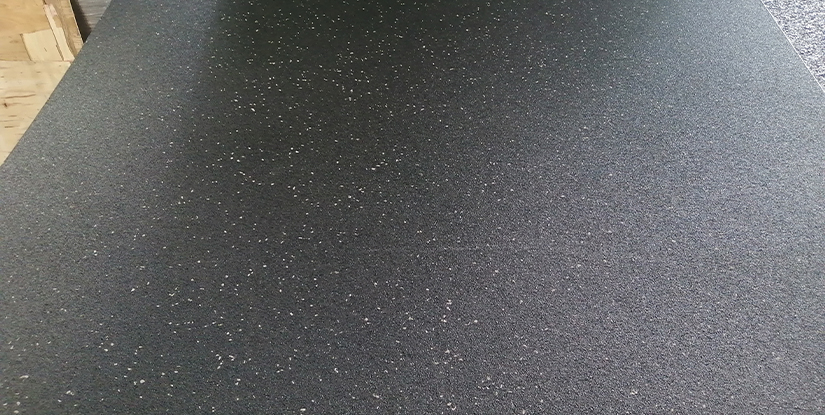
The problem of floor degradation is often caused by the use of thin, low-density rubber mats. While these are cheaper, they provide insufficient shock absorption for heavy drops, leading to uneven wear and noise pollution. The solution lies in high-density, vulcanized rubber flooring with a minimum thickness threshold. This material is designed to dissipate kinetic energy throughout the material's structure rather than transferring it directly to the concrete slab.
- Implementation Detail: Always specify a minimum thickness (e.g., 15mm to 20mm) for high-traffic lifting areas.
- Common Mistake: Using interlocking foam mats for heavy lifting; these will compress permanently and create trip hazards.
- Verification: Test the floor by dropping a standard weight; the sound should be a dull thud rather than a high-pitched crack, and there should be no visible deformation under the weight.
Plyometric Box Durability and Safety
Similarly, plyometric boxes must be scrutinized for edge durability. In high-volume environments, the edges of wooden or foam boxes frequently degrade, creating sharp corners that can cause injury. Investing in high-density foam-wrapped boxes or reinforced plywood ensures a longer lifespan and a safer landing surface. This focus on the 'contact points' of the workout ensures that the physical environment supports, rather than hinders, athlete performance. Once the ground-level hazards are controlled, the operator can focus on the peripheral mobility and metabolic conditioning tools.
Explore the complete technical specifications:
Best Barbells Guide: Specifications, Knurling, and Commercial Selection
Metabolic Conditioning and Mobility Tools
The final tier of investment involves the tools used for high-volume metabolic conditioning (MetCon) and recovery. This includes rowers, bikes, and mobility implements, which often suffer from electrical or mechanical fatigue due to constant, high-cadence usage.
Maintaining Mechanical Efficiency in Cardio Equipment
Cardio equipment in a CrossFit setting operates at much higher intensity than in a traditional commercial gym. Air bikes and rowers are subject to high volumes of sweat and constant mechanical motion. The primary failure mode is often the degradation of the drive mechanism or electrical sensor malfunctions caused by environmental moisture. To mitigate this, operators should select units with sealed bearings and robust, easy-to-clean surfaces. Regular maintenance is non-negotiable; a lack of lubrication or cleaning can lead to premature motor failure and higher downtime.
The Value of High-Quality Mobility Implements
Mobility tools, such as foam rollers and resistance bands, are often treated as afterthoughts, yet they are essential for the longevity of the athlete. Cheap resistance bands tend to lose elasticity or snap unexpectedly, which can lead to injury. High-grade, latex-free bands provide a more predictable tension curve and higher tensile strength. The decision to invest in higher-quality mobility gear is a decision to invest in the long-term health and retention of the client base.
Final Procurement Checklist for Facility Owners
To ensure your investment strategy is sound, utilize this checklist during the final stages of your purchasing cycle. A successful procurement process relies on verifying physical properties against theoretical standards.
- Structural Integrity: Does the rig/rack feature multi-angle reinforcement and high-gauge steel?
- Impact Resistance: Is the flooring thickness at least 15mm with a high-density vulcanized profile?
- Mechanical Longevity: Do the cardio units feature sealed bearings and moisture-resistant components?
- Safety Compliance: Are the edges of plyometric boxes reinforced to prevent chipping or tearing?
By approaching procurement through the lens of durability, structural integrity, and total cost of ownership, facility owners can build a world-class training environment that stands the test of time. The ability to verify performance through regular inspection ensures that these investments continue to pay dividends for years to come.