

Technical Evaluation of How CrossFit Gym Accessories Support Member Training
The Myth of Accessory Redundancy in High-Intensity Training
A common misconception among facility operators is that specialized accessories are merely "optional extras" that do not fundamentally alter the physiological outcomes of a workout. This perspective suggests that a standard barbell and a single weight plate are sufficient for all training requirements. However, from a biomechanical engineering standpoint, this view ignores the critical role of specialized implement geometry and material density in optimizing power transfer and preventing overuse injuries.
In high-intensity functional training, the technical specification of an accessory—such as the knurling of a pull-up bar or the coefficient of friction on a gymnastics ring—directly impacts a member's ability to execute complex movements with precision. When an operator relies on generic equipment, they often witness a plateau in member progress, not due to lack of effort, but due to mechanical inefficiencies. Understanding how CrossFit gym accessories support member training begins with recognizing that these tools are functional extensions of the human kinetic chain.
By selecting accessories based on technical merit rather than aesthetic similarity, operators can ensure that the resistance provided is both predictable and scalable. This technical foundation is essential before addressing the specific material requirements for high-durability implements.
Mechanical Integrity of Grip and Manipulation Accessories
As established by the need for mechanical precision, the most frequent point of failure in a CrossFit environment occurs during high-repetition grip-intensive movements. Issues such as grip slippage or premature wear in lifting straps and gymnastics grips are rarely just a matter of "bad form"; they are often symptomatic of sub-optimal material selection.
Material Resistance and Surface Friction Parameters
The interface between the athlete's hand and the equipment is the primary transmission point for force. For example, gymnastics grips must balance the need for high friction (to prevent slipping) with durability (to prevent tearing). Operators must evaluate the leather density and the stitching integrity of these accessories to ensure long-term utility.
| Accessory Type | Critical Technical Parameter | Failure Mode (Unverified Quality) | Operator Verification Method |
|---|---|---|---|
| Gymnastics Grips | Leather Tensile Strength & Stitch Density | Rapid seam splitting under high tension | Stress test seams with manual pulling |
| Lifting Straps | Weave Tightness & Material Elasticity | Unexpected stretching during heavy pulls | Check for thickness uniformity along length |
| Hand Tape | Adhesive Residue & Elasticity Ratio | Skin irritation or tape shedding during heat | Apply to skin; check for residue after removal |
Failure to monitor these parameters results in increased downtime and potential safety risks. If the grip interface is unstable, the athlete's entire kinetic chain is compromised. This necessity for stability leads directly into the structural demands placed on heavy-duty implements like kettlebells and medicine balls.
Dynamic Weight Distribution in Kinetic Implements
Once the grip interface is secured, the next technical challenge involves the mass and balance of the implement itself. A common mistake in procurement is selecting implements with poorly centered centers of gravity, which can lead to unpredictable movement during high-velocity exercises.
Center of Gravity and Rotational Inertia
In exercises involving rotational force, such as kettlebell swings or medicine ball slams, the distribution of mass within the shell is paramount. A high-quality kettlebell must have a consistently weighted handle to ensure the center of mass does not shift during a swing. If the weight is off-center, the resulting torque can cause wrist strain or improper deceleration patterns.
- Kettlebell Symmetry: Ensure the handle width and thickness are consistent to prevent lateral wobbling.
- Medicine Ball Density: High-impact spheres must use high-density polymers to prevent internal component shifting after repeated slams.
- Dumbbell Balance: Check that the weight distribution between the two heads is within a narrow tolerance range.
Operators should perform a "spin test" on kettlebells to ensure rotational stability. An imbalanced implement is a liability that degrades the quality of the training session. This structural stability must be matched by the resilience of the surfaces they contact.
Explore the complete technical specifications:
Surface Interface and Flooring Protection
The interaction between heavy implements and the gym floor is an overlooked technical variable. An operator may focus heavily on the weight of the kettlebells but ignore the impact force they exert on the facility's foundation. How CrossFit gym accessories support member training also involves protecting the environment in which the training occurs.
Shock Absorption and Energy Dissipation
When dropping heavy weights, the kinetic energy must be dissipated through a controlled medium. Without proper high-density rubber flooring or specialized mats, the impact energy travels through the subfloor, causing micro-fractures in the concrete or damaging the structural integrity of the building. This is not merely a maintenance issue; it is a fundamental requirement for a sustainable facility.
| Surface Type | Ideal Function | Common Misstep | Verification Metric |
|---|---|---|---|
| Drop Pads | Localised Energy Dissipation | Using low-density foam that permanently compresses | Check for "rebound recovery" after heavy impact |
| Rubber Flooring | Wide-area Vibration Damping | Installing thin mats that allow sound/vibration transfer | Measure thickness and density of the rubber sheet |
| Plyometric Boxes | Stable Impact Surface | Using wood boxes with low-grade finish that splinters | Inspect edges for sharpness and surface hardness |
Ensuring the floor can handle the dynamic load is the next step in creating a professional-grade environment. However, the durability of the floor is only as good as the maintenance of the tools used upon it.
Rigging and Suspension Systems Stability
Beyond the floor and the handheld weights, the vertical dimension of a CrossFit facility relies on the technical integrity of rigging systems. Pull-up rigs, gymnastic rings, and suspension trainers introduce complex loading vectors that can jeopardize both the facility and the member if not properly evaluated.
Load-Bearing Capacity and Connection Points
Suspension trainers and gymnastics rings rely on high-tensile strength straps and secure carabiner systems. A common failure mode occurs when operators use non-rated carabiners or hardware that cannot withstand the dynamic, snatching force of a human body in motion. Unlike static loads, the dynamic load of a person performing a muscle-up is significantly higher than their resting weight.
- Connection Integrity: Verify that all rings and suspension straps are attached via hardware rated for high-velocity movement, not just static weight.
- Rust and Oxidation: Inspect metal connection points (carabiners, shackles) for signs of corrosion, which weakens metal fatigue resistance.
- Stress Creep: Observe nylon straps for thinning or fraying, which signals that the material is reaching its structural limit.
A failure in vertical rigging is often catastrophic rather than incremental. This level of structural dependency necessitates a disciplined approach to keeping all equipment in peak condition. This leads us to the essential protocols for long-term equipment viability.
Maintenance Protocols for High-Usage Accessories
Even the highest quality accessories will eventually degrade if they are not subjected to a rigorous maintenance and inspection cycle. A failure to implement a standard operating procedure (SOP) for equipment care is a primary cause of unexpected equipment failure during a member's session.
Systematic Inspection and Cleaning Workflows
Maintenance should not be reactive; it must be proactive. For instance, checking the integrity of barbell knurling or the tension in resistance bands should be part of a weekly facility walkthrough. A common failure mode is waiting for a piece of equipment to break before inspecting it, which often leads to higher costs and safety concerns.
Maintenance Checklist for Facility Operators
- Barbell Inspection: Check for bends in the shaft and inspect the knurling for smoothness or excessive wear.
- Resistance Band Integrity: Inspect for micro-tears or color fading, which indicates UV or structural fatigue.
- Weight Plate Integrity: Check for cracks in cast iron or peeling coatings on bumper plates.
- Cleaning Protocol: Use non-corrosive cleaners to prevent the degradation of metal finishes and rubber grips.
Regularly applying these checks ensures that the technical benefits of the equipment are preserved. Beyond the physical tools, the way these implements are stored and organized also impacts the long-term ROI of the facility. This leads us to the final consideration: the strategic organization of the training space.
Spatial Optimization and Tool Accessibility
The final component of how CrossFit gym accessories support member training is how they are integrated into the training floor layout. An unorganized space leads to more than just aesthetic clutter; it leads to mechanical hazards and inefficient movement patterns.
Ergonomic Layout and Storage Solutions
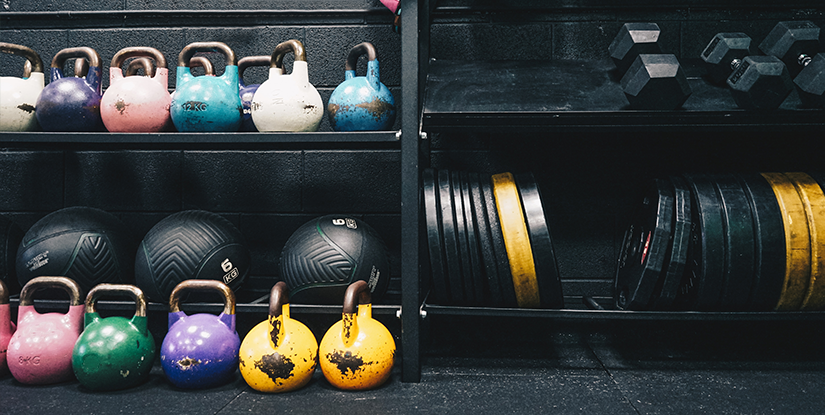
The placement of heavy implements like bumper plates and dumbbells affects the speed of transitions during high-intensity interval training (HIIT). If a member has to navigate a cluttered floor to reach a weight, the intended intensity and flow of the workout are disrupted. Professional-grade storage racks are not just furniture; they are workflow optimization tools.
- Load-Bearing Racks: Must be rated for the cumulative weight of the entire set to prevent structural collapse.
- Access Speed: Arrange frequently used accessories (like jump ropes or kettlebells) in a way that minimizes travel distance during fast-paced WODs (Workouts of the Day).
- Stability in Transit: Ensure that storage solutions themselves are heavy-duty and do not tip when partially loaded.
By optimizing the spatial distribution of accessories, an operator reduces the mental and physical friction of the training session. This holistic approach—from the microscopic friction of a grip to the macroscopic layout of the gym—is what separates a premium training facility from a standard commercial gym.