
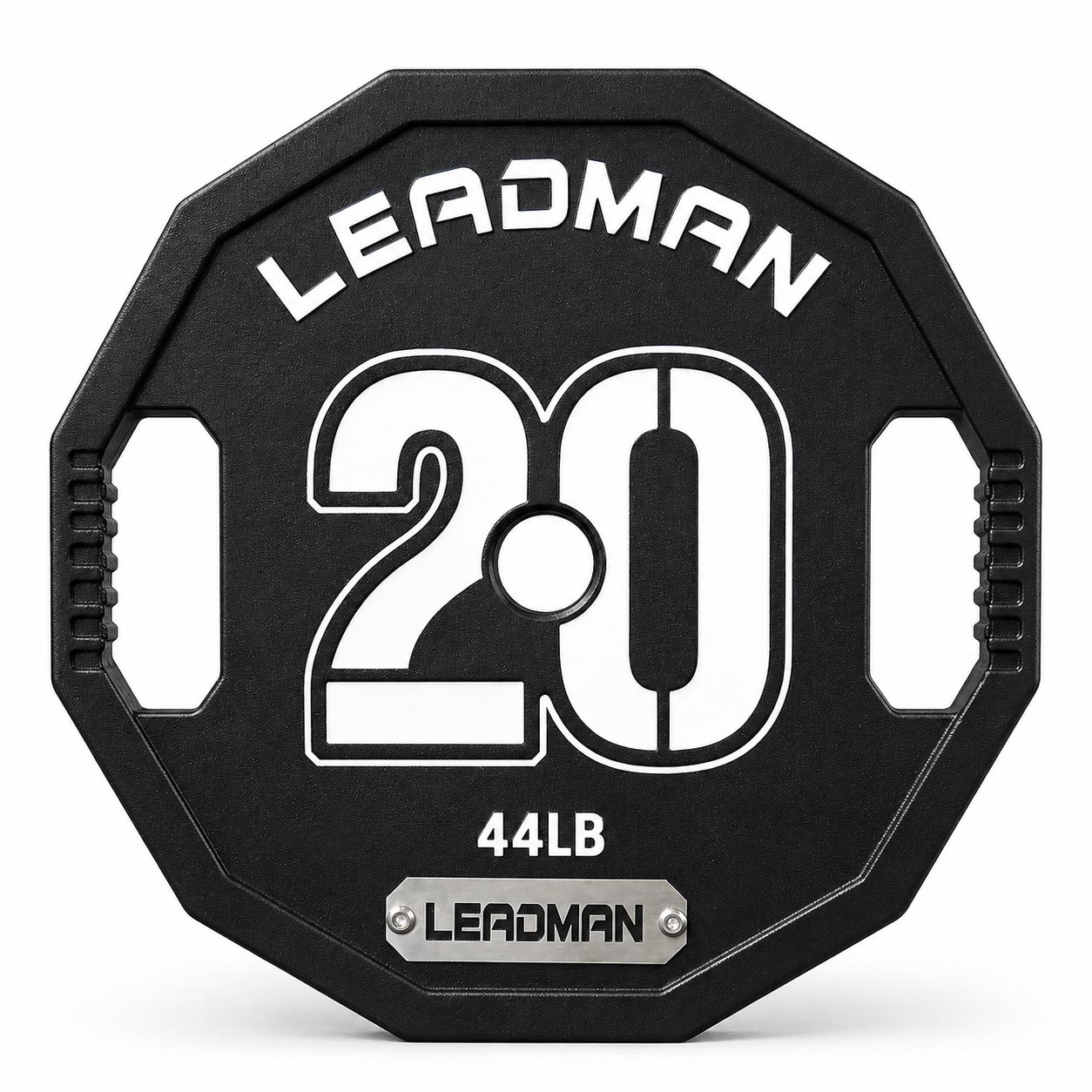
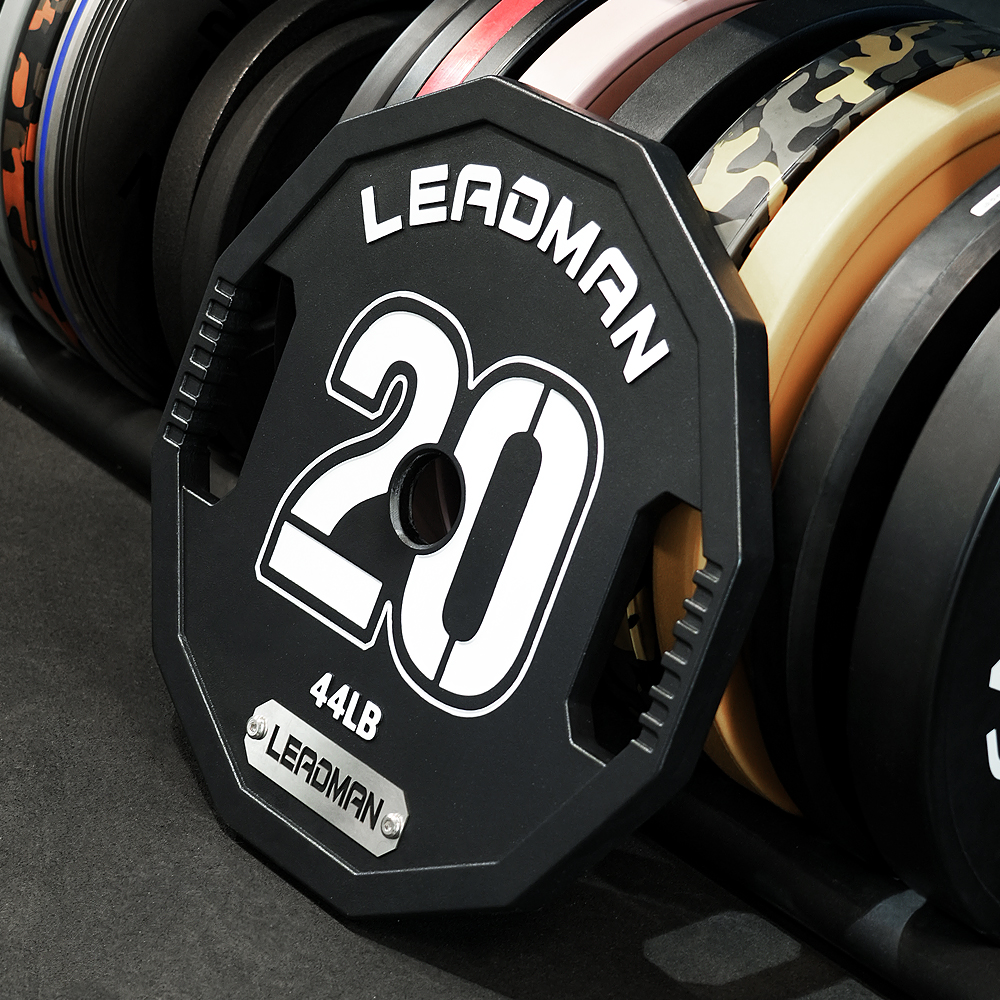
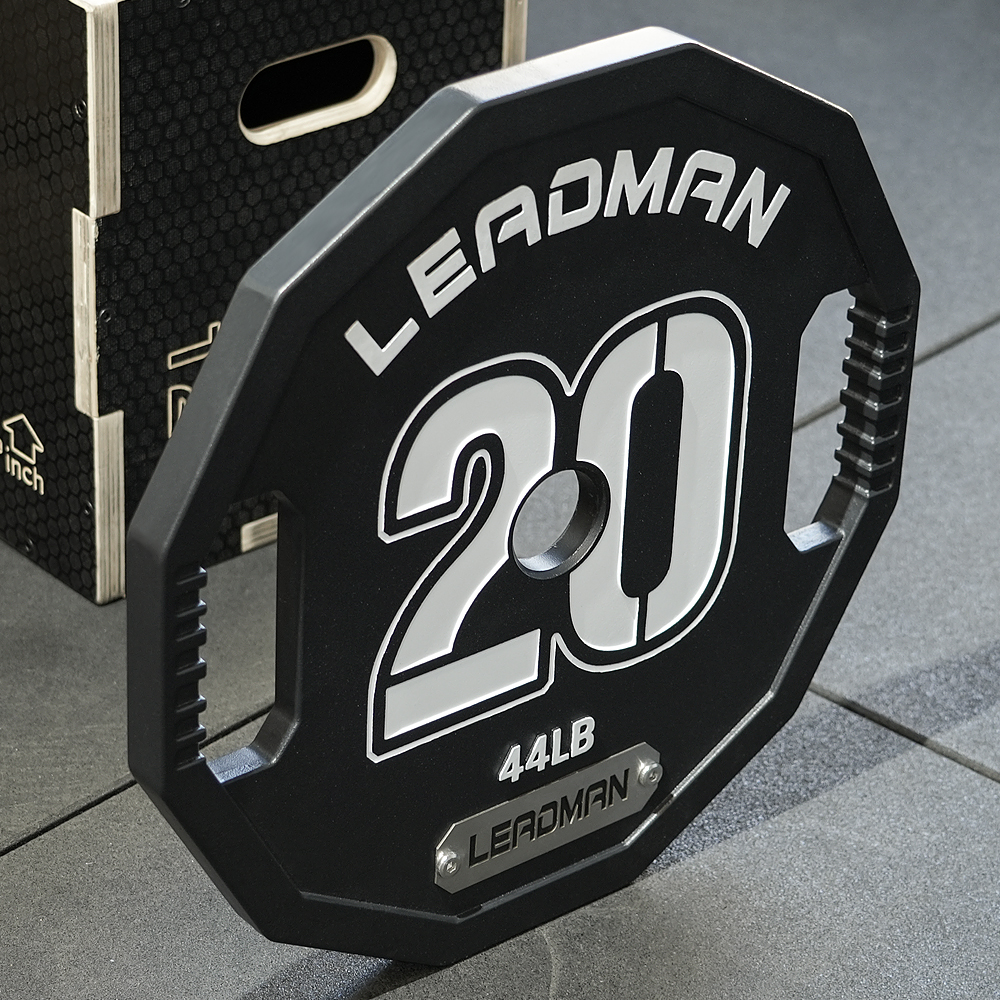
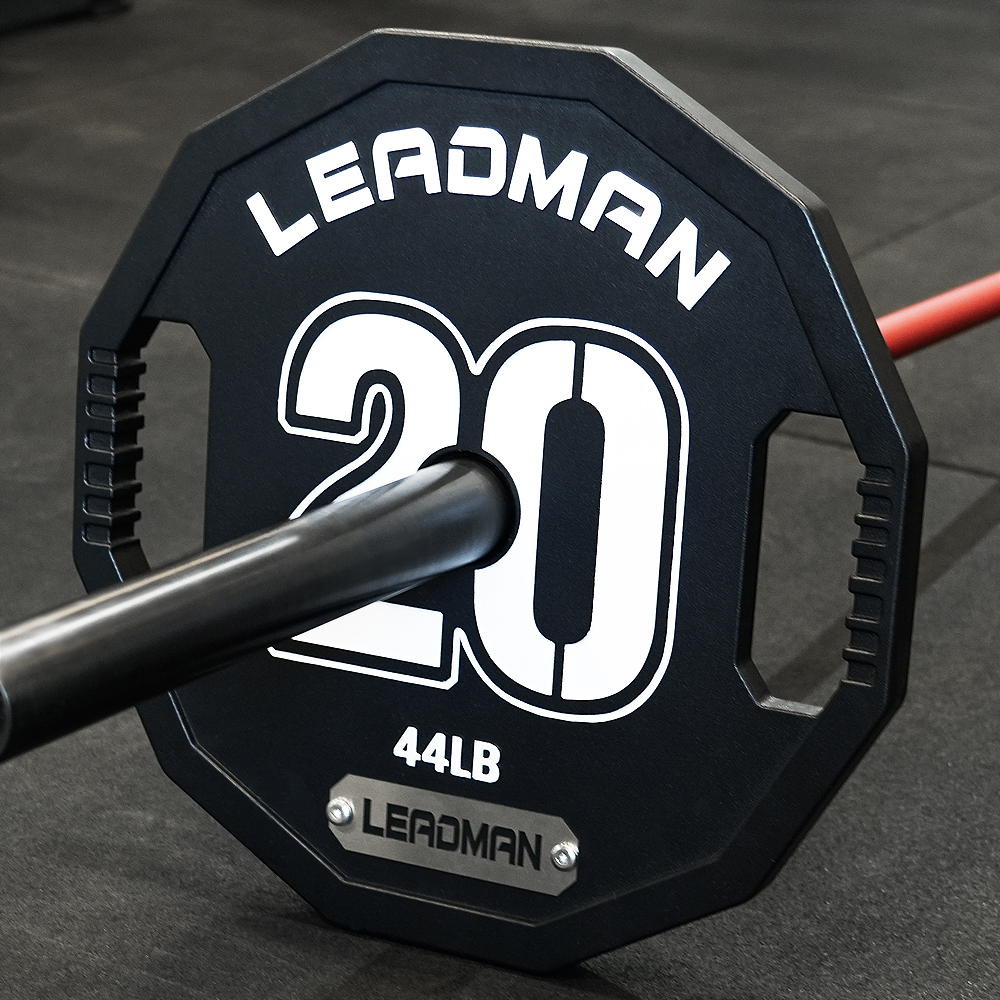
Standard round weight plates roll. Place one on a slightly inclined gym floor, and it will travel until it hits a wall or a foot. Hexagonal plates solved the rolling problem but introduced a new one: uncomfortable handling. The sharp corners of hex plates dig into hands and forearms during carrying. The 12-sided professional weight plate represents a third path. With twelve flat edges distributed around the circumference, the plate will not roll when set down, but the angles are shallow enough that no edge feels sharp or aggressive. This is functional geometry—designed for how plates are actually used, not just how they are stored.
From a commercial facility perspective, non-rolling plates reduce two hazards: trip risks and equipment damage. A round plate left on the floor can roll underfoot or into the path of moving equipment. A 12-sided plate stays where it is placed. When dropped during reracking, a round plate might spin or roll away; a 12-sided plate settles immediately. For facilities with hundreds of daily plate interactions, this stability reduces small accidents that add up over time.
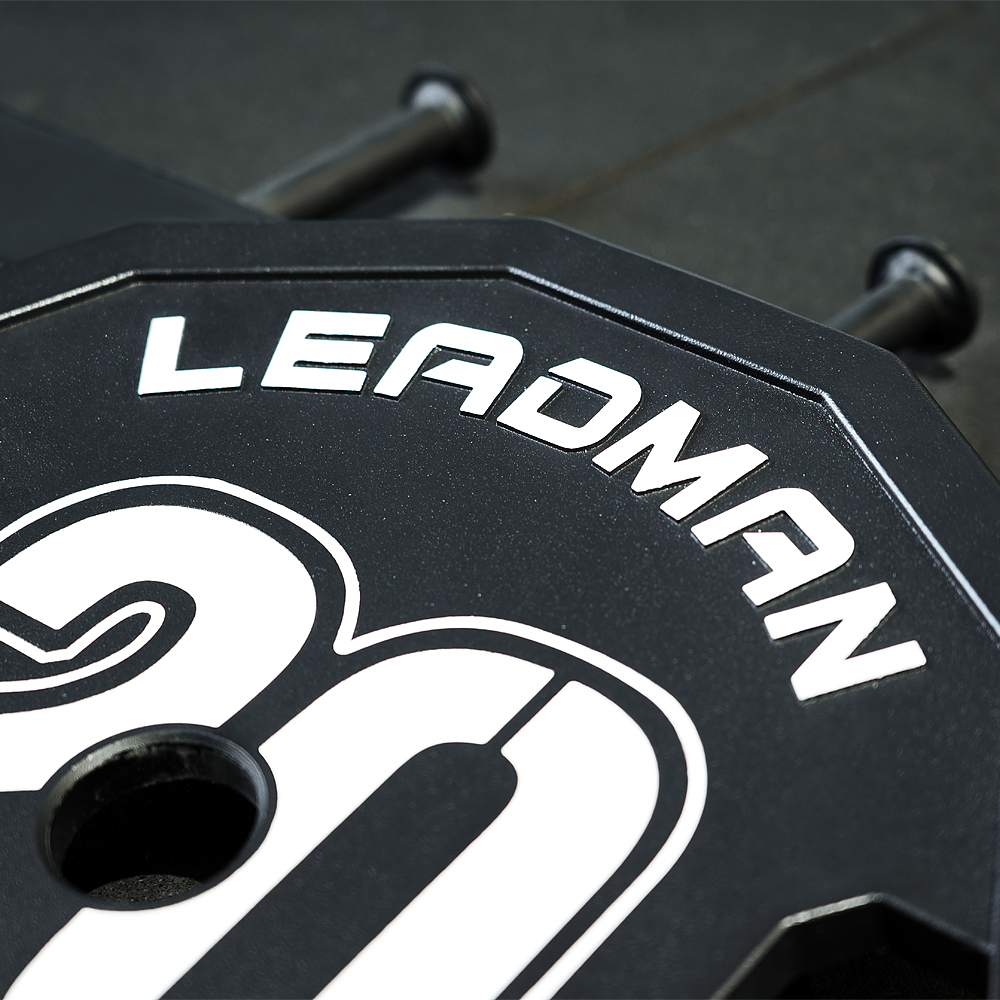
The 12-sided plate features oversized weight markings and a prominent metal logo plate. The oversized digits are legible from across the gym floor, allowing lifters to identify the correct plate without bending down or picking it up. This may seem like a minor convenience, but in a busy commercial gym, seconds saved per plate selection accumulate into meaningful efficiency. A member selecting four plates saves 4-8 seconds. Across 300 members per day, that is 20-40 minutes of cumulative time—time spent training rather than searching.
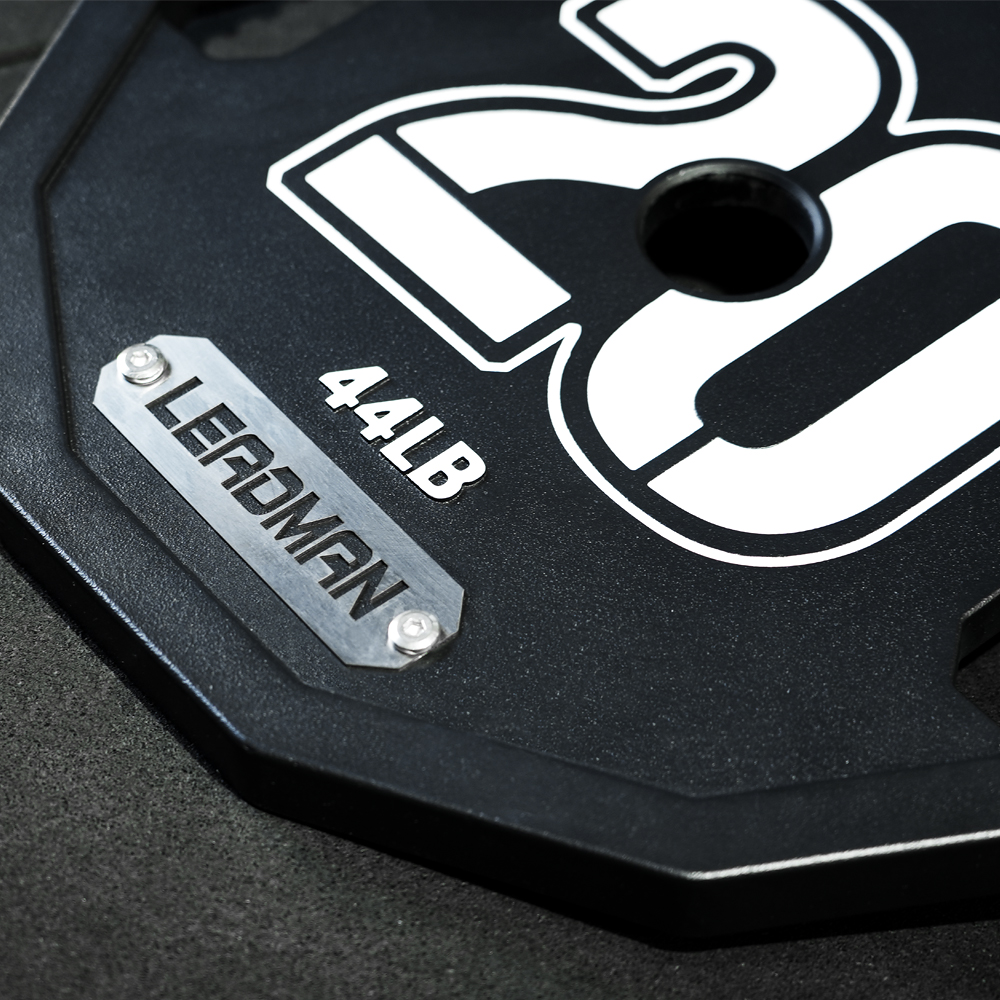
The metal logo plate is integrated into the plate body, not printed or stamped. Printed logos wear off over time, especially on plates that are stacked, slid, and cleaned daily. The metal logo plate is permanent. For facilities that have invested in a cohesive equipment brand, this logo permanence matters. Members see the brand every time they handle a plate. In multi-gym chains, consistent branding across locations reinforces the facility identity.
The oversized markings and logo plate create what the manufacturer describes as "highly recognizable design." In a crowded weight room where plates from different manufacturers may be mixed, the visual distinctiveness of the 12-sided plate helps staff quickly identify which plates belong to the facility. This is particularly useful in shared gym spaces (hotels, universities, corporate facilities) where equipment sometimes migrates.
| Shape | Rolls When Set Down | Edge Comfort for Carrying | Storage Stability |
|---|---|---|---|
| Round (Circular) | Yes—rolls easily on any surface | Smooth, no sharp edges | Poor—plates shift and roll |
| Hexagonal (6-sided) | No—flat edges prevent rolling | Poor—sharp corners dig into hands | Good—flat edges stabilize stack |
| 12-Sided (Dodecagonal) | No—12 edges prevent rolling | Good—shallow angles, no sharp corners | Excellent—multiple contact points |
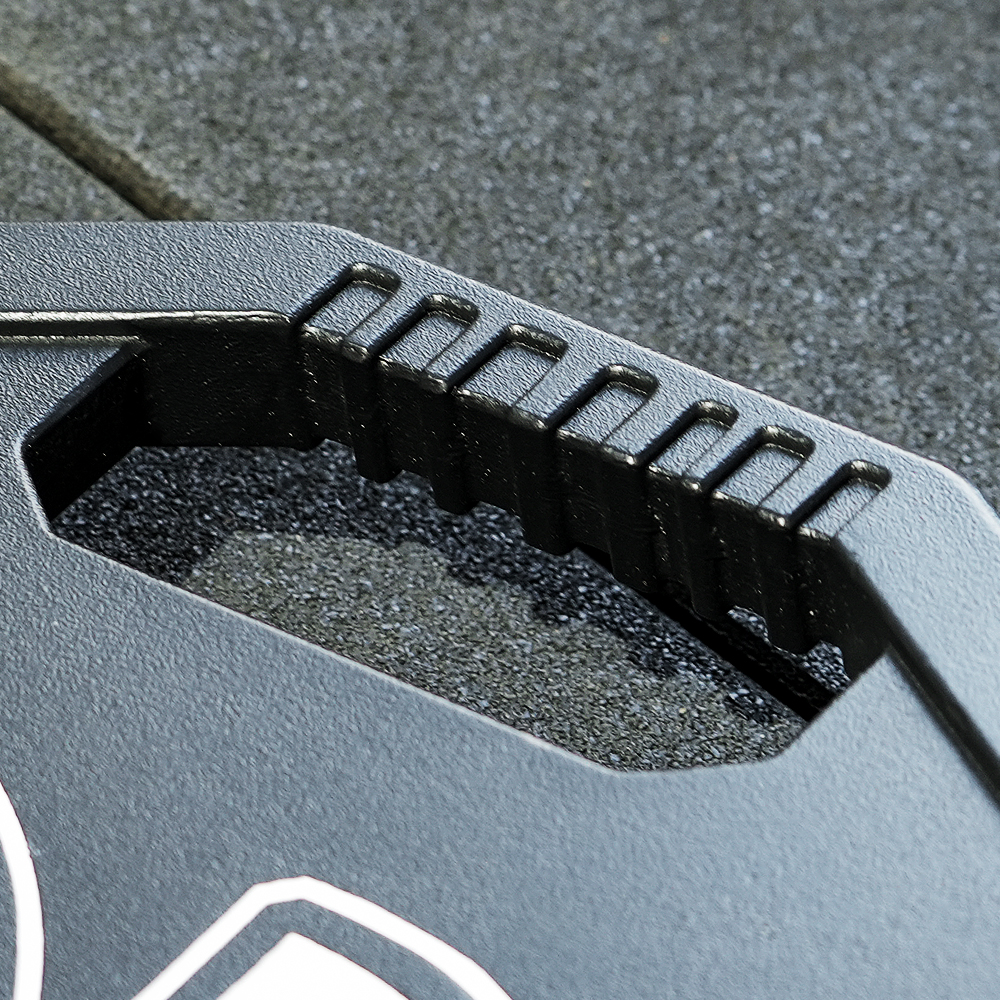
The dual-handle grip design incorporates two grip holes positioned on opposite sides of the plate. This allows the user to lift the plate with a natural two-hand grip, distributing weight evenly across both hands. For heavier plates (20kg/44lb and above), the dual-handle grip is significantly easier than pinching the edge or hooking fingers through the center hole. The grip holes are large enough to accommodate gloved hands and are finished with smooth internal edges that do not pinch or abrade.
The anti-slip texture surrounds the grip holes and extends across the plate faces. This texture serves two purposes: it provides friction between stacked plates, preventing them from sliding against each other during transport, and it gives the user's hands a secure gripping surface even when sweaty. In commercial environments where plates are handled by hundreds of different users daily, the anti-slip texture reduces the risk of dropped plates.
The placement of the grip holes at the edges of the plate rather than near the center hole is a deliberate design choice. Edge gripping provides better mechanical leverage than center gripping. When lifting a plate from a horizontal stack, an edge grip allows the user to tilt the plate and slide it out. A center hole grip requires lifting the plate straight up, which may require clearing the plates above it. The edge grip is faster and requires less clearance.
The 12-sided plates are manufactured using one-piece resin-coated sand casting. This process produces a finer grain structure than traditional green sand casting, resulting in higher density and hardness. The fine-grained, dense structure resists impact deformation better than coarser castings. When plates are dropped—and in commercial gyms, plates will be dropped—a coarser casting is more likely to crack or chip at the impact point. The resin sand process minimizes this risk.
The one-piece construction means there are no welded or bolted components to fail. Some plates use pressed steel inserts for the center hole; these inserts can loosen over time. The 12-sided plate's center hole is cast as part of the plate, then precision-machined to final tolerance. This monolithic construction ensures the center hole remains concentric and dimensionally stable for the life of the plate.
The resin-coated sand process also produces a smoother surface finish than traditional casting methods. This smoother surface accepts the powder coating more uniformly, resulting in a more consistent appearance and better corrosion protection. For facilities where equipment aesthetics matter—boutique studios, high-end hotel gyms, corporate fitness centers—this surface quality contributes to the overall professional impression.
The plates feature dual weight markings: kilograms (20kg) and pounds (44lb). This dual marking is essential for facilities serving international clientele or regions where both measurement systems are common. A lifter from Europe can read the kilogram marking; a lifter from the United States can read the pound marking. Both are correct—44lb is the approximate equivalent of 20kg (actually 20kg = 44.09lb, rounded for practical purposes).
The dual marking also simplifies inventory management for facilities that carry plates from multiple manufacturers. If the facility's barbells are calibrated in kilograms, the kilogram marking is primary. If the facility's programming uses pounds, the pound marking is primary. The presence of both eliminates conversion errors that could lead to unbalanced loading or incorrect workout prescriptions.
The markings are oversized and high-contrast, typically white or bright against the matte black background. This legibility is particularly important for the 44lb marking, which might otherwise be smaller due to the two-digit format. The designers have ensured both markings are equally prominent, avoiding the common problem where the secondary marking is printed in small type and becomes illegible over time.
The metal logo plate is a distinctive feature of the 12-sided plate design. Rather than printing or stamping the brand name into the casting, a separate metal plate is embedded into the plate body. This plate is made of metal (typically steel or aluminum) and features the brand name in raised or engraved lettering. The metal logo plate is highly visible and permanent—it will not wear off with cleaning or handling.
For commercial facilities, the metal logo plate serves a practical function beyond branding. When plates from different manufacturers become mixed in the storage area, staff can quickly identify which plates belong to the facility by looking for the logo plate. This reduces the loss of equipment to other facilities in shared gym spaces (e.g., university recreation centers where multiple departments use the same weight room).
The logo plate also adds to the premium aesthetic of the plates. The contrast between the matte black cast iron and the metallic finish of the logo plate creates visual interest. For home gym users who care about the appearance of their equipment, this detail matters. A well-designed weight plate that looks professional encourages consistent use and pride in the training space.
The matte black finish on the 12-sided plates is achieved through powder coating, not wet paint. Powder coating is applied electrostatically and then cured under heat, creating a hard, continuous film that bonds to the metal. This finish is more durable than paint, resisting chipping, scratching, and chemical degradation from cleaning products. For commercial facilities that wipe down equipment multiple times daily, this durability is essential.
The matte finish provides a non-slip surface. Gloss finishes become slippery when wet; matte finishes maintain friction even when damp from sweat or cleaning solutions. This anti-slip property is particularly important for the plate faces, where stacked plates might otherwise slide against each other. When plates are stored vertically on pegs, the matte finish helps them stay in place rather than shifting.
The matte black color is neutral and professional, blending into any gym aesthetic. Unlike colored plates that may clash with facility branding or become dated as color trends change, black plates remain timeless. The finish also hides minor scratches and scuffs better than lighter colors, maintaining a clean appearance longer. For facilities concerned about equipment presentation, matte black is the safe, professional choice.
| Property | Standard Wet Paint | Powder Coating (Matte Black) |
|---|---|---|
| Durability | Moderate—scratches and chips easily | High—resists scratching and chipping |
| Chemical Resistance | Poor—degrades with cleaners | Good—resists cleaning chemicals |
| Grip When Wet | Poor—gloss finishes are slippery | Good—matte texture maintains friction |
| Corrosion Protection | Moderate—rusts if scratched | Excellent—seals metal completely |
| Appearance Longevity | Poor—fades and wears unevenly | Good—maintains appearance for years |
The 12-sided plates are specifically engineered for commercial gym environments where plates are handled hundreds of times per day. The combination of resin sand casting, powder coating, and precision machining creates a plate that withstands the abuse of daily use. The fine-grained dense structure resists the micro-cracking that can lead to catastrophic failure in lower-quality plates. The thickened center hole area distributes impact forces from dropped plates across a larger cross-section.
For home gym users, the commercial-grade durability means the plates will likely never need replacement. A home gym might see a few thousand plate-handling events per year. Commercial-grade plates are tested for hundreds of thousands of cycles. The margin of safety is enormous. A home gym owner purchasing these plates is buying a lifetime product.
The durability extends to the finish. The matte black powder coating is resistant to the chemical disinfectants used in commercial facilities. Many cheaper plates develop blotchy finishes or surface rust after repeated cleaning. The 12-sided plates maintain their appearance even with daily wiping. For facilities where equipment presentation is part of the member experience, this finish longevity is a significant advantage.
The 12-sided anti-roll design is not just about preventing plates from rolling across the floor. It also improves storage stability. When plates are stacked horizontally on a storage tree, the flat edges of the 12-sided design prevent the stack from shifting. Round plates can rotate slightly within the stack, causing the stack to lean over time. A leaning stack of heavy plates is a safety hazard and a maintenance nuisance. The 12-sided plates lock into position relative to each other, maintaining a straight, stable stack.
When plates are stored vertically on wall-mounted pegs, the 12-sided design prevents rotation. A round plate on a vertical peg can spin, causing the weight marking to face the wall rather than the user. The 12-sided plate's geometry prevents this rotation, ensuring the weight markings remain visible. This may seem like a minor detail, but in a busy commercial gym, having to rotate each plate to read its weight slows down plate selection significantly.
The functional 12-sided design also reduces noise during storage. Round plates clank against each other when the stack shifts. The flat edges of the 12-sided plates create more contact surface area, dampening movement and reducing noise. In facilities where noise is a concern—hotel gyms, residential building gyms, corporate fitness centers—this noise reduction improves the user experience.
The 12-sided plates are positioned for two primary markets: professional gyms and premium home training. For professional gyms, the commercial-grade durability, non-rolling design, and high-visibility markings address the operational needs of high-traffic facilities. The metal logo plate also supports facility branding, whether the gym is an independent studio or part of a national chain.
For premium home training, the 12-sided plates offer the aesthetic and functional qualities that discerning home gym owners value. The matte black finish with metal logo plate looks professional, not like budget equipment. The anti-roll design keeps the training area tidy. The dual-handle grip makes plate handling easier for home users who may not have the grip strength of experienced lifters. The dual weight markings (kg/lb) accommodate home users who may follow programming from international sources.
The plates are suitable for all strength training setups, from power racks to dedicated deadlift platforms to multi-functional cable systems. The 50mm center hole fits all standard Olympic barbells. The 12-sided geometry does not interfere with loading or unloading—the plates slide onto the sleeve normally, with the flat edges only coming into contact when the plate is set down or stored. There is no functional compromise for the anti-roll benefits.
| Specification Category | Technical Details |
|---|---|
| Product Name | 12-Sided Professional Weight Plates / Dodecagonal Cast Iron Plates |
| Shape | 12-sided (dodecagonal) anti-roll design |
| Weight Markings | Dual markings: 20kg / 44lb, oversized high-contrast digits |
| Grip Design | Dual-handle grip holes with anti-slip texture |
| Manufacturing Process | One-piece resin-coated sand casting (resin sand casting) |
| Center Hole | Professional fit for standard 50mm Olympic barbell sleeves |
| Finish | Matte black electrostatic powder coating, anti-slip, corrosion-resistant |
| Branding | Metal logo plate for permanent brand visibility |
| Durability Rating | Commercial-grade, designed for high-frequency daily usage |
| Anti-Roll Property | 12-sided geometry prevents rolling on any surface |
| Storage | Stable stacking, prevents rotation on vertical pegs |
| Application | Professional commercial gyms, premium home gyms, all strength training setups |
| Aesthetic | Premium matte black finish with metal logo plate for high-end fitness sector |