
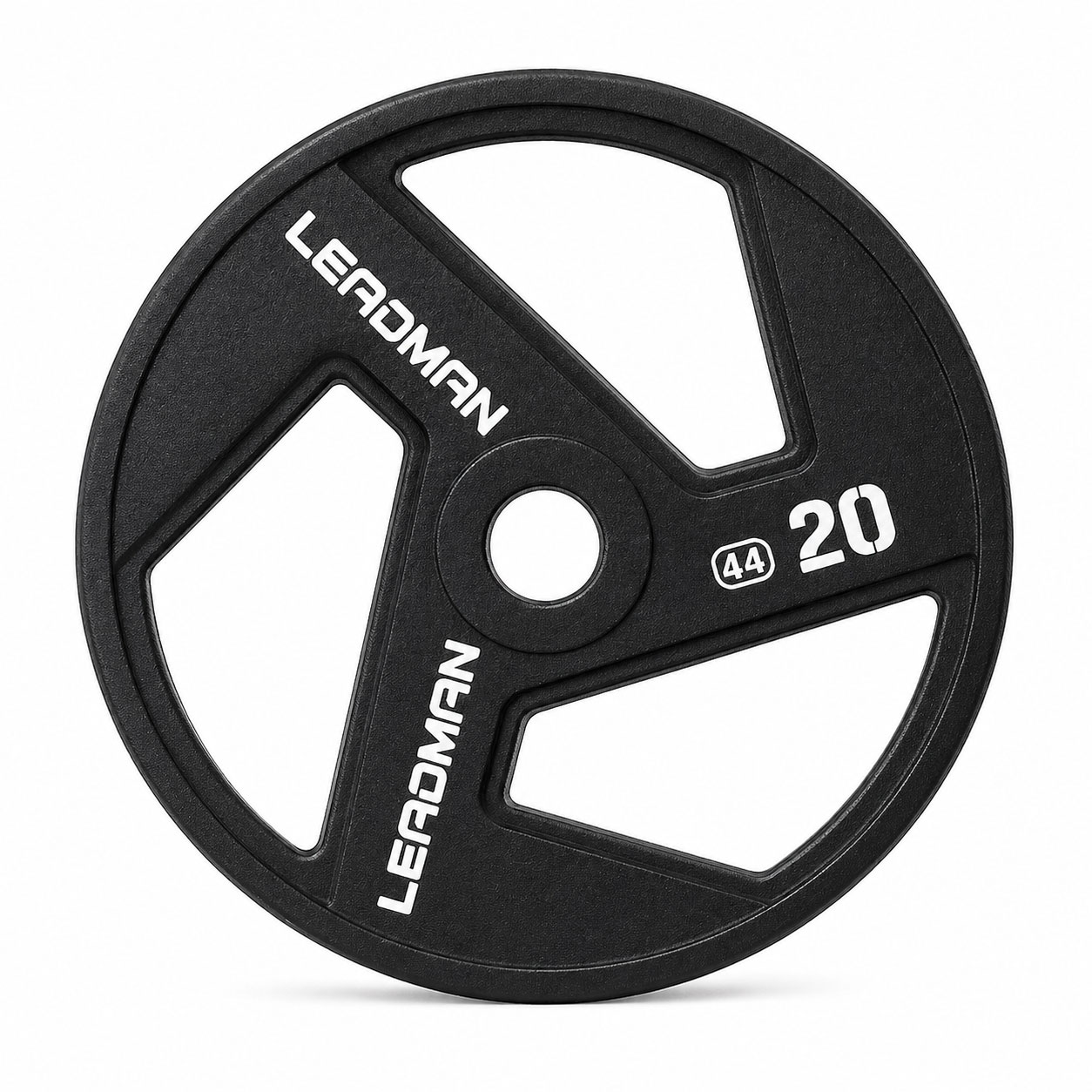
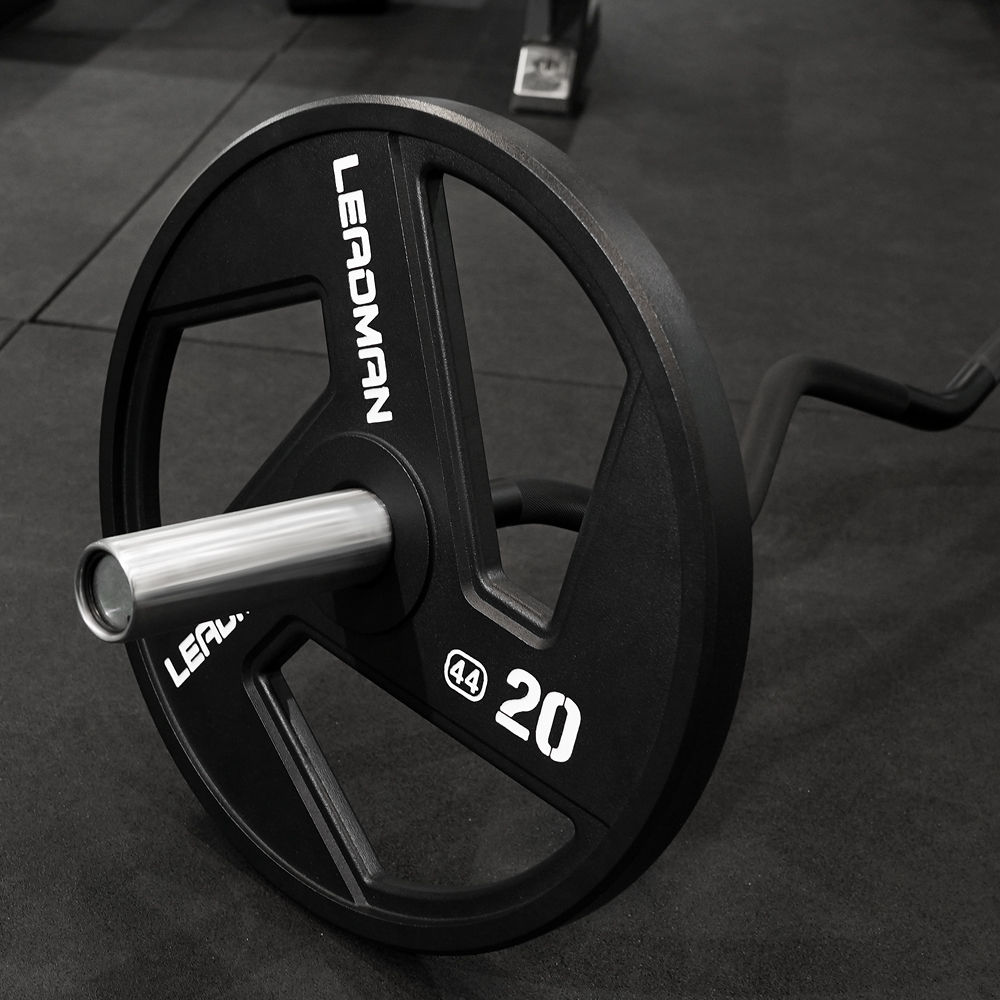
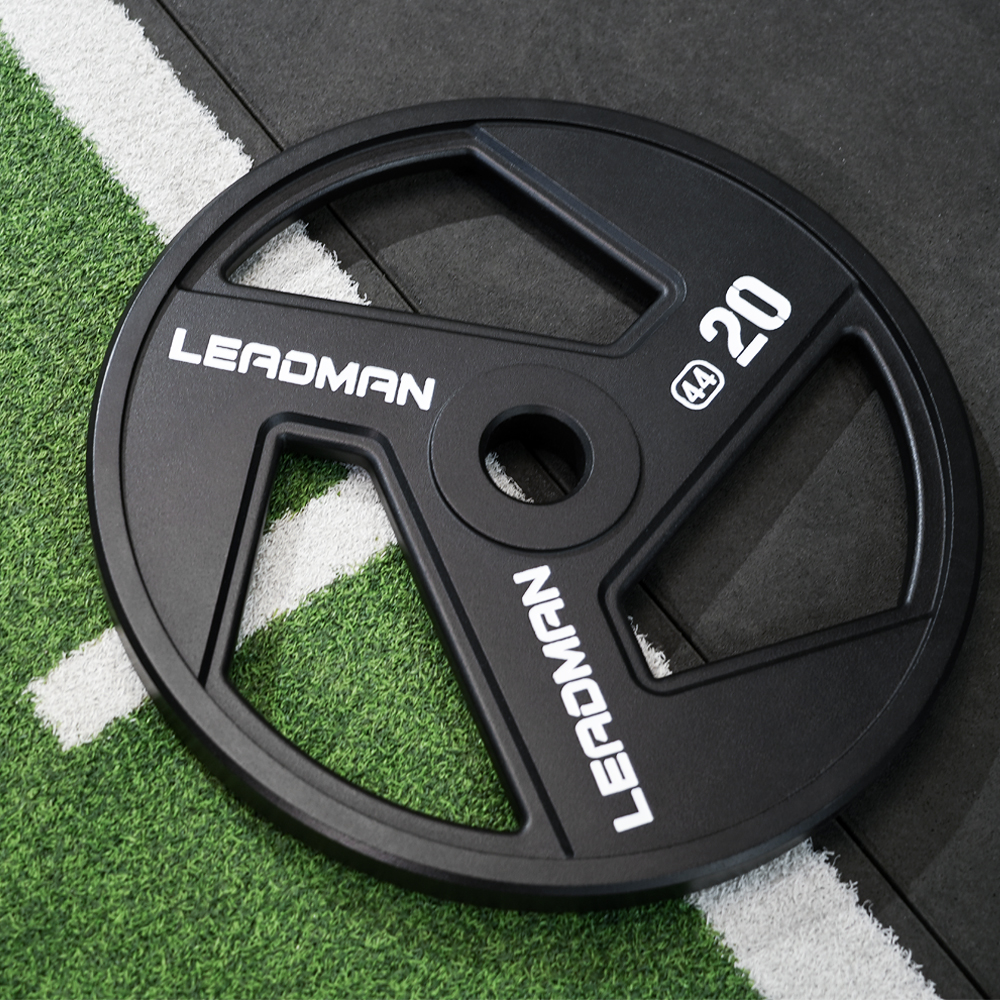
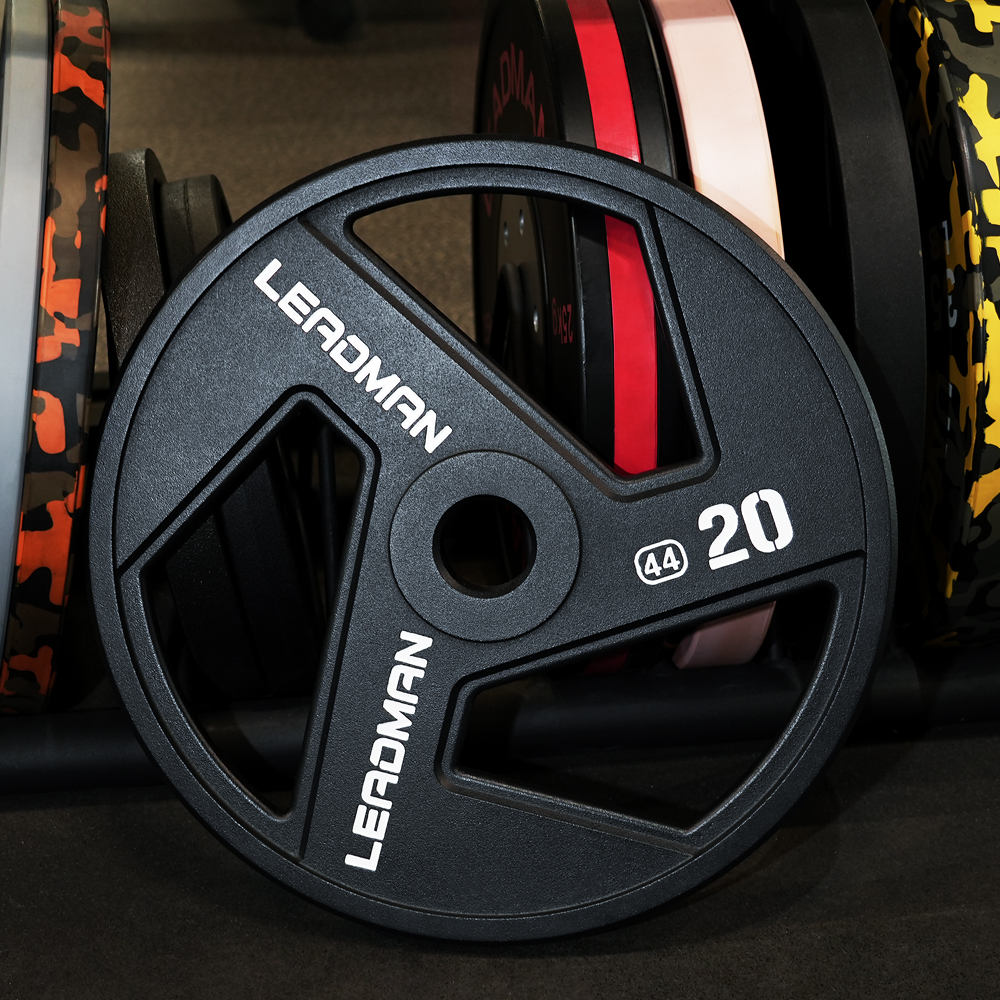
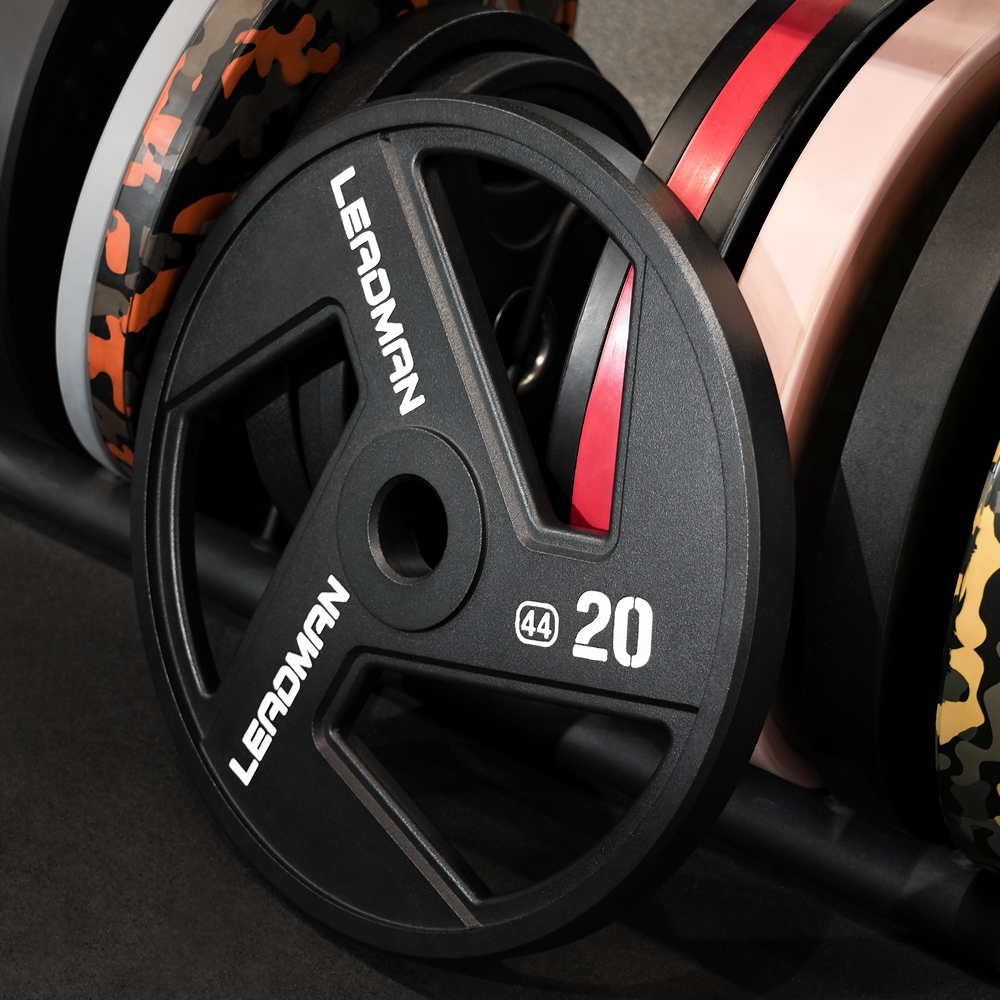
Standard weight plates have a fundamental design flaw: they are hard to hold. The smooth, circular surface forces users to pinch or hook their fingers into the center hole—a grip position that is awkward, insecure, and mechanically inefficient. The Tri-Grip Plate redesigns the weight plate around the human hand. Three slotted grips integrated into the plate body allow lifting, carrying, and loading from any angle, with one hand or two. This is not a cosmetic change. It is a functional re-engineering that solves four problems: awkward plate handling, grip slippage, loading inefficiency, and floor damage from dropped plates.
From a facility operations perspective, the Tri-Grip Plate reduces two major costs: labor time spent reracking plates and equipment damage from mishandling. A trainer loading a barbell can grab a plate by the slot, slide it onto the bar, and release—all without adjusting grip or using a second hand. A member re-racking plates can carry three plates at once using the two-hand carry slots, reducing trips between the barbell and the storage tree. The time savings across hundreds of daily member interactions add up to meaningful operational efficiency.
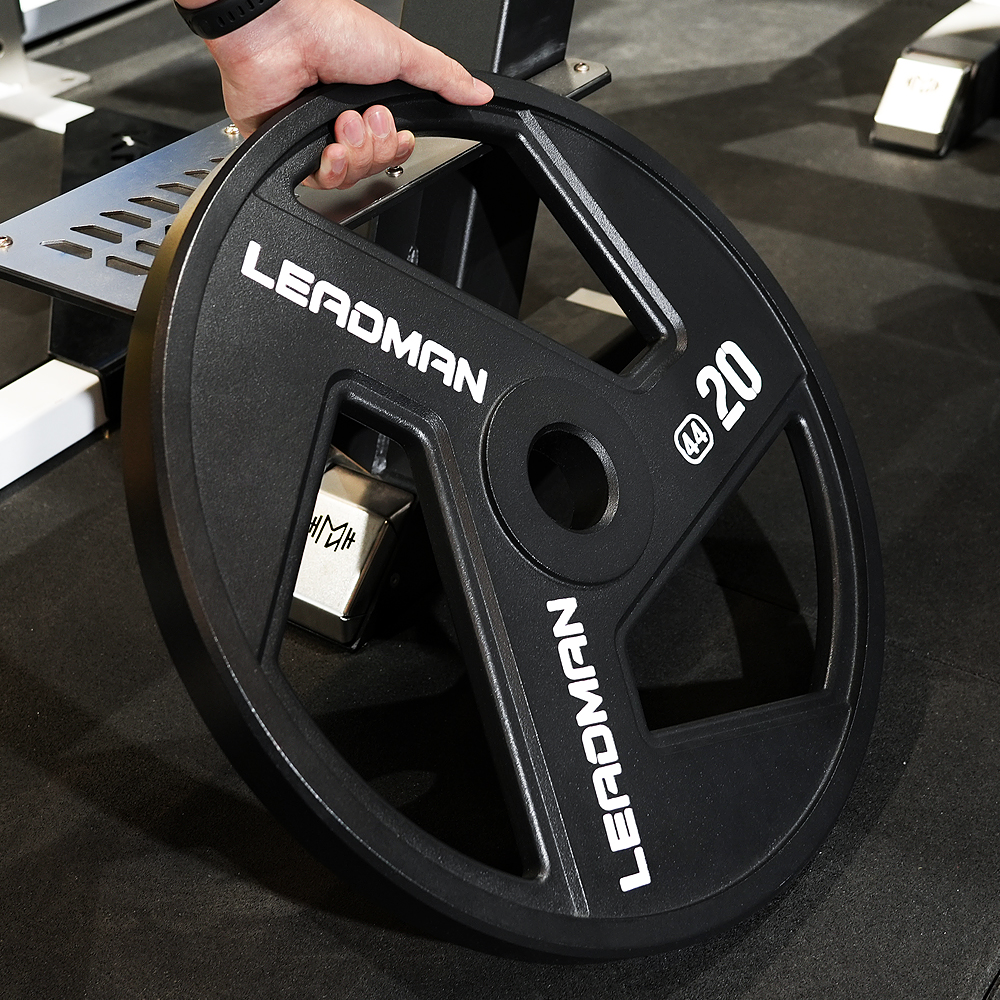
The three slotted grip design is the core innovation of the Tri-Grip Plate. Unlike standard plates that require the user to insert fingers into the center hole or pinch the outer edge, the Tri-Grip provides dedicated handholds. Each slot is sized to accommodate gloved or bare hands, with smooth internal edges that do not pinch or abrade. The slots are positioned at 120-degree intervals around the plate, creating balanced carry points regardless of which slot is used.
The one-hand grip allows a user to pick up a plate by inserting the hand into a single slot, with the plate resting against the palm and forearm. This is significantly more stable than pinching the edge of a standard plate, which relies on finger strength alone. For heavier plates (15kg and above), the one-hand grip transforms plate handling from a grip endurance challenge into a simple pick-and-carry motion. The two-hand carry uses two slots simultaneously, distributing the plate weight across both hands. This is ideal for moving multiple plates or carrying heavier plates over longer distances.
Multiple grip points also mean the user can load a barbell without repositioning the plate. A standard plate requires the user to find the center hole, align it with the bar end, and slide it on—often requiring a grip adjustment halfway through. With the Tri-Grip, the user grabs the plate by a slot that naturally aligns the center hole with the bar. The plate slides on in one continuous motion. For trainers loading multiple plates between client sets, this efficiency is immediately noticeable.
| Handling Task | Standard Plate Method | Tri-Grip Plate Method | Efficiency Difference |
|---|---|---|---|
| Pick up from floor | Pinch edge or hook center hole | One-hand slot grip | Reduced grip fatigue |
| Carry multiple plates | Stack on arm or use two hands per plate | Two-hand carry using two slots | 50% fewer trips |
| Load onto barbell | Align center hole, slide, adjust grip | Slot naturally aligns center hole | One-motion loading |
| Rerack onto storage pin | Lift with two hands or hook method | One-hand slot grip to peg | Faster reracking compliance |
The non-slip textured surface on the Tri-Grip Plate addresses a safety issue that standard smooth plates ignore: sweat. During high-intensity training, hands sweat. Sweat on a smooth plate surface reduces friction dramatically, increasing the risk of the plate slipping during handling. A dropped plate can damage flooring, injure feet, or worse—fall from height during overhead loading. The textured surface boosts friction between the hand and the plate, maintaining a secure grip even when both are wet.
The texture is applied to both sides of the plate, not just one. This matters because plates are often handled from either side—picked up from a stack, loaded onto a bar, or reracked onto a storage peg. Single-sided texture would require the user to always orient the plate correctly, which adds mental friction to a task that should be automatic. Double-sided texture eliminates orientation concerns.
The texture pattern is designed to be aggressive enough to grip but not so sharp that it damages gloves or abrades skin during repeated handling. Facilities that require members to rerack their own plates report that textured plates significantly reduce the number of plates left on the floor—members are more willing to handle plates that feel secure in their hands.
The Tri-Grip Plate is manufactured using a resin-coated sand integral casting process. This is a significant upgrade over traditional sand casting or iron casting methods. Resin-coated sand produces a finer grain structure in the finished metal, which translates to higher density and hardness. The fine-grained, dense structure resists impact deformation better than coarser castings. When a plate is dropped—and in commercial gyms, plates will be dropped—a coarser casting is more likely to crack or chip at the impact point. The resin-coated sand process minimizes this risk.
The dense structure also affects the plate's long-term dimensional stability. Weight plates can deform slightly over years of use, especially around the center hole where the barbell sleeve contacts the plate. A deformed center hole leads to a loose fit, which causes the plate to wobble during lifts. Wobbling plates shift the center of mass dynamically, making lifts less stable. The high-density casting of the Tri-Grip resists this deformation, maintaining the precise center hole diameter across years of heavy use.
The high hardness rating means the plate surface resists gouging and scratching. In commercial environments where plates are stacked, slid, and occasionally dragged, softer plates develop surface damage that accelerates corrosion. The harder surface of the Tri-Grip maintains its protective coating longer, extending the plate's service life. For facilities that amortize equipment costs over five to ten years, this durability difference directly impacts the bottom line.
The center hole of the Tri-Grip Plate is machined to a tolerance of 50.4 to 51.2 millimeters. This range is critical. Standard Olympic barbell sleeves measure 50 millimeters in diameter (with slight variations by manufacturer). A center hole that is too tight (under 50.2mm) will bind on the sleeve, making loading and unloading difficult. A center hole that is too loose (over 51.5mm) allows the plate to shift laterally during lifts, creating a wobble that changes the balance of the barbell.
The 50.4 to 51.2mm range provides a snug fit that slides smoothly onto the sleeve but does not rattle during dynamic movements. For Olympic lifts like the clean and jerk or snatch, where the barbell rotates in the hands, a loose plate fit is more than an annoyance—it changes the moment of inertia of the barbell system unpredictably. The high-precision fit eliminates this variable, allowing the lifter to focus on technique rather than compensating for equipment inconsistencies.
The wear-resistant design of the center hole is reinforced by thickened edge details. The edge around the center hole is the highest-stress area of any weight plate. Every time the plate is loaded, the edge contacts the barbell sleeve. Every time the plate is dropped, the edge absorbs impact force. The thickened edge distributes these forces over a larger cross-section, reducing the risk of the center hole enlarging over time. Facilities that have replaced plates due to "loose fit" issues will recognize the value of this design.
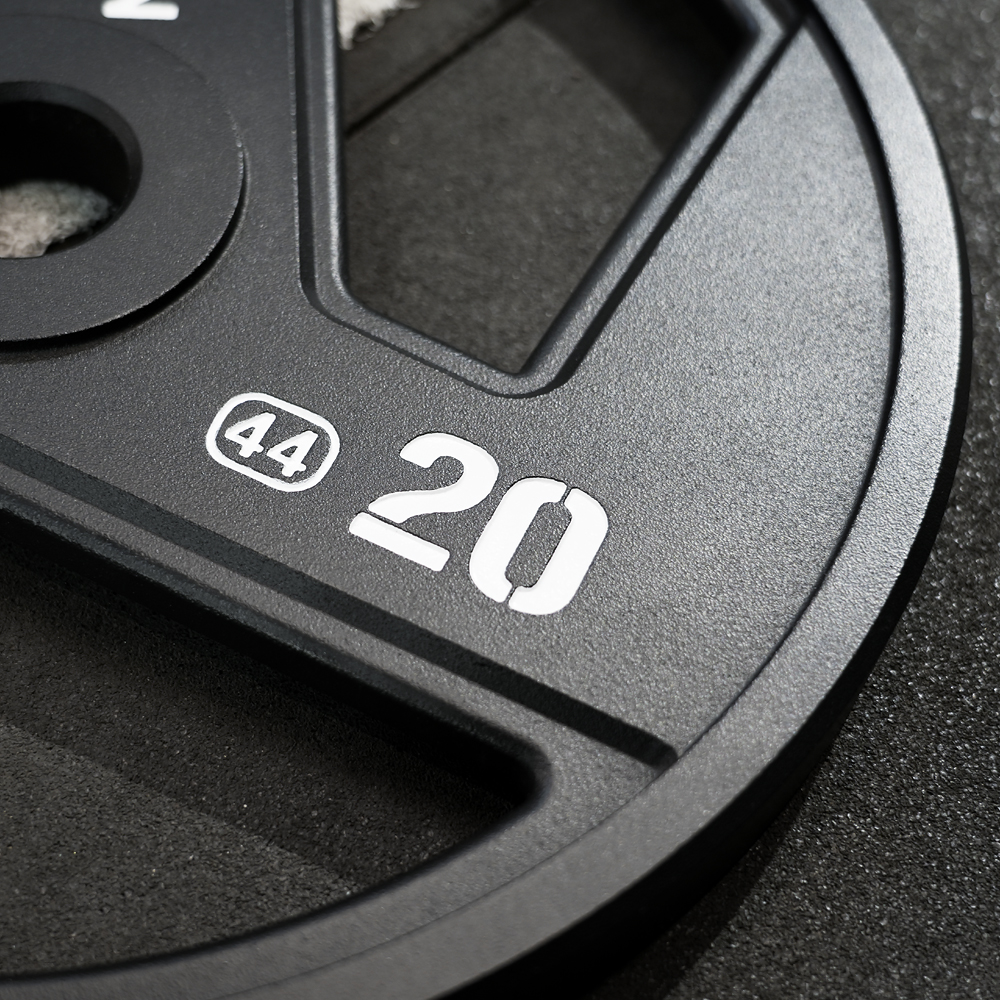
The weight markings on the Tri-Grip Plate are designed for legibility at a glance. Each plate features large, high-contrast numerals that are visible from standing height and from across the gym floor. The markings are debossed or raised (depending on the specific plate model) and often filled with contrasting paint to ensure they do not wear off over time. Printed markings on standard plates fade or scratch off; the Tri-Grip markings are engineered to persist through years of handling and cleaning.
Clear weight markings serve an operational function: they reduce the time members spend searching for the correct plate. In a busy commercial gym, a member sorting through a stack of plates to find two 20kg plates may take 10 to 15 seconds. Across 200 members per day, that adds up to nearly an hour of cumulative waiting time—time that could be spent training. The high-visibility markings reduce search time to 2 to 3 seconds per plate selection.
For group training environments where coaches need to verify loads quickly, clear markings are essential. A coach scanning a circuit of 10 athletes can instantly see if any athlete has loaded the wrong plate. This allows real-time correction without interrupting the flow of the session. For facilities that run back-to-back classes, this efficiency directly increases the number of classes that can be scheduled per day.
The Tri-Grip Plate uses coated sand casting, which integrates the coating into the casting process rather than applying it as a post-processing step. This creates a bond between the coating and the base metal that is significantly stronger than spray-applied paints or powders. The result is a corrosion-resistant surface that does not peel, flake, or bubble even when exposed to sweat, cleaning chemicals, and high humidity.
The matte black coating serves both functional and aesthetic purposes. Functionally, matte surfaces are less slippery than gloss surfaces when wet—the microscopic texture of a matte finish provides additional friction. Aesthetically, matte black communicates commercial-grade professionalism. It hides minor scratches and scuffs better than gloss finishes, maintaining a clean appearance longer. The coating also reduces glare under gym lighting, which is a small but meaningful consideration for facilities with overhead LED arrays.
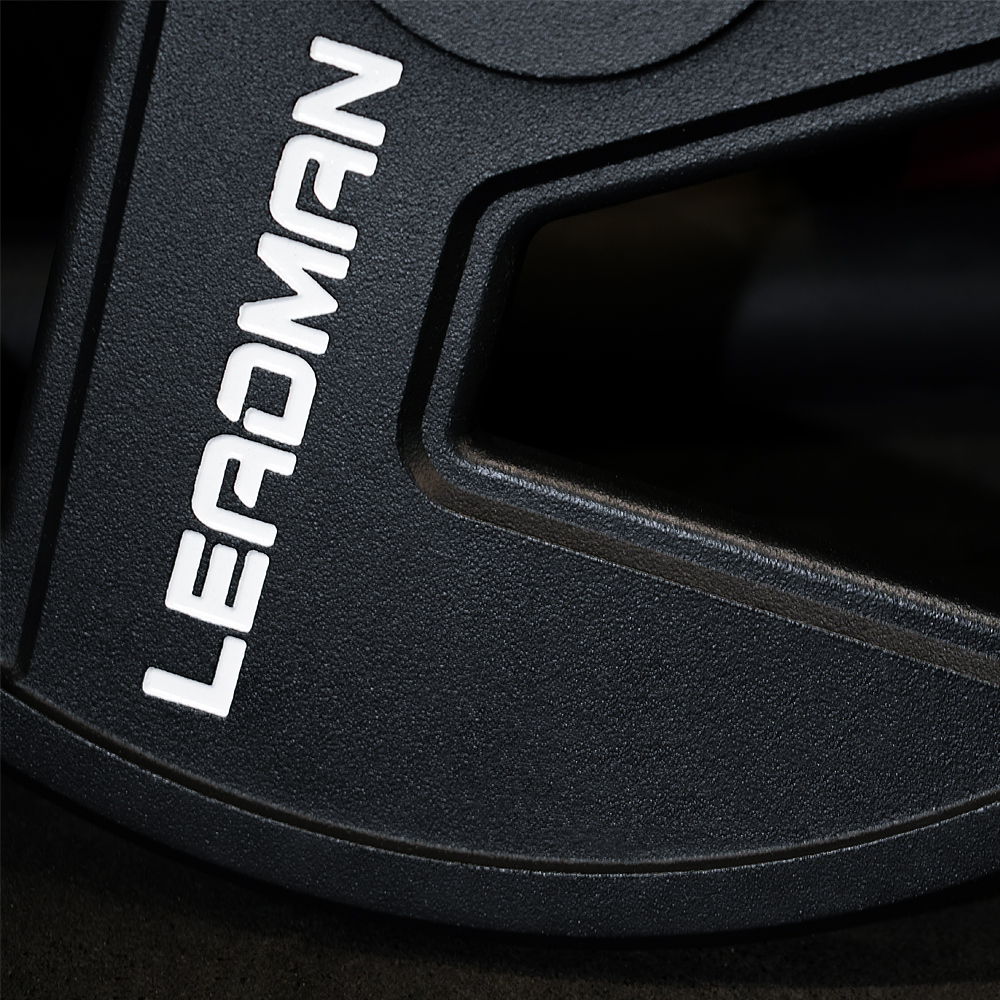
The prominent brand logo (LEADMAN) is integrated into the plate design, enhancing product recognition. For facilities that have invested in a cohesive equipment brand across their strength floor, this logo consistency matters. The logo is positioned to be visible when plates are stored on trees or loaded on barbells, acting as a passive branding element. The corrosion-resistant coating ensures the logo remains legible even after years of use.
The Tri-Grip Plate is rated for both home and commercial use, but the construction specifications lean heavily toward commercial demands. The combination of resin-coated sand casting, high-density structure, thickened edge details, and corrosion-resistant coating creates a plate that can withstand the daily abuse of a high-traffic commercial gym. For home gym users, this means the plates will outlast multiple ownership cycles.
The impact resistance of the Tri-Grip is particularly notable. In commercial settings, plates are frequently dropped from height—from the top of a deadlift jack, from shoulder height during reracking, or accidentally during plate changes. Standard plates often develop cracks at the center hole or chips on the outer edge after repeated drops. The dense, fine-grained structure of the Tri-Grip absorbs impact energy differently, distributing it across the plate mass rather than concentrating it at the impact point.
For facilities that track equipment replacement costs, the Tri-Grip represents a lower total cost of ownership. The initial purchase price may be comparable to standard plates, but the replacement interval is significantly longer. A facility that replaces standard plates every three to five years due to fit loosening or edge damage may get seven to ten years from the Tri-Grip. Over a decade, this replacement differential saves thousands of dollars.
| Property | Standard Sand-Cast Iron | Tri-Grip Resin-Coated Casting |
|---|---|---|
| Grain Structure | Coarse, variable density | Fine-grained, uniform density |
| Impact Resistance | Moderate—crack risk at center hole | High—distributes impact energy |
| Center Hole Wear | Enlarges over 3-5 years | Thickened edge resists deformation |
| Coating Adhesion | Spray-applied, can peel | Integral casting bond, no peeling |
| Expected Commercial Lifespan | 3-5 years before fit issues | 7-10 years with normal use |
The Tri-Grip Plate benefits every user who handles weight plates, but certain populations experience disproportionate advantages. Older adults or users with arthritis often struggle with the pinch grip required for standard plates. The slot grip allows them to carry plates using a palmar grip that does not stress the finger joints. Rehabilitation populations recovering from hand or wrist injuries can continue loading their own barbells using the slots rather than pinching the plate edge.
For high-volume commercial facilities, the Tri-Grip reduces plate-related injuries. The most common plate handling injuries are finger pinches (when two plates slide together) and dropped plates on feet. The slots reduce pinching risk by providing dedicated handholds. The non-slip texture reduces drop risk. For facilities concerned about liability, these are meaningful risk-reduction features.
For competitive strength athletes, the high-precision center hole ensures consistent barbell feel across training sessions. An athlete who competes with calibrated competition plates will appreciate that the Tri-Grip maintains the same tight fit throughout the training cycle. The clear weight markings also allow faster plate changes between heavy sets, keeping rest intervals consistent—a key variable in periodized programming.
| Specification Category | Technical Details |
|---|---|
| Product Name | Tri-Grip Plate / Three-Slot Grip Weight Plate |
| Grip Design | Three slotted grips at 120-degree intervals; one-hand grip and two-hand carry options |
| Surface Texture | Non-slip textured surface on both sides for secure grip |
| Manufacturing Process | Resin-coated sand integral casting; fine-grained, dense structure, high hardness |
| Center Hole Tolerance | 50.4mm to 51.2mm diameter for snug Olympic bar fit |
| Center Hole Design | High-precision fit, thickened edge details, wear-resistant |
| Weight Markings | Clear and legible markings for quick identification and easy selection |
| Coating | Matte black coating, corrosion-resistant, integral casting bond |
| Branding | Prominent brand logo for product recognition |
| Impact Resistance | Excellent impact and deformation resistance for long-term heavy-duty training |
| Compatibility | Fits standard Olympic barbells (50mm sleeves) |
| Application | Home gyms and commercial fitness facilities |
| Key Benefits | Effortless transport, safer workouts, no wobble, secure grip when sweaty |