
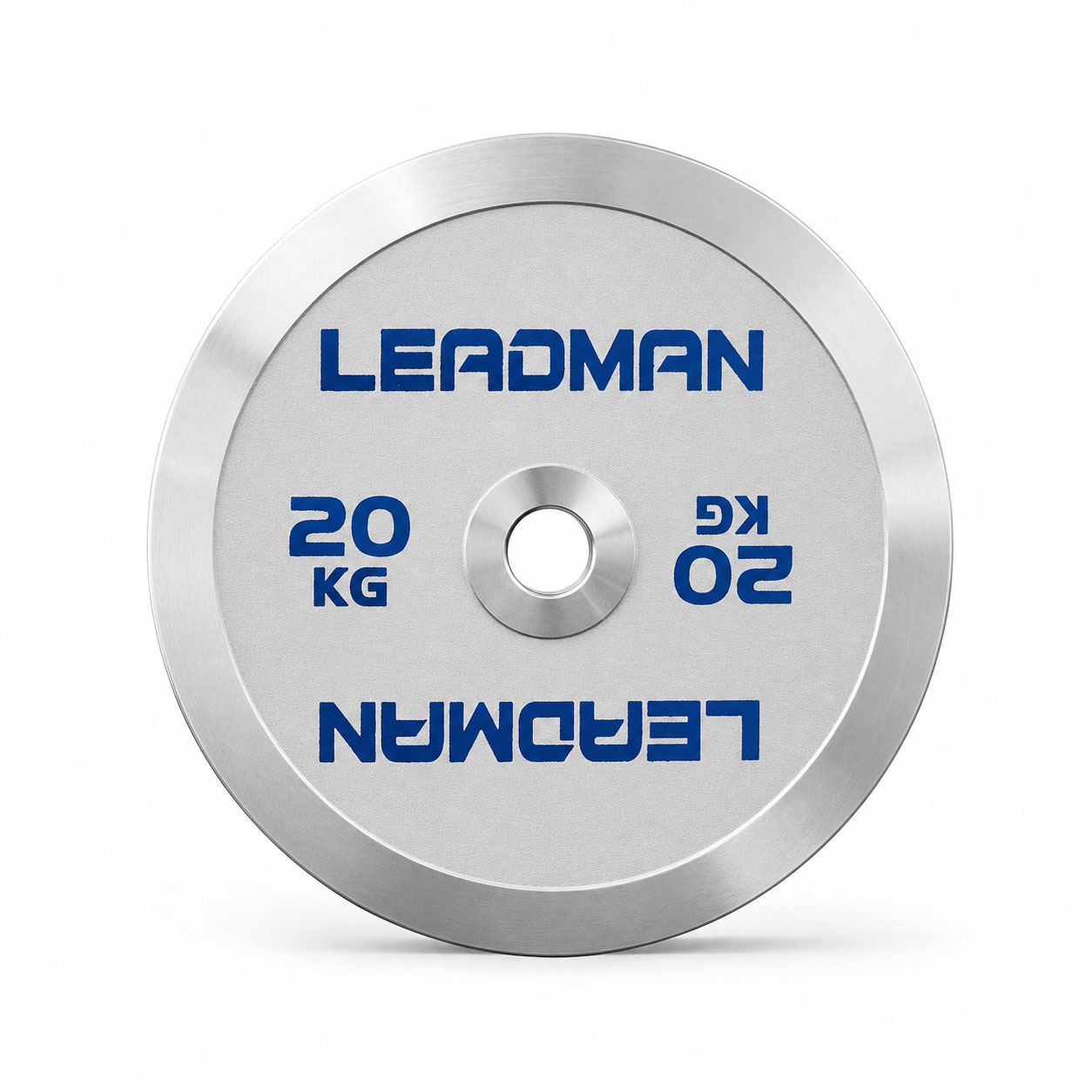
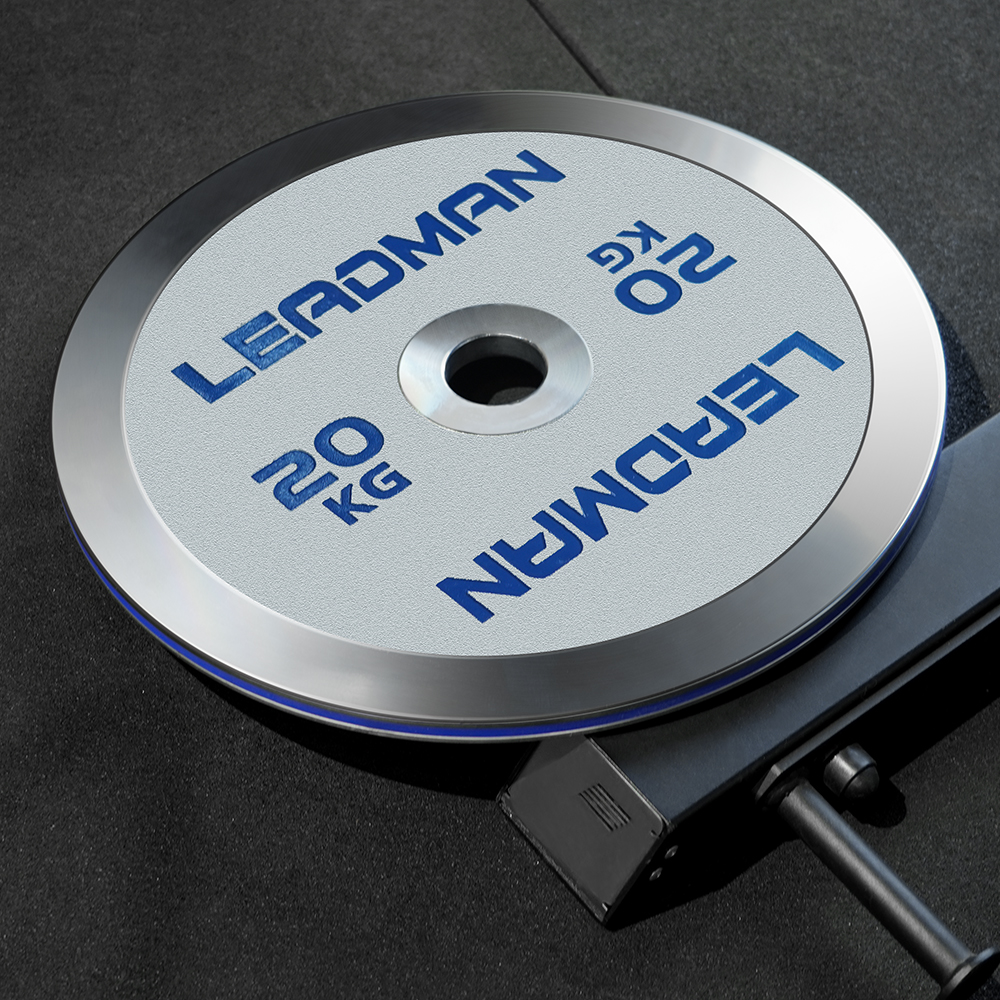
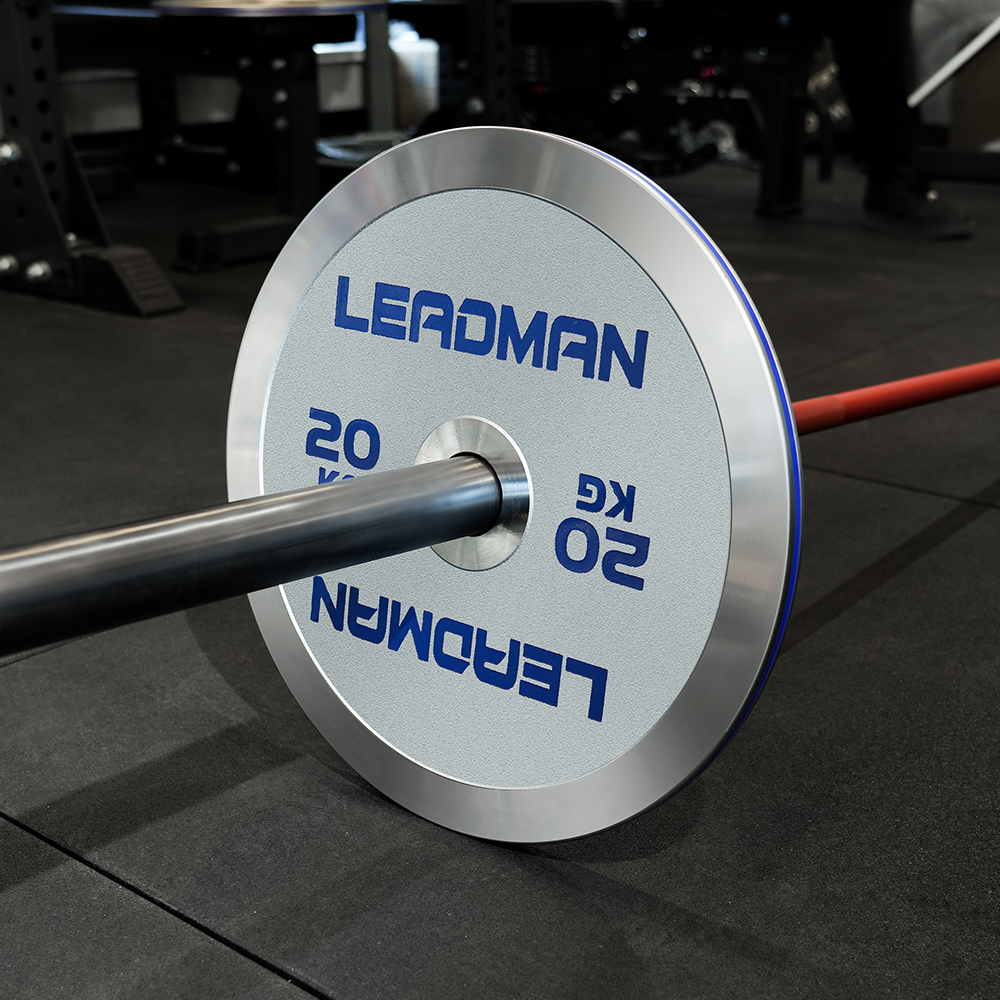
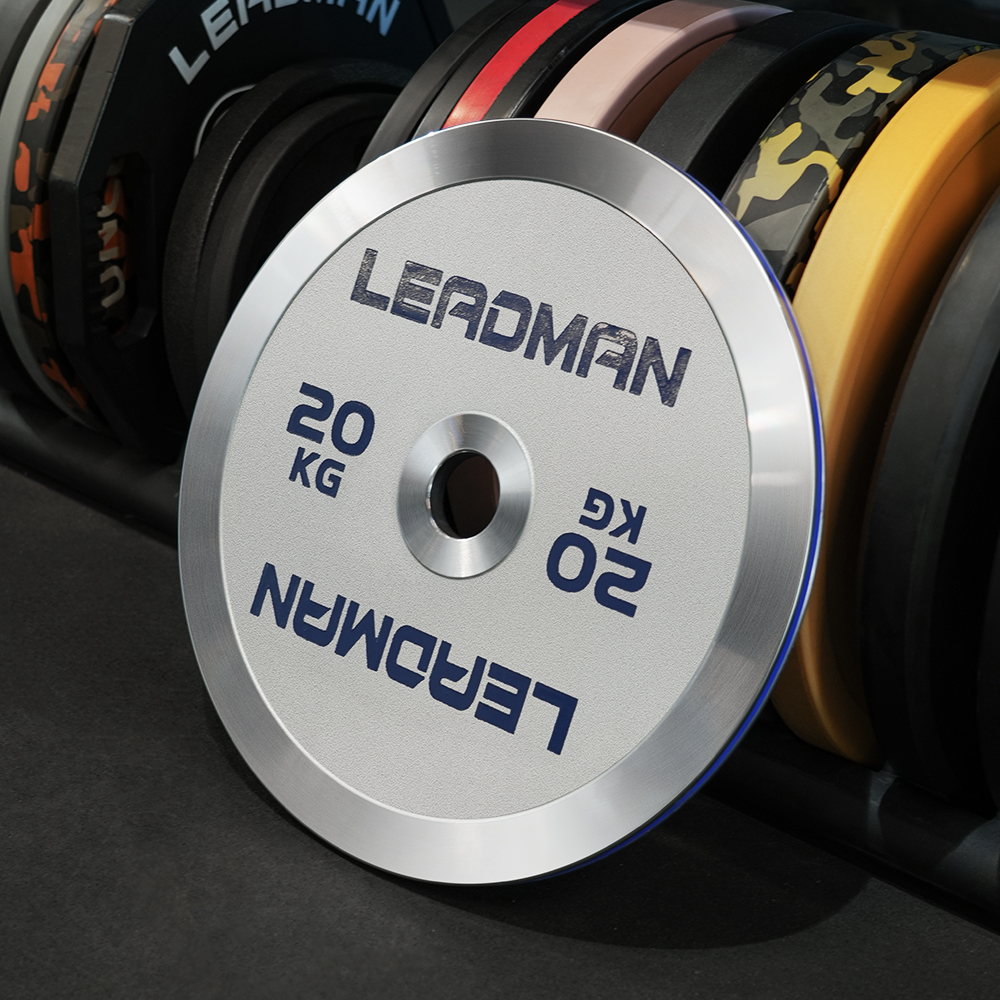
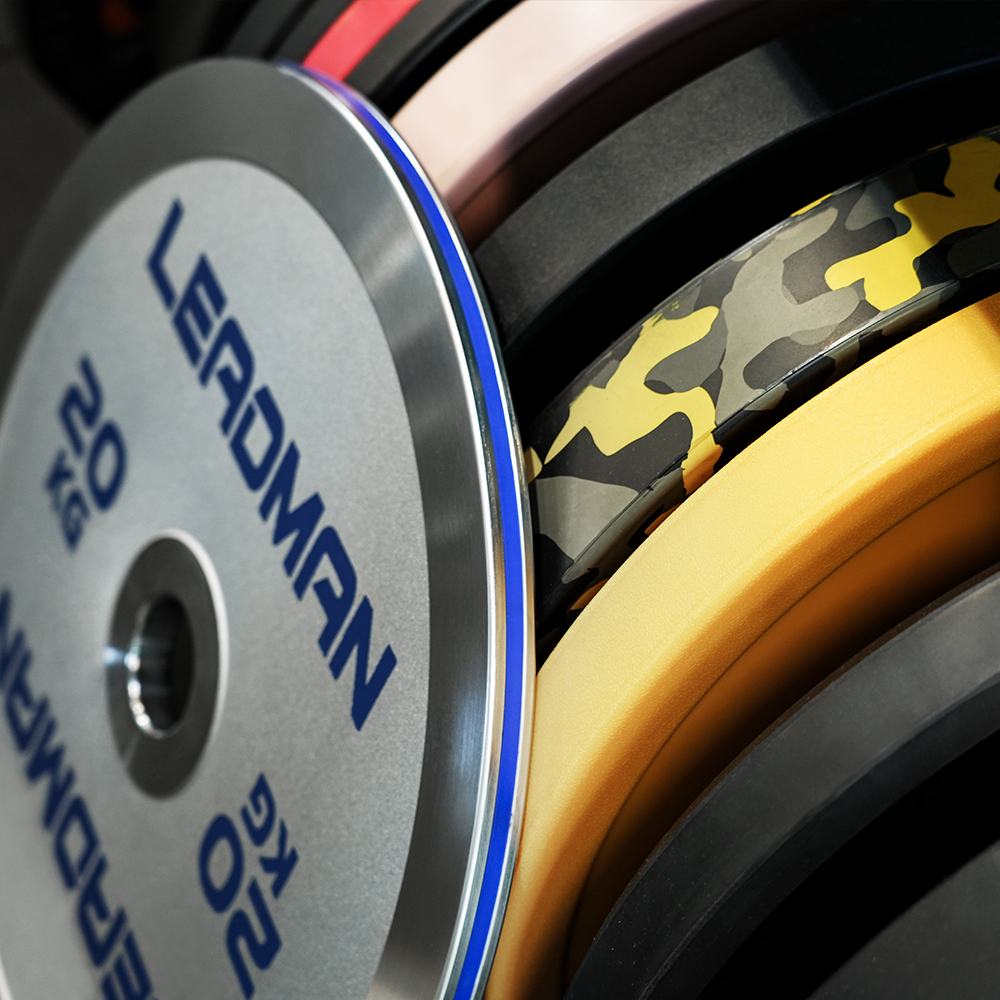
Standard rubber bumper plates solve one problem—floor protection—but create another: limited loading capacity. A typical rubber bumper plate measuring 450mm in diameter might be 60mm thick for a 20kg plate. Load five of those on each side of a barbell, and you have run out of sleeve space before reaching serious weight. The Steel Competition Weight Plate takes the opposite approach. Crafted from high-quality solid steel, these plates are significantly thinner than rubber bumpers, allowing over 700kg of total loading on a standard barbell. This is not a niche feature for powerlifting specialists. It is a practical requirement for any facility serving advanced strength athletes who regularly squat, deadlift, or bench press above 250kg.
From a commercial facility perspective, thin steel plates increase equipment utilization. A barbell that can only hold 300kg of rubber bumpers becomes a bottleneck when a 180kg lifter is warming up with 140kg and needs to add 60kg for their working set. With rubber, they may not have enough sleeve space. With steel competition plates, they load and lift without constraint. The facility serves both the novice using 60kg and the advanced lifter using 300kg on the same bar, with the same plates.
The plates meet IPF (International Powerlifting Federation) standards, which define not just weight accuracy but also diameter, center hole tolerance, and finish requirements. IPF standards are the most stringent in strength sports, governing equipment used in world championship competition. For a commercial gym, IPF compliance signals to serious lifters that the facility takes equipment quality seriously. For competitive athletes training for sanctioned meets, being able to train on IPF-spec plates removes a variable between the gym and the platform.
IPF standards specify a diameter of 450mm for plates 10kg and above, a center hole diameter of 50.4mm to 50.5mm, and weight tolerance of ±0.25% or 10 grams—whichever is stricter. The plates meet this specification precisely. For a 20kg plate, ±0.25% allows a range of 19.95kg to 20.05kg. The 10g limit is actually stricter for plates under 4kg; for a 20kg plate, the 10g limit would allow 19.99kg to 20.01kg, which exceeds the percentage requirement. The plates are calibrated to the tighter of the two limits.
Competition compliance extends beyond numbers to the plate's behavior under load. IPF-spec plates have a snug center hole fit that prevents the plate from shifting laterally on the sleeve. During a heavy squat, a loose plate will oscillate, changing the barbell's balance point mid-rep. This is dangerous and inconsistent. The IPF-spec fit eliminates this variable, allowing the lifter to focus on technique rather than equipment compensation.
| Specification | Standard Rubber Bumper | Steel Competition Plate |
|---|---|---|
| Diameter (10kg+) | Typically 450mm, but varies by brand | 450mm fixed (IPF standard) |
| Center Hole Tolerance | Often 50.5mm-51.5mm (looser fit) | 50.4mm-50.5mm (snug fit) |
| Weight Accuracy | ±3% to ±5% typical | ±0.25% or 10g |
| Thickness (20kg plate) | 55mm-70mm depending on rubber density | Approximately 25mm-30mm |
| Maximum Bar Load (standard barbell) | ~300kg-400kg (sleeve space limited) | 700kg+ |
| Floor Protection | Excellent (rubber absorbs impact) | Minimal (requires platform or crash pads) |
The ultra-thin profile is the defining engineering achievement of these plates. Standard rubber bumper plates achieve their thickness because rubber is a compliant material—it needs sufficient volume to absorb impact without permanently deforming. Steel, being incompressible, does not need this volume. A 20kg steel competition plate can be as thin as 25mm, compared to 60mm or more for a rubber bumper of the same weight.
The practical implication is loading capacity. A standard Olympic barbell has approximately 400mm of usable sleeve length on each side (16 inches). With rubber bumpers, each side might hold four 20kg plates (4 × 60mm = 240mm) plus collars, leaving room for two more plates. Total bar load: approximately 180kg of plates plus the bar. With steel competition plates, each side can hold twelve 20kg plates (12 × 25mm = 300mm) plus collars. Total bar load: over 500kg of plates plus the bar. The manufacturer's claim of 700kg+ total loading is achievable with heavier plates (25kg and above) or specialized barbells with longer sleeves.
For facilities serving strength athletes, this capacity matters. A 140kg lifter deadlifting 300kg needs 160kg of plates—eight 20kg plates. On rubber bumpers, that fills most of the sleeve. Adding 20kg for the next increment may require changing plate combinations or using smaller-diameter plates that change the bar's pull height. On steel competition plates, 160kg occupies half the sleeve, leaving room for continued progression to 400kg and beyond without equipment changes.
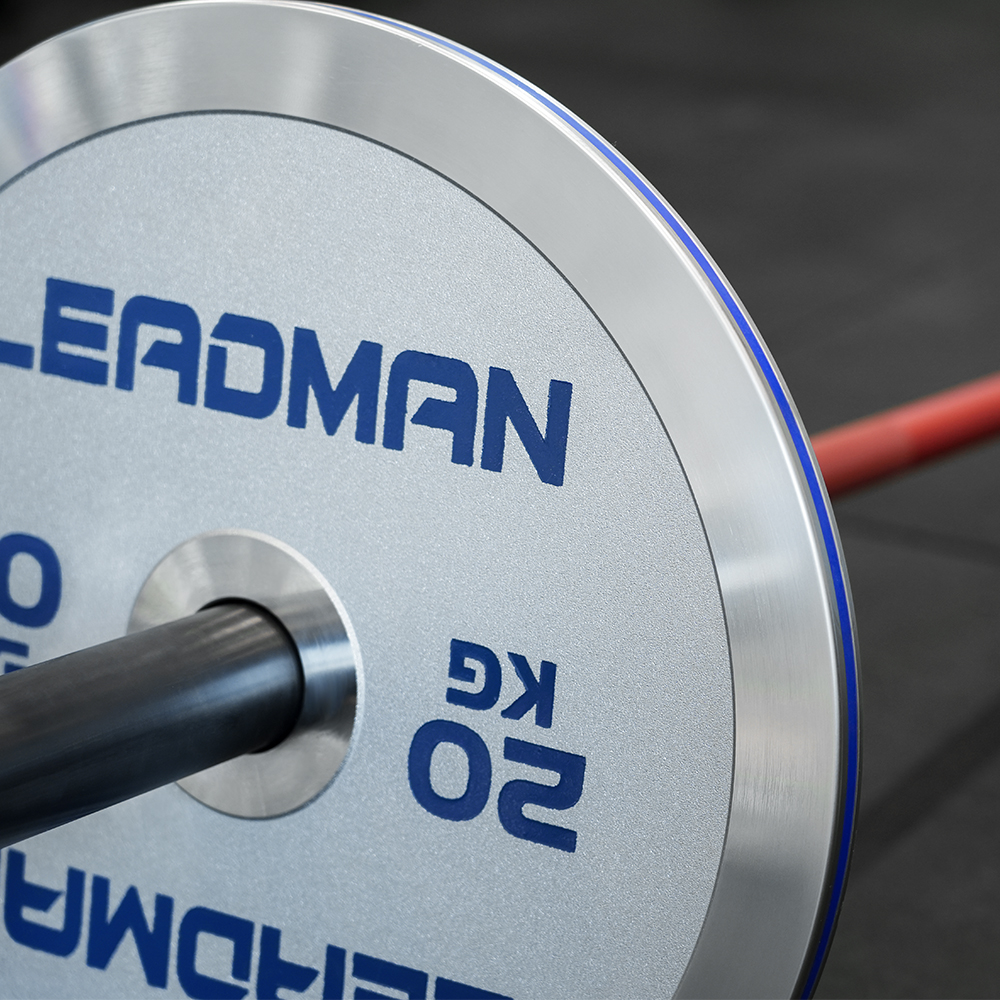
The center hole is precision-machined to 50.4mm. This is not a drilled hole; it is machined to exact tolerance after the casting or forging process. The 50.4mm diameter is 0.4mm larger than the standard 50mm barbell sleeve. This 0.2mm clearance on each side allows the plate to slide onto the sleeve smoothly but eliminates lateral play. On a standard plate with a 51mm or larger center hole, the plate can shift side to side by 0.5mm or more. Under a 200kg squat, that small shift translates to a perceptible wobble.
The snug fit provides two benefits: mechanical stability and noise reduction. Mechanically, a barbell loaded with snug-fitting plates behaves as a single rigid system. The moment of inertia is predictable, and there is no dynamic shifting of mass during the lift. For competition lifts where every fraction of a second matters, this predictability is essential. For noise reduction, a loose plate rattles against the sleeve during the walkout and during the descent. In a quiet commercial gym or during filmed competition, this rattling is both distracting and unprofessional.
The precision machining also means the plates do not bind on the sleeve. Plates with undersized center holes (under 50.2mm) can seize on the sleeve, especially if the barbell is slightly out of spec or if corrosion has roughened the sleeve surface. The 50.4mm diameter provides a 0.2mm radial clearance that accommodates minor surface variations while still feeling tight. This is the same specification used by IPF competition plates and by premium plate manufacturers worldwide.
Each plate is individually calibrated on precision scales, not batch-sampled. This means every plate leaving the factory has been weighed and verified to fall within the ±0.25% or 10g tolerance. For a 20kg plate, the maximum allowable deviation is 50 grams (0.25% of 20,000g). The 10g limit for smaller plates is stricter: a 2.5kg plate would be allowed 6.25g under the percentage rule, but the 10g cap applies, so the actual tolerance is ±6.25g. This level of precision is unnecessary for general fitness training but essential for competitive strength athletes who track progress in 0.5kg to 2.5kg increments.
The calibration process involves weighing each plate and, if necessary, machining material from the back of the plate to reduce weight to the target. Plates that fall below the target are not sold; they are recycled. This is why calibrated plates cost more than standard plates—the rejection rate is higher, and the machining step adds labor. For facilities that do not need this precision, standard plates are sufficient. For facilities that serve powerlifters, weightlifters, or strongman athletes, calibrated plates are expected.
The calibration also applies across weight increments. A set of plates with mismatched actual weights creates a barbell that is unbalanced. If the left side has a 20kg plate that actually weighs 20.04kg and the right side has a 20kg plate that weighs 19.96kg, the barbell has a 0.08kg side-to-side imbalance. Over a 200kg squat, the lifter's body must compensate for this imbalance asymmetrically, which can lead to technique drift or, in extreme cases, injury. The ±0.25% tolerance ensures that even the worst-case imbalance is small enough to be imperceptible.
The finish on these plates is not paint; it is electrostatic powder coating. In this process, dry powder is electrostatically charged and sprayed onto the plate, then cured under heat to form a hard, continuous film. The result is significantly more durable than wet paint. Powder coating resists chipping, scratching, and chemical degradation from cleaning products. For commercial facilities that wipe down equipment multiple times daily, this durability matters.
The powder coating also provides a non-slip surface. The texture is fine—not aggressive enough to damage gloves or tear skin, but sufficient to provide friction between plates when stacked. Plates stored on vertical pegs will not slide against each other. Plates carried in a stack will not shift. This non-slip property also helps when plates are leaned against walls or stored in horizontal racks, reducing the risk of stacks toppling.
Corrosion resistance is critical for plates used in humid environments. Coastal facilities, gyms with poor ventilation, or any space where sweat accumulates on equipment will eventually cause uncoated steel to rust. The powder coating seals the steel completely, preventing moisture from reaching the base metal. Even if the coating is scratched, the electrostatic bonding process minimizes under-rusting—the corrosion does not spread beyond the scratch. For facilities expecting a 10-year equipment life, this corrosion resistance is a significant factor in total cost of ownership.
The plates feature large, high-contrast weight markings on both sides. The numerals are typically recessed or raised and filled with contrasting color (often white or yellow against the dark powder coat). This design ensures the weight is legible from several meters away, even under varied lighting conditions. For coaches supervising multiple athletes or members working in busy facilities, this quick identification reduces confusion and speeds up workouts.
The marking system follows competition conventions. Plates of different weights are often distinguished by color bands or colored lettering, though the exact color scheme may vary by manufacturer. The key design principle is legibility at a glance. A lifter setting up for a deadlift should not have to pick up a plate to read its weight. The clear markings eliminate this step, allowing the lifter to scan the storage tree, select the needed plates, and load the bar without delay.
For facilities that use color-coded plates (red for 25kg, blue for 20kg, yellow for 15kg, green for 10kg, white for 5kg), the markings include both the numeral and the color indicator. This dual-coding system accommodates different user preferences—some members read numbers, others recognize colors. The combination speeds up identification for all users.
| Weight | IPF Color Code | Typical Diameter | Thickness (Approx.) |
|---|---|---|---|
| 25kg | Red | 450mm | 30-35mm |
| 20kg | Blue | 450mm | 25-30mm |
| 15kg | Yellow | 450mm | 20-25mm |
| 10kg | Green | 450mm | 15-20mm |
| 5kg | White | 450mm or smaller | 10-15mm |
| 2.5kg | Black or gray | Varies (smaller diameter) | 8-12mm |
Steel competition plates do not absorb impact like rubber bumpers. A 20kg steel plate dropped from deadlift lockout height (approximately 750mm) will transfer nearly all impact energy to the floor. This means steel plates are not suitable for use on hard surfaces like concrete, tile, or standard gym flooring without protection. Facilities using steel plates must have either a dedicated lifting platform (with rubber or plywood striking surfaces) or crash pads designed to absorb the impact.
The trade-off for impact sensitivity is loading capacity. Facilities that serve advanced strength athletes often use steel plates for squat, bench press, and deadlift—all movements where the bar is not dropped from height. For Olympic lifting (snatch, clean and jerk), where the bar is dropped from overhead, rubber bumper plates remain the correct choice. Many facilities maintain both types: steel plates for powerlifting movements, rubber bumpers for Olympic lifting.
For facilities that primarily serve general fitness populations, steel competition plates may be over-specified. The precision calibration, ultra-thin profile, and IPF compliance add cost that most casual lifters will not utilize. However, for facilities positioning themselves as serious strength destinations, steel competition plates are a signal of quality that attracts and retains advanced lifters. The decision depends on the facility's target market and programming focus.
| Specification Category | Technical Details |
|---|---|
| Product Name | Steel Competition Weight Plates / IPF Standard Calibrated Plates |
| Standard Compliance | Meets IPF (International Powerlifting Federation) competition standards |
| Weight Accuracy | ±0.25% or 10 grams per plate, machine-calibrated individually |
| Construction Material | High-quality solid steel, ultra-thin profile |
| Maximum Bar Load | 700kg+ total loading capacity on standard Olympic barbell |
| Center Hole Diameter | Precision-machined 50.4mm snug fit for standard 50mm barbell sleeves |
| Diameter (10kg and above) | 450mm (IPF standard) |
| Finish | High-grade electrostatic powder coating, non-slip, corrosion-resistant |
| Markings | Clear, high-contrast weight markings on both sides |
| Thickness (20kg plate) | Approximately 25-30mm (significantly thinner than rubber bumpers) |
| Recommended Use | Powerlifting (squat, bench press, deadlift); requires platform or crash pads |
| Not Recommended For | Olympic weightlifting (snatch, clean and jerk) without crash pads |
| Application | Commercial strength facilities, competitive powerlifting gyms, serious home gyms |