

Strategic Selection: What Weight Room Equipment Every Gym Needs to Succeed
The Economic Reality of Equipment Selection
Facility operators often face a critical dilemma: investing in a broad range of specialized machines versus a concentrated set of versatile, high-durability staples. The problem arises when a gym over-invests in niche equipment that sits idle, or conversely, lacks the foundational tools that drive daily member engagement. This imbalance leads to poor Return on Investment (ROI) and high maintenance costs due to underutilization or improper usage of non-standard gear.
To avoid these pitfalls, a professional procurement strategy must focus on the high-utility core. A successful weight room is built on a hierarchy of utility, where free weights and fundamental racks form the base of the revenue-generating ecosystem. When these foundational pieces are selected based on structural integrity rather than aesthetic trend, the long-term operational stability of the facility increases significantly. Once the foundational hierarchy is understood, the specific categories of essential equipment become clearer.
Core Free Weight Essentials for High-Traffic Facilities
Transitioning from general theory to specific procurement, the first tier of essential equipment involves free weights. The primary pain point for operators is the rapid degradation of cheap, non-commercial grade weights, which results in aesthetic wear and safety risks. High-density rubber coating or high-grade steel construction is a non-negotiable requirement for durability.
Dumbbell and Barbell Selection Criteria
When determining what weight room equipment every gym needs, the standard of the barbell and dumbbell set is the ultimate metric of quality. A common mistake is purchasing consumer-grade bars that lack the knurling precision and shaft rigidity required for heavy lifting. This leads to uneven weight distribution and user dissatisfaction.
| Equipment Type | Required Specification | Failure Mode to Avoid | Verification Method |
|---|---|---|---|
| Olympic Barbell | Precision Knurling & High Tensile Strength | Permanent Bar Bends | Check straightness against a flat surface |
| Dumbbell Set | Consistent Diameter & High-Density Rubber | Cracked Rubber/Leaking Fillings | Visual inspection for surface fissures |
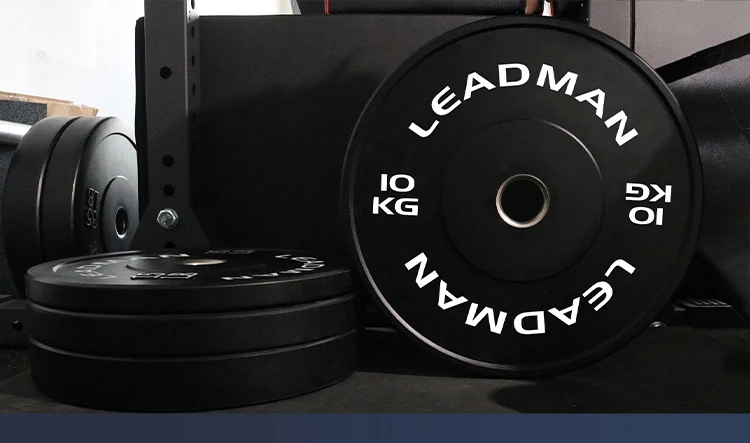
| Weight Plates | Calibrated Precision & Impact Resistance | Uneven Weight Distribution | Compare weights against a calibrated scale |
By ensuring that the weight sets meet these rigorous structural standards, operators mitigate the risk of premature replacement cycles. These foundational pieces set the stage for more complex, movement-based resistance training.
Functional Strength: The Role of Power Racks and Benches
Building upon the free weight core, the next critical layer involves the structural frames that support heavy loading. A lack of robust power racks or versatile benches often results in user bottlenecks, where members wait for available space to perform basic movements. This inefficiency can drive churn in high-demand gym environments.
Structural Integrity and Footprint Optimization
The selection of racks must balance heavy-duty load capacity with the available square footage. A common error is failing to account for the 'shadow area'—the space required for a user to move safely around the rack. A rack that is too large for its footprint limits facility throughput, while one that is too light risks structural failure under maximal loads.
- Power Rack Requirements: Must feature high-tensile steel uprights and adjustable J-cups with locking mechanisms.
- Adjustable Benches: Should offer a multi-angle range (0° to 85°+) and a high-density foam core that resists compression.
- Verification: Regularly test the locking pins on adjustable components to ensure they seat fully without excessive play.
Effective rack management ensures that the most intense training can occur safely, providing the necessary support for the free weights previously discussed. This structural support leads naturally into the more specialized resistance machines.
Explore the complete technical specifications:
Resistance Machines and Variable Load Systems
While free weights offer maximum versatility, resistance machines provide the controlled environments that many users—particularly beginners and those in rehabilitation—require. The strategic challenge here is selecting machines that offer a high degree of biomechanical versatility without occupying excessive floor space.
Analyzing Machine Versatility vs. Space Constraints
The primary failure mode in machine procurement is the 'single-function trap,' where a machine only serves one specific exercise. Operators should look for dual-function or multi-joint machines that provide greater utility per square foot. This increases the machine's 'utilization-to-space' ratio, a key metric for profitability.
| Machine Category | Primary Benefit | Common Maintenance Issue | Operational Fix |
|---|---|---|---|
| Cable Columns | High Versatility (Push/Pull/Rotate) | Cable Fraying/Pulley Friction | Monthly tension and lubrication check |
| Leg Press | Isolated Lower Body Strength | Seat Rail Friction/Binding | Clean rails and check pivot points |
| Functional Trainer | Multi-angle Cable Versatility | Weight Stack Stability | Verify stack alignment and guide rod smoothness |
When machines are properly maintained and strategically placed, they complement the free weight area rather than competing for space. This balance of strength and control is essential for a comprehensive training environment.
Explore the complete technical specifications:
Optimizing Floor Layout and Load Distribution
Having selected the necessary equipment, the focus must shift to how these pieces interact within the physical environment. A poorly planned layout creates safety hazards and operational friction. For example, placing heavy dumbbells too close to a high-traffic cable machine can lead to accidental collisions or interference with user movement.
Managing Spatial Flow and Safety Zones
A professional layout uses 'zones' to separate different intensities of training. The high-impact zone (free weights/platforms) should be distinct from the low-impact zone (machines/stretching). A common mistake is failing to provide sufficient 'buffer zones' around heavy equipment, which increases the risk of injury during accidental weight drops.
Layout Implementation Checklist:
- Identify high-impact zones and install high-density flooring (minimum 15mm-20mm).
- Create clear walkways of at least 3 feet between equipment rows.
- Ensure electrical outlets for cardio or digital equipment are safely recessed or shielded.
- Place mirrors to assist with form but ensure they are mounted to structural supports, not just drywall.
Once the layout is optimized, the attention must turn to the long-term viability of the investment through a rigorous maintenance protocol.
Preventative Maintenance: Protecting the Capital Investment
The most significant hidden cost in gym management is not the initial purchase, but the lack of a preventative maintenance schedule. Equipment failure is often a symptom of neglected small-scale maintenance, such as unlubricated cables or loose bolts. Ignoring these minor issues leads to catastrophic failures and expensive replacement costs.
Standard Maintenance Protocols for Operators
To maintain a professional standard and ensure user safety, operators must implement a tiered inspection system. This prevents the 'cascade effect,' where a small part failure leads to a total machine breakdown. Maintenance should be treated as a scheduled operational expense rather than an emergency repair cost.
- Daily: Visual inspection of cables, pins, and upholstery; wipe down surfaces for hygiene.
- Weekly: Check bolt torque on racks and benches; inspect weight plates for cracks.
- Monthly: Lubricate guide rods and pulleys; test the tension of cables and resistance systems.
- Quarterly: Full structural audit of all load-bearing frames and welding points.
By treating maintenance as a proactive discipline, facility owners can extend the lifecycle of their equipment and maximize their long-term ROI.
Safety Compliance and Risk Mitigation Strategies
Effective equipment management is ultimately about risk mitigation. Beyond the physical upkeep of the gear, the operator must also manage the human element of safety. A lack of clear usage guidelines or poorly maintained safety features is a primary driver of liability in the fitness industry.
Verifying Safety Standards and User Compliance
A common failure mode is assuming that the presence of safety equipment (like spotter arms) is enough to mitigate risk. In reality, safety is a dual-responsibility system involving both the equipment and the user'off. Operators must provide clear, visible instructions and ensure that safety features are actually functional.
Verification Checklist for Safety Compliance:
- Spotter Arms: Verify they are seated firmly and can hold the maximum weight used in the facility.
- Upholstery: Inspect for tears or exposed foam that can cause skin abrasions or trap bacteria.
- Floor Surface: Ensure flooring is slip-resistant and free of any 'bubbling' or lifting edges.
- Weight Collars: Ensure a sufficient supply of collars/clips are available to prevent barbell slippage.
A culture of safety, supported by reliable equipment, builds trust with members and protects the business from litigation and reputational damage.
Future-Proofing: Adapacing to Emerging Fitness Trends
While the core essentials remain stable, the fitness industry evolves. A forward-thinking operator must decide how much to invest in 'trend' equipment versus 'foundational' equipment. The goal is to create a space that feels modern without being reliant on ephemeral fads that may disappear in two years.
Balancing Stability with Innovation
When evaluating new equipment categories, the decision should be based on the 'utility lifespan.' For example, functional training tools (kettlebells, sandbags) have a long lifespan because they are fundamental to human movement, whereas certain high-tech digital machines may become obsolete as software evolves. A healthy gym mix includes 80% proven staples and 20% innovative or trending pieces to keep the facility feeling current.
As the fitness landscape changes, the fundamental principles of equipment selection—durability, versatility, and safety—will remain the true drivers of long-term success and operational excellence.