
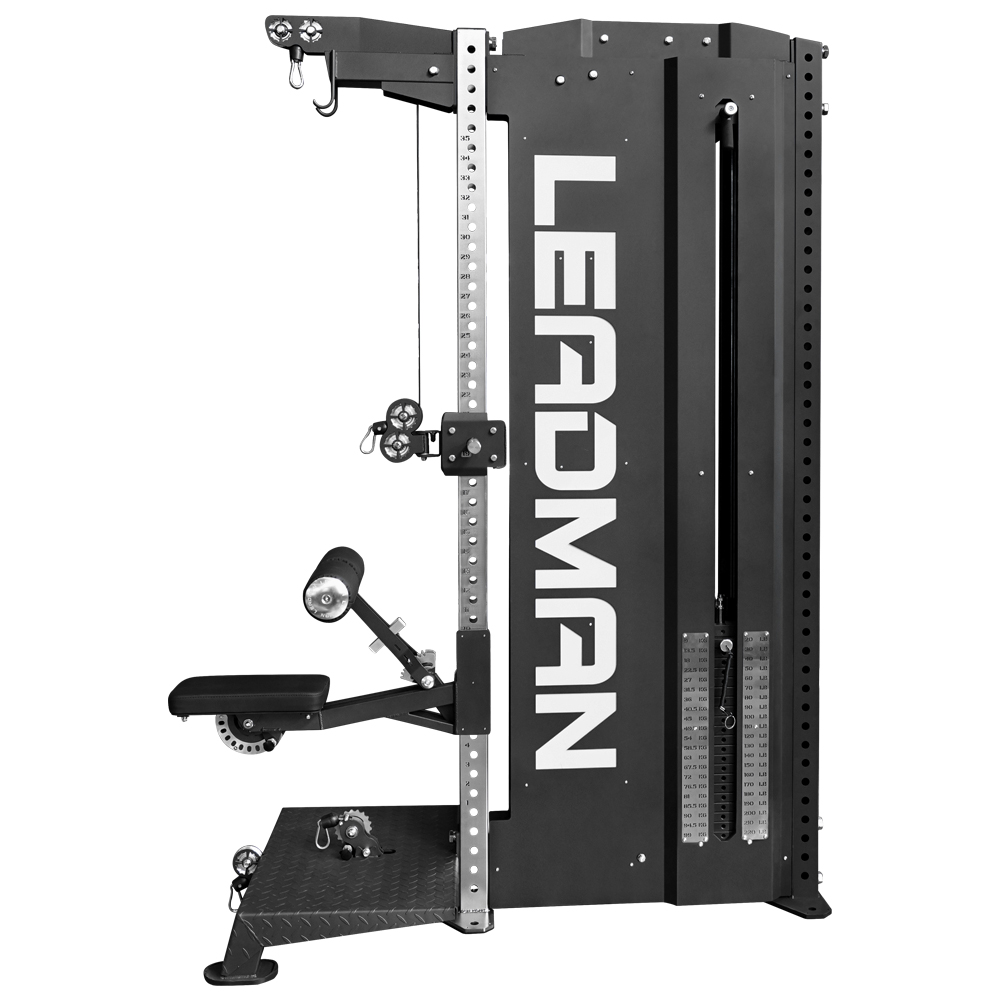
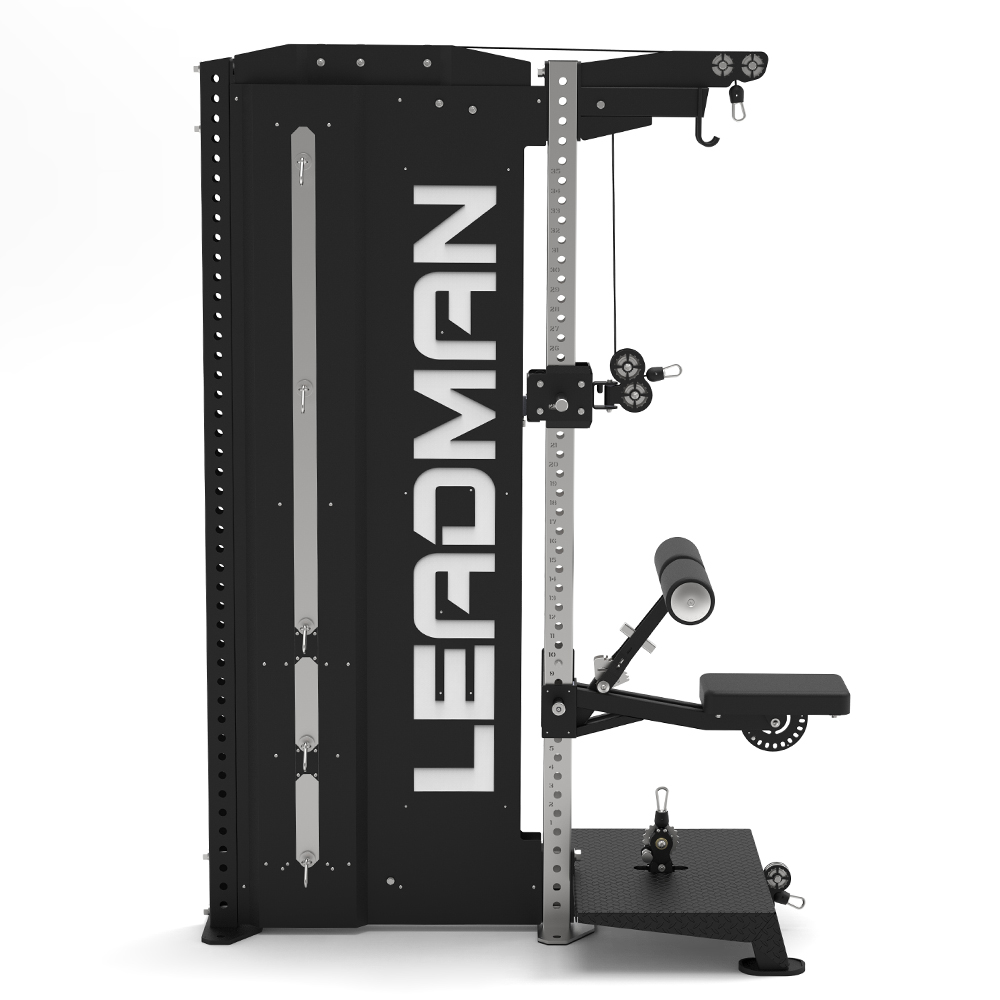
The traditional approach to gym equipment forces a trade-off: you can have variety, or you can have a small footprint, but rarely both. The 9002 Multi-Functional Trainer eliminates this compromise. Built around a compact modular frame, this system integrates a lat pulldown, low row, belt squat attachment, and multiple cable crossover points into a footprint that competes with a small power rack. The innovation is not just in what functions are included—it is in how they are arranged. Rather than stacking attachments outward, the 9002 uses vertical integration and smart storage to pack maximum utility into minimum floor space.
From a commercial operator's perspective, the 9002 solves a specific problem: how to offer complete training variety in facilities where every square foot is contested. Boutique studios, hotel fitness centers, corporate gyms, and multi-family residential buildings all face the same constraint. Members expect Smith machines, cable columns, leg stations, and pull-up options. The 9002 delivers all of these through a single, cohesive system. The modular assembly means facilities can start with core functions and add components as budgets allow, without replacing the entire unit.
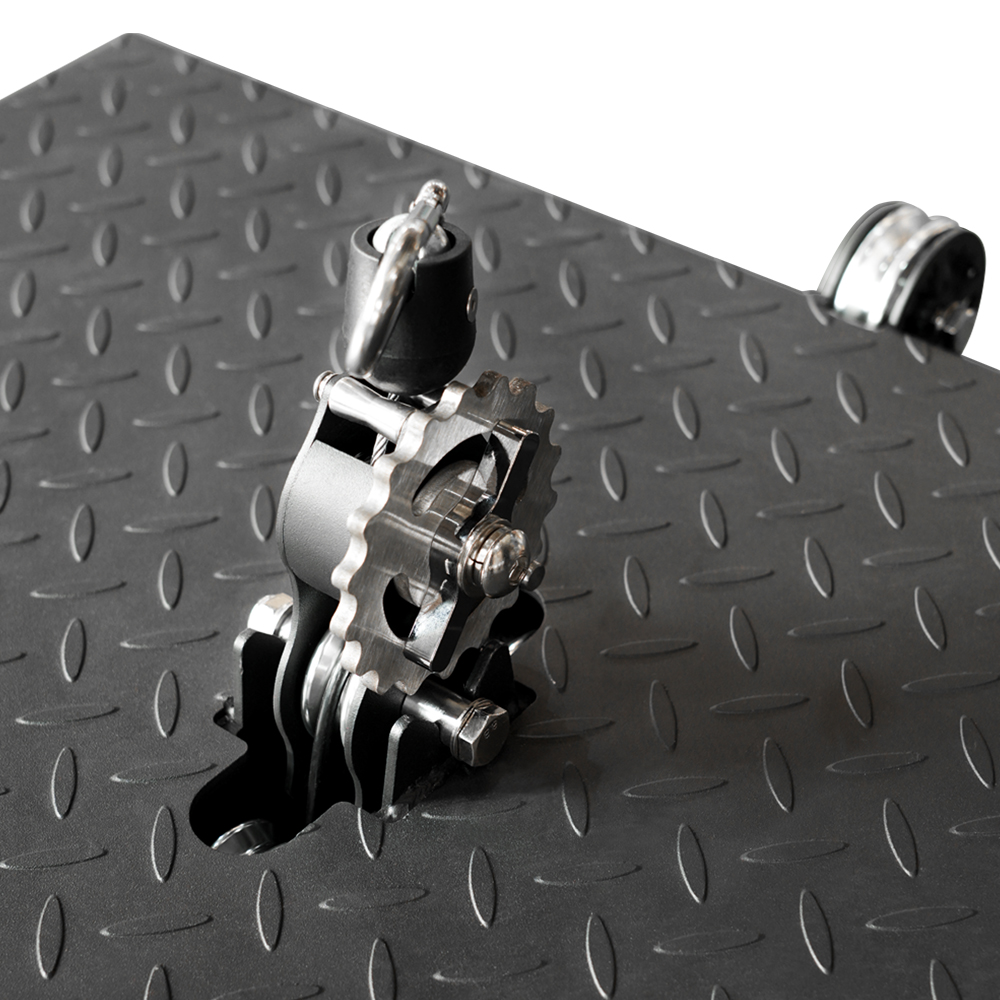
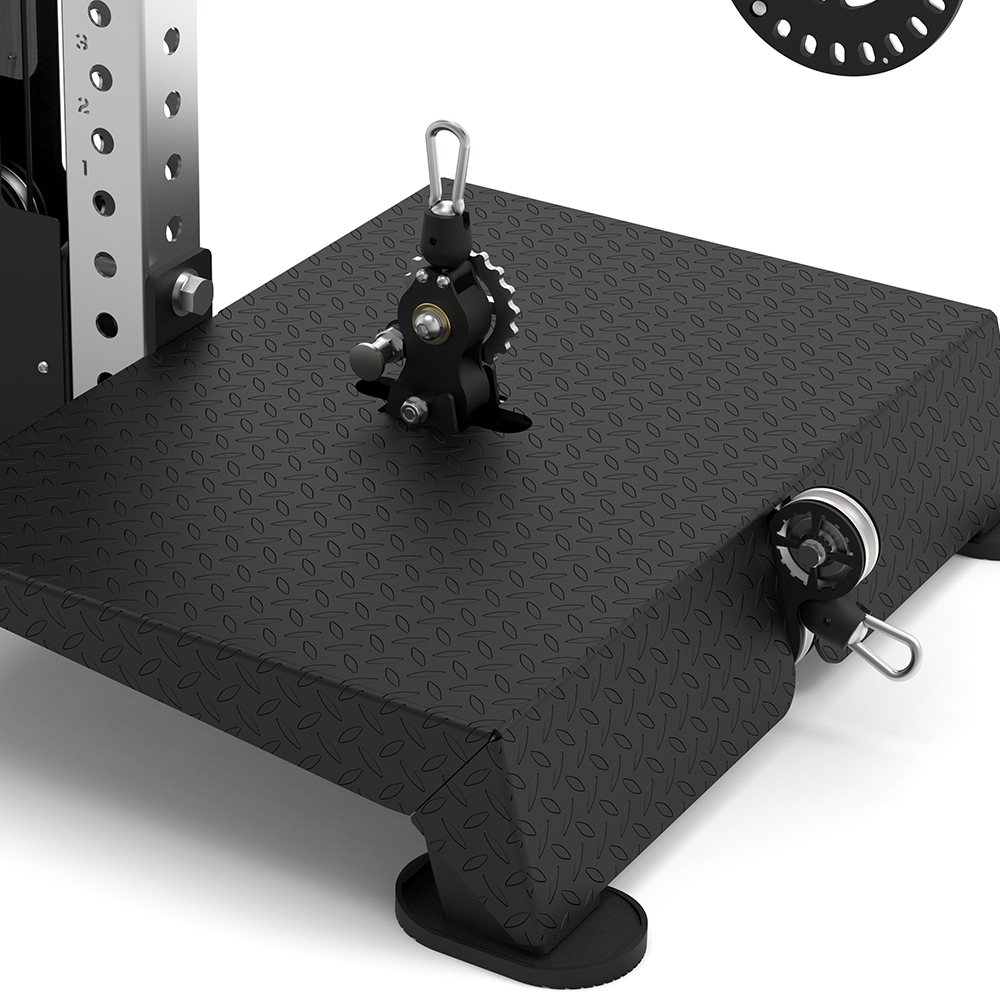
The dedicated belt squat attachment is the standout feature of the 9002. Traditional barbell squats load the spine directly through the bar position on the upper back. For many users—those with previous back injuries, older adults, or athletes recovering from lumbar strain—this axial loading is problematic. The belt squat transfers the load to the hips and legs through a padded belt worn around the waist. The user stands on the anti-slip textured footplate, attaches the belt to the cable system, and squats against resistance that pulls downward from the hips rather than pressing down on the spine.
From a biomechanical perspective, the belt squat changes the force vector. In a barbell back squat, the load passes through the spine to the hips and then to the legs. Any inefficiency in spinal bracing compromises the lift and increases injury risk. In a belt squat, the load bypasses the spine entirely. The hip extensors (gluteus maximus, hamstrings) and knee extensors (quadriceps) work against resistance that pulls directly through the center of mass. The result is a squat pattern that can be performed safely by users who cannot tolerate spinal loading.
The footplate features an anti-slip textured surface. This is not merely a comfort feature; it is a safety requirement for belt squats. When the load pulls downward through the belt, the user's feet must remain absolutely planted. Any foot movement during a heavy squat shifts the center of mass unpredictably. The texture provides mechanical grip even when the footplate is wet from sweat or cleaning. For facilities serving high-volume populations, this reduces slip-related liability.
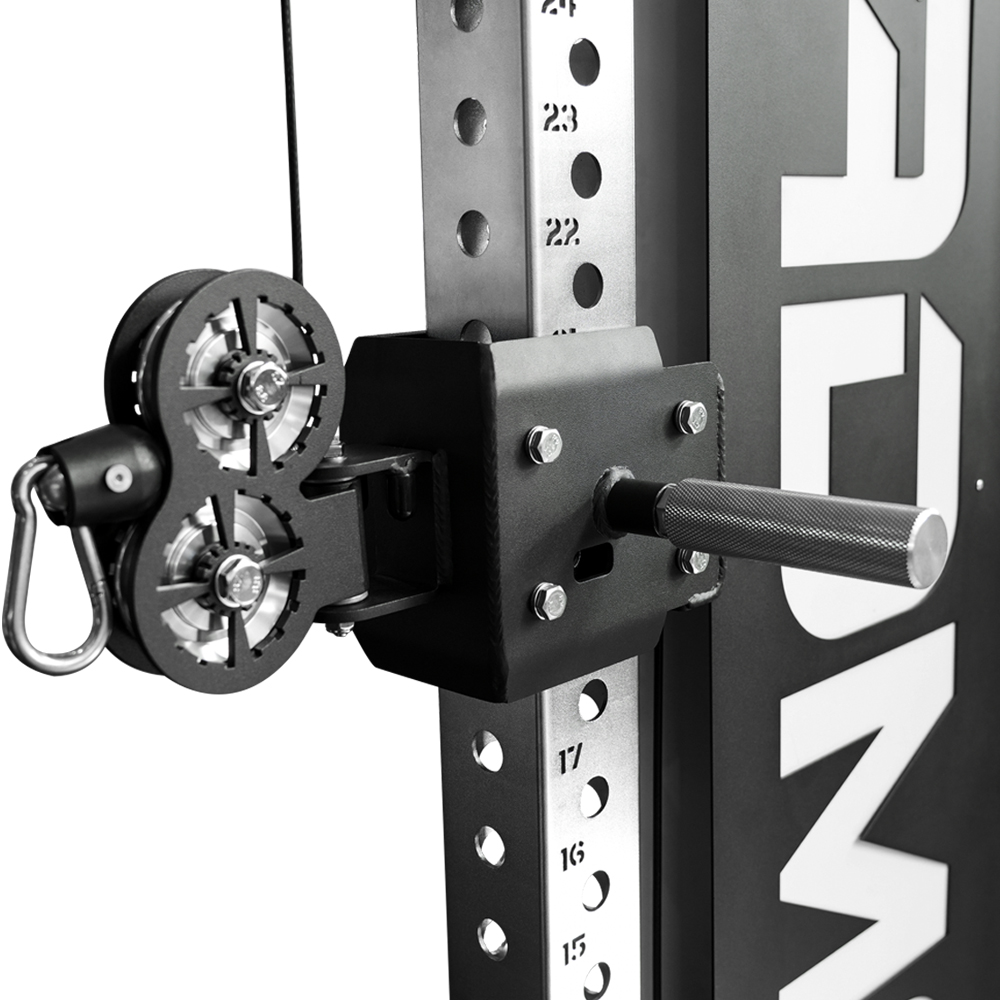
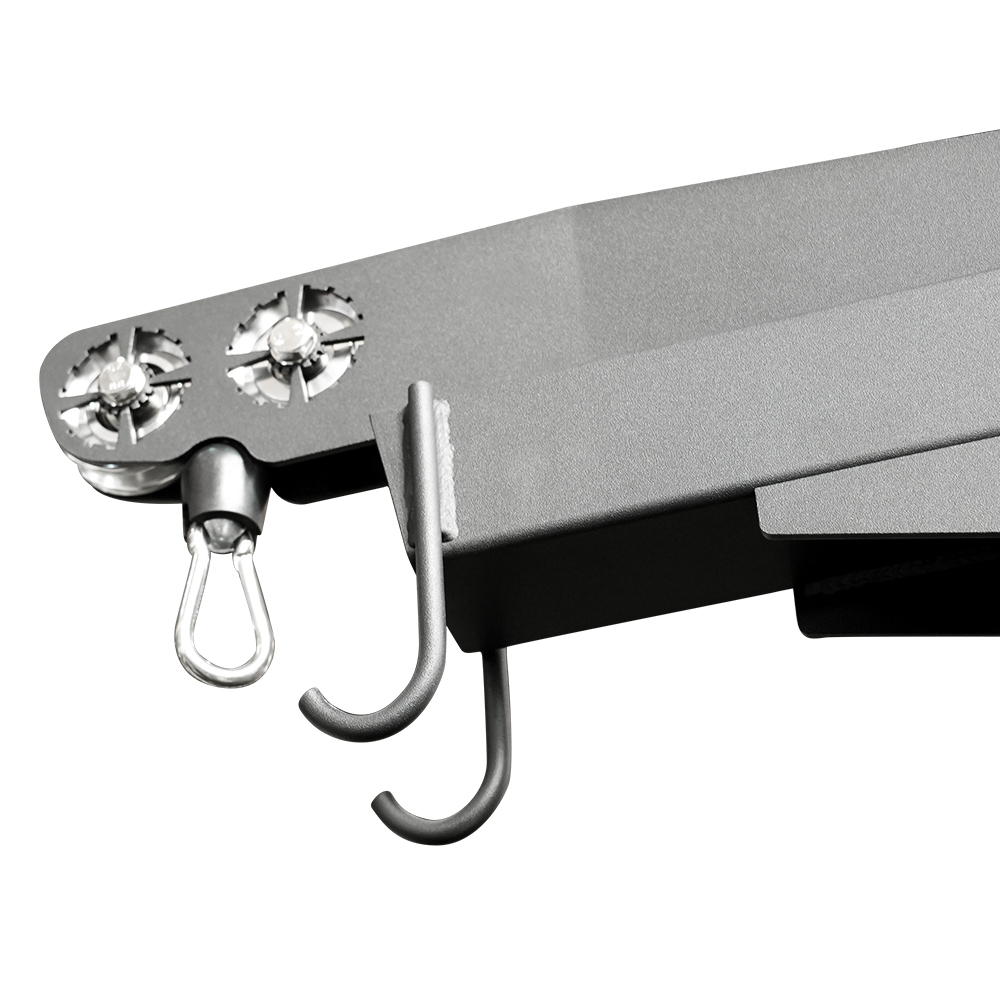
The cable system on the 9002 uses C&U premium aluminum pulleys with commercial-grade bearings. C&U is a recognized manufacturer in the linear motion industry, known for precision components that tolerate high cycle counts. The aluminum pulley body offers advantages over both nylon and steel. Nylon pulleys deform under sustained heavy loads, creating flat spots that cause cable jumping or sticking. Steel pulleys are heavier and, without proper sealing, rust at the bearing race. Aluminum provides corrosion resistance, dimensional stability, and reduced rotational inertia.
The precision bearings inside each pulley are sealed against dust and moisture. This matters in commercial environments where equipment is cleaned multiple times daily. Cleaning chemicals can degrade unsealed bearings over time, leading to gritty or sticking rotation. Sealed bearings maintain their smooth operation despite chemical exposure. The result is what the manufacturer describes as "ultra-quiet operation" and "consistent resistance response" under heavy loads.
The "reduced joint stress" claim is directly tied to the elimination of empty stroke—that dead zone at the beginning of a cable pull where the cable moves before resistance engages. Empty stroke causes a sudden load spike when the cable finally catches, which can jerk the joint. The 9002's pulley system is engineered for immediate resistance engagement from the first millimeter of cable travel. For users with pre-existing joint issues, this smooth engagement reduces the risk of exacerbating conditions like tendonitis or bursitis.
| Material | Durability Under Load | Corrosion Resistance | Rotational Inertia |
|---|---|---|---|
| Nylon | Deforms under heavy sustained loads | Good, but absorbs moisture | Low, but deformation changes geometry |
| Steel | Excellent, heavy | Poor without coating; rust at bearing race | Highest, affects cable return speed |
| Aluminum (C&U Premium) | Excellent, dimensionally stable | Excellent, natural oxide layer | Lowest, smoothest operation |
The 9002 features selectable power ratios that change how the cable system translates plate weight to felt resistance. A 1:1 ratio means one kilogram on the weight stack produces one kilogram of felt resistance at the handle. This is direct drive, commonly used for heavy pulling movements like low rows where maximum load is desired. A 1:2 ratio means one kilogram on the stack produces 0.5 kilograms of felt resistance. This ratio is used for high-speed, low-resistance movements like cable crossovers or rehabilitation exercises where small increments matter. A 2:1 ratio doubles the felt resistance—one kilogram on the stack produces two kilograms at the handle, used for heavy leg movements like belt squats where the user's body weight plus external load requires higher resistance capacity.
The practical implication is that a single weight stack can serve multiple training purposes without requiring different machines. The same stack that provides 50kg for a lat pulldown (1:1 ratio) can provide 25kg for a rotator cuff exercise (1:2 ratio) and 100kg for a belt squat (2:1 ratio). This flexibility is particularly valuable for facilities with limited floor space, as it multiplies the effective range of the resistance source.
From a programming perspective, the power ratio system enables micro-loading across different movement patterns. A user who needs a 2.5kg increment for a shoulder exercise uses the 1:2 ratio with a 5kg plate change. A user who needs a 5kg increment for a belt squat uses the 2:1 ratio with a 2.5kg plate change. The smart weight matching system ensures that the ratio selection is intuitive, with visual indicators showing which ratio is active based on cable attachment points.
The smart storage system on the 9002 addresses a persistent frustration in multi-function trainers: accessory clutter. Cable attachments, belts, handles, and collars accumulate around the base of the machine, creating trip hazards and forcing users to search for the correct implement. The 9002 integrates magnetic hooks rated for up to 4 kilograms per hook. These hooks attach to the frame at any point, allowing users to customize their storage layout based on which accessories they use most frequently.
The magnetic attachment method is a deliberate design choice over fixed pegs. Fixed pegs are permanent; if they are in the wrong location for a particular user's workflow, they cannot be moved. Magnetic hooks can be repositioned in seconds. A taller user might prefer hooks at shoulder height for triceps ropes; a user in a wheelchair might prefer hooks at waist height. This adjustability makes the 9002 more accessible across different user populations.
The durability rating of 4 kilograms per hook is conservative but meaningful. A typical cable attachment (triceps rope, straight bar, V-handle) weighs between 1 and 2 kilograms. A belt squat belt might weigh 2 to 3 kilograms. The 4kg rating provides a safety margin while ensuring the magnets are strong enough to hold accessories during machine vibration from nearby users. The result is a clean, organized workout space where everything has a designated place—reducing cleaning time for staff and frustration for members.
The cable attachments on the 9002 feature knurled aluminum grips rather than rubber or foam. This is a commercial-grade specification. Rubber grips degrade under UV light and cleaning chemicals, becoming sticky or brittle. Foam absorbs sweat and becomes unsanitary over time. Aluminum with precision knurling lasts for the life of the attachment. The knurling pattern is moderate—aggressive enough to provide a secure grip during heavy pulls, but not so sharp that it tears calluses or requires chalk.
The knurling serves a biomechanical purpose beyond grip security. When a user can hold the attachment without excessive crushing force, the forearm muscles remain relaxed. This relaxation allows the larger back and shoulder muscles to do the work during pulling movements. When grip becomes the limiting factor—as it often does with smooth or rubberized handles—the target muscles are underloaded. The knurled aluminum grip eliminates grip as a bottleneck, ensuring that the muscle group being trained reaches failure before the forearms do.
For facilities serving high-volume populations, the durability of aluminum grips reduces replacement frequency. Rubber grips on commercial cable machines often need replacement every 12 to 18 months due to wear and chemical degradation. Aluminum knurled grips can last 5 to 10 years with normal use. The total cost of ownership calculation favors the aluminum option significantly.
The uprights on the 9002 feature laser-cut numbered markings that are visible through the slider holes. This is a small detail with significant workflow implications. On many racks, users must count holes or estimate positions when moving the cable trolley or seat. The laser-cut numbers provide an absolute reference point. A user who knows they need "position 7" for lat pulldowns can move the trolley directly to that position without trial and error.
The numbers are laser-cut into the steel rather than printed or stamped. Printed numbers wear off over time, especially in commercial environments where equipment is wiped down with chemical cleaners multiple times daily. Stamped numbers can be difficult to read in low light. Laser-cut numbers are permanent and high-contrast. The cut creates a shadow that makes the number readable from any angle.
The slider holes are positioned to align with the numbers, so the locking pin drops into place at each marked position. This eliminates the need to "hunt" for the correct hole. For trainers moving between multiple clients, the time savings add up. A 5-second saving per adjustment, across 20 adjustments per day, saves nearly 2 minutes daily—over 10 hours annually of billable time that would otherwise be wasted on equipment setup.
The 2.5kg micro-adjustment system is an exclusive feature designed for progressive overload. Traditional weight stacks increase resistance in fixed increments, typically 5kg or 10lb. For many users, this increment is too large. A lifter who can complete 10 reps at 50kg but fails at 55kg has no intermediate option. They are stuck at 50kg until their strength jumps by 10%, which can take weeks or months. The 2.5kg micro-weight bridges this gap.
The micro-weight sits on top of the weight stack, adding a precise 2.5kg of resistance regardless of the stack's starting point. This allows 5kg jumps to become 2.5kg jumps. The user who fails at 55kg can train at 52.5kg, continue making progress, and eventually reach 55kg. This is the principle of progressive overload applied at the equipment level rather than the programming level.
For rehabilitation and senior populations, the micro-adjustment system is even more critical. These users often need resistance increases as small as 1kg to 2kg to avoid joint irritation or excessive muscle soreness. The 2.5kg increment is still appropriate, as it represents roughly a 5% increase for a 50kg starting point—well within the recommended 2.5% to 10% weekly progression range. The top-mounted design means the micro-weight is always available and cannot be lost, unlike fractional plates that can be misplaced.
| Starting Weight | Standard Stack Next Increment | Jump Size (%) | 9002 Next Increment | Jump Size (%) |
|---|---|---|---|---|
| 50kg | 55kg | 10% | 52.5kg | 5% |
| 70kg | 75kg | 7.1% | 72.5kg | 3.6% |
| 100kg | 105kg | 5% | 102.5kg | 2.5% |
The modular structure of the 9002 is designed for facilities that need to adapt over time. The base unit includes the frame, weight stack, and core cable system. From there, facilities can add the belt squat attachment, additional cable trolleys, different grip attachments, or storage accessories. Each component attaches via standardized interfaces, so additions made years after the initial purchase fit perfectly.
This modularity also simplifies shipping and installation. Components ship in separate boxes that can be moved by facility staff rather than requiring a rigging crew. The heaviest single component—the weight stack—still requires two people to move, but assembly does not require specialized tools or skills. For facilities opening on a tight timeline, this reduces the gap between delivery and operation.
The "free combination" aspect refers to the ability to configure the 9002 differently on each side. The left side might be set up for belt squats with the footplate in place; the right side might be configured for lat pulldowns with the adjustable seat. This asymmetry allows two users to work on the same machine simultaneously, performing completely different exercises. For busy facilities, this doubles the throughput of a single footprint.
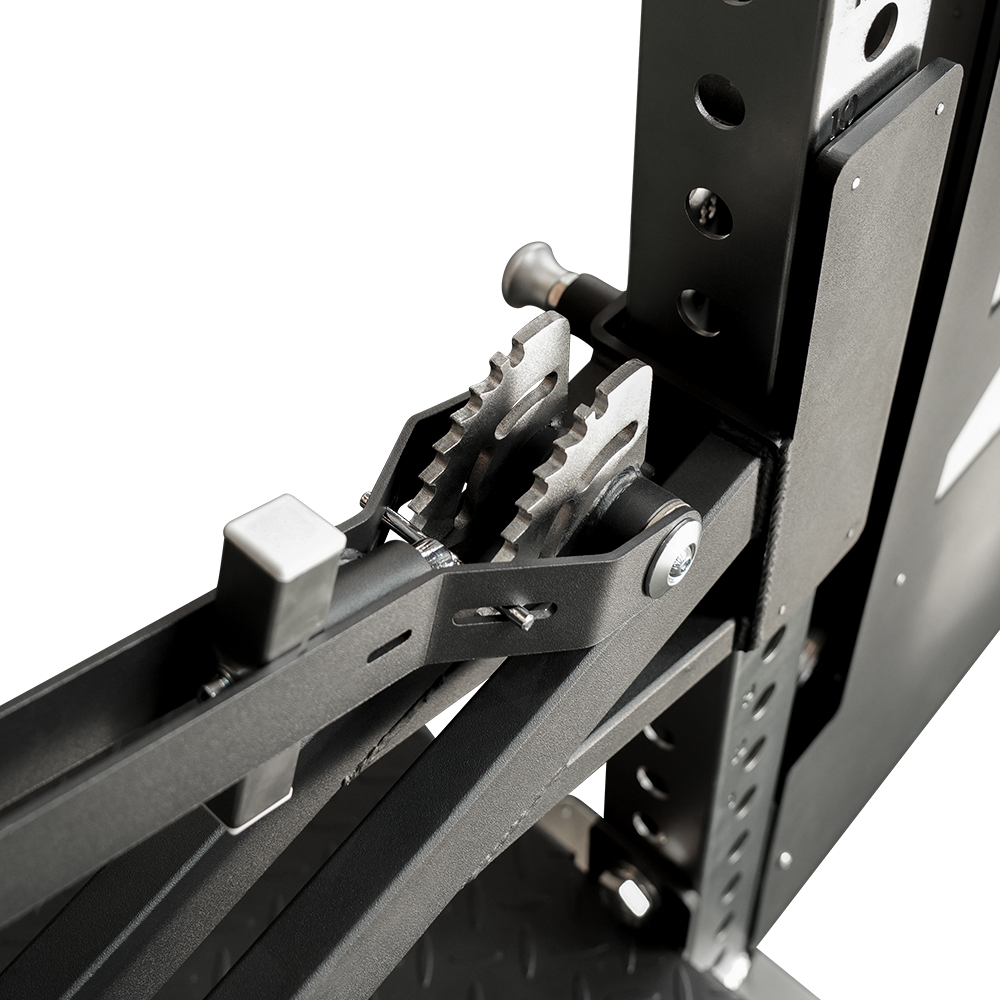
The compact design of the 9002 is achieved through deliberate engineering choices. The weight stack is integrated into the frame rather than standing separately. The belt squat attachment folds or slides out of the way when not in use. The cable trolleys travel on the uprights rather than on external guide rods. Every component is positioned to minimize the machine's footprint while maintaining full range of motion for each exercise.
The footprint is comparable to a small power rack, yet the 9002 replaces a lat pulldown machine, a low row station, a belt squat platform, and a functional cable crossover. For a boutique studio with 1,000 square feet of training space, this consolidation means the difference between offering a complete strength program or not. The "limitless potential" claim refers to the variety of exercises possible within that small footprint—from heavy belt squats to light rotator cuff work, all on the same machine.
For multi-family residential buildings, where gym space is often a converted ground-floor room of 300 to 500 square feet, the 9002 is particularly valuable. A single unit, combined with a treadmill and a bike, creates a complete fitness offering. Residents can perform lower body strength (belt squat), upper body pulling (lat pulldown, low row), and cable work (flyes, triceps, biceps) without requiring multiple machines. The space efficiency directly translates to higher resident satisfaction and, for developers, a marketable amenity.
The concept of "ergonomic strength distribution" refers to how resistance is matched to the natural strength curve of each muscle group. The quadriceps are strongest at mid-range and weakest at full extension. The hamstrings are strongest at mid-range and weakest at full flexion. The latissimus dorsi is strongest at the beginning of a pull and weakest at the end. The 9002's pulley geometry and cam profiles are designed to match these natural curves, providing more resistance where the muscle is stronger and less where it is weaker.
Smart weight matching is the system that guides users to the appropriate power ratio and attachment point for their chosen exercise. A user selecting "belt squat" is guided to the 2:1 ratio with the footplate attachment. A user selecting "lat pulldown" is guided to the 1:1 ratio with the high cable trolley. This reduces confusion for new users and speeds setup for experienced ones. For facilities with high member turnover—such as hotel gyms or corporate fitness centers—this intuitive design reduces the need for staff supervision.
The single stack weight design is a deliberate simplification over dual-stack systems. Dual stacks offer independent resistance for each arm but double the maintenance complexity and cost. The single stack on the 9002 serves both cable columns through a 1:2 ratio split when both are used simultaneously. This means a user performing cable crossovers feels half the stack weight on each arm—perfectly matched for bilateral movements. For unilateral movements, the full stack weight is available on a single cable.
| Specification Category | Technical Details |
|---|---|
| Product Name | 9002 Multi-Functional Trainer / Belt Squat Integration System |
| Frame Construction | Modular steel frame, compact design, commercial-grade welding |
| Specialized Attachment | Dedicated belt squat attachment with anti-slip textured footplate |
| Pulley System | C&U premium aluminum pulleys with commercial-grade sealed bearings |
| Cable Operation | Ultra-quiet, consistent resistance response, reduced joint stress, zero empty stroke |
| Power Ratios | 1:1, 1:2, and 2:1 selectable ratios for different movement patterns |
| Resistance Type | Single weight stack with 2.5kg top-mounted micro-adjustment system |
| Storage System | Magnetic hooks, up to 4kg per hook, customizable positioning |
| Grip Attachments | Knurled aluminum grips, precision knurling pattern |
| Upright Markings | Laser-cut precision numbered markings visible through slider holes |
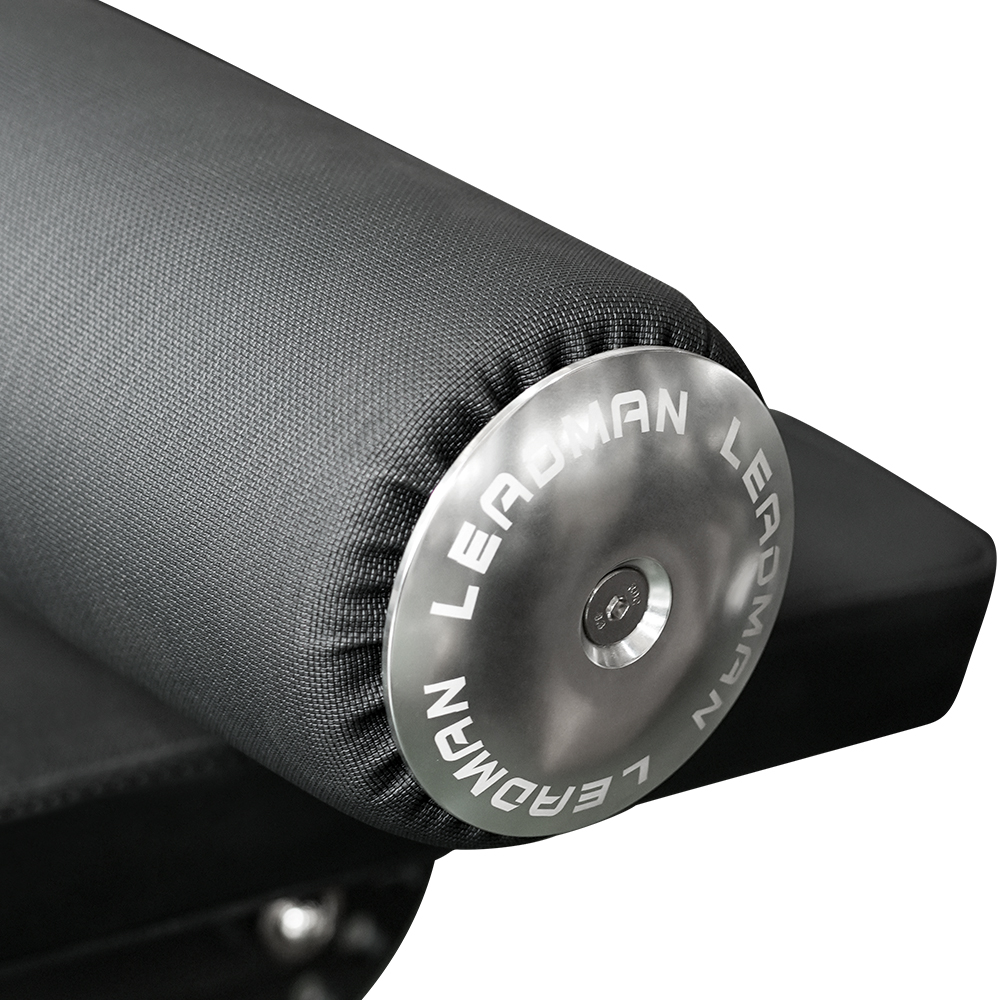
| Seat | Adjustable seat for lat pulldown and low row positions |
| Training Functions | Lat pulldown, low row, belt squat, cable crossovers, unilateral cable work |
| Assembly Type | Modular assembly, flexible matching, free combination of components |
| Design Philosophy | Compact footprint, limitless potential, ergonomic strength distribution |
| Application | Boutique studios, hotel fitness, corporate gyms, multi-family residential, rehabilitation facilities |