

Why Functional Training Accessories Are Important for Variety and ROI
The Strategic Imperative: Why Functional Training Accessories Are Important for Variety
For facility operators and high-performance coaches, the challenge of stagnation is a constant threat to member retention and athlete progression. When a training environment relies solely on traditional strength machines or fixed-path resistance, the mechanical stimulus becomes predictable. This predictability leads to physiological plateaus and, more critically, a decrease in the perceived value of the facility. This is precisely why functional training accessories are important for variety: they break the linear constraints of standard equipment, introducing multi-planar movement and cognitive engagement that fixed machines cannot replicate.
From a strategic procurement perspective, investing in a diverse ecosystem of accessories—such as suspension trainers, medicine balls, resistance bands, and stability tools—is not merely about adding 'gadgets.' It is about maximizing the utility of every square meter of floor space. A single functional rig can be transformed into dozens of different training modalities with the addition of the right peripheral tools, effectively increasing the ROI of the primary hardware. To achieve this, one must understand that variety serves two masters: the physiological need for diverse stimulus and the commercial need for a versatile, high-value training environment.
Before selecting these tools, operators must evaluate the tension between specialized movement and equipment durability. This transition from static to dynamic training requires a foundational understanding of the different categories of accessories and their specific operational benefits.
Diversification of Movement Planes
Traditional strength training often operates within the sagittal plane. Functional accessories allow for immediate expansion into the frontal and transverse planes, which are essential for injury prevention and real-world athletic performance. By integrating tools that demand lateral and rotational stability, a facility moves from a 'weight room' identity to a 'human performance center.'
Evaluating Material Integrity and Durability Standards
The shift toward more dynamic, high-velocity movements introduces a new set of mechanical stresses on equipment. While a barbell remains relatively stable, a medicine ball dropped repeatedly or a suspension strap subjected to rapid oscillations places unique demands on material fatigue resistance. A common mistake in procurement is prioritizing low cost over the durability of specialized textiles and polymers, leading to frequent replacement cycles and safety risks.
When selecting accessories, operators must look beyond the surface aesthetic and interrogate the technical specifications of the materials used. For example, the tensile strength of a resistance band or the UV resistance of a high-density foam roller dictates its operational lifespan in a high-traffic commercial setting. Failure to verify these parameters often results in 'hidden costs'—the price of replacement and the liability of equipment failure during use.
| Accessory Category | Key Material Specification | Common Failure Mode | Verification Method |
|---|---|---|---|
| Suspension Systems | High-tensile Nylon/Polyester | Fraying at anchor points | Tactile inspection for fiber protrusion |
| Medicine Balls | Double-stitched Synthetic Leather | Seam bursting under impact | Pressure test and seam integrity check |
| Resistance Bands | Latex or Thermoplastic Elastomer | Micro-tears or loss of elasticity | Visual check for surface discoloration |
| Stability Tools | High-density EVA/NBR Foam | Compression set (permanent denting) | Manual rebound test |
Understanding these failure modes allows a manager to implement a more effective inspection cadence. Once the material standards are established, the focus must shift to how these tools are integrated into a cohesive training program.
Optimizing Equipment Layout for Multimodal Training
Having a diverse inventory is only effective if the facility layout supports the high-intensity, multi-directional nature of functional training. A common pain point for operators is the 'congestion bottleneck,' where high-variety training leads to chaotic floor management and increased collision risks. The cause is often a lack of designated 'zones' for accessory-based movements.
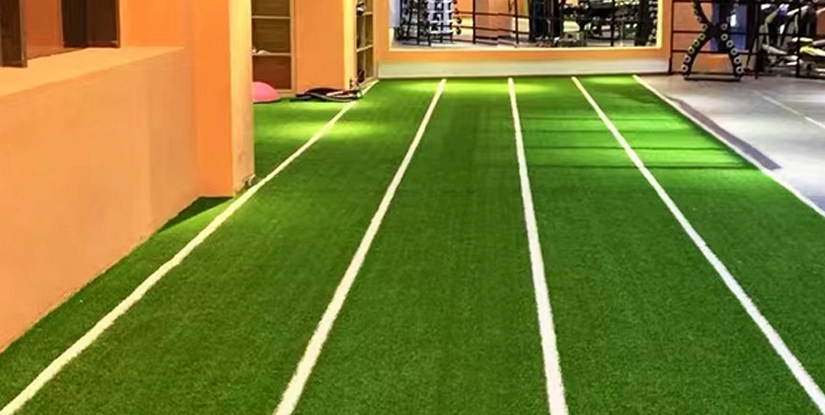
To mitigate this, facilities should adopt a zoned approach, where certain areas are optimized for high-impact tools (like medicine balls or heavy sleds) and others for high-mobility tools (like suspension trainers or balance pads). This spatial strategy ensures that the variety provided by the accessories does not compromise the safety or flow of the facility.
Implementing Zoned Training Architectures
- The Impact Zone: Hardened flooring and reinforced corner protection for heavy ballistic accessories.
- The Stability Zone: Open floor space with minimal fixed obstacles for suspension and mobility work.
- The High-Flow Zone: Areas near weight racks that allow for quick transitions between heavy lifting and functional accessory work.
A well-designed layout ensures that the introduction of variety enhances rather than disrupts the user experience. However, even the best layout cannot overcome the eventual degradation of the equipment itself if a strict maintenance protocol is not in place.
Explore the complete technical specifications:
Freemotion Cable Machine | Dual-Axis Functional Trainer for Athletic Training
Maintenance Protocols for High-Utility Accessories
Because functional accessories are often mobile and used in diverse ways, they are more susceptible to environmental and user-induced wear than stationary machines. A robust maintenance schedule is the difference between a facility that feels premium and one that feels neglected. The goal of a professional maintenance program is to move from reactive repairs to proactive replacement cycles.
The following checklist provides a standard for daily and weekly inspections to ensure equipment remains within safe operational tolerances:
- Suspension Straps: Check all stitching and anchor points for fraying or thinning. Ensure the carabiners move freely without binding.
- Resistance Bands: Inspect the entire length of the band for micro-tears, discoloration, or 'bubbling' of the material.
- Stability Pads/Rollers: Check for permanent deformation or loss of structural integrity in the foam.
- Medicine/Slam Balls: Verify that the internal weight remains centered and the outer casing has no structural breaches.
Regularly verifying these components prevents the catastrophic failure of equipment during a high-intensity interval, protecting both the client and the operator's reputation. Following a strict maintenance regimen allows for a predictable capital expenditure (CapEx) model, as replacements can be planned rather than forced by an emergency.
The Relationship Between Accessory Variety and Long-Term ROI
From a financial standpoint, the argument for why functional training accessories are important for variety extends directly into the bottom line. Fixed-path machines have a high upfront cost and a relatively stagnant depreciation curve. In contrast, functional accessories offer a high degree of versatility and a lower cost-per-utility ratio. A $50 set of high-quality kettlebells or a $100 suspension kit can facilitate hundreds of different programmed outcomes, whereas a specialized machine serves only a handful of specific movements.
The true value lies in the 'Adaptability Quotient' of the equipment. As training trends shift from pure hypertrophy to metabolic conditioning or athletic performance, a facility equipped with a wide range of functional accessories can pivot its programming without significant reinvestment. This agility is a competitive advantage in a crowded market.
| Metric | Traditional Machines | Functional Accessories |
|---|---|---|
| Initial Investment | High | Low to Moderate |
| Space Requirement | High (Fixed Footprint) | Very Low (Highly Portable) |
| Programming Versatility | Limited (Fixed Paths) | Extensive (Infinite Variations) |
| Depreciation Rate | Slow (Mechanical Decay) | Variable (Material/Textile Wear) |
| Upgrade/Pivot Speed | Low (Requires New Hardware) | High (Requires New Small Tools) |
By prioritizing assets that offer high versatility, a facility owner optimizes their long-term capital efficiency. With the financial logic established, the final consideration is the long-term impact on the training culture itself.
Cultivating a Culture of Progressive Complexity
The ultimate goal of introducing variety via accessories is to foster a culture of constant progression. When users can move from a standard weight to a more complex, unstable, or multi-planar challenge, they experience the 'novelty effect,' which is a primary driver of long-term engagement. However, this must be managed through professional instruction to avoid the 'complexity trap'—where users use advanced tools with poor form, leading to injury.
Operators must ensure that the variety provided by the accessories is backed by a structured progression model. For example, a user should not move directly from a single-leg press to a single-leg balance drill on a BOSU ball without first demonstrating the necessary proprioceptive control. This structured approach ensures that the variety serves as a tool for growth rather than a liability.
Future-Proofing the Facility Through Accessory Integration
As we look toward the future of fitness, the integration of even more specialized, tech-enabled accessories—such as smart resistance bands or sensor-equipped stability tools—will become the standard. Facilities that have already mastered the procurement and maintenance of basic functional accessories will find this transition seamless.
The ability to integrate, manage, and maintain a diverse inventory of tools is a foundational skill for any modern facility operator. By viewing accessories not as secondary items, but as core components of a versatile training ecosystem, you ensure your facility remains at the cutting edge of the industry.