

Understanding the Weight Of Olympic Barbell In Kg: A Technical Guide
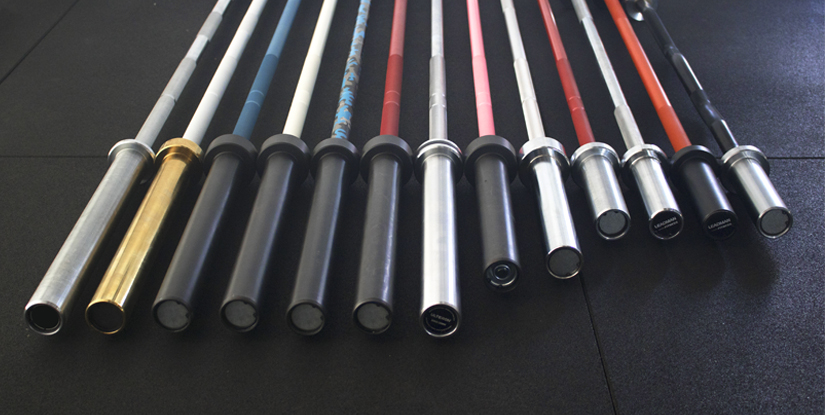
The Common Myth of Standardized Barbell Mass
Many strength athletes and facility managers operate under the assumption that every barbell labeled as 'Olympic' possesses an identical mass. This misconception often leads to discrepancies in training progression and programmatic accuracy. While the international standard for a men's technical barbell is widely recognized, actual Weight Of Olympic Barbell In Kg can deviate significantly depending on the manufacturing tolerances and the specific intended use of the equipment.
The primary cause of these discrepancies is not usually error, but rather a lack of distinction between different categories of bars, such as powerlifting bars, weightlifting bars, and general-purpose training bars. A powerlifting bar, designed for maximum stiffness, often has a different density and mass distribution than a highly flexible weightlifting bar. Failure to account for these differences can result in micro-loading errors that frustrate competitive lifters. To ensure training integrity, operators must move beyond assuming a 'standard' and begin verifying the actual mass of their inventory.
| Bar Type | Standard Target Mass (kg) | Typical Intended Use | Tolerance Range |
|---|---|---|---|
| Men's Olympic Bar | 20 kg | Weightlifting/Snatch/Clean | ± 0.5 kg |
| Women's Olympic Bar | 15 kg | Technical Training | ± 0.3 kg |
| Powerlifting Bar | 20 kg | Squat/Bench/Deadlift | ± 0.2 kg |
| Training/General Bar | 20 kg | Crossfit/General Strength | ± 1.0 kg |
Understanding these baseline variations is the first step toward establishing a rigorous equipment audit. Once the standard weight classes are identified, the focus shifts to the technical nuances that influence these numbers.
Technical Specifications and Material Density Variations
Following the establishment of baseline weight classes, one must examine the underlying physical properties that dictate the actual weight of the steel. The weight of a bar is not merely a sum of its length and diameter; it is a function of the alloy's density and the precision of the manufacturing process.
The Impact of Shaft Diameter and Wall Thickness
A frequent source of weight variation is the thickness of the shaft. While most Olympic bars feature a 28mm or 29mm diameter, the internal hollow or solid nature of the core can change the total mass. For instance, a high-end competition bar is often manufactured to a much tighter tolerance than a budget-friendly training bar. If a bar has a thinner wall thickness to increase whip or flexibility, the total weight may drop below the expected 20 kg threshold unless the manufacturer has increased the diameter to compensate.
Knurling and End Cap Construction
The density of the knurling pattern also contributes to the final mass. A deep, aggressive knurling removes more steel from the surface than a light, passive knurl. Additionally, the weight of the end caps—the pieces that seal the sleeves—can vary. A solid steel end cap will add more weight than a thinner, lighter cap. Professionals should inspect the end caps and sleeves to see if they are constructed with heavy-duty steel, which is a hallmark of a high-quality competition-grade bar.
By identifying these physical contributors, operators can better understand why two bars that look identical may actually weigh different amounts. This leads directly to the necessity of a formal verification process.
Verification Protocols for Facility Equipment Audits
After understanding the mechanical causes of weight deviation, facility operators must implement a systematic verification protocol. Relying on a manufacturer's label is insufficient for high-performance environments where precise micro-loading is required.
Implementing a Calibrated Weighing Routine
To verify the Weight Of Olympic Barbell In Kg, operators should utilize a digital industrial scale rather than a standard gym scale. A gym scale may not be sensitive enough to detect a 200g or 500g difference, which is critical for elite athletes. The process should follow a specific sequence to ensure accuracy:
- Ensure the scale is on a level, vibration-free surface.
- Tare the scale with zero weight.
- Place the barbell across the center of the scale to ensure even weight distribution.
- Allow the scale to stabilize for at least 10 seconds before recording the reading.
- Repeat the process three times to calculate an average mass.
A common mistake in this process is weighing the barbell while it is resting on a rubber lifting platform or a single piece of equipment, which introduces error. The bar must be a standalone load on a calibrated instrument.
Documentation and Discrepancy Thresholds
Once the weight is measured, it must be recorded in a digital inventory log. We recommend establishing a 'Acceptable Variance Threshold.' For example, in a professional powerlifting gym, any bar deviating by more than 0.2 kg from its labeled weight should be flagged for replacement or recalibration. This level of detail ensures that training data remains consistent across different sessions.
Effective verification protocols protect the integrity of a training program. However, knowing the weight is only half the battle; ensuring the bar remains safe and functional through regular maintenance is equally vital.
Explore the complete technical specifications:
Preventative Maintenance and Longevity of Barbell Components
The accuracy of a barbell's weight can actually be affected by its state of maintenance. Over time, the accumulation of dust, sweat, and oxidation can subtly alter the mass and, more importantly, the mechanical performance of the sleeves and bearings.
Dealing with Oxidation and Surface Contamination
When steel is exposed to moisture, oxidation (rust) begins to form. While a small amount of surface rust might not significantly change the weight of the barbell, it can create a buildup of oxide layers that affect the smoothness of the rotation. Furthermore, if an operator attempts to 'clean' a bar by applying excessive amounts of oil or lubricants, the added weight of the fluid can introduce a slight, though often negligible, increase in mass. The priority should be preventing oxidation through proper storage rather than managing the weight of the contaminants.
Bearing and Bushing Inspection Checklist
A well-maintained bar is a safe bar. During your routine weight and inspection checks, you should also evaluate the rotational components. A failure to do this can lead to uneven loading, which can cause an athlete to lose balance during heavy lifts. Use the following checklist for your monthly equipment audit:
| Component | What to Check | Failure Mode | Action Required |
|---|---|---|---|
| Sleeves | Spin/Rotation | Stiffness or Grinding | Clean and Re-lubricate |
| Shaft | Straightness | Visible Bend or Wobble | Retire/Replace Immediately |
| Knurling | Edge Sharpness | Flattened/Smooth Patches | Evaluate for Regular Use |
| End Caps | Attachment | Loose or Rattling | Tighten or Replace |
Regularly checking these components ensures that the equipment remains a reliable tool for heavy lifting. As equipment ages, the focus must eventually shift from maintenance to evaluating the total return on investment and potential replacement cycles.
Explore the complete technical specifications:
Barbell Guide | Olympic Bar Sizes, Knurling & Tensile Strength
Evaluating Long-Term Equipment Value and Replacement Cycles
Maintaining a consistent Weight Of Olympic Barbell In Kg across a facility requires a long-term procurement strategy. Equipment that is cheap to purchase initially often results in higher long-term costs due to rapid degradation and weight inconsistencies.
The ROI of High-Tolerance Equipment
For commercial gym owners, the decision between purchasing 'budget-grade' bars and 'competition-grade' bars is a matter of operational efficiency. Budget bars often have much wider weight tolerances (up to 1 kg), which can lead to athlete dissatisfaction and even lawsuits if a programmed lift is performed with an underweight bar. High-tolerance bars, while more expensive, offer a predictable lifespan and consistent performance that justifies the initial capital expenditure.
Decision Criteria for New Acquisitions
When sourcing new inventory, do not simply look at the price tag. Use the following parameters to evaluate the quality of a potential supplier:
- Tolerance Specification: Does the supplier state the actual weight tolerance in kg?
- Material Certifications: Can they provide data on the steel grade and tensile strength?
- Bearing Type: Are the sleeves using needle bearings for rotation or simple bushings?
- Maintenance Requirements: What is the expected service interval for the lubrication system?
By applying these rigorous standards to both your current inventory and your future purchases, you ensure that your facility remains a professional-grade environment for all athletes.
Explore the complete technical specifications:
Barbell Diameter Standard: Olympic, Powerlifting, and Specialty Bars
Environmental Factors and Calibration Stability
Beyond the physical construction of the bar, the environment in which the barbell is stored and used can influence its perceived and actual weight. Thermal expansion and structural fatigue are often overlooked when auditing the Weight Of Olympic Barbell In Kg in large-scale facilities.
Temperature Fluctuations and Metal Expansion
Steel undergoes thermal expansion and contraction. While the change in mass due to temperature is practically zero, the change in the physical dimensions of the bar can affect how it sits on a scale or how it interacts with weight plates. In unconditioned environments, such as outdoor training facilities or warehouses, significant temperature swings can cause the metal to expand. A critical decision factor for facility managers is whether to calibrate equipment in a climate-controlled environment to ensure that all specialized testing is performed under standardized thermal conditions.
Stress-Induced Permanent Deformation
A common failure mode in barbell longevity is permanent deformation, often referred to as 'bending.' When a bar is subjected to loads exceeding its tensile strength or is dropped improperly, the metal may undergo permanent structural changes. While a bent bar doesn't necessarily lose weight, the change in its structural integrity makes it unusable for competition. To prevent this, operators should implement a strict 'Drop Protocol,' specifying whether a bar is rated for 'Drops' (high-impact) or is a 'Static Only' bar (intended for controlled lifting).
| Load Scenario | Impact on Bar Longevity | Risk Level | Mitigation Strategy |
|---|---|---|---|
| High-Rep Clean & Jerk | Moderate (Bearing Wear) | Low | Routine Lubrication |
| Maximum Attempt Drops | High (Structural Fatigue) | High | Use Weightlifting-Specific Bars |
| Improper Storage (Damp) | Moderate (Oxidation) | Medium | Climate-Controlled Storage |
Monitoring these environmental and structural factors ensures that your equipment remains a precision-tuned instrument rather than an unpredictable liability. This concludes our deep dive into the technical realities of barbell mass and quality management.