

Optimizing Facility Versatility: Flexibility for All Users with a Commercial Adjustable Weight Bench
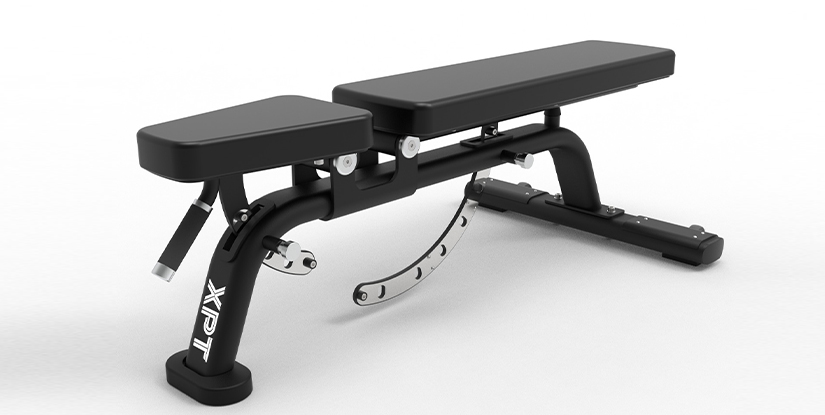
The Economic Imperative of Versatility in Strength Equipment
In the current commercial fitness market, procurement decisions are increasingly driven by the need for multi-functional utility. A single, static piece of equipment often limits the demographic reach of a facility, whereas a high-quality adjustable unit maximizes the return on investment (ROI) by serving diverse training styles. The core challenge for facility managers is the tension between equipment durability and the functional range required by a varied clientele, from bodybuilders to rehabilitation specialists.
When a facility invests in a fixed-position bench, they inadvertently create a bottleneck. Users with different anatomical proportions or specific training goals (such as incline pressing versus seated rows) must compete for limited specialized machines. By prioritizing flexibility for all users with a commercial adjustable weight bench, operators can effectively increase the "density of utility" within their existing square footage. This strategic pivot from single-use to multi-use equipment is a fundamental requirement for modernizing gym layouts and increasing member retention through improved accessibility.
Understanding the technical nuances of these benches is the first step toward making an informed procurement decision that avoids the high costs of premature replacement or user dissatisfaction.
Structural Integrity and Load-Bearing Standards
Beyond mere adjustability, the primary concern for any commercial operator is the mechanical stability of the unit under heavy loads. A common failure mode in lower-tier adjustable benches is the lateral instability that occurs when the bench is set at a high incline. This is often caused by a poorly designed pivot point or a frame that lacks sufficient cross-sectional rigidity.
Critical Load Parameters and Frame Geometry
When evaluating the structural capacity of a bench, it is not enough to look at the total weight capacity. One must examine the distribution of that load across various angles. A bench might support 1,000 lbs in a flat position but significantly less when at a 60-degree incline due to torque applied to the adjustment mechanism.
| Adjustment Angle | Expected Stability Level | Common Mechanical Stress Point | Verification Method |
|---|---|---|---|
| 0° (Flat) | Maximum | Main Support Beam | Visual check for straightness under load |
| 15°-45° (Incline) | High | Pivot Pin and Locking Knob | Manual pressure test for lateral wobble |
| 60°-85° (Decline/High Incline) | Moderate | Adjustment Ladder/Selector | Repeatable setting verification |
| Flat/Decline Hybrid | Variable | Leg/Foot Support | Check for level footing on surface |
To verify structural integrity, operators should implement a weekly "load-shake" test, where a controlled weight is applied to the bench at various angles to ensure no unexpected movement or audible creaking occurs. Establishing these baseline expectations ensures that the equipment remains a reliable asset rather than a liability.
With structural integrity established, the focus must shift to the fine-tuning mechanisms that allow for the seamless transitions required by a high-traffic facility.
Precision Engineering in Adjustment Mechanisms
The transition between angles is the most frequent point of mechanical friction in adjustable equipment. A high-quality commercial unit should offer instantaneous or near-instantaneous adjustments that do not require complex disassembly. The mechanism determines the user experience and the longevity of the product.
Selector Pins vs. Ladder Adjustments
In the commercial sector, two primary adjustment styles dominate the market: the pop-pin selector and the ladder-style notch system. Each has distinct operational advantages and failure modes. A pop-pin system is faster for the user but can be prone to jamming if debris or sweat enters the mechanism. Conversely, a ladder system is extremely robust but may require more physical effort to adjust.
- Pop-Pin Systems: Ideal for high-turnover environments where speed is critical. Requires regular lubrication of the pin to prevent seizing.
- Ladder-Style Adjustments: Preferred for heavy-duty training where absolute stability is the priority. Typically easier to maintain and less prone to catastrophic failure.
- Common Error: Forcing a pin into a slot that is not fully aligned, which can strip the threading or bend the adjustment rod.
A professional operator should verify the smoothness of these transitions by performing several cycles of adjustment throughout a single shift to ensure the mechanism does not exhibit resistance or misalignment.
Once the mechanical adjustments are mastered, the next layer of user compatibility depends on the ergonomic surfaces provided by the bench.
Explore the complete technical specifications:
Adjustable Bench Press Rack | Buyer's Guide for Commercial Gyms
Ergonomic Surface Optimization for Diverse Users
The interface between the user and the machine is the upholstery. A common mistake in procurement is selecting a bench based solely on frame weight, while overlooking the density and resilience of the padding. For a bench to provide true flexibility for all users, it must accommodate a wide range of body types and training intensities without significant compression or discomfort.
Upholstery Density and Material Selection
High-impact training causes the foam inside a bench to compress over time, a process known as "bottoming out." Once the user can feel the underlying frame, the bench is effectively decommissioned for high-level training. Selecting a bench with high-density, multi-layered foam is essential for long-term viability.
| Material Type | Durability Rating | Primary Benefit | Maintenance Requirement |
|---|---|---|---|
| Standard Vinyl | Moderate | Cost-effective | Frequent cleaning/sanitization |
| High-Density PU Leather | High | Sweat and tear resistance | Minimal; wipe down daily |
| Multi-Layered Foam | High | Maintains shape under load | N/A (Internal component) |
To verify the quality of the upholstery, an operator should perform a "compression test": applying significant pressure to the center of the pad and observing how quickly—and how completely—the foam returns to its original shape. If the indentation persists, the foam density is insufficient for commercial use.
The physical surface is only as effective as the support system beneath it, which leads to the necessity of robust foot and leg supports.
Explore the complete technical specifications:
Adjustable Bench Commercial: Specifications, Durability & Selection
Stability Dynamics: Leg and Foot Support Systems
A bench is only as stable as its connection to the floor. While the main frame provides the foundation, the secondary supports—specifically the leg rollers and foot plates—often become the weak links in the chain. Users of varying heights and weights require consistent support to maintain proper form during seated or declined exercises.
Addressing Leg Support Discrepancies
One frequent complaint in multi-user environments is that leg rollers are either too short for taller users or too restrictive for smaller users. This lack of adjustability limits the bench's utility for a diverse demographic. A truly flexible commercial bench should feature adjustable footpads that can accommodate a range of leg lengths.
Failure Mode: A common issue is the loosening of the leg roller height, which can lead to uneven weight distribution and potential tipping. This is often caused by a lack of a secondary locking mechanism on the leg adjustment rod. To prevent this, operators must verify that the foot support is securely locked in place before any heavy load is applied. A simple check involves applying downward pressure on the foot rollers to ensure there is zero vertical play.
Consistent stability across all angles is the hallmark of professional-grade equipment, which brings us to the crucial aspect of routine maintenance.
Maintenance Protocols for Long-Term Reliability
A commercial environment is inherently harsh. Sweat, skin oils, and constant mechanical movement can degrade a bench much faster than home-use scenarios. To maintain the ability to provide flexibility for all users with a commercial adjustable weight bench, a strict maintenance cadence must be established.
Weekly and Monthly Inspection Checklists
Maintenance should not be reactive; it must be proactive. Waiting for a part to break results in downtime and potential injury. Instead, facility managers should implement a two-tier inspection system.
- Daily Checklist: Wipe down upholstery with non-abrasive disinfectant; check for visible loose bolts; ensure the floor area around the bench is clear of debris.
- Monthly Checklist: Apply silicone-based lubricant to adjustment pins and pivot points; inspect upholstery for micro-tears; check the tension of all mounting bolts; test the leveling of the feet on the flooring.
Failure to execute these steps often leads to the gradual loosening of the frame, which results in the "wobble" that many users report in older gym equipment. By treating maintenance as a standard operational procedure, the lifecycle of the equipment is significantly extended.
Effective maintenance ensures that the technical advantages of the bench are preserved over several years of intense use.
The Role of Flooring and Placement in Equipment Stability
Even the best-engineered bench can perform poorly if the environment is not optimized. The relationship between the bench and the floor is a critical, yet often overlooked, component of the total user experience. If a bench is placed on a surface that is too soft or uneven, its inherent stability is compromised.
Optimizing the Base Environment
In many commercial settings, weightlifting often occurs on rubber flooring. While this is excellent for impact absorption, excessively thick or soft mats can actually decrease the stability of an adjustable bench, especially when it is in an incline or decline position. The lateral forces generated during a heavy press can cause the bench to tilt if the floor is too compliant.
Optimization Strategy: Ensure the bench is placed on a high-density, low-compression rubber matting (at least 15mm–20mm thick). This provides the necessary shock absorption while maintaining a firm foundation. Additionally, ensure the floor is perfectly level; even a slight grade in the facility's subfloor can become magnified when the bench is adjusted to a high incline.
Verification of the placement involves placing a level on the bench in its flat position and then checking it again at a 45-degree incline to ensure the deviation remains within acceptable professional tolerances.
With the environment and maintenance protocols in place, the final consideration is the long-term operational outlook and the evolving needs of the user base.
Future-Proofing Your Strength Training Area
As fitness trends evolve, the demand for specialized movements will shift. A bench that is highly adjustable is a hedge against these changes. Today's user might focus on hypertrophy, but tomorrow's demographic might prioritize functional mobility or rehabilitative strength. Investing in equipment that offers a high degree of adjustability ensures that your facility remains relevant.
When selecting equipment, look for modularity. Can the bench be integrated with other accessories like dip handles or landmines? Does it offer enough variety in its angles to support the latest training methodologies? A forward-thinking procurement strategy treats the adjustable weight bench not just as a single purchase, but as a dynamic component of a larger, evolving fitness ecosystem. This adaptability is what ultimately drives long-term facility success and customer satisfaction.