

Maximizing Floor Plan Efficiency: Space-Saving Solutions with a Commercial Adjustable Workout Bench
Addressing Footprint Constraints in Modern Facility Design
Commercial facility operators frequently face a zero-sum game between equipment variety and available floor area. As real estate costs escalate, the traditional model of high-density, static equipment placement is becoming obsolete. A common pain point for gym owners is the 'dead zone'—areas where massive, single-use benches occupy significant square footage but offer limited functional versatility. This lack of adaptability often leads to cluttered training environments that impede movement and reduce the perceived value of the facility.
The introduction of highly versatile, modular units provides a direct resolution to these spatial inefficiencies. By utilizing a single high-quality piece of equipment that transitions through multiple angles, operators can reclaim up to 40% of the footprint typically reserved for stationary training stations. Understanding the mechanics of spatial deployment is the first step in transitioning from a cluttered layout to an optimized training ecosystem.
The Cost of Static Equipment Layouts
Static equipment represents a sunk cost in terms of both capital and floor space. When a bench is fixed at a single angle, the area surrounding it is effectively locked into one specific exercise mode. This rigidity creates bottlenecks during peak hours. To mitigate this, decision-makers must shift toward equipment that offers high functional density. This transition requires a granular look at how equipment dimensions affect traffic flow and user safety.
With the structural logic of space optimization established, we must now analyze the mechanical attributes that make an adjustable unit a viable long-term investment.
Evaluating Mechanical Versatility and Angle Increments
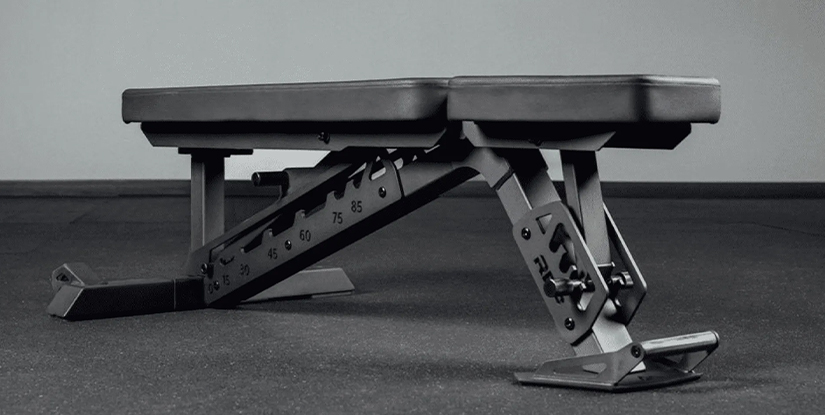
The effectiveness of space-saving solutions with a commercial adjustable workout bench is fundamentally dictated by the precision of its adjustment mechanism. In a high-traffic environment, an imprecise mechanism is not just a nuisance; it is a liability. If the adjustment increments are too broad, the user cannot target specific muscle groups; if they are too frequent or difficult to manipulate, the throughput of the station decreases.
Professional-grade benches typically utilize a pop-pin or ladder-style adjustment system. The choice between these two depends on the desired speed of transition versus the required stability under heavy loads. For high-turnover commercial environments, speed of adjustment is often the primary metric, whereas strength-focused facilities may prioritize absolute stability and locking strength.
| Adjustment Type | Primary Benefit | Typical Use Case | Mechanical Limitation |
|---|---|---|---|
| Pop-Pin System | Rapid angle changes; high user autonomy | High-traffic commercial gyms | Requires more manual dexterity; potential for pin wear |
| Ladder/Slot System | Maximum structural stability; high weight capacity | Strength and powerlifting clubs | Slower transition times; requires more physical effort |
| Hand-Lever System | Seamless transition; fluid movement | Boutique fitness studios | Often more complex internal hydraulics or linkages |
A common mistake in procurement is prioritizing the number of angles over the quality of the locking mechanism. An adjustable bench with 15 angles that lacks a secure, high-tolerance lock will fail during heavy compound movements. Operators should verify that any adjustable component meets strict tolerance standards to prevent lateral shifting during use. Beyond the mechanical internals, one must consider the physical boundaries the equipment creates.
Dimensional Analysis: Footprint vs. Functional Reach
When calculating the required clearance for a piece of equipment, many operators fail to account for the 'dynamic footprint.' This is the total area occupied by the equipment plus the person using it and the range of motion (ROM) of the weights involved. For an adjustable bench, the footprint changes depending on the incline angle and the length of the user's limbs.
To implement a successful space-saving strategy, operators must utilize a 'maximum deployment' calculation. This involves measuring the bench at its longest possible setting (usually a full decline or extreme incline) and adding a safety buffer for barbell or dumbbell movement. Neglecting this calculation leads to collisions between users or equipment hitting adjacent walls.
Optimizing Clearance Zones
Effective layout planning requires a three-dimensional approach to space. You are not just managing the floor; you are managing the overhead and lateral clearance. This is especially critical when the bench is used with adjustable dumbbells or barbells, where the arc of movement extends beyond the bench's physical frame.
- The Lateral Buffer: Ensure at least 36 inches of clear space on either side of the bench for arm extension and weight swing.
- The Longitudinal Buffer: Account for the length of the barbell plus the user's head and foot positioning.
- The Vertical Variable: For incline work, ensure the ceiling height or overhead obstructions do not interfere with the upward trajectory of the load.
By mastering these dimensional variables, an operator ensures that the versatility of the equipment does not create a safety hazard in a confined space. This leads directly to the necessity of rigorous maintenance to ensure these dimensions remain safe over time.
Explore the complete technical specifications:
Foldable Workout Bench for Small Spaces: Wholesale Guide | Factory Price
Maintenance Protocols for High-Use Adjustment Points
A failure in the adjustment mechanism of a commercial bench is a high-risk event. In high-intensity training environments, the constant shifting of weight and the friction of adjustment parts can lead to premature wear. If an operator neglects the upkeep of these moving parts, the 'space-saving' benefit is negated by the need for frequent equipment replacement or, worse, a user injury.
The primary cause of adjustment failure is often the accumulation of sweat, dust, and debris within the sliding or pivoting tracks. This debris acts as an abrasive, increasing friction and eventually causing the mechanism to stick or, in extreme cases, fail to lock completely. Rigorous maintenance is the only way to prevent these structural degradations.
The Preventative Maintenance Checklist
To maintain the integrity of a commercial adjustable workout bench, facility managers should implement a structured inspection cadence. This is not a suggestion; it is a requirement for long-term operational ROI.
| Inspection Component | Frequency | What to Look For | Corrective Action |
|---|---|---|---|
| Adjustment Pins/Levers | Weekly | Bent pins, loose handles, or sluggish movement | Lubrication or replacement of pin assemblies |
| Upholstery & Seams | Monthly | Cracks, tears, or moisture ingress | Re-upholstering or replacing padding inserts |
| Frame & Welds | Quarterly | Stress fractures, rust, or loose bolts | Torque check on all structural bolts |
| Leveling Feet/Base | Bi-Annually | Uneven wear or wobbling on the floor | Adjustment of leveling feet or floor matting |
A common failure mode observed in lower-tier equipment is the 'incremental drift,' where the bench slowly shifts out of its intended angle due to loose internal components. If a bench does not return to a perfectly level position when reset, the adjustment mechanism must be serviced immediately. Even with perfect maintenance, the human element remains a critical variable in space management.
Operational Best Practices for High-Density Training
Even with the best equipment and maintenance, the way staff and users interact with the bench dictates the efficiency of the floor space. A high-quality adjustable bench is a tool, and like any tool, its utility is maximized through proper operational protocols. Operators often see the same mistake: a user leaves a heavy dumbbell or a barbell partially on the bench, which effectively 'claims' more space than the bench actually occupies.
To maintain a high-density environment, there must be a cultural standard of 'resetting the station.' This means that once an exercise is complete, the bench is immediately returned to a neutral or compact position. This small habit allows the next user to transition more quickly and ensures that the footprint remains predictable for the next person in line.
Standard Operating Procedures (SOPs) for Staff
Gym floor staff should be trained to monitor equipment positioning. This is particularly important in smaller boutique settings where every square inch counts. Implementing a 'zero-footprint' policy during downtime can significantly enhance the visual appeal and functional density of the gym.
- The Reset Rule: Every bench must be returned to a flat/neutral position immediately following use.
- The Weight Clearance Rule: No weights should be left on or near the bench between sessions.
- The Visual Audit: During every shift change, a supervisor must verify that all adjustable benches are in a safe, standardized position.
When these protocols are followed, the operational efficiency of the facility increases, allowing for higher user throughput without adding more equipment. Looking ahead, the intersection of technology and hardware will further evolve these practices.
The Integration of Digital Intelligence in Compact Layouts
As the fitness industry matures, the concept of space-saving is moving beyond physical dimensions into digital integration. Modern facility design is no longer just about where a bench sits, but how it communicates with the user's training program. We are seeing a shift toward highly specialized, smart-capable equipment that minimizes the need for multiple disparate machines.
A future-proof facility will likely utilize benches that are compatible with integrated weight-tracking sensors and digital coaching interfaces. This allows a single station to serve as a strength station, a hypertrophy station, and a mobility station, all while maintaining a very small physical footprint. This level of multi-functionality is the ultimate evolution of the commercial adjustable workout bench.
The Future of Modular Strength Training
For the professional buyer, the investment decision is moving toward a holistic view of the facility ecosystem. The goal is to procure equipment that can adapt to changing trends without requiring a complete floor-plan overhaul. Key indicators of future-proof equipment include:
- Modular Compatibility: The ability to add attachments (e.g., dip handles or preacher pads) without replacing the entire base unit.
- Standardized Footprints: Equipment designed with predictable dimensions that facilitate easy grouping and modularity.
- Digital Readiness: Hardware that can support or integrate with emerging fitness tracking technology.
By prioritizing these factors, operators ensure that their facility remains competitive, even as spatial constraints and consumer demands continue to evolve in the highly dynamic commercial fitness market.