

Why a Commercial Gym Bench Is Essential for Any Workout Area
The Foundational Role of Professional Strength Infrastructure
In the architecture of a high-performance training environment, certain pieces of equipment serve as the cornerstone for all other movements. A commercial gym bench is not merely a piece of furniture; it is a precision-engineered tool designed to facilitate hundreds of different exercises ranging from heavy compound presses to isolated accessory work. Unlike consumer-grade alternatives, a commercial-grade bench provides the stability required to handle asymmetrical loading and high-velocity movements without compromising the user's safety or the equipment's structural integrity. Understanding why this investment is essential requires a deep dive into the technical specifications that separate professional equipment from standard household items.
A well-chosen bench serves as the primary interface between the athlete and the weight, making its build quality a direct variable in training performance. As we explore the intricacies of these machines, we will first examine the structural reality that makes them indispensable for high-traffic environments.
Structural Reality: Load Capacity and Frame Engineering
The most significant differentiator in professional fitness environments is the sheer level of structural reinforcement. A commercial gym bench is engineered to manage dynamic loads—meaning it must withstand not just static weight, but the sudden, jarring forces of a heavy lift being dropped or a rapid change in direction during an exercise. High-quality benches typically utilize heavy-gauge steel tubing with reinforced welding at every critical junction.
- Steel Gauge Comparison: While a standard home bench might use 14-gauge steel, a professional unit often utilizes 11-gauge or even 7-gauge steel in high-stress areas to prevent bowing or structural fatigue.
- Base Design: A wide-set base is a non-negotiable requirement to ensure the center of gravity remains stable during unilateral movements, such as single-arm dumbbell presses.
- Common Failure Mode: A common mistake in procurement is ignoring the base width. A narrow base may support high weight in a static position but can tip or wobble during high-intensity, dynamic lifting sessions.
Once the frame provides a stable foundation, the next critical component is the mechanical system that allows for versatility across various training planes.
Precision Adjustment Mechanisms and Range of Motion
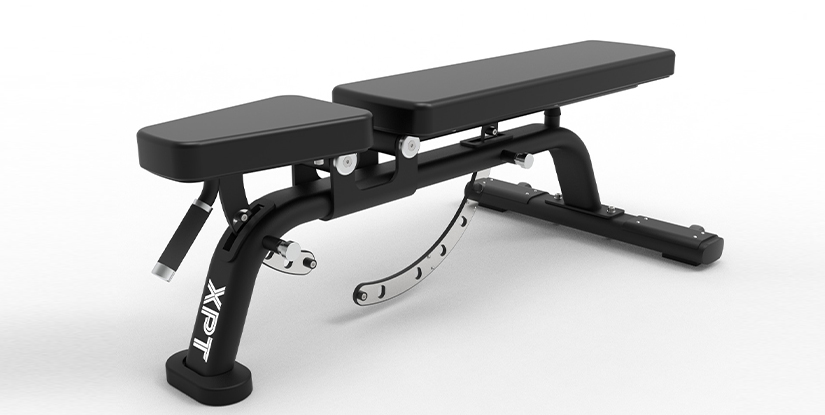
Versatility is the hallmark of a professional training space. A single commercial gym bench can transform from a flat bench for heavy chest presses into an incline bench for upper pectoral development, or even a decline bench for lower chest work. This versatility is entirely dependent on the precision of the adjustment mechanism.
When selecting a bench, the mechanism must be evaluated based on its ability to lock securely and transition smoothly. Professionals look for a 'ladder-style' or 'pop-pin' system that offers consistent angles. A precise adjustment mechanism ensures that the athlete is always at the optimal angle for muscle engagement, preventing unnecessary joint strain. If the angles are off by even a few degrees, the effectiveness of a targeted exercise is significantly diminished.
| Mechanism Type | Primary Benefit | Best Use Case |
|---|---|---|
| Pop-Pin System | Rapid, single-handed adjustments | High-traffic commercial settings |
| Ladder/Slot System | Extremely high stability and security | Heavy powerlifting environments |
| Manual Lever Adjustment | Smooth, controlled transitions | Bodybuilding and hypertrophy training |
After ensuring the mechanical movements are precise, one must consider the surface that the athlete actually interacts with: the upholstery.
Explore the complete technical specifications:
Adjustable Bench Exercises: Full-Body Movement Library for Fitness
Surface Integrity: Upholstery and Density Standards
The interface between the human body and the bench is where many equipment failures begin to manifest. High-quality commercial upholstery is designed to be more than just a comfortable surface; it must be a high-density, non-porous layer that supports the athlete's posture and hygiene requirements. In a professional setting, the upholstery must resist the chemical breakdown caused by frequent sanitization and the physical impact of sweat and friction.
A high-density foam core is essential because it maintains its shape over thousands of uses. Low-quality foam will eventually 'bottom out,' meaning the athlete will feel the hard surface beneath the padding. This not only causes discomfort but also creates instability during heavy lifts. Furthermore, the exterior material should be a high-grade synthetic leather that is easy to clean and resistant to tearing. A failure to prioritize this often leads to hygiene-related complaints and premature equipment replacement.
Maintaining this surface integrity requires a consistent approach to cleaning and inspection to avoid the gradual degradation of the material.
Maintenance Protocols for Long-Term Durability
Even the most robust commercial gym bench requires a proactive maintenance regimen to ensure it remains a safe tool for athletes. In a high-traffic facility, the cumulative stress of hundreds of users can lead to the loosening of bolts or the degradation of moving parts if left unchecked. Establishing a formal maintenance protocol is a sign of a professional operation.
The following checklist is recommended for monthly facility inspections:
- Fastener Integrity: Check every bolt and screw for torque. High-impact exercises can naturally loosen fasteners over time.
- Upholstery Assessment: Look for hairline cracks in the synthetic leather or 'soft spots' in the foam that indicate internal density loss.
- Welding Inspection: Visually inspect all weld points for signs of stress fractures or discoloration, which can indicate structural fatigue.
- Lubrication: If the bench uses a sliding mechanism, ensure the tracks are clean and lightly lubricated to prevent sticking.
Consistent maintenance ensures that the bench continues to perform at peak levels, maximizing the return on your initial investment.
Spatial Optimization and Ergonomic Layout
Integrating a commercial gym bench into a workout area is not just about finding a place to put it; it is about spatial optimization. A professional training space must account for the 'operational footprint' of the equipment. This includes the physical dimensions of the bench, the length of the barbell being used, and the reach of the athlete during movement.
When planning a layout, designers must consider the range of motion (ROM) required for specific exercises. For example, an incline bench requires more vertical and longitudinal space than a flat bench. If benches are placed too close together, it increases the risk of collisions between users or interference with other equipment like power racks or dumbbells. A well-planned layout utilizes the bench as a focal point that dictates the flow of movement within the zone.
By optimizing the space around the bench, you create a safer, more efficient environment that allows for both heavy lifting and accessory work without congestion.
Procurement and Return on Investment (ROI)
Purchasing equipment for a fitness facility is a significant capital expenditure. While the initial cost of a commercial-grade bench is higher than a residential model, the long-term ROI is significantly superior. A professional bench is designed for a lifecycle measured in years of constant use, whereas consumer models often fail within months of commercial-grade demand.
When evaluating your purchase, consider the Total Cost of Ownership (TCO). This includes the initial price, the frequency of required maintenance, and the expected lifespan of the upholstery. A cheap bench that requires replacement every 18 months is far more expensive over a five-year period than a single premium bench that lasts the entire duration with minimal upkeep. Professional facilities prioritize durability to avoid the downtime and labor costs associated with frequent equipment replacement.
Understanding these economic factors is vital for making a decision that supports both the facility's budget and the athletes' needs.
The Future Outlook: Evolution of Strength Training Benches
The design of strength equipment is constantly evolving to meet the needs of modern athletes. We are seeing a shift toward more modular and multi-functional designs that can adapt to various training styles. Future developments in materials science promise even more durable upholstery and even more robust steel alloys, while smart-integration technology may soon allow for real-time data tracking through the equipment itself.
As the demand for professional-grade home and boutique studio spaces grows, the distinction between 'consumer' and 'commercial' continues to widen. Investing in high-spec equipment now ensures that your workout area remains relevant and capable of handling the evolving complexities of human performance and strength training.