

Optimizing Procurement for Wholesale Dumbbell Sets: A Technical Guide for Facility Operators
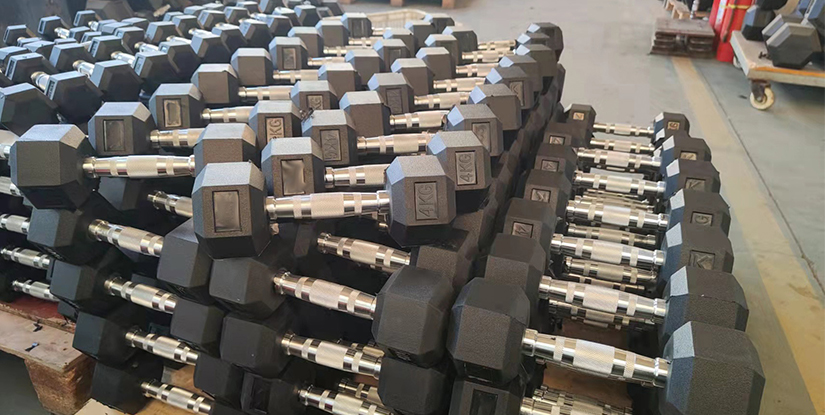
Addressing Material Degradation in Wholesale Dumbbell Sets
Facility operators frequently encounter the issue of premature surface degradation, where coating or rubber components begin to peel or crack within months of deployment. This failure mode is rarely a result of misuse; rather, it is typically caused by poor chemical bonding during the manufacturing phase or the use of low-grade recycled elastomers that lack UV stabilizers. When managing Wholesale Dumbbell Sets, identifying these material weaknesses at the point of procurement is essential to preventing high replacement costs.
Common Material Failure Modes
Understanding the root causes of material fatigue allows procurement officers to set higher standards for incoming shipments. Below are the primary mechanical failures observed in lower-tier commercial equipment.
- Elastomer Delamination: Occurs when the bond between the metal core and the rubber coating fails due to improper vulcanization.
- Oxidation of Cast Iron: Visible when thin coatings fail to protect the ferrous core from humidity, leading to surface rust.
- Handle Grip Erosion: Caused by low-density knurling or soft polymer coatings that compress under heavy use.
To prevent these issues, buyers should request technical data sheets that specify the durometer of the rubber and the type of coating used on the steel handles. Once the material composition is validated, the next step is evaluating the structural geometry of the weights themselves.
Geometric Precision and Weight Tolerance Standards
Beyond surface aesthetics, the structural uniformity of a weight set determines its longevity and professional utility. A significant pain point for high-end fitness centers is the receipt of sets where individual dumbbells deviate significantly from the labeled weight, a problem that undermines user trust and equipment calibration.
Weight Deviation Benchmarks
In a professional setting, weight tolerances must be strictly defined. Unchecked variance is often a result of imprecise casting processes or inconsistent metal density in the center of the dumbbell head. Operators should use the following benchmark table to evaluate incoming inventory.
| Dumbbell Type | Expected Tolerance Range | Acceptable Deviation | Critical Failure Threshold |
|---|---|---|---|
| Cast Iron (Hex/Round) | ± 1% to 2% | < 0.5kg for low weights | > 3% deviation |
| Rubber Encased | ± 1.5% to 3% | < 1kg for high weights | > 5% deviation |
| Urethane Coated | ± 1% to 2% | Minimal (Precision focus) | Visible density gaps |
By implementing a random sampling check upon delivery, operators can verify that the Wholesale Dumbbell Sets meet the agreed-upon precision standards. This rigorous verification process is the foundation for the operational maintenance required once the equipment is in active use.
Operational Maintenance: Protecting Surface Integrity
Having secured high-precision equipment, the focus shifts to preserving that initial state through structured maintenance. A common mistake among facility managers is treating dumbbells as "set and forget" items, failing to account for the environmental factors that accelerate wear.
Preventative Maintenance Checklists
Regular inspections reduce the frequency of full-set replacements. Operators should integrate a monthly inspection cadence into their standard operating procedures (SOPs). The following checklist serves as a baseline for professional facility audits.
- Knurling Inspection: Check for smoothness or rounded edges that could cause skin abrasions.
- Surface Friction Test: Ensure rubber coatings have not become excessively slick due to oil or sweat buildup.
- Structural Symmetry: Rotate the dumbbell to ensure no significant wobble exists between the heads and the handle.
- Corrosion Audit: Inspect handle junctions for any signs of oxidation or metal exposure.
If a technician identifies a significant flaw, such as a crack in a rubber head, the piece should be removed from service immediately to avoid injury. Effective maintenance, however, goes beyond mere inspection and enters the realm of environmental control.
Explore the complete technical specifications:
Environmental Variables and Storage Solutions
The lifespan of high-quality equipment is heavily influenced by the climate in which it is stored. High humidity or extreme temperature fluctuations can cause the expansion and contraction of different materials—such as the metal core versus the rubber shell—leading to catastrophic structural failure.
Atmospheric Impact on Equipment Longevity
When sourcing Wholesale Dumbbell Sets, it is vital to consider the destination environment. An indoor commercial gym in a temperate zone requires different storage protocols than an outdoor training facility or a high-humidity tropical gym.
| Environmental Factor | Effect on Equipment | Mitigation Strategy |
|---|---|---|
| High Humidity | Accelerated oxidation of iron cores | Use of humidity-controlled air or silicone-based coatings |
| UV Exposure | Polymer/Rubber brittleness and cracking | Protective covers or indoor storage only |
| Temperature Flux | Expansion/Contraction stress on bonds | Stable ambient temperatures and controlled ventilation |
Implementing these environmental controls ensures that the investment in premium equipment is protected from the elements. Once the physical environment is stabilized, the focus shifts to the logistics of efficient floor organization.
Explore the complete technical specifications:
Identifying the Best Fitness Manufacturer for Commercial Use
Layout Optimization and Floor Loading Dynamics
Properly managing the physical presence of heavy weights is as much about safety as it is about space efficiency. A frequent failure in gym layout design is the over-concentration of weight in a single area, which can lead to floor subsidence or uneven wear on commercial flooring.
Weight Distribution and Storage Hardware
To maintain floor integrity, weight sets should be distributed across several storage stations rather than stacked in one centralized location. This prevents localized pressure points on the subfloor. When designing the layout, consider the following technical requirements:
- Rack Stability: Ensure all dumbbell racks are level and capable of supporting the full weight of a complete set without tipping.
- Damping Materials: Use high-density EVA or vulcanized rubber mats beneath all storage areas to absorb impact and vibration.
- Spatial Clearance: Maintain a minimum 1-meter clearance around storage racks to allow for safe retrieval and user movement.
A well-organized layout not only enhances safety but also simplifies the inspection process by making it easier to spot damaged or misplaced units. Maintaining this order requires a systematic approach to troubleshooting common operational issues.
Explore the complete technical specifications:
Troubleshooting Common Equipment Issues
Even with the best maintenance, operational issues will arise. The ability of a facility manager to diagnose whether an issue is a manufacturing defect or a maintenance failure is the difference between unnecessary returns and a high-functioning gym floor.
Diagnostic Matrix for Equipment Wear
When a user reports a problem, use the following diagnostic steps to determine the root cause before taking action.
- Problem: Handle Slippage. Cause: Excessive sweat/oil or worn knurling. Action: Clean with isopropyl alcohol or replace unit if knurling is structurally compromised.
- Problem: Audible Rattling. Cause: Loose internal weight components or failing weld. Action:-
- Problem: Rubber Odor. Cause: Outgassing from low-grade synthetic materials. Action: Increase ventilation or replace with high-grade urethane sets.
By following this logical diagnostic path, operators can avoid the mistake of blaming the supplier for issues caused by improper cleaning or environmental neglect. This distinction is critical when calculating the long-term ROI of your equipment purchases.
Explore the complete technical specifications:
Procurement Strategy: Verifying Supplier Quality
The ultimate step in ensuring the longevity of your facility is the initial procurement process. A successful purchase is not defined by the lowest price per unit, but by the total cost of ownership over the equipment's lifecycle.
The Professional Buyer's Verification Checklist
Before finalizing any contract for large-scale orders, ensure that the following technical documentation is provided and verified by a third party or internal engineer.
- Material Certifications: Request documentation regarding the grade of steel and the chemical composition of the coating.
- Tolerance Reports: Ask for sample weight test results to ensure the manufacturer adheres to strict weight precision. - Stress Test Data: Seek evidence of impact testing or drop tests performed on the dumbbell heads.- Shipping and Crating Standards: Verify that the supplier uses reinforced packaging to prevent impact damage during transit.
Rigorous documentation ensures that you are not just buying a product, but an engineered tool designed for professional use. As the industry moves toward higher standards of durability, these verification steps will become increasingly critical.
Explore the complete technical specifications:
Multi-Vendor Procurement | Managing Hidden Operational Costs
Conclusion: The Long-Term Value of Quality Control
Effective management of Wholesale Dumbbell Sets requires a transition from viewing them as simple commodities to treating them as precision instruments. By focusing on material integrity, strict weight tolerances, and proactive maintenance, facility operators can maximize the lifespan of their assets and ensure a safe, high-performance environment for their clients. The success of a commercial fitness facility is built on the reliability of its fundamental tools, and that reliability begins with technical scrutiny at the moment of procurement.