

How to Choose the Right Weight Plates for Your Facility
Understanding the Fundamental Material Archetypes
Selecting weight plates is not merely a matter of purchasing heavy objects; it is a strategic decision regarding the long-term durability, noise profile, and floor impact of your facility. A common failure in facility management occurs when an operator selects materials based solely on price-per-pound without considering the secondary costs of floor damage or equipment wear. The choice between cast iron, rubber-coated, and solid urethane plates will fundamentally dictate your maintenance schedule and the lifespan of your barbell sleeves.
Cast Iron: Durability and Cost Efficiency
Cast iron plates are the industry standard for traditional strength training environments. They offer high density and a relatively compact profile, which is essential for loading heavy barbell combinations. However, the lack of shock absorption means that improper technique or high-velocity drops can lead to micro-fractures in the iron or significant damage to your lifting platforms. When selecting cast iron, operators must verify the casting quality to ensure there are no structural inclusions that could lead to shattering under high stress.
Bumper Plates: Impact Management and Versatility
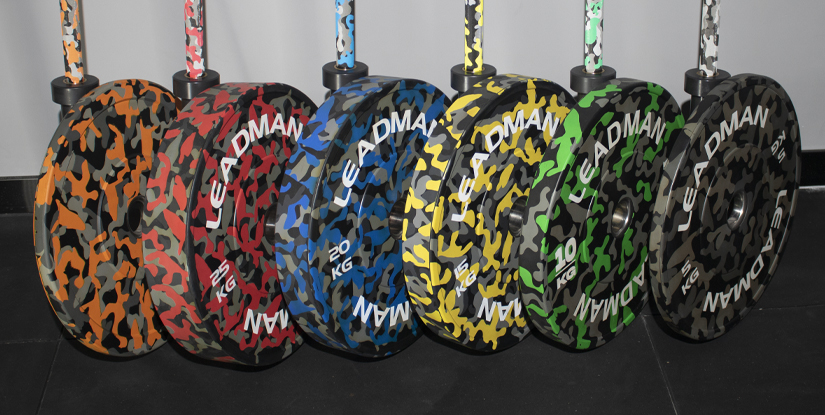
Bumper plates, typically made of high-density rubber or urethane, are engineered for Olympic lifting and high-impact training. The primary advantage is the ability to drop the weight from overhead without destroying the equipment or the floor. While they are significantly thicker than iron plates, which can limit the total weight loadable on a standard barbell, they provide the essential safety buffer required for modern functional fitness facilities. The decision to use bumpers depends on whether your clientele focuses on technical barbell movements or traditional powerlifting.
Explore the complete technical specifications:
Core Certification Systems for Professional Fitness Equipment Manufacturers
Comparing Plate Material Performance and Use Cases
To make an informed procurement decision, an operator must analyze the intersection of material properties and the intended training style of the facility. Using the wrong material in a high-impact zone is a leading cause of premature floor degradation and increased noise complaints in multi-tenant buildings.
| Material Type | Primary Use Case | Impact Resistance | Durability Profile | Typical Thickness |
|---|---|---|---|---|
| Cast Iron | Powerlifting, Bodybuilding | Low (Minimal drop capability) | High (Brittle if dropped) | Thin/Compact |
| Rubber Encased | General Fitness, CrossFit | Medium (High shock absorption) | Moderate (Edge wear possible) | Medium |
| Solid Urethane | High-Performance, Olympic Lifting | Very High (Superior density) | Very High (Resistant to tearing) | Medium/Thick |
| Vinyl/Plastic | Home/Light Commercial Use | Low (Surface durability issues) | Low (Scuffing/Cracking) | Variable |
When comparing these options, professional buyers should note that while urethane carries a higher upfront cost, its resistance to environmental degradation and physical abrasion often yields a lower total cost of ownership (TCO) over a five-year operational cycle compared to cheaper rubber alternatives.
Explore the complete technical specifications:
Evaluating Dimensional Tolerances and Calibration Standards
One of the most significant pain points for advanced strength athletes and competitive facilities is weight variance. A 20kg plate that actually weighs 19.5kg can disrupt a training cycle and lead to athlete dissatisfaction. This is often caused by low-grade manufacturing processes that prioritize speed over precision.
The Importance of Center-Hole Uniformity
Beyond the weight itself, the diameter of the center hole is a critical technical specification. If the hole is too tight, plates will not slide easily onto the barbell, creating friction and preventing smooth rotation. If it is too loose, the plates will wobble, causing uneven weight distribution during a lift. Operators should verify that the tolerance for the center hole remains consistent across all denominations in a set. A high-quality commercial-grade plate should have a hole diameter that allows for a smooth fit on standard 2-inch (50mm) Olympic bars without excessive play.
Weight Deviation Benchmarks
Professional facilities should establish a maximum acceptable deviation for all incoming shipments. While most commercial equipment allows for a small percentage of variance, the lack of standardization in lower-tier products can be problematic. A standard benchmark for high-quality bumper plates is a deviation of less than 1% to 2% of the total mass. If a batch of 25kg plates shows a consistent 3% deficit, it indicates a calibration issue at the manufacturing source that must be addressed before the equipment is deployed on the floor.
Material Selection Based on Facility Environment
The ambient environment of your facility plays a decisive role in how weight plates will age. A common mistake is selecting high-gloss or certain rubberized finishes for environments that are subject to high humidity or chemical cleaning agents. Moisture can seep into the cores of inferior plates, leading to internal corrosion or the growth of mold, which is particularly prevalent in basement gyms or non-climate-controlled warehouses.
Humidity and Temperature Fluctuations
In environments with high humidity, such as functional fitness centers or coastal-region gyms, metal-core plates are susceptible to oxidation. Even if the plate is coated, moisture can penetrate the edges. For these settings, solid urethane is often the superior choice as it is essentially non-porous and chemically inert. For traditional weight rooms, ensuring that the plates are finished with a high-quality powder coating or a durable polymer layer is essential to prevent surface rust and aesthetic degradation.
Floor Protection and Noise Mitigation
The thickness of the plate is directly proportional to the pressure exerted on the floor. If your facility is located in a multi-use building, noise mitigation is a primary operational requirement. Bumper plates provide a better buffer, but the density of the material matters. A hard-density rubber might produce a high-pitched 'clack' upon impact, whereas a softer, high-density urethane might produce a duller, more manageable sound. Operators must balance the need for durability with the acoustic requirements of their lease agreement.
Explore the complete technical specifications:
Implementing a Rigorous Inspection and Maintenance Protocol
Even the highest-quality weight plates require periodic inspection to ensure they remain safe for use. Neglecting this task can lead to catastrophic failure, such as a plate shattering during a lift or a barbell sleeve being damaged by a malformed plate hole. A structured inspection routine prevents these issues from escalating into liability risks.
Daily Operational Checklist
- Visual Inspection: Check for any cracks, chips, or structural deformities in the outer rim.
- Surface Integrity: Look for peeling coatings or bubbling rubber that could indicate internal degradation.
- Odor/Scent Check: In rubber-heavy environments, monitor for excessive off-gassing, which can indicate low-grade recycled materials.
- Loading Ease: Ensure plates slide easily on barbells; any resistance may indicate debris in the center hole.
Quarterly Deep-Dive Maintenance
On a quarterly basis, facility managers should perform a more granular technical audit. This includes weighing a sample of the plates on a calibrated scale to check for any significant deviation from the labeled weight. Additionally, inspect the edges of the plates for any sharpness or burrs that could snag a user's hands or damage barbell knurling. If a plate shows signs of significant structural fatigue, it must be removed from circulation immediately.
Common Failure Modes in Weight Plate Equipment
Understanding how equipment fails allows an operator to move from a reactive to a proactive management style. Most weight plate failures are not instantaneous but are the result of gradual wear and tear that goes unmonitored.
| Failure Mode | Primary Cause | Detection Method | Preventative Action |
|---|---|---|---|
| Edge Cracking | High-velocity impact/Drops | Visual inspection of rim | Use bumper plates for all drops |
| Weight Drift | Improper calibration/Age | Digital scale testing | Buy from high-tier suppliers |
| Color Fading | UV exposure/Chemical cleaning | Visual aesthetic check | Store away from sunlight/Use inert cleaners |
| Core Oxidation | High humidity/Poor coating | Check for rust at center hole | Use urethane-coated equipment |
By recognizing these patterns, an operator can adjust their training protocols—such as limiting heavy drops on certain types of plates—to extend the functional life of the equipment.
Optimizing Procurement for Long-Term ROI
When planning a facility build-out or refresh, the temptation to prioritize the lowest initial quote is high. However, professional operators know that the most expensive plate is the one that needs to be replaced twice in five years. To achieve true ROI, procurement must be treated as a technical evaluation rather than a shopping trip.
The Total Cost of Ownership (TCO) Formula
A sophisticated procurement process considers more than just the unit price. You must factor in the cost of floor replacement, the frequency of replacement, and the potential downtime caused by equipment failure. A cheaper iron plate might save $500 upfront, but if it requires more frequent replacement of the barbell sleeves due to improper fit, or if it damages the flooring, the true cost is significantly higher. Always request technical specification sheets that include material composition, tolerance levels, and impact testing results before finalizing a large-scale order.
Verification of Supplier Standards
Before committing to a vendor, ask for evidence of their quality control processes. Do they perform random weight-check audits? What are their tolerances for center-hole diameter? Do they provide detailed material safety data sheets (MSDS) for their polymers? A supplier that can provide these technical details is much more likely to provide equipment that meets the rigors of a commercial environment than one that only provides marketing imagery.