

Selecting a Reliable Weight Plates Manufacturer: A Technical Guide to Production Quality
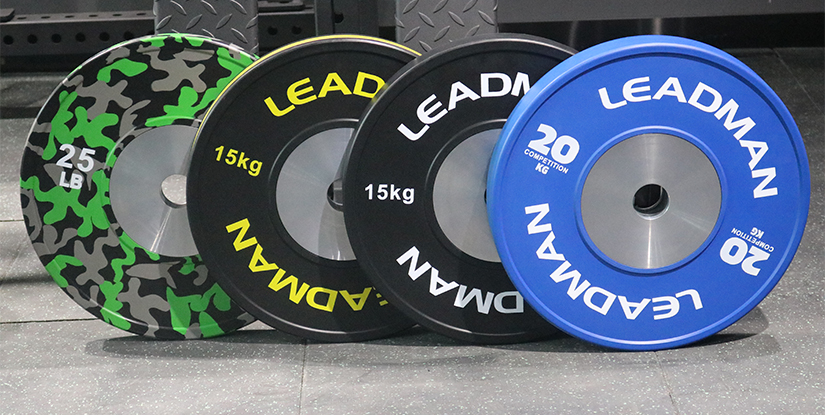
Procurement managers at commercial fitness facilities often face a recurring frustration: the arrival of weight plates that deviate from their declared mass or possess inconsistent thicknesses. Such discrepancies do not merely disrupt gym floor organization; they can unbalance barbell loads, creating significant safety risks for athletes during heavy lifts. When a facility experiences premature surface degradation or uneven weight distribution, the root cause is rarely user error, but rather a failure in the fundamental manufacturing process. Understanding the technical nuances of how a Weight Plates Manufacturer operates allows buyers to move beyond surface-level aesthetics and evaluate the structural integrity of their inventory.
Evaluating Material Selection and Raw Input Standards
Before the first casting or molding begins, the quality of the finished product is largely determined by the purity and consistency of the raw materials. A professional manufacturer must manage several distinct material streams, each requiring specific handling to prevent common defects like air pockets or brittleness.
The Role of Iron and Steel Purity
For traditional iron plates, the ratio of carbon to silicon is critical. An excess of impurities can lead to casting defects, such as cracks during the cooling phase. High-grade cast iron provides the density required for high-mass plates, but if the metallurgical composition is poorly controlled, the plates may become brittle and prone to shattering under high-impact drops. Operators should verify that the supplier uses consistent iron grades to ensure long-term durability.
Polyurethane and Rubber Compounding
In the production of bumper plates, the elastomer quality is the primary differentiator between premium and budget-grade equipment. High-quality polyurethane offers better density and durability than standard rubber, but it requires precise mixing ratios. If the chemical composition is inconsistent, the plates may exhibit "bleeding" or hardening, leading to a loss of the necessary kinetic energy absorption. Professionals should look for manufacturers that utilize high-density, virgin materials rather than recycled scrap to maintain predictable bounce characteristics.
Once the materials are secured, the manufacturer moves into the structural shaping phase, where the physical dimensions are established. This transition from raw substance to defined shape is where precision tolerances are either met or missed.
Precision Molding and Casting Methodologies
The transformation of raw material into a geometric weight plate requires specialized machinery and highly controlled environments. The method chosen—whether casting, molding, or pressing—dictates the plate's final density and surface consistency.
| Manufacturing Method | Primary Material | Typical Application | Common Failure Mode |
|---|---|---|---|
| Sand Casting | Cast Iron | Standard Iron Plates | Surface pitting and internal voids |
| Injection Molding | Polyurethane/Rubber | Bumper Plates | Inconsistent thickness or "flash" edges |
| Compression Molding | High-Density Rubber | Commercial Bumper Plates | Uneven weight distribution |
Understanding these methods is essential because the chosen technique directly influences the plate's center of gravity. A well-executed casting process ensures that the weight is concentrated centrally, whereas a poor molding process can lead to eccentric loading. This technical foundation leads directly to the necessity of rigorous dimensional and mass verification.
Explore the complete technical specifications:
Iron Casting Factory | Precision Weight Plates & Barbell Manufacturing
Dimensional Tolerances and Weight Accuracy Protocols
The most common point of failure in procurement is the "tolerance gap." A weight plate labeled as 20kg may actually weigh 19.8kg or 20.2kg. While a 1% variance might seem negligible in a home setting, in a professional strength facility, it can lead to cumulative errors on a barbell, causing an uneven lift. A high-tier Weight Plates Manufacturer implements a multi-stage verification system to mitigate this.
Implementing Mass Deviation Limits
Manufacturers must establish strict deviation limits for every production batch. For high-end competition equipment, these limits are significantly tighter than for general commercial use. Buyers should demand documentation regarding the manufacturer's internal tolerances. For example, a professional-grade bumper plate might target a deviation of less than 0.5%, whereas economy-grade plates may allow up to 2% or 3%.
The Importance of Center-Hole Precision
Beyond the total mass, the diameter and concentricity of the center hole are vital. If the hole is not perfectly centered, the plate will wobble on the barbell sleeve, creating dangerous oscillations during movement. This is often caused by inadequate shrinkage compensation during the cooling phase of casting. A rigorous QC checklist should include a measurement of the hole's diameter relative to the plate's overall diameter to ensure a seamless fit.
When a manufacturer achieves these tolerances, the focus shifts from the internal structure to the external finish, which determines how the product interacts with the environment and the user.
Explore the complete technical specifications:
Surface Finishing and Protective Coating Processes
A plate's surface is its first line of defense against oxidation, abrasion, and environmental wear. The application of paint, powder coating, or specialized coatings is not merely aesthetic; it is a functional requirement for longevity.
Powder Coating vs. Liquid Paint
Powder coating is generally superior for commercial environments because it creates a thicker, more resilient barrier. Unlike liquid paint, which can peel or chip easily under impact, powder coating undergoes a thermal curing process that bonds the material to the substrate. This prevents the common problem of "rust bleeding" from beneath the surface in humid gym environments. However, if the oven temperature during application is not precisely managed, the coating can become brittle and crack.
A detailed checklist for surface quality includes:
- Adhesion Test: Ensuring the coating does not flake when subjected to mechanical stress.
- Uniformity: Checking for "orange peel" textures or uneven thickness that could affect the grip.
- Oxidation Resistance: Verifying that the primer layer effectively protects the underlying metal.
With the surface protection established, the manufacturer must finalize the product through various testing stages to ensure it survives the rigors of daily use.
Explore the complete technical specifications:
Stress Testing and Impact Durability Standards
A high-quality weight plate must withstand thousands of cycles of loading, unloading, and dropping. Failure to perform adequate stress testing leads to catastrophic failures, such as the splitting of bumper plates or the cracking of cast iron plates.
Simulating High-Impact Scenarios
The manufacturing process should include a phase of drop testing. This involves dropping plates from specific heights onto a hard surface to simulate real-world usage. If a plate is constructed with high internal air pockets or poor material density, the impact force will cause a structural fracture. This is a critical distinction between a manufacturer that produces hobbyist gear and one that produces professional-grade equipment.
Testing for Fatigue Resistance
Fatigue resistance is particularly relevant for plates that undergo frequent temperature fluctuations or heavy dynamic loading. Constant vibration and impact can weaken the molecular bonds of the material over time. Manufacturers should utilize empirical data from cyclic loading tests to verify that their products can maintain their structural integrity over a multi-year lifecycle. This ensures that the equipment does not become a liability for the facility owner.
After the production and testing cycles are complete, the final step involves the logistics and storage protocols that preserve these quality standards until the product reaches the end-user.
Explore the complete technical specifications:
Rubber Products Factory | Eco-Friendly Fitness Flooring & Weight Plates
Quality Control Checkpoints: A Procurement Checklist
To successfully navigate the relationship with a Weight Plates Manufacturer, buyers should move away from qualitative descriptions and toward quantitative verification. The following checklist serves as a professional benchmark during the procurement auditing phase.
| Audit Category | Requirement to Verify | Red Flag/Warning Sign |
|---|---|---|
| Material Integrity | Certification of raw material purity (Iron/Rubber) | Lack of material data sheets or inconsistent batch numbers |
| Dimensional Precision | Verified center-hole concentricity and thickness tolerance | Visible wobble when placed on a barbell sleeve |
| Mass Consistency | Detailed weight deviation report (e.g., <1% variance) | Noticeable weight differences between plates in the same set |
| Surface Durability | Application of electrostatically applied powder coating | Visible rust spots or peeling paint on sample units |
By utilizing these checkpoints, procurement officers can identify whether a supplier is offering true industrial-grade equipment or merely lower-tier consumer goods. This rigor in selection translates directly to lower replacement costs and higher safety standards in the long run.
Explore the complete technical specifications:
Long-Term Maintenance and Lifecycle Management
Even the highest quality plates produced by an expert manufacturer require periodic oversight to remain in optimal working order. A proactive maintenance strategy prevents the gradual degradation that leads to equipment obsolescence.
Managing Environmental Degradation
Metal-based plates are susceptible to oxidation if humidity levels are not controlled. Even with a high-quality powder coating, small scratches from daily use can expose the raw iron. Facility managers should implement a regular inspection schedule to identify these points of entry. For rubber-based plates, the primary concern is UV exposure and chemical interaction, which can cause the material to harden or crack over time.
Periodic Inspection and Replacement Cycles
A professional facility should not wait for a failure to occur before replacing equipment. Instead, they should track the lifecycle of their most frequently used weights. If a significant percentage of a batch shows consistent mass deviation or surface degradation, it is time to re-evaluate the supplier's manufacturing quality. This data-driven approach ensures that the facility remains a safe and reliable environment for all users.
Maintaining this level of scrutiny ensures that the investment made in high-quality plates yields a significant return through durability and safety.