

Optimizing Facility ROI Through Strategic Functional Equipment Selection
The Economic Shift Toward High-Utility Training Modalities
Modern fitness facility operators are facing a critical inflection point: the diminishing returns of traditional heavy machine rows versus the high-demand surge in functional movement training. While traditional strength machines occupy substantial floor space and offer predictable maintenance, they lack the versatility required by the current demographic of movement-focused athletes. This shift has created a complex procurement challenge: determining exactly what functional equipment gym facilities need to balance capital expenditure with high user engagement. Failure to adapt often results in 'dead zones'—areas of the gym that are underutilized but still demand cleaning and floor space.
The primary cause of this mismatch is a lack of understanding of movement durability. Traditional machines are built for single-plane, linear movements, whereas functional equipment must withstand multidirectional force and higher impact. To avoid the trap of low-value procurement, operators must view functional zones not just as 'extra space,' but as high-performance areas that require specific engineering tolerances. Once the economic rationale for functional zones is established, the next logical step is identifying the specific categories of hardware that drive value.
Essential Categories of Movement-Based Hardware
Establishing a high-performance training zone requires more than just a collection of kettlebells and mats. To maximize the return on investment (ROI), a facility must implement a stratified approach to equipment categories, ensuring that each piece of hardware serves a distinct physiological purpose while maintaining structural integrity under varied use cases.
Load-Bearing and Resistance Modalities
Functional training relies heavily on free weights and non-linear resistance. Unlike selectorized machines, these tools require constant oversight of surface integrity and weight distribution. Common mistakes include purchasing low-grade rubberized weights that degrade under UV exposure or high-frequency impact, leading to cracking and decreased aesthetic value.
| Equipment Category | Primary Use Case | Typical Maintenance Driver | Selection Priority |
|---|---|---|---|
| Free Weight Kits | Unilateral & Bilateral Strength | Surface Oxidation & Grip Integrity | High (Commercial Grade) |
| Suspension Trainers | Core Stability & Bodyweight | Anchor Point Tension/Wear | Medium (High Turnover) |
| Resistance Bands | Variable Resistance/Mobility | Elasticity Decay & Micro-tears | Low (Frequent Replacement) |
| Medicine Balls | Plyometrics & Explosive Power | Outer Shell Integrity/Pressure | High (High Impact) |
Selecting equipment based solely on price rather than durability often leads to a cycle of rapid replacement. For instance, a facility that opts for consumer-grade resistance bands will experience a significant increase in liability risk due to sudden snaps. Therefore, the first step in procurement is verifying that all resistance-based tools meet commercial-grade tensile strength standards. This mechanical reliability forms the foundation for more complex, integrated training structures.
Structural Integrity of Rigging and Wall-Mounted Systems
Moving from portable implements to stationary structures, the demand for load-bearing surfaces increases significantly. The failure of a wall-mounted pull-up bar or a heavy-duty squat rack is rarely a sudden event; it is usually the result of cumulative fatigue in the anchor points or insufficiently treated steel. Identifying what functional equipment gym facilities need also means identifying the structural support required to house it.
Anchor Point Calibration and Wall Loading
A common failure mode in functional zones is the installation of heavy-duty rigs into non-reinforced wall sections. When a user applies dynamic, lateral force—such as during a muscle-up or a high-intensity swinging motion—the load on the anchor points is exponentially higher than a standard vertical weight load. This can lead to structural crumbling or hardware failure if the substrate is not properly vetted.
- Verifying Wall Substrate: Operators must ensure that any wall-mounted functional equipment is secured to structural studs or reinforced masonry.
- Fastener Integrity: Bolts should be checked quarterly for vibration-induced loosening.
- Load Directionality: Ensure that the equipment is designed for the specific direction of force (lateral vs. vertical) prevalent in functional movements.
A robust rigging system serves as the backbone of the functional area, but even the strongest steel requires a dedicated maintenance protocol to prevent degradation. Without a consistent check of the structural mounts, the facility risks both equipment failure and member injury. This leads directly to the necessity of specialized flooring that can absorb these dynamic forces.
Explore the complete technical specifications:
Durable Flooring Solutions for Impact Management
The relationship between equipment and the floor is often overlooked until a high-impact event occurs. A high-performance functional zone requires a flooring system that can manage both the static weight of heavy implements and the dynamic energy of plyometric movements. Without the correct flooring, the vibration from high-impact exercises can travel through the building's structure, causing nuisance noise and long-term damage to adjacent machine-based areas.
Material Selection for High-Impact Zones
When choosing flooring, operators must distinguish between aesthetic rubber and high-density impact absorption. The primary problem is often 'density mismatch,' where the floor is too thin to protect the subfloor from dropped kettlebells or medicine balls, yet too soft to provide a stable base for balance-heavy movements like suspension training.
| Flooring Type | Best For | Pros | Cons |
|---|---|---|---|
| High-Density Vulcanized Rubber | Heavy Free Weights/Kettlebells | Superior Impact Absorption; High Durability | Higher Initial Cost; Installation Complexity |
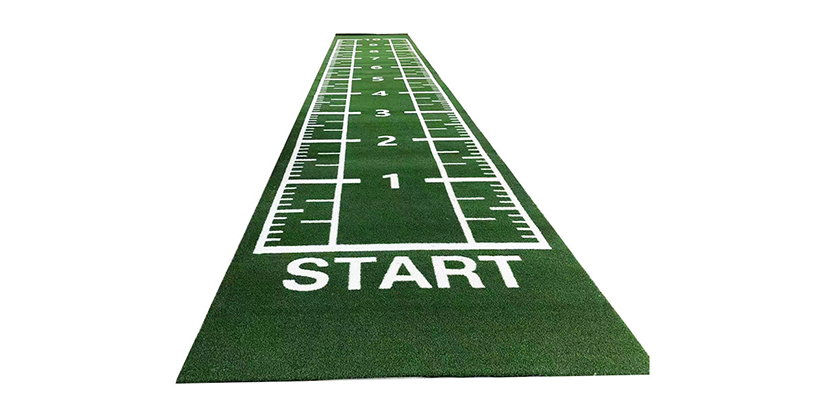
| Turf (Synthetic Grass) | Sled Pushes & Agility Work | Excellent Traction; High Aesthetic Appeal | Requires Specialized Cleaning; Low Impact for Heavy Drops |
| Modular EVA Foam | Light Mobility & Stretching | Low Cost; Easy Replacement | Poor Durability; Low Stability for Strength Work |
A successful implementation involves blending these materials—such as a rubber base with a turf overlay—to accommodate a variety of movements. To verify the efficacy of your flooring, perform a 'bounce test' with a standard medicine ball to ensure the energy return is controlled rather than unpredictable. Once the ground plane is secure, the focus must shift to the environmental maintenance of the equipment itself.
Explore the complete technical specifications:
Commercial Grade Gym Equipment: Durable Solutions for Facilities
Maintenance Protocols for High-Frequency Usage Equipment
The highly versatile nature of functional equipment means it is often subjected to more varied stresses than traditional machines. While a chest press machine has a predictable track, a kettlebell can be dropped at any angle, and a suspension trainer can be subjected to sweat-induced corrosion. This variability necessitates a more rigorous, multi-faceted maintenance schedule to protect the facility's assets.
Daily vs. Monthly Inspection Checklists
A common mistake among facility managers is treating functional equipment maintenance as a periodic, rather than a routine, task. Because these tools are often used in high-intensity, high-sweat environments, the rate of degradation is accelerated. A structured approach to inspection prevents small issues from becoming catastrophic failures.
- Daily Routine: Visual inspection for torn fabric on kettlebells, checking for sweat-induced stickiness on handles, and ensuring no visible debris on the floor.
- Weekly Routine: Testing the tension in suspension trainers, checking the integrity of resistance band loops, and verifying the stability of all portable racks.
- Monthly/Quarterly Deep Dive: Detailed torque checks on all stationary bolts, deep-cleaning of textured handles, and weight verification for any calibrated equipment.
Effective maintenance is not just about repairing; it is about predictive verification. For instance, if a resistance band feels even slightly 'grainy' when stretched, it should be replaced immediately, regardless of its appearance. This proactive stance ensures the longevity of the equipment and, more importantly, the safety of the members. Following these protocols allows the facility to maintain its high-performance standards while managing the total cost of ownership.
Mitigating Liability Through Standardized Verification
Ultimately, knowing what functional equipment gym facilities need involves a commitment to the standards of use and safety that protect the business. The diversity of movement in these zones makes them higher-risk areas than traditional weight rooms. To mitigate liability, operators must move beyond 'common sense' and implement documented, standardized verification processes for every major piece of equipment.
The Verification Framework for Operators
Liability reduction is achieved through documentation. If an incident occurs, the facility must be able to prove that the equipment was inspected and found within operational tolerances. This can be achieved by maintaining a 'Digital Asset Log' where each piece of equipment is assigned a unique ID and a scheduled check-in.
- The Logbook Method: Maintain a physical or digital log that records the date, the inspector, and the specific findings of every routine check.
- The Failure-to-Report Protocol: Establish a clear, non-punitive process for members to report equipment issues, such as a loose bolt or a frayed strap, so that issues are identified before they become failures.
- The Threshold of Replacement: Define clear, non-negotiable thresholds for when a piece of equipment is considered 'end-of-life' (e.g., a certain amount of fraying or a specific level of surface wear).
By institutionalizing these safety and maintenance protocols, an operator transforms a potentially high-risk functional zone into a controlled, high-value asset. This systematic approach ensures that the facility remains both a premium training environment and a commercially viable, low-risk business venture.
Maximizing Capacity via Zonal Design Strategies
The final component of understanding what functional equipment gym facilities need is how that equipment is distributed across the floor plan. Unlike traditional weight rooms where machines are placed in rows, functional zones thrive on 'zonal fluidity.' This requires a design philosophy that accounts for both the static footprint of the equipment and the dynamic radius of the athlete.
A common failure mode in facility layout is the 'collision risk'—placing high-velocity equipment, such as medicine ball stations or sled lanes, too close to stationary areas like stretching mats. To prevent this, operators should implement a 'buffer zone' strategy. This involves defining specific radii for movement that exceed the physical dimensions of the hardware. For example, a kettlebell station should ideally have a 1.5-meter clearance circle to allow for various grip adjustments and accidental drops without interfering with nearby users.
- The Buffer Protocol: Always designate a 10-15% 'safety margin' of empty floor space around high-intensity items.
- Zonal Segregation: Separate 'High-Impact/High-Noise' zones (sleds, plyo boxes) from 'Low-Impact/Quiet' zones (mobility, yoga) to maintain member satisfaction across different training styles.
- Flow Management: Ensure that paths for walking through the gym do not intersect with the primary movement arcs of functional users.
By integrating these spatial considerations with high-quality hardware and rigorous maintenance, a facility creates a professional, high-performance environment. This holistic approach to equipment selection and management ensures the longevity of the investment and the continued satisfaction of the modern, movement-driven athlete.