

How to Choose Commercial Strength Training Equipment for Your Gym
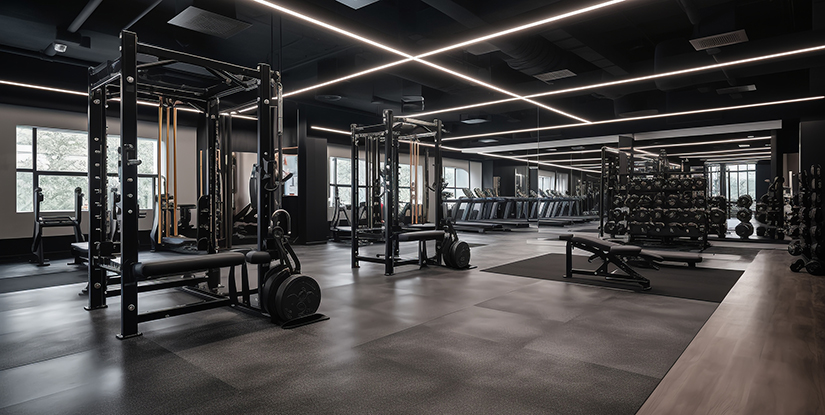
Structural Integrity and Material Selection Standards
The most frequent failure mode in commercial fitness facilities is not the misuse of equipment by clients, but the premature structural fatigue caused by substandard material specifications. When an operator chooses equipment based solely on aesthetic appeal or initial purchase price, they often inherit a high total cost of ownership due to frequent component replacements. To avoid this, one must look beyond the surface finish and analyze the fundamental metallurgy and construction methods used in the manufacturing process.
Steel Gauge and Wall Thickness Requirements
A common mistake is failing to verify the steel gauge of the primary uprights and frames. In a high-traffic commercial environment, heavy-duty resistance requires a minimum thickness that can withstand both static loads and dynamic impacts. If the steel is too thin, the frame may experience micro-fractures over time, leading to catastrophic failure during high-intensity movements. When evaluating specifications, ensure the frame thickness is appropriate for the intended use case, such as heavy lifting versus functional training.
Weld Quality and Joint Reinforcement
The junction where two steel members meet is a critical failure point. Poorly executed welds—characterized by porosity or insufficient penetration—create weak spots that will eventually crack under repetitive stress. High-quality commercial-grade equipment utilizes continuous, high-penetration welds rather than spot welds to ensure structural uniformity. A professional operator should visually inspect weld beads for consistency; irregular or 'bubbled' welds are a red flag for structural instability.
| Component Type | Common Material Spec | Critical Verification Metric |
|---|---|---|
| Main Frame Uprights | 11-Gauge or 3mm Steel | Wall thickness consistency |
| Adjustment Pins | Hardened Steel | Shear strength and coating durability |
| Load-Bearing Plates | Reinforced Steel Plate | Thickness and welding depth |
| Weight Horns | Thick-walled Steel Tubing | Resistance to bending under load |
By prioritizing these material specifications, you transition from a reactive replacement cycle to a proactive longevity strategy. Once the fundamental frame integrity is secured, the focus must shift toward the mechanical components that enable movement.
Mechanical Precision and Bearing Assembly Performance
While a robust frame provides the foundation, the quality of the user experience is dictated by the precision of the moving parts. Mechanical friction is the enemy of smooth resistance, and low-quality bearing assemblies are a leading cause of both user frustration and accelerated part wear. A misalignment in the movement path or excessive friction in the pivot points can lead to uneven muscle engagement and increased risk of injury.
Bearing Types and Lubrication Longevity
The choice between bushings and ball bearings significantly impacts the maintenance interval of the machine. While bushings are cost-effective, they often require more frequent lubrication and can suffer from rapid wear in high-use environments. Ball bearings, particularly those with high-precision races, provide much smoother resistance and a longer service life but come at a higher initial cost. An operator must decide based on the projected daily throughput of the machine.
Alignment and Tolerance Specifications
A frequent issue in lower-tier equipment is 'tracking error,' where the weight stack or resistance arm does not follow a perfectly linear or intended curved path. This is often caused by loose tolerances in the pivot points or poor alignment of the guide rods. When inspecting a machine, perform a manual test of the movement path: if you feel any 'notching' or irregular resistance, the tolerances are likely too wide for a commercial setting. This lack of precision can lead to joint strain for the end-user.
- Verification Step: Manually cycle the weight stack through its entire range of motion to check for resistance spikes.
- Verification Step: Observe the guide rods for any wobbling or lateral movement during the lift.
Ensuring mechanical precision reduces the frequency of technician call-outs, but a machine that moves well must still be safe to operate under extreme loads, necessitating a deep dive into the braking and safety systems.
Resistance Mechanisms and Loading Systems
The method by which resistance is delivered—whether through gravity, electromagnetism, or pneumatic pressure—defines the machine's utility and the potential for mechanical failure. A mismatch between the resistance technology and the gym's target demographic can lead to high turnover in equipment utility and increased maintenance overhead.
Selectorized vs. Plate-Loaded Systems
Deciding between selectorized (weight stack) and plate-loaded equipment is a core strategic decision for any gym owner. Selectorized machines offer convenience and ease of use, making them ideal for general fitness clubs, but they rely heavily on the integrity of cables and pulleys. Plate-loaded machines, conversely, offer a more traditional strength training feel and are often more durable for high-intensity athletes, but they require more setup time and floor space management.
Cable Durability and Pulley Systems
For machines using cables, the cable itself is a consumable part that requires strict oversight. A common failure mode is the fraying of the outer sheath, which often results from low-quality pulley wheels or excessive friction. High-quality commercial cables are typically aircraft-grade steel with a protective coating to prevent internal corrosion and external abrasion. If the pulleys are made of plastic rather than aluminum or high-density nylon, they will wear down significantly faster under heavy use.
| System Type | Primary Advantage | Maintenance Trigger |
|---|---|---|
| Selectorized (Stack) | Speed of use; consistent resistance | Cable fraying; pulley bearing noise |
| Plate-Loaded | High durability; high weight capacity | Guide rod lubrication; bolt tightness |
| Pneumatic Resistance | Variable intensity; smooth transitions | Air pressure seal integrity |
| Digital/Electronic | Data tracking; precise increments | Software updates; sensor calibration |
Understanding these loading mechanisms allows you to predict long-term maintenance costs. Once you have selected the resistance method, you must then address the safety components that govern the machine's operation during failure scenarios.
Explore the complete technical specifications:
Safety Protocols and Failure Mitigation
Safety is not merely an additive feature; it is an inherent requirement of the machine's architecture. In a commercial setting, a failure in a safety mechanism—such as a broken selector pin or a malfunctioning weight stack limiter—can lead to severe litigation and user injury. Therefore, selecting equipment involves auditing the redundant safety systems built into every piece of hardware.
Redundant Safety Features and Limiters
A high-quality machine should have more than one way to stop a descending load. For example, a weight stack machine should feature both a robust selector pin and a heavy-duty bottom stopper. The failure to verify the thickness and material of the selector pin is a common mistake; a thin or cheap pin can bend under the weight of a heavy stack, causing the weight to drop uncontrollably. Always verify that the safety stops are made of high-density materials that can absorb impact without cracking.
Emergency Stops and Weight-Limit Clarity
For electronically controlled or high-intensity strength machines, the presence of an easily accessible emergency stop is non-negotiable. Furthermore, the maximum load capacity must be clearly visible and integrated into the machine's structural limits. Operators should never rely on 'perceived' limits; the technical specification sheet must explicitly state the maximum weight the machine is engineered to support in a dynamic environment.
- Checklist: Inspect all safety pins for bending or structural fatigue monthly.
- Checklist: Ensure all weight-limit decals are legible and placed in high-visibility areas.
- Checklist: Test the descent speed of weight stacks to ensure they stay within safe operational ranges.
Implementing these safety checks ensures the longevity of the machine, but a safe machine is only useful if it is positioned and maintained within a professional layout framework.
Operational Layout and Facility Integration
Even the best equipment will fail to deliver ROI if it is poorly integrated into the gym's floor plan. Effective equipment selection must account for the physical footprint, the 'buffer zones' required for safe movement, and the overall workflow of the facility. A poorly planned layout creates congestion, which increases the likelihood of accidents and equipment wear due to frequent bumps and collisions.
Footprint vs. Functional Clearance
When calculating how much space to allocate for a piece of strength equipment, many operators only consider the dimensions of the machine itself. This is a critical error. You must also account for the 'functional clearance'—the extra space required for a user to step in, move through the range of motion, and for a spotter to stand safely. A machine that fits perfectly on a blueprint might be unusable in practice if there is no room for a barbell to be loaded or for a client to step away from the bench.
Power Requirements and Electrical Integration
If your facility incorporates digital resistance or smart strength equipment, the technical requirements extend beyond the floor space. You must audit your facility's electrical capacity and ensure that the machine's power draw is supported. Overloading a circuit with multiple high-draw digital machines can lead to tripped breakers and downtime. Ensure that the technical specifications for voltage and amperage are reviewed by a facility electrician during the procurement phase.
| Layout Aspect | Risk of Oversight | Verification Method |
|---|---|---|
| Buffer Zones | Collisions and user injury | Measure machine footprint + 36ft/1m of clear space |
| Power Supply | Frequent power outages/downtime | Consult electrical load capacity vs. total machine wattage |
| Floor Loading | Structural floor damage | Check machine weight vs. facility floor weight capacity |
A well-integrated layout supports smooth operations, which in turn makes the routine maintenance and inspection of the equipment much more manageable.
Maintenance Schedules and Preventative Strategies
The difference between a five-year and a ten-year equipment lifespan often comes down to the rigor of the maintenance program. A common mistake is treating maintenance as a reactive task—only addressing a machine once it breaks. A professional operator utilizes a preventative approach, addressing minor issues before they escalate into structural failures.
Routine Inspection vs. Deep Maintenance
Maintenance should be divided into two categories: daily visual inspections and scheduled technical servicing. Daily checks are performed by staff to identify obvious issues like loose bolts or frayed cables. Scheduled technical servicing, however, involves deeper mechanical intervention, such as regreasing bearings, tensioning cables, and checking the torque on major structural bolts. A lack of a written maintenance log is a significant indicator of an unprofessional operation.
Common Failure Modes and Rapid Fixes
Understanding common failure modes allows you to prepare spare parts in advance. For instance, if you notice a slight squeak in a pulley system, it is a precursor to a bearing failure. If the resistance feels inconsistent, it may be time to replace the cable. By tracking these small signs, you can schedule a repair during off-peak hours rather than dealing with an emergency during a busy training session.
- Weekly Task: Check all upholstery for tears or thinning; worn upholstery can trap sweat and lead to hygiene issues.
- Monthly Task: Inspect all pivot points and apply manufacturer-recommended lubricant.
- Quarterly Task: Perform a full bolt-torque check on all heavy-duty frames.
Maintaining a disciplined schedule keeps the equipment in peak condition, ensuring that the structural integrity you selected at the beginning of the process remains intact.
Procurement Lifecycle and ROI Analysis
Choosing commercial strength training equipment is a long-term capital investment, not a one-time purchase. To maximize the Return on Investment (ROI), the procurement process must look at the entire lifecycle of the equipment, from the initial delivery through to eventual decommissioning.
Total Cost of Ownership (TCO) Calculation
The initial purchase price is often a misleading metric. A high-quality machine may cost 30% more upfront but can last twice as long as a budget alternative and require significantly fewer replacement parts. When evaluating quotes, ask for the expected service life and the availability of replacement components. A machine that is cheap to buy but has a proprietary part that is hard to source will eventually become a liability in your facility.
The Impact of Equipment Quality on Member Retention
In the fitness industry, equipment quality is directly linked to member experience. If members frequently encounter 'out of order' signs due to poorly maintained or low-quality machines, they are likely to cancel their memberships. High-quality, durable equipment provides a consistent, premium experience that justifies membership fees and fosters long-term loyalty. Therefore, the cost of high-quality equipment should be viewed as an insurance policy against member churn.
| Buying Metric | Low-End Equipment | Commercial-Grade Equipment |
|---|---|---|
| Initial Cost | Low | Moderate to High |
| Maintenance Frequency | High (Reactive) | Low (Preventative) |
| Lifespan | 2–4 Years | 8–12+ Years |
| Member Perception | Budget/Basic | Premium/Professional |
By understanding the relationship between quality, maintenance, and member retention, you can make a data-driven decision that benefits both your facility's reputation and its bottom line.
Conclusion and Long-Term Operational Success
Successful gym management relies on the ability to provide a safe, functional, and high-performing environment. This begins with the rigorous selection of commercial strength training equipment based on technical specifications rather than marketing claims. By focusing on structural integrity, mechanical precision, and robust safety systems, you mitigate the risks of both equipment failure and user injury.
Ultimately, the goal is to build a facility where the hardware is as reliable as the training programs provided. Through disciplined maintenance, strategic layout planning, and an understanding of the total cost of ownership, an operator can ensure that their equipment remains a high-performing asset for many years to come. Transitioning from a buyer to a steward of your facility's hardware is the final step in achieving long-term operational success.