

Mastering the Art of Commercial Fitness Equipment Procurement
The High Cost of Cheap Sourcing: Navigating Procurement Risks
In my years on the factory floor and in procurement offices, I have seen countless facility managers make the same catastrophic error: prioritizing the initial purchase price over the total cost of ownership. A low-cost order for a commercial gym might look like a win on a spreadsheet today, but it often manifests as broken welds, seized bearings, and unusable machines within six months. This is not just a financial failure; it is a liability and a direct hit to member retention.
The primary cause of these failures is often a lack of technical scrutiny during the selection phase. When you buy based on a catalog photo rather than a spec sheet, you are essentially gambling on the quality of the internal components. To avoid this, you must shift your mindset from 'buying equipment' to 'procuring engineered assets.' This requires a deep dive into material grades, component origins, and assembly standards. Once you understand the risks of superficial selection, you can begin to establish the rigorous criteria needed for a successful acquisition.
| Risk Factor | Common Manifestation | Root Cause | Mitigation Strategy |
|---|---|---|---|
| Structural Fatigue | Cracked weld joints or frame bending | Substandard steel gauge or poor welding gas mix | Demand certified steel thickness (gauge) and welding standards |
| Component Seizure | Smooth motion becomes jerky or noisy | Low-grade bearings or improper lubrication | Specify high-quality, sealed bearing units |
| Rapid Surface Degradation | Paint peeling or upholstery tearing | Poor powder coating or low-density foam | Verify micron thickness of coating and foam density |
Recognizing these risks is your first line of defense. With a baseline understanding of what can go wrong, the next critical step is defining the technical specifications that will safeguard your investment.
Defining Technical Specifications for Durability and Performance
Having identified the potential failure modes, your procurement strategy must pivot to establishing rigid technical specifications. A professional buyer does not just ask for a 'strength machine'; they ask for the steel gauge, the bearing type, and the upholstery material specification. Without these details, you are leaving your quality control to chance.
Material Selection and Structural Integrity
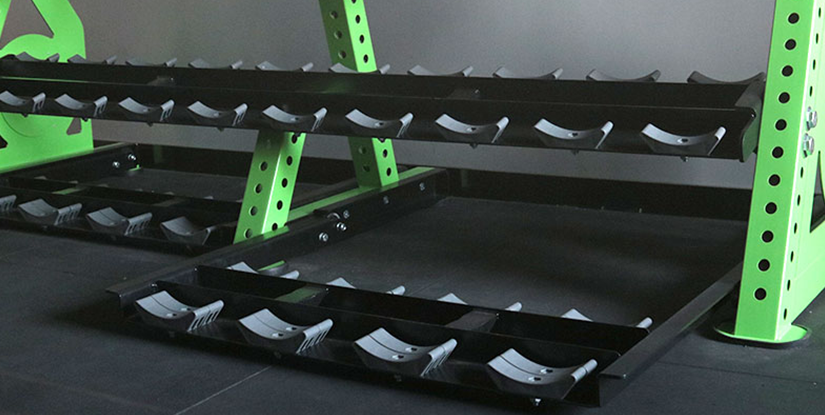
The skeleton of your fitness facility is its heavy-duty equipment. When reviewing specifications, focus on the steel construction. Commercial-grade equipment should typically utilize heavy-duty steel tubing with a specific wall thickness. For instance, a weight rack that uses thin-walled tubing will vibrate excessively and eventually suffer from stress fractures. You must demand to know the gauge of the steel for both the frame and the moving parts.
Mechanical Components and Motion Precision
The 'feel' of a machine is determined by its mechanical internals. A high-quality selectorized machine relies on precision-ground steel shafts and high-grade bearings. If a supplier cannot provide the technical details regarding the bearing types or the pulley materials (such as nylon vs. aluminum), that is a major red flag. High-friction pulleys lead to cable wear and premature failure, which increases your maintenance burden.
Failure to define these parameters usually leads to the 'phantom quality' trap, where a machine looks perfect but performs poorly under heavy use. By standardizing these specs, you create a benchmark for all future orders. This leads us directly to the necessity of a formal verification process during the vendor selection stage.
Vendor Vetting: Moving Beyond the Sales Pitch
A perfect specification list is useless if the person selling it to you cannot back it up with verifiable data. A common mistake in commercial fitness equipment procurement is taking a salesperson's word at face value. In a professional procurement cycle, you must treat every claim as a hypothesis that requires evidence.
A reliable vendor should provide more than just a glossy brochure. They should be able to provide technical datasheets, material safety data sheets (MSDS) for upholstery, and detailed maintenance manuals. If a vendor is hesitant to share these, they are likely masking a lack of technical depth or a reliance on outsourced, low-quality components. Use the following checklist to vet your potential partners before signing any purchase agreement.
- Request a Technical Datasheet: Does it list steel gauge, bearing types, and motor specifications?
- Inquire About Testing Protocols: How do they test for load capacity and fatigue cycles?
- Verify Compliance Certifications: Do they meet international safety and quality standards for commercial use?
- Assess Warranty Support: Is the warranty for the structure or just the electronic parts?
- Review Maintenance Documentation: Is there a clear, documented service schedule for the equipment?
Using this checklist ensures that you are building a relationship with a technical partner rather than a mere merchant. Once you have selected a reliable vendor, you must prepare for the physical arrival of the goods.
The On-Site Inspection: Verifying Physical Quality and Assembly
The procurement process does not end when the invoice is paid; it ends when the equipment is successfully installed and verified on-site. One of the most common failures occurs during the 'last mile'—the transition from the warehouse to the gym floor. Poorly handled shipping or rushed assembly can turn high-quality steel into a liability.
When the shipment arrives, do not rely on the delivery team to do the inspecting. You must conduct a systematic audit of the equipment. This involves more than just checking for scratches; it requires a functional and structural audit. For example, check the tension of every cable and the levelness of every base plate. A machine that is even slightly unlevel will suffer from uneven wear on the bearings and could eventually tip under load.
The Step-by-Step Installation Audit
To ensure the equipment is ready for high-traffic use, follow this structured approach:
- Visual Inspection: Check for any shipping damage, paint chips, or structural dents.
- Hardware Verification: Ensure all bolts are present and that they are the correct grade (not just standard hardware store bolts).
- Functional Testing: Run every moving part through its full range of motion. Listen for any grinding or catching in the bearings.
- Cable and Pulley Check: Inspect cables for fraying and ensure pulleys spin freely without excessive resistance.
- Leveling and Anchoring: Use a spirit level to ensure all machines are perfectly horizontal. If specified, ensure heavy equipment is properly anchored to the floor.
A rigorous inspection prevents the long-term headaches of 'hidden defects' that only appear after a few weeks of use. With the installation verified, you must now establish a framework to keep the equipment in top condition.
The Maintenance Framework: Protecting Your Long-Term ROI
The transition from procurement to operation is where many facility managers lose sight of their investment. Once the equipment is on the floor, it is easy to ignore the subtle signs of wear. However, a proactive maintenance schedule is the only way to prevent a catastrophic failure and extend the lifespan of your assets.
Effective maintenance is not just about cleaning; it is about technical intervention. Most commercial fitness equipment failures can be traced back to a lack of lubrication or a failure to tighten bolts that have loosened due to vibration. In my experience, a small monthly investment in preventative maintenance saves ten times that amount in emergency repairs and equipment replacement.
Standard Maintenance Categories
| Category | Action Required | Frequency | Objective |
|---|---|---|---|
| Lubrication | Apply silicone-based lubricant to rails and pulleys | Monthly/Quarterly | Reduce friction and prevent wear |
| Hardware | Tighten all bolts, nuts, and pivot points | Quarterly | Prevent structural loosening and vibration |
| Upholstery | Inspect for tears, cracks, or moisture damage | Monthly | Ensure hygiene and aesthetic integrity |
| Electrical | Dust consoles and check software/connection stability | Monthly | Maintain uptime for cardio/smart machines |
By implementing these cycles, you move from a reactive 'fix-it-when-it-breaks' model to a controlled, predictable operational model. This discipline is the hallmark of a professional facility. The final piece of the puzzle is knowing how to handle the inevitable issues that arise.
The Logistic and Financial Lifecycle: Beyond Installation
Successful procurement is not a linear path ending at installation; it is a lifecycle that involves tracking logistics and managing depreciating assets. Many buyers fail to consider the complexities of the 'delivery to floor' phase, often ignoring the logistical constraints of a high-traffic facility. If your procurement plan does not account for the physical movement of heavy iron through narrow exits or tight hallways, you risk significant damage to both the product and your facility's structure.
Furthermore, from a financial perspective, you must view these machines as depreciating assets with a specific lifecycle. A common mistake is failing to budget for the 'end-of-life' phase. By the time your equipment reaches its third or fourth year of heavy use, the procurement strategy should already be pivoting toward replacement or heavy overhaul. This foresight ensures that your facility remains modern and functional without sudden, unplanned capital expenditures.
Logistical Checklist for Delivery Day
- Pathway Clearance: Are all entryways and elevators wide enough for the largest machines?
- Floor Load Capacity: Has the facility's structural engineer confirmed the weight-bearing capacity for heavy strength zones?
- Delivery Timing: Is the delivery scheduled during low-traffic hours to minimize disruption?
- Assembly Supervision: Is a trained technician present to oversee the unboxing and hardware assembly?
Managing these logistics ensures that the transition from a vendor's warehouse to your gym floor is seamless. Once the assets are integrated into your daily operations, you must be prepared for the inevitable mechanical discrepancies.
Troubleshooting: Addressing Common Operational Failures
Despite the best procurement and maintenance efforts, you will eventually encounter equipment issues. The difference between a professional and an amateur lies in how they diagnose these problems. Most people call a technician the moment they hear a noise, but often, the fix is much simpler and can be handled in-house.
The most common mechanical issues in a commercial gym are related to cable tension, bearing resistance, and electronic glitches. Understanding the 'why' behind these problems allows you to make better decisions: should you fix it, or is it time to replace it? If a cable is fraying, it is usually due to a pulley that is not aligned or a lack of lubrication, not just 'old age.'
Diagnostic Guide for Common Issues
Issue: Jerky Motion in Selectorized Machines
The Cause: Most often caused by a lack of lubrication on the guide rod or a bearing that has become contaminated with dust or sweat.
The Fix: Clean the guide rod with a lint-free cloth and apply a thin layer of high-quality silicone lubricant. If the motion remains jerky, the bearing or the bushing likely needs replacement.
Issue: Unresponsive Consoles/Screens
The Cause: Often a simple communication error between the motor controller and the mainboard, or a loose wire connection caused by vibration.
The Fix: Power down the machine entirely, check all connection points for tightness, and restart. If the issue persists, it may be a firmware or internal component failure.
Issue: Excessive Noise from Treadmills
The Cause: Usually related to the belt tension being too tight or a lack of lubrication under the walking belt.
The Fix: Adjust the belt tension according to the technical manual and check the lubrication levels. If the noise is a rhythmic 'thumping,' it may be a worn-out roller or a damaged belt.
Correct diagnosis prevents unnecessary service calls and ensures you are not over-paying for minor adjustments. Mastering these small operational details ensures that your procurement process results in a high-performing, durable, and profitable facility.