

Selecting the Best Functional Fitness Products for Commercial Gyms: A Procurement and Durability Guide
The Durability Gap in Functional Training Procurement
Most facility managers encounter a frustrating cycle: high-end functional equipment that looks impressive in showroom photos but fails under the rigorous, high-volume load of a commercial environment. This gap between aesthetic promise and operational reality often stems from a misunderstanding of material tolerances and structural fatigue. When a gym transitions from traditional weightlifting to dynamic functional training, the mechanical stress on equipment changes from static loads to high-impact, multidirectional forces. This shift requires a fundamental change in how you evaluate the best functional fitness products for commercial gyms.
The primary cause of premature equipment failure is not just user abuse, but rather the mismatch between the equipment's structural capacity and the kinetic energy of functional movements. For instance, a standard plyometric box might hold a static weight easily, but it may lack the impact resistance required for repetitive explosive jumps. Understanding these mechanical nuances is the first step in mitigating risk. Before we dive into specific product categories, we must establish a baseline for what constitutes 'commercial-grade' in a functional context.
| Feature | Consumer/Home Grade | Commercial Functional Grade |
|---|---|---|
| Material Thickness | Thin-walled steel/plastic | High-gauge, heavy-duty steel |
| Moderate (static load focus) | High (dynamic/repetitive impact) | |
| Standard welding/bolts | Reinforced structural welding/heavy-duty hardware | |
| Basic powder coating | Industrial-grade, abrasion-resistant finish |
Establishing these baseline standards ensures that your initial investment protects your long-term ROI. Once you understand the material requirements, the next logical step is evaluating the specific strength-training modules that demand the highest durability.
Structural Integrity of Rig and Station Components
Moving from general material standards to specific hardware, the central rig or functional station serves as the backbone of your training area. A failure in a central upright or a crossmember does not just mean an out-of-service machine; it can lead to a catastrophic structural collapse. In my years of inspecting facility failures, the most common culprit is the use of undersized hardware or insufficient welding at critical stress points where attachments meet the main frame.
Verifying Upright Gauge and Wall Thickness
When sourcing rigs, do not settle for descriptions like 'heavy-duty.' You must demand specific gauge measurements. For commercial functional areas, a minimum of 3mm (approx. 11 gauge) steel for uprights is the industry standard for high-traffic zones. Anything thinner will likely suffer from 'flex' over time, which eventually leads to permanent deformation of the frame. When inspecting a sample, apply lateral pressure to the upright; if you feel a perceptible vibration or oscillation, the gauge is insufficient for high-intensity commercial use.
Attachment Durability and Tolerance Checks
The failure of a single attachment—such as a dip station or a pull-up bar—is often more common than a frame failure. The issue usually lies in the connection mechanism. Check for the following:
- Bolt Grade: Ensure fasteners are high-tensile steel, not standard zinc bolts.
- Tolerances: There should be minimal 'play' or wobbling when an attachment is tightened. Excessive play indicates poor manufacturing tolerances that will inevitably lead to thread stripping.
- Weld Quality: Inspect the transition between the attachment and the upright. A 'beaded' or irregular weld is a red flag for structural weakness.
By verifying these technical specifications during the procurement phase, you prevent the costly downtime associated with equipment replacement. However, a sturdy rig is only as useful as the peripheral tools used upon it, which leads us to the specialized mobile equipment used in functional circuits.
Material Density and Coating in Free Weights
While the rig provides the structure, the free weights used in functional training—specifically kettlebells and medicine balls—undergo extreme surface-level abuse. A common mistake among new operators is choosing weights with decorative or thin coatings that chip easily. Once the internal core is exposed to moisture or heavy impact, the degradation process begins, leading to rust or structural cracking.
Selecting High-Impact Medicine Balls
In functional training, medicine balls are subjected to both high-velocity drops and heavy throwing. A ball that is purely 'aesthetic' will fail within months. You must distinguish between two primary types of commercial-grade balls:
- Slam Balls: Designed for high-impact drops. Look for a thick, non-slip rubber skin that can withstand being slammed onto concrete or heavy rubber flooring without cracking.
- Wall Balls: Designed for throwing accuracy and recoil. These require a more consistent density and a surface that won't lose its grip when dampened by sweat.
If you observe the rubber starting to peel or showing micro-cracks at the seams, the ball has reached its end-of-life and must be replaced immediately to prevent injury during high-velocity drills. This brings us to the next category of equipment: the high-impact floor and flooring systems that support these movements.
Explore the complete technical specifications:
Functional Patterns Workout: Principles, Exercises, and Programming
Optimizing Flooring for Impact and Longevity
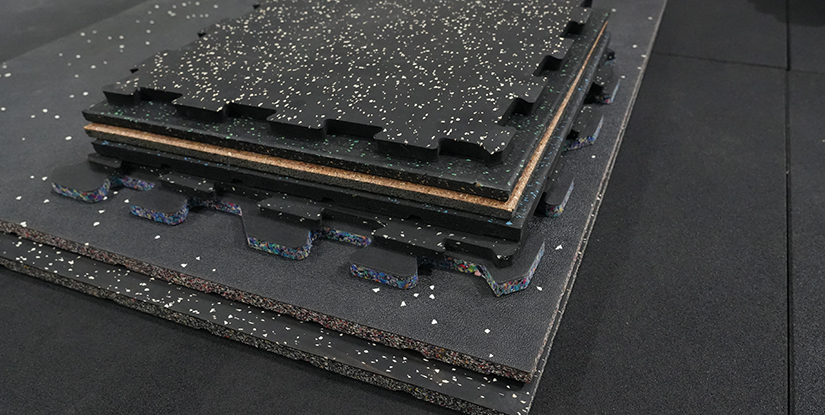
The choice of flooring is perhaps the most overlooked aspect of selecting the best functional fitness products for commercial gyms. Many operators focus entirely on the machines and forget that the floor is a piece of equipment in itself. If the flooring cannot absorb the energy of a heavy kettlebell drop or a high-impact plyometric landing, that energy is transferred directly into the subfloor and your expensive equipment, causing structural damage to both.
Determining Density and Thickness Requirements
A common failure mode is using standard thin rubber mats which provide zero shock absorption. For a functional area, you need high-density, vulcanized rubber flooring. The density of the rubber determines how much kinetic energy is dissipated rather than reflected. If the floor feels 'bouncy' rather than 'firm,' it may be too soft for heavy lifting, but if it feels 'dead' and vibrates excessively during a drop, it lacks sufficient impact absorption.
| Activity Type | Recommended Thickness | Primary Benefit |
|---|---|---|
| Heavy Strength/Functional | 15mm - 20mm | High impact protection and subfloor preservation |
| Light Movement/HIIT | 8mm - 10mm | Durability and noise reduction |
| 20mm+ (High Density) | Joint protection and energy dissipation |
Proper flooring selection reduces the frequency of maintenance for your machines and protects your staff from repetitive stress injuries. Once the foundation is set, you must look at the specialized mobile tools that reside upon it.
Integrating High-Intensity Cardiovascular Modules
Functional fitness frequently incorporates high-intensity interval training (HIIT), which places immense strain on cardiovascular equipment. The error here is treating a functional cardio machine like a standard gym bike. Functional-focused cardio equipment—such as air bikes or heavy-duty rowing machines—is subject to much higher torque and erratic power outputs from the user.
Maintenance of Air-Resistance Systems
Air bikes are staples in functional gyms due to their variable resistance. However, the fan and the chain/belt drive are critical failure points. A common mistake is ignoring the buildup of dust and debris within the fan housing, which can unbalance the blade and cause vibration. To verify performance, check for smooth rotation; any grinding or jerky movement indicates that the drive system requires cleaning or tension adjustment. Failure to maintain these components will lead to premature motor or belt failure.
The Role of Resistance Consistency
In a commercial setting, users demand consistent resistance throughout a workout. If an air bike or rower shows inconsistent resistance levels during a high-output interval, it is often a sign of a poorly maintained or low-quality drive system. Operators should conduct monthly checks on the tension of all belts and the lubrication of moving parts to ensure the equipment can handle the high-torque demands of functional athletes.
Reliable cardio and high-quality mobility tools form a complete ecosystem, but even the best machines require a rigorous maintenance protocol to remain safe.
Routine Inspection and Preventive Maintenance Protocols
The most expensive way to maintain a gym is through reactive repairs—fixing something after it breaks. To truly utilize the best functional fitness products for commercial gyms, you must implement a proactive, scheduled inspection routine. This is not just about aesthetics; it is about structural safety and preventing catastrophic failure during peak hours.
The Weekly Safety Checklist
Every week, your facility team should perform a physical inspection of all high-use items. Use this checklist to guide your staff:
- Check All Bolts/Fasteners: Use a torque wrench to ensure no bolts on rigs or weight benches have vibrated loose.
- Inspect Welds: Look for hairline cracks or discoloration on structural uprights and attachment points.
- Surface Integrity: Check medicine balls for cracks and kettlebells for rust or grip degradation.
- Floor Condition: Ensure rubber mats are not lifting or creating trip hazards.
If a piece of equipment fails any of these checks, it should be tagged as 'Out of Service' immediately. Waiting even a single day to address a loose bolt on a rig can lead to a serious liability issue. This rigorous approach to maintenance ensures the longevity of your assets and the safety of your members.
Common Procurement Errors and Red Flags
As a buyer, the biggest trap is the 'Price-Per-Unit' fallacy. A lower upfront cost often hides much higher long-term operational expenses. When you are sourcing the best functional fitness products for commercial gyms, you must look beyond the invoice price and analyze the total cost of ownership (TCO).
Identifying Low-Quality Manufacturers
During the vendor vetting process, look for these red flags that suggest a manufacturer is cutting corners on quality control:
- Vague Technical Specs: If a vendor cannot provide exact steel gauges or bolt grades, they are likely using consumer-grade materials.
- Inconsistent Finish Quality: If the powder coating is uneven or thin on a sample, it will fail rapidly in a high-moisture or high-use environment.
- Lack of Documentation: Reputable commercial suppliers will have detailed maintenance manuals and spec sheets for every component.
A high-quality product might cost 20% more initially, but if it lasts three times longer and requires fewer repairs, the ROI is significantly higher. Always demand technical data sheets before finalizing any large-scale purchase order.
Future-Proofing Through Modular Design
The landscape of functional training is constantly evolving. What is popular today might be replaced by a new movement pattern tomorrow. Therefore, the best investment you can make is in modularity. A modular rig system allows you to add or remove attachments without replacing the entire structural frame.
The Value of Modular Upgrades
Instead of buying a monolithic, single-purpose machine, opt for systems that allow for easy adaptation. This includes adjustable weight benches, modular pull-up stations, and adaptable flooring systems. By choosing equipment that can evolve, you future-proof your facility against changing fitness trends and ensure that your equipment remains relevant and profitable for years to come.
By prioritizing structural integrity, material quality, and proactive maintenance, you move from being a simple equipment owner to a professional facility operator. The goal is to create a space where the equipment is a silent, reliable partner in the user's training, not a source of constant concern.