

Mastering the Barbell You Stand Inside: A Technical Guide to Specialized Training Racks
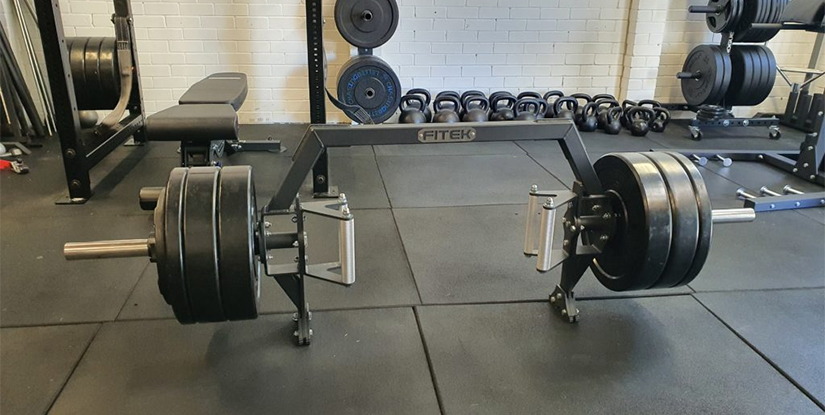
Understanding the Mechanics of the Barbell You Stand Inside
In the specialized world of strength training, the concept of a Barbell You Stand Inside—often referred to as a specialized squat rack, a squat cage, or a power cage—represents a critical evolution in athlete safety and loading capacity. Unlike standard squat stands that offer minimal lateral protection, these structural enclosures are engineered to house the lifter within a perimeter of steel. This design philosophy prioritizes the containment of movement and the prevention of catastrophic failure during heavy eccentric loading.
Operators and facility managers often encounter the problem of inadequate spatial control during high-intensity sessions. Without a rigid, full-height enclosure, the risk of lateral instability increases as the athlete reaches peak intensity. This guide addresses the technical nuances of selecting, setting up, and maintaining these essential structures to ensure peak performance and structural longevity.
Before moving to physical installation, one must understand the structural parameters that distinguish a professional-grade enclosure from a standard rack.
Selection Criteria for High-Capacity Enclosure Structures
Selecting the right frame is not merely about footprint, but about load-path integrity. A professional operator must evaluate the rigidity of the uprights and the quality of the connection points. The primary pain point for many buyers is the discrepancy between advertised load capacities and the actual structural stability under dynamic load.
Structural Integrity and Material Specifications
When assessing a potential unit, pay close least attention to the gauge of the steel. Thinner steel may look substantial but lacks the density required for high-frequency impacts. You should prioritize heavy-duty steel profiles that maintain their shape under compression.
| Feature | Standard Power Rack | Advanced Training Cage |
|---|---|---|
| Upright Gauge | 11-gauge steel | 7-gauge or 11-gauge reinforced |
| Collars/J-Cups | Basic spring clips | Precision-machined locking systems |
| Safety Spacing | Fixed positions | Variable height adjustment capability |
| Footprint Stability | Minimal base width | Wide-base or floor-anchored design |
Choosing a cage with a higher steel density ensures that the Barbell You Stand Inside remains a stable environment even when weights are dropped or bumped against the uprights. This baseline of structural quality leads directly into the complexities of spatial configuration.
Optimizing Workspace Layout and Clearance Tolerities
Even the highest-quality cage becomes a liability if the surrounding environment is not properly accounted for. A common mistake in facility design is failing to calculate the "dynamic clearance zone." This is the space required not just for the rack itself, but for the bar's rotation and the lifter's lateral movement.
Calculating Essential Clearances
To ensure safety, operators must verify three distinct zones: the static footprint, the bar-rotation zone, and the human-movement buffer. If the space is too tight, the bar may strike the uprights during a descent, causing an unpredictable kinetic transfer. This can result in the bar bouncing or the lifter losing balance.
- Static Footprint: The exact dimensions of the steel base.
- Bar-Rotation Zone: An additional 10–15cm of clearance on each side to allow for sleeve rotation.
- Human-Movement Buffer: At least 30cm of clearance around the perimeter for the lifter's feet and elbows.
Once the footprint is established, the next critical step is the precise installation of the internal components, such as safety pins and J-cups.
Explore the complete technical specifications:
Barbell Guide | Olympic Bar Sizes, Knurling & Tensile Strength
Precision Setting of Safety Hardware and J-Cups
The safety mechanisms within a cage are the final line of defense. A frequent failure mode in commercial settings is the improper height setting of the safety bars. If the safeties are set too low, the lifter may strike them during the descent; if set too high, they provide no relief during a failed lift. This misalignment is often caused by a failure to account for the lifter's specific range of motion.
Verification Protocol for Safety Pin Placement
To prevent injury, operators should implement a standardized verification checklist every time a new athlete begins using the unit. This ensures that the safety pins are optimized for the specific height of the user's movement arc.
| Step | Action Item | Verification Metric |
|---|---|---|
| 1 | Identify lowest point of descent | Visual marker on upright |
| 2 | Set safety bar height | Must be 2-5cm below the eccentric limit |
| 3 | Check pin engagement | Pins must be fully seated and locked |
| 4 | Test weight impact | Low-weight drop test to check stability |
Effective adjustment of these components minimizes the risk of a failed lift turning into a medical incident. However, even perfectly set hardware can suffer from mechanical wear if maintenance is neglected.
Explore the complete technical specifications:
Preventative Maintenance and Wear Inspection Schedules
Regular maintenance is the only way to prevent the gradual degradation of the cage's integrity. Over time, the constant vibration from heavy lifting can loosen fasteners and affect the alignment of the internal components. This is a hidden danger that many facility owners overlook until a part fails under load.
Identifying Common Failure Modes in Metal Frames
Operators must look for specific signs of mechanical fatigue. Small indicators often precede major structural failures. If these signs are caught early, the fix is often a simple tightening or replacement of a single component rather than an entire rack.
- Loose Fasteners: Check every bolt for torque consistency once a month.
- Weld Cracks: Inspect the junction points where the uprights meet the base for hairline fractures.
- Sleeve Scoring: Look for excessive scratching on the barbell sleeves, which indicates friction issues in the J-cups.
- Paint Chipping: Monitor for rust emerging from chipped areas, which can compromise long-term metal density.
By implementing a routine inspection, you can ensure the structural stability remains uncompromised. This stability is the foundation upon which successful training is built.
Explore the complete technical specifications:
Troubleshooting Common Operational Issues
Even with a well-maintained cage, operators may encounter functional issues. These are often not failures of the metal itself, but rather misalignments in how the equipment is being utilized or adjusted. Addressing these issues promptly maintains the flow of the training environment.
Resolving Mechanical Friction and Misalignment
If you notice that the barbell feels "unbalanced" or is making an unusual grinding sound while inside the cage, it is likely an issue of sleeve-to-cup contact. This friction can be caused by several factors, ranging from dirt accumulation to improper component-to-component spacing.
Problem: Barbell rotation feels sluggish or jerky.
Cause: Dust, chalk, or metal shavings in the J-cups or sleeve bearings.
Fix: Clean the contact points with a dry cloth and use a specialized lubricant if the manufacturer permits.
Verification: Rotate the bar manually to ensure smooth, consistent movement across the entire span.
Once these mechanical discrepancies are resolved, the focus shifts back to the long-term lifecycle of the equipment.
Explore the complete technical specifications:
Long-Term ROI: Lifecycle Management of Heavy-Duty Racks
Investing in a high-grade cage is a capital expenditure that should yield many years of service. To maximize the return on investment (ROI), a lifecycle management strategy is required. This involves treating the equipment as a dynamic asset that requires constant monitoring rather than a static piece of furniture.
Total Cost of Ownership (TCO) Considerations
When calculating the value of your equipment, do not just look at the initial purchase price. A cheaper rack with lower-gauge steel will require more frequent repairs and potentially shorter replacement cycles. A higher-quality Barbell You Stand Inside structure will offer a much lower TCO through durability and minimal downtime.
| Lifecycle Stage | Focus Area | Required Action |
|---|---|---|
| Year 1-2 | Operational Onboarding | Standardize safety settings and clearance protocols. |
| Year 3-5 | Wear Management | Deep inspections of welds, pins, and fasteners. |
| Year 5+ | Structural Re-evaluation | Assess metal fatigue and consider component upgrades. |
Effective lifecycle management ensures that your facility remains a safe and professional environment for years to come.
Explore the complete technical specifications:
Future Trends in Structural Training Enclosures
As the strength industry evolves, the technology within these enclosures continues to advance. We are seeing a shift toward modular designs that allow for greater adaptability and integrated technology. Understanding these trends helps buyers make decisions that are future-proof.
The Rise of Modular and Digital Integration
Modern training cages are moving toward highly modular systems where uprights can be swapped or expanded to accommodate different training modalities. Furthermore, the integration of digital feedback systems—such as load sensors and velocity trackers—is becoming more common. These tools provide real-time data to the lifter, turning the cage into an intelligent training partner.
While these advancements offer significant benefits, they also require a more sophisticated approach to maintenance and electrical safety. As the hardware becomes more complex, the operator's role becomes even more critical in maintaining the synergy between the physical steel and the digital components.