

From Steel Coil to Power Rack—A Manufacturing Deep Dive
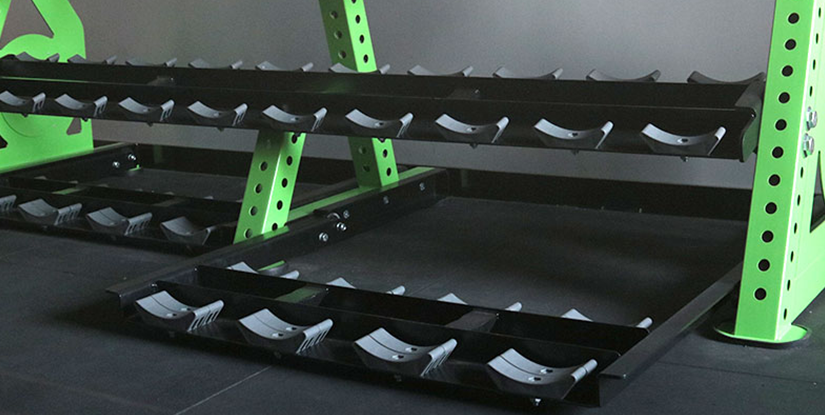
The production of high-performance power racks is a highly engineered transition from a continuous, uniform mass of steel—the coil—to a complex, load-bearing structural system. For procurement officers and facility managers, understanding this transformation is critical to distinguishing between consumer-grade hardware and industrial-strength equipment. A power rack must withstand extreme dynamic loads, repetitive impact, and potential oxidation, making the manufacturing precision of every phase vital to end-user safety.
Material Specification and the Selection of Steel Coils
The journey begins with the selection of the substrate. A common pain point for operators is receiving equipment that displays premature buckling or weld failure. This is often traced back to inconsistent material grades at the source. The choice of steel coil dictates the entire downstream process, from how the metal bends to how it accepts coatings.
In industrial-grade manufacturing, the focus is on high-tensile or structural-grade carbon steel. If the steel lacks uniformity in carbon content or grain structure, the resulting tubes will exhibit unpredictable properties under stress. Manufacturers must verify that the coil meets specific yield strength and ductility requirements to ensure the rack can be formed without internal micro-fractures.
Carbon Steel Composition and Yield Strength
The mechanical properties of the steel are determined by the chemical composition of the coil. High-quality power racks typically utilize steel with a high yield-to-tensile ratio. This ensures that the material deforms predictably under load rather than snapping or shattering. Buyers should look for documentation regarding the steel's mechanical properties rather than just the gauge thickness.
| Material Characteristic | Requirement for Power Racks | Risk of Low-Quality Specification |
|---|---|---|
| Yield Strength | High (Consistent across coil) | Brittle failure under heavy load |
| Ductility | Moderate to High | Cracking during bending/forming |
| Surface Uniformity | High (Minimal inclusions) | Weak points in weld seams |
| Thickness Tolerance | Strict (ASTM standards) | Imbalanced load distribution |
The Coil-to-Tube Transformation: Precision Forming
Once the steel coil is selected, it must be converted from a flat sheet into a hollow structural shape. This is the most volatile phase where dimensional errors often originate. A common failure in low-end racks is 'out-of-round' tubing, which causes uneven wear on accessory holes and destabilizes the entire structure.
The process typically involves a continuous line of heavy-duty rollers that gradually bend the flat strip into a rectangular or circular profile. This is not a single step but a series of incremental radius adjustments. The machine must maintain constant tension and speed to prevent variations in wall thickness.
Continuous Roll Forming Processes
In roll forming, the steel strip passes through a series of dies. Each die imparts a small fraction of the total bend. If the pressure or the angle of the die is even slightly off, the resulting tube will have 'thin spots'—areas where the steel is stretched too thin. These areas become structural vulnerabilities where the rack might buckle under a heavy barbell drop.
Edge Squaring and Dimensional Control
Before the final shape is locked, the edges of the steel must be trimmed and squared. This ensures that the walls of the tube are perfectly parallel. If the edges are not precisely managed, the resulting tube will have a tapered shape, making it nearly impossible to create perfectly aligned holes for J-cups or spotter arms later in the process.
Explore the complete technical specifications:
Fitness Equipment Factory vs. Trading Company: 7 Ways to Tell the Difference
Structural Integrity through Precision Welding and Joining
The transition from individual metal tubes to a single, cohesive power rack occurs during the welding phase. This is the critical junction where most structural failures occur if thermal management is neglected. The problem of 'weak welds' is usually caused by improper heat input or inconsistent penetration, leading to brittle joints that cannot absorb energy.
The fabricator must use specialized welding techniques, such as MIG (Metal Inert Gas) or robotic welding, to ensure that the heat is applied consistently across every joint. Every corner and brace in a power rack represents a potential point of failure if the metallurgy of the weld pool is not controlled.
Heat-Affected Zone (HAZ) Management
When welding, the area surrounding the weld—known as the Heat-Affected Zone—undergoes a change in microstructure. If the heat is too intense or applied for too long, the steel becomes brittle in that specific area. This is a common cause of cracking in heavy-duty equipment. Precision control of the welding amperage and travel speed is mandatory to maintain the structural integrity of the surrounding steel.
Alignment and Jigging Protocols
To prevent the frame from warping during welding, parts must be held in rigid jigs. If the parts are not perfectly aligned before the first bead of weld is laid, the thermal expansion of the metal will pull the frame out of square. A rack that is even 1-2 degrees out of alignment will exhibit 'wobble' and uneven weight distribution, which can be dangerous during high-intensity training.
Explore the complete technical specifications:
Hidden Costs of Choosing the Wrong Fitness Equipment Manufacturer
Surface Treatment: Protection and Aesthetic Finish
After the structural assembly is complete, the rack undergoes surface treatment. This phase is often underestimated, but it is vital for preventing oxidation. A common complaint from facility owners is rust appearing at the joints or screw holes after only a few months of use. This is almost always a failure in the powder coating or galvanization process.
The surface treatment must not only look professional but must also provide a resilient barrier against moisture and human sweat, which is highly corrosive. The preparation stage—cleaning the steel of all oils and manufacturing residues—is just as important as the application of the coating itself.
| Treatment Type | Primary Function | Ideal Verification Method |
|---|---|---|
| Powder Coating | Durability and Color consistency | Adhesion test (Cross-cut test) |
| Electrostatic Painting | Uniform thin-film coverage | Visual inspection for 'orange peel' |
| Zinc Galvanization | High-level corrosion resistance | Thickness measurement (Micrometer) |
| Pre-treatment Wash | Surface decontamination | Surface roughness profile check |
Powder Coating Adhesion and Thickness
Powder coating involves applying dry powder electrostatically and then curing it under heat. For a power rack, the coating must be thick enough to prevent rust but thin enough not to interfere with the fit of accessories like J-cups. A common mistake is applying too much powder, which leads to 'clumping' in corners and prevents the coating from adhering properly to the metal surface.
Quality Control: Validating Structural Capacity
The final stage of the manufacturing lifecycle is rigorous quality control (QC). A professional-grade manufacturer does not simply rely on visual inspection; they use measurable data to validate the product. The goal is to ensure that the finished rack meets the advertised load capacity and maintains its geometry under stress.
The primary challenge in QC is the detection of latent defects—issues that aren't visible to the eye but will cause failure under load. This requires a combination of mechanical testing and high-precision measurement tools. Without standardized testing, the reliability of the steel structure remains purely speculative.
Load Testing and Deformation Analysis
A legitimate manufacturing process includes periodic load testing. This involves placing the completed rack (or a sample from a production batch) under a weight significantly higher than its rated capacity. This tests the integrity of the welds and the stiffness of the tubing. Operators should verify that their suppliers use batch testing protocols to ensure consistency across production runs.
Geometric Tolerance Verification
Every part of the rack, especially the uprights and the pull-up bar, must fall within a strict tolerance range. Using calipers and precision levels, inspectors check for squareness and straightness. If the uprights are bowed, even slightly, it will result in uneven load-bearing and potential structural instability over time. This geometric precision is what separates premium commercial equipment from budget home versions.
Advanced Material Science in Modern Fabrication
Modern manufacturing has moved beyond simple blacksmithing into the realm of metallurgical science. When choosing a power rack, one must consider how modern alloys and high-performance steel coils contribute to the overall longevity of the unit. The synergy between material science and mechanical engineering is what allows a piece of equipment to remain stable under extreme dynamic torque.
Engineers today focus heavily on the grain structure of the steel. A well-controlled manufacturing process ensures that the grain remains intact even after the intense deformation of the roll-forming process. This prevents the 'stress fatigue' that often plagues cheaper, less-refined metal products. When the grain structure is optimized, the steel possesses both the strength to hold heavy weight and the elasticity to absorb the shock of a dropped barbell.
Explore the complete technical specifications:
How Many Kettlebell Sizes a Gym Actually Needs | Factory Guide
The Lifecycle Perspective: From Procurement to Maintenance
Understanding the manufacturing process allows a buyer to plan the entire lifecycle of the equipment. When a power rack is manufactured with high-quality steel coils and precision welding, its lifespan is measured in decades. Conversely, poor-quality fabrication leads to a high total cost of ownership through frequent replacements and safety risks. The economic value of premium manufacturing is realized through long-term durability rather than low initial price points.
Maintenance is the final phase of the lifecycle. Even the best-manufactured steel will require periodic inspection. Facility managers should implement a routine check of the bolt tightness and a visual inspection of the powder coating to ensure no localized corrosion is beginning at the joints. This proactive approach ensures that the precision established during the manufacturing phase is preserved throughout the product's operational life, maintaining a safe environment for all users.
Optimizing Equipment Longevity
To extend the life of the equipment, avoid environments with extreme humidity or salt air unless the steel has been specifically galvanized. Regular cleaning with non-corrosive solutions will also preserve the powder coating. By understanding the complexities of the steel coil to power rack journey, you can make informed decisions that prioritize safety, performance, and long-term value.