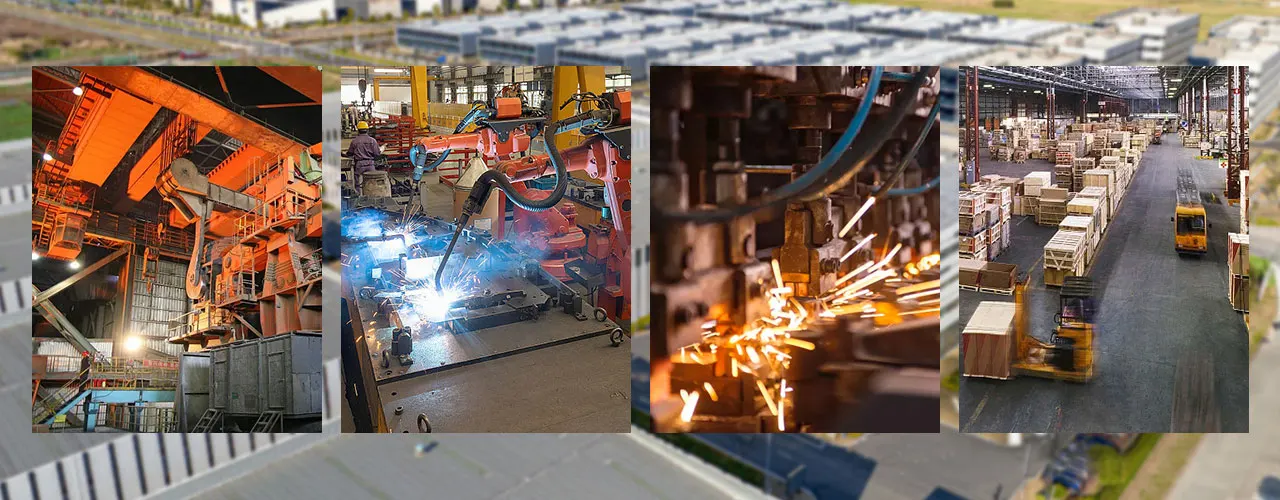
A Commercial Gym Equipment Factory is the physical production site where tube processing, welding, coating, and assembly actually happen — the physical carrier of manufacturing capability. It does not fully overlap with the legal and commercial concept of a “manufacturer”: the manufacturer may be an integrated manufacturing-trading company, with the factory as the line behind it, or it may be a partner represented by a sales entity. Understanding this distinction is the premise for judging whether a supplier genuinely has production capability.
Line structure reveals more about a factory’s real level than an equipment list. Whether cutting, bending, welding, coating, and assembly are completed in one continuous facility determines how tightly the process links are controlled. If coating is outsourced and welding is subcontracted, the factory is effectively an assembly workshop, and control over process standards is distributed across multiple entities. This is not to say outsourcing is always bad — it means the more outsourcing there is, the more links the buyer must verify. The completeness of line structure is especially critical in categories such as the Strength Training Equipment Manufacturer, where welding and assembly precision requirements are high.
Live video is more reliable than a recording, and route is more reliable than frame. Ask the supplier to walk without cutting from the office entrance to the welding station, and watch whether the route passes through internal factory corridors or public roads. Check the company nameplate at the workshop entrance against the business license. Ask a causal question only an engineer can answer, and see whether the response is relayed or understood. These three actions require no technical background, but they filter out most “borrowed factory” situations. Under an integrated manufacturing-trading structure, separate office and factory locations are normal — the key is whether the relationship can be explained and whether documents match. The same logic is expanded further in the Commercial Gym Equipment Manufacturer identity verification section.
Equipment can be purchased; records cannot. Welding fixture maintenance records, coating pre-treatment bath testing records, and assembly functional test records with a signer are direct evidence of a factory’s management level. A factory with complete equipment but no process records shows that quality depends on individual experience rather than system; a factory with ordinary equipment but complete records shows that quality is controllable. When screening among Gym Equipment Manufacturer China operations, record completeness often predicts long-term performance better than equipment age.