
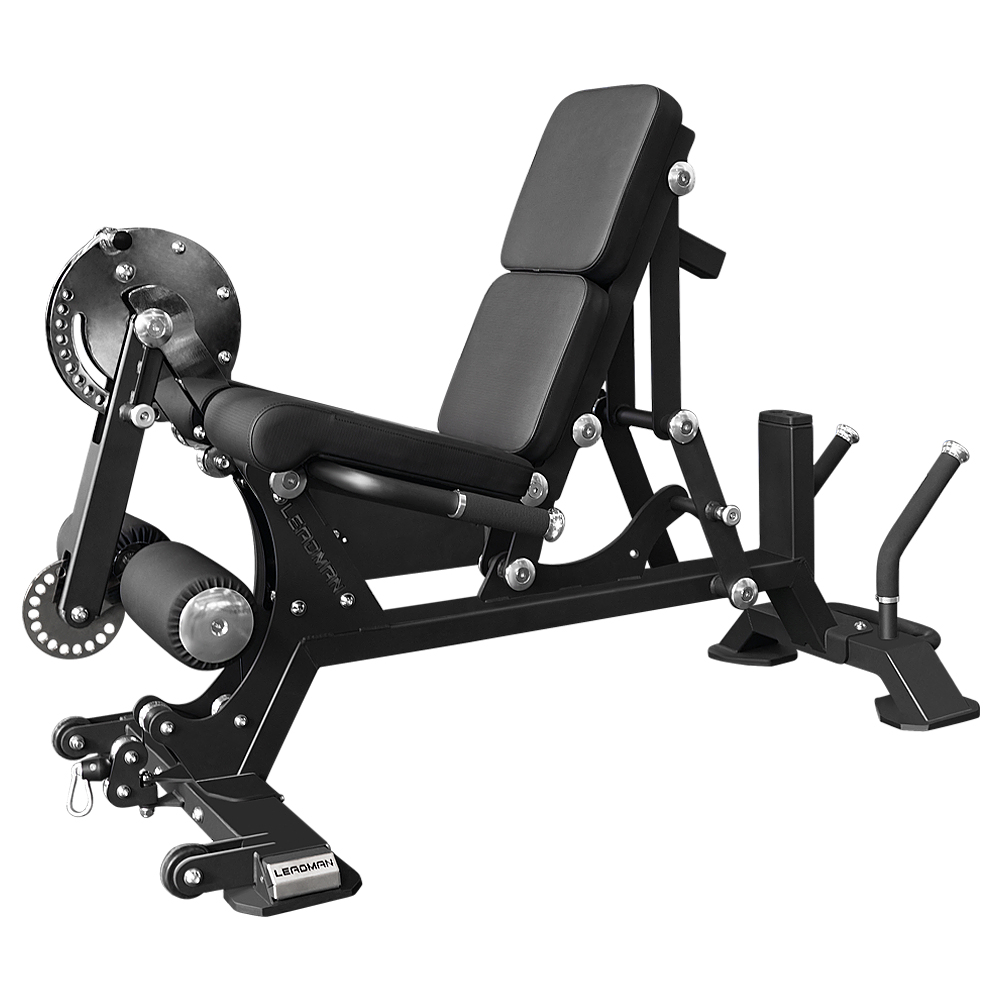
A persistent challenge in commercial gym design has been balancing exercise variety against equipment footprint. Many facilities sacrifice targeted isolation work—specifically for the hamstrings and quadriceps—simply because dedicated machines consume too much floor space. The 8004 series attachment directly solves this by converting an existing weight stack or squat stand into a three-mode leg training station. This is not merely an add-on; it is a strategic space-efficiency tool that changes the economics of gym layout.
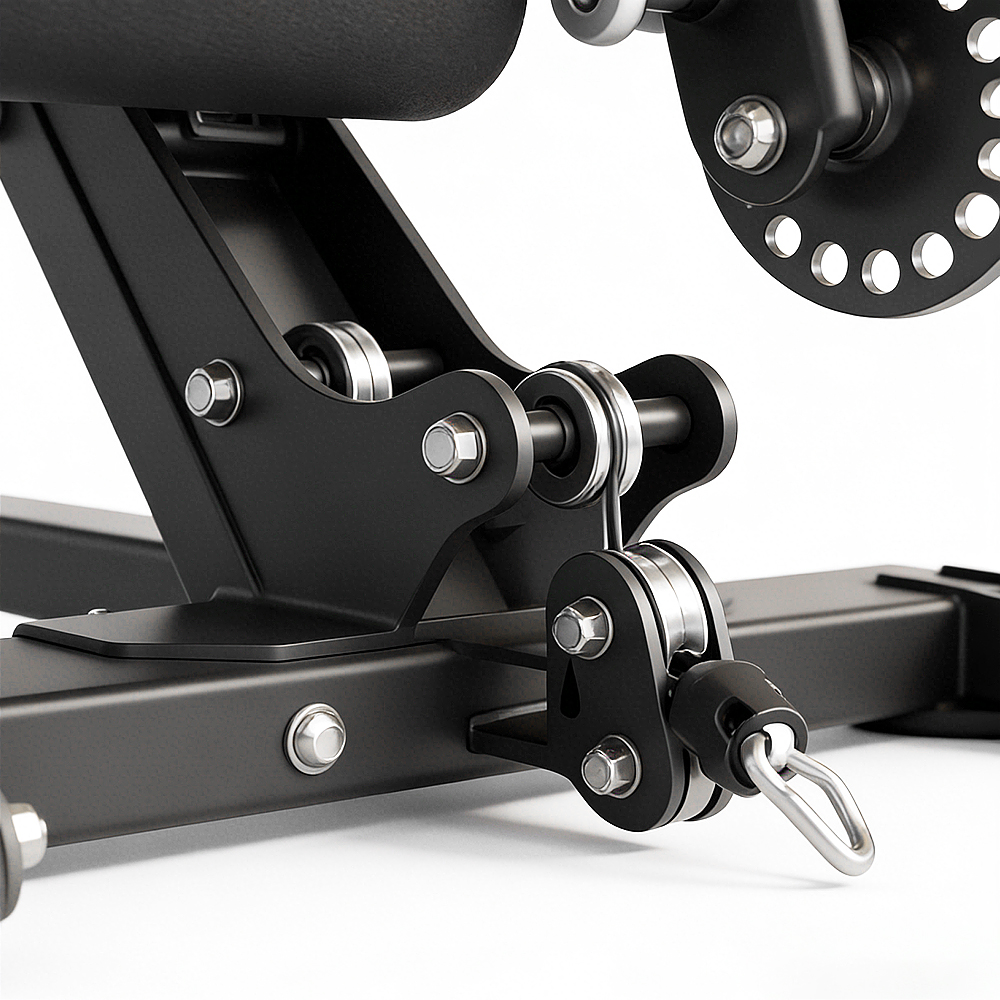
From a biomechanical standpoint, the unit allows users to transition between seated leg extensions, seated leg curls, and prone leg curls without changing stations. This capability is crucial for progressive overload protocols where a lifter moves from a compound movement to an isolation exercise. The mechanism relies on a precision gear-adjustable steel cable, offering a 1.2-meter range of motion. Unlike fixed-angle attachments, the adjustable cable angle supports both front and side installation, adapting to various rack configurations.
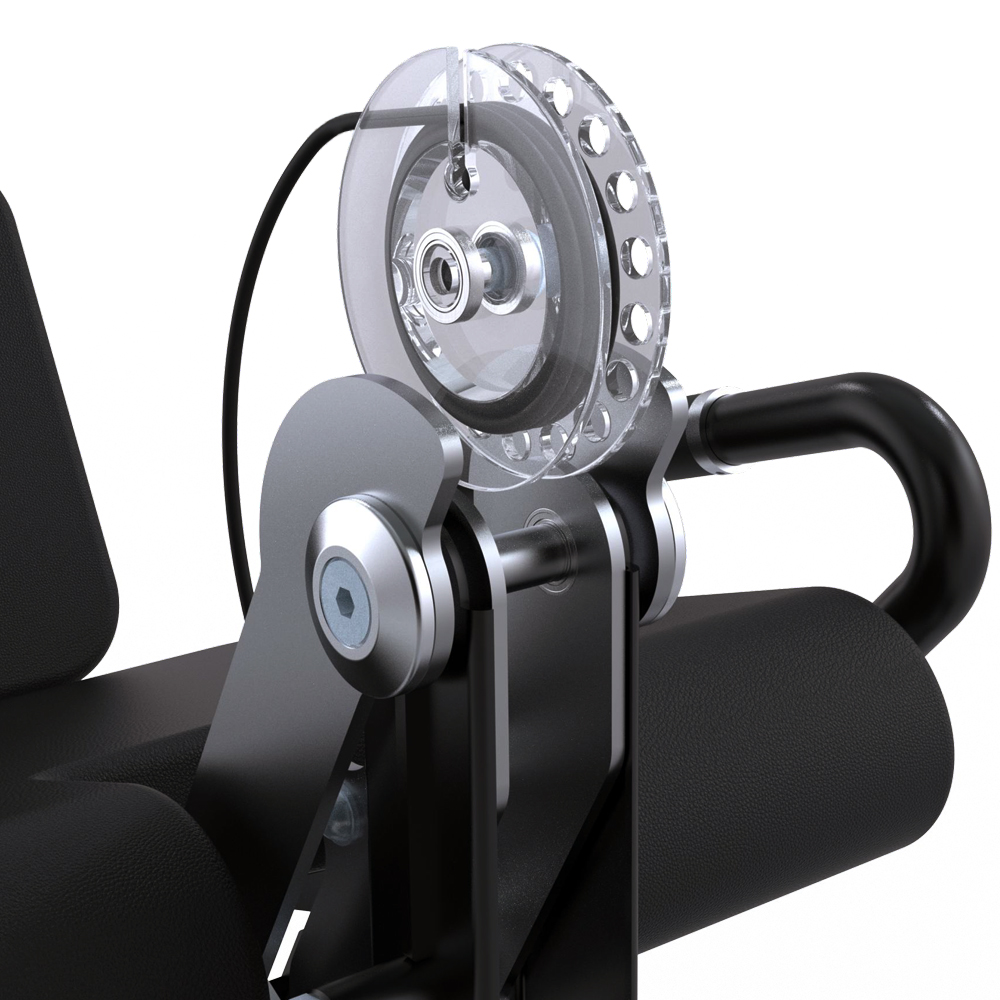
Facility managers often report that lower-body machines suffer from low utilization when placed in remote corners. By installing this unit on the front or side of a weight stack, the equipment remains in high-traffic zones. The built-in cord reel storage eliminates loose cables, reducing trip hazards and maintenance calls. Furthermore, transport wheels allow staff to reposition the unit for deep cleaning or rearranging floor plans—a feature rarely found in static leg machines. A CrossFit affiliate in Texas noted that adding this attachment increased lower-body accessory work by 40% without requiring a single new square foot of floor space.
The seated leg extension targets the rectus femoris and vastus medialis. The adjustable back pad features four levels, accommodating femur lengths from the 5th to 95th percentile. When you switch to the seated leg curl, the cam profile changes resistance to match the strength curve of the hamstrings—weakest at full extension and strongest mid-range. The prone leg curl option offers a different hip angle, reducing neural inhibition and allowing for heavier loads. This variety prevents adaptation and keeps members engaged.
| Position | Primary Muscles | Peak Resistance Point |
|---|---|---|
| Seated Leg Curl | Semitendinosus, Biceps Femoris (short head) | Mid-contraction (90° knee angle) |
| Prone Leg Curl | Biceps Femoris (long head), Semimembranosus | Peak at full contraction |
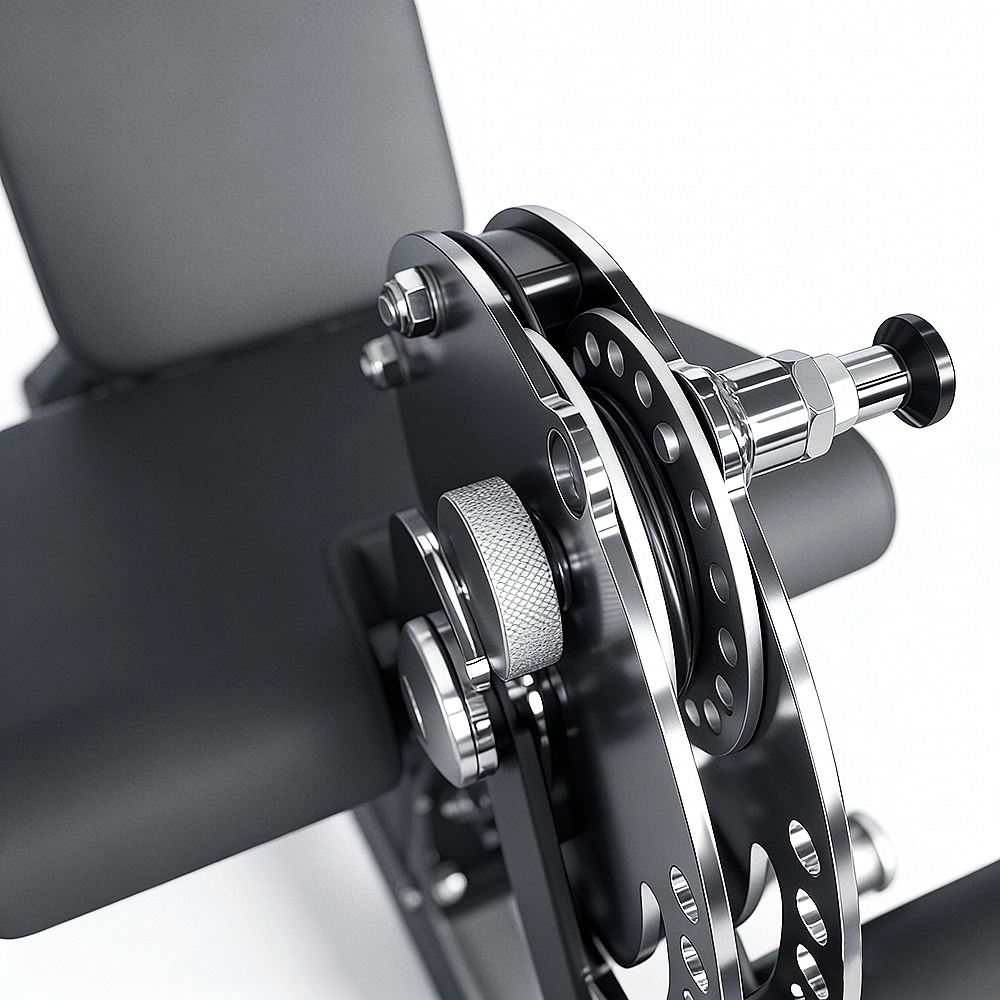
The integrated steel cable adjusts via a precision gear mechanism, similar to those used in high-end functional trainers. This allows the effective length to change from 0 to 1.2 meters in small increments. For gyms with multi-station weight stacks, the unit can be moved between racks in under five minutes using the built-in transport wheels. The cord reel storage is engineered to withstand repeated extension cycles—tested to over 20,000 retractions without performance degradation. When not in use, the cable retracts flush with the unit, eliminating clutter.
Compared to dedicated leg extension/curl combos that cost upwards of $2,500 and occupy 15-20 sq ft, this attachment leverages the existing weight stack footprint. The ROI calculation is straightforward: you gain three new exercises without losing any revenue-generating floor space. A hotel fitness center in Miami installed four units across their selectorized stations and reported a 30% increase in guest satisfaction scores related to lower-body equipment variety.
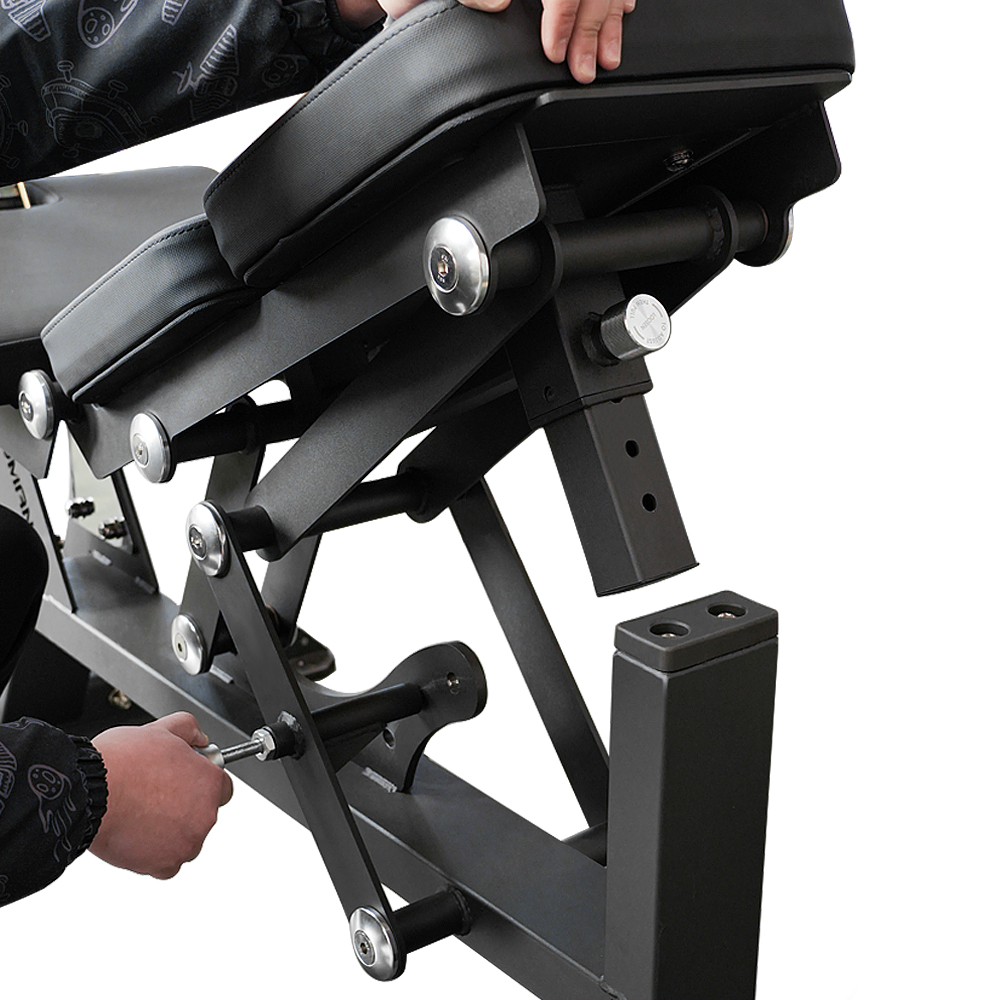
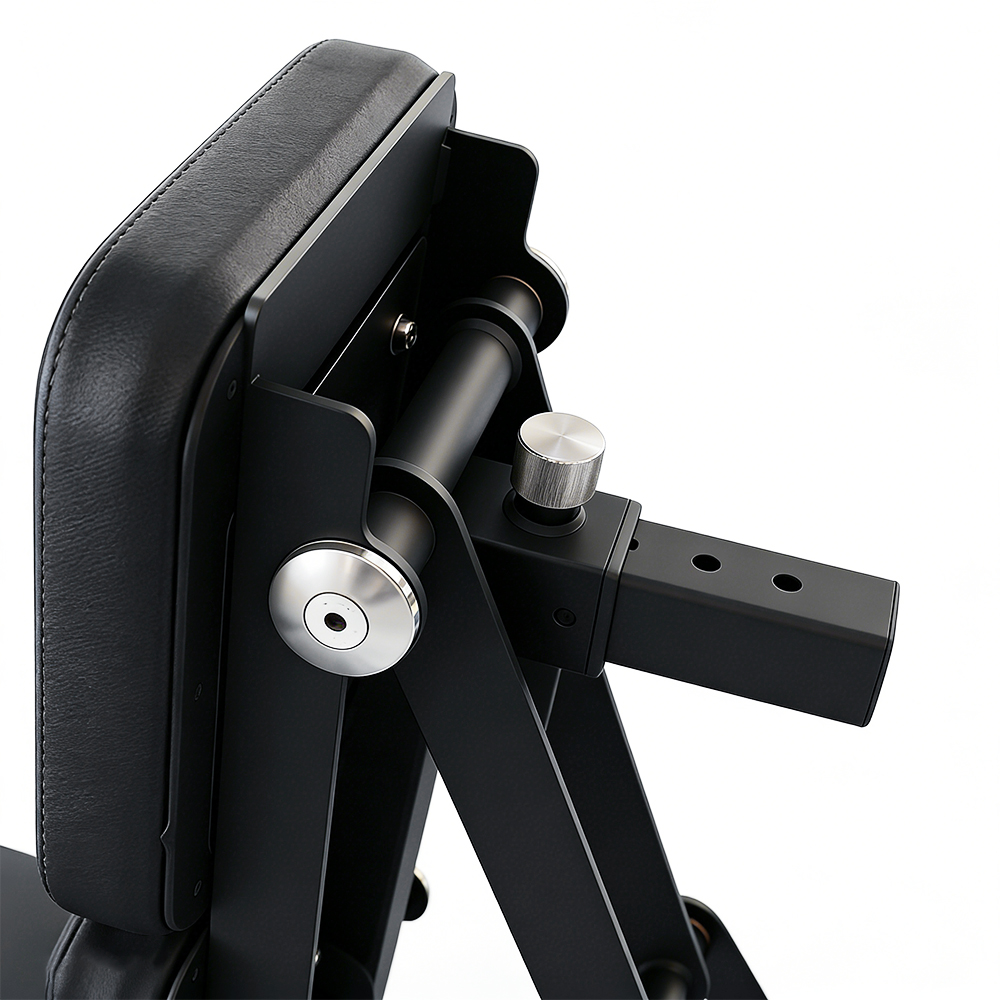
The four-level adjustable back pad is not just a comfort feature; it is a safety imperative. Proper pad placement ensures the knee joint aligns with the machine's fulcrum, reducing shear forces on the patellar tendon. The non-slip leather upholstery uses a high-friction top layer with a closed-cell foam base that resists sweat absorption—critical for commercial environments where sanitation is paramount. Users ranging from a 5'0" female athlete to a 6'4" male powerlifter can find a secure position without sliding.
Field data from a university recreation center showed that adjustable back pads reduced user complaints about knee discomfort by 65% compared to fixed-pad designs. The upholstery also meets commercial flammability standards (CA TB 117-2013), a detail often overlooked but required for insurance compliance in many jurisdictions. For gym owners, this means one less liability to track.
Perhaps the most underrated feature is the unit's ability to mount on the front or side of a weight stack. In a cramped fitness facility, side mounting allows the user to face a wall, preserving sightlines for supervision. Front mounting works well in open floor plans where members want to face the mirror or watch televisions. The transport wheels make it feasible to treat the attachment as a "roving" piece of equipment—bring it to a specific rack for a circuit class, then move it back afterward. This level of modularity is rare in lower-body equipment, which traditionally is bolted to the floor.
For gyms that serve diverse populations—from elderly clients needing seated leg extensions to young athletes performing prone curls—this single attachment replaces three separate machines. The average cost per new exercise drops to less than $300, compared to $1,000+ per dedicated machine. A case study from a franchise gym in Chicago showed that after deploying eight of these units across their locations, they were able to remove five standalone leg machines, freeing up 300 sq ft for a functional training zone, which increased overall membership retention by 12% over six months.
| Specification Category | Technical Details |
|---|---|
| Cable System | 1.2M adjustable steel cable with precision gear mechanism |
| Cable Management | Built-in cord reel storage with auto-retract (20,000+ cycle rating) |
| Mounting Options | Front or side installation on compatible weight stack units |
| Training Modes | Seated leg extension, seated leg curl, prone leg curl |
| Back Pad Adjustment | 4-level adjustable to accommodate diverse user heights |
| Upholstery | Non-slip leather, sweat-resistant closed-cell foam, CA TB 117-2013 |
| Mobility | Integrated transport wheels for repositioning |
| Construction Material | Heavy-duty structural steel with commercial-grade coating |