

Why Professional Gym Machines Are Built for Heavy Use: A Strategic Engineering Analysis
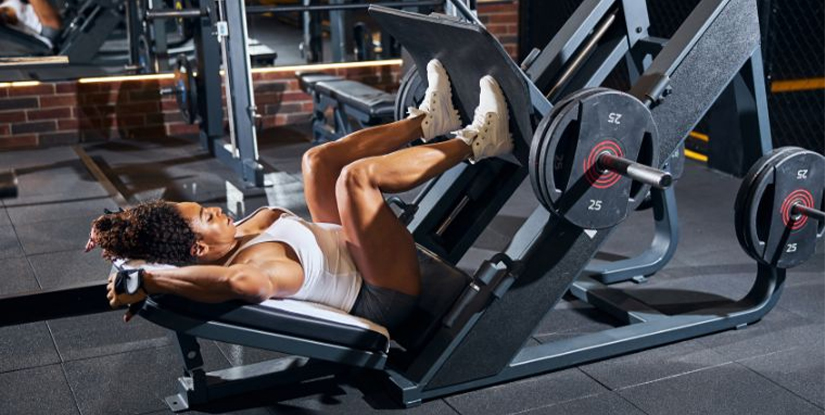
Facility operators often encounter a frustrating cycle: purchasing high-quality-looking equipment only to witness premature mechanical failure or structural instability within eighteen months. This degradation is rarely an accident of bad luck; it is usually a failure to account for the extreme mechanical stress profiles inherent in commercial environments. Understanding why professional gym machines are built for heavy use requires looking beyond the aesthetic finish to the underlying metallurgical and mechanical engineering. When machines fail under heavy load, the costs extend far beyond the initial purchase price, impacting user safety, facility reputation, and long-term ROI.
Structural Integrity and Material Density Selection
The most visible difference between consumer-grade and professional-grade equipment lies in the frame geometry and the density of the steel used. A common mistake in procurement is prioritizing weight over dimensional stability; lighter frames may seem easier to ship, but they lack the torsional rigidity required for heavy compound movements.
Steel Gauge and Wall Thickness Standards
Professional-grade frames typically utilize high-gauge carbon steel with significantly thicker walls than residential counterparts. This density is not just about weight; it is about resisting the micro-oscillations that occur during explosive or heavy lifting. A thin-walled frame will eventually suffer from fatigue cracking at the weld points due to these constant vibrations.
- Consumer Grade: Often uses 14-16 gauge steel, suitable for low-frequency, moderate-weight usage.
- Professional Grade: Generally employs 11-12 gauge steel, designed to absorb high-impact energy and sustained heavy loads.
- Verification Metric: Operators should check the specification sheet for the steel gauge thickness, not just the total weight of the machine.
While a robust frame provides the foundation, the strength of the structure is only useful if the moving parts can withstand the resulting friction and heat. This leads us to the critical role of specialized bearings and bushings.
Mechanical Component Endurance and Friction Management
Even the strongest frame is rendered useless if the motion is jerky or inconsistent. In high-traffic facilities, the constant repetition of mechanical cycles creates heat and friction, which are the primary enemies of longevity. Understanding the mechanics of friction management is essential for maintaining a smooth user experience.
The failure mode observed in many mid-tier machines is 'stuttering' or 'binding' during the eccentric phase of a lift. This is caused by inferior bearing assemblies that cannot handle the axial and radial loads generated by heavy weights. Professional machines utilize high-grade precision bearings designed to minimize the coefficient of friction over millions of cycles.
| Component Type | Common Failure Mode | Professional Standard Requirement |
|---|---|---|
| Ball Bearings | Bearing seizure due to heat buildup | Sealed precision bearings with high load capacity |
| Bushings | Excessive play/wobble in the pivot | Hardened steel or high-density polymer sleeves |
| Guide Rods | Scratches or bending under load | Chrome-plated or stainless steel with high straightness tolerance |
| Cables/Pulleys | Fraying or pulley misalignment | Nylon-coated steel cables with high UV and heat resistance |
By ensuring these moving parts are rated for high-frequency use, operators can avoid the catastrophic failure of a cable snap or a jammed lever. Once the motion is stabilized, the focus must shift to how the machine handles the actual load transfer through its drive systems.
Load Path Optimization in Weight Stack Systems
The way a machine transmits resistance—whether through cables, cams, or plates—determines its long-term reliability. A critical aspect of why professional gym machines are built for heavy use is the intentional design of the load path to prevent single-point stress concentration.
The Engineering of Cam Profiles
In selectorized machines, the cam is the brain of the resistance. A poorly designed cam results in uneven resistance, where the weight feels too light at the start and too heavy at the peak. This unevenness places disproportionate stress on the cables and pulleys. Professional machines use mathematically optimized cam profiles to ensure a smooth resistance curve, which protects both the user's joints and the machine's internal components.
Decision Criteria for Procurement: When evaluating selectorized equipment, ask if the resistance profile is constant or variable. A machine that offers a progressive resistance curve is generally more forgiving on the mechanical drive system than one with a jagged resistance pattern. A smooth curve prevents the 'shock loading' that often snaps cables during rapid movements.
Selecting a machine with a superior load path is only the first step; the operator must also understand how to protect these systems through regular diagnostic checks.
Explore the complete technical specifications:
Commercial Grade Gym Equipment: Durable Solutions for Facilities
Operator Inspection Protocols and Preventative Maintenance
No matter how well-engineered a machine is, the mechanical environment of a gym is inherently hostile. Sweat, dust, and constant movement necessitate a rigorous inspection cadence to prevent minor wear from becoming a total system failure.
The Three-Tiered Inspection Checklist
Facility managers should implement a tiered approach to maintenance, moving from daily visual checks to monthly mechanical deep-dives. Relying solely on a user's report of a 'broken machine' is a reactive strategy that increases downtime and lowers facility ROI.
- Daily (Visual/Tactile): Check for loose bolts, visible cable fraying, and torn upholstery. Look for any oil leaks or dry spots on guide rods.
- Weekly (Performance): Test the smoothness of the motion. Does the machine feel 'crunchy' or 'sticky'? Check if the weight stack selector pin is seated correctly.
- Monthly (Technical): Inspect bolt torque (especially on moving joints), check cable tension, and lubricate guide rods with specialized silicone spray.
A common mistake is using the wrong lubricant. Applying WD-40 or petroleum-based grease to guide rods can actually attract dust and create an abrasive paste that destroys the bushings. Always use a dry-film silicone lubricant designed for high-friction surfaces.
Effective maintenance extends the life of the hardware, but the operator must also be prepared to identify when a component has reached its natural end-of-life before a failure occurs.
Explore the complete technical specifications:
Identifying and Mitigating Failure Modes in High-Volume Environments
Understanding the signs of imminent failure allows an operator to move from a reactive to a proactive stance. In a high-volume setting, waiting for a machine to stop working is a costly error that results in lost revenue and potential liability issues.
Failure modes often present subtle warnings long before a total breakdown. For instance, a slight change in the 'sound' of a machine—a new squeak or a rhythmic clicking—is frequently the first sign of a bearing that is losing its lubrication or a bolt that has loosened. Ignoring these auditory cues is a primary reason why machines fail unexpectedly during peak hours.
| Symptom | Likely Root Cause | Immediate Action Required |
|---|---|---|
| Rhythmic Clicking/Popping | Loose pivot bolt or damaged bearing | Isolate machine and check all assembly bolts |
| Resistance 'Drops' | Cable fraying or pulley misalignment | Inspect cable sheath and pulley groove alignment |
| Excessive Vibration | Unbalanced weight stack or loose frame mounting | Verify floor mounting and weight stack stability |
| Jerky Resistance | Dry guide rods or worn bushings | Clean rods and apply professional-grade silicone lubricant |
By categorizing these symptoms, management can dispatch maintenance teams with specific parts in hand, significantly reducing the 'out of order' duration.
Ergonomic Integrity and User Safety Parameters
Durability is not just about the strength of the metal; it is also about the stability of the user's position. A machine can be structurally sound but ergonomically flawed, leading to user fatigue and improper form. In a professional setting, ergonomic durability ensures that the machine remains safe even when used by athletes of varying sizes and strength levels.
Professional machines incorporate highly adjustable components—such as seat height, back angles, and arm positions—that are built to withstand constant readjustment. A common failure in lower-end equipment is the 'slippage' of adjustment pins or the wearing down of adjustment tracks, which makes finding a stable position difficult and potentially dangerous for heavy lifters.
Verification of Adjustability Stability
When testing new equipment, the operator should not only check the range of motion but also the locking reliability. A professional-grade adjustment should feel 'positive' and 'solid.' If a seat adjustment feels 'squishy' or slides easily despite the pin being inserted, the adjustment mechanism is likely not designed for high-volume use and will fail under the weight of a heavy user.
Ensuring that these adjustable components are robust is a vital part of a facility's safety protocol, bridging the gap between mechanical durability and user safety.
Long-Term ROI: The Economic Case for Professional Equipment
When calculating the total cost of ownership (TCO), the initial price tag is often the least significant factor. The real cost is determined by the frequency of replacement and the labor required for upkeep. Choosing equipment based on why professional gym machines are built for heavy use is a strategic financial decision, not just a technical one.
A facility that buys mid-tier equipment to save 30% upfront might find itself spending 50% more over five years due to constant part replacements and increased downtime. High-quality machines offer a lower TCO because their components—from the heavy-gauge steel to the precision bearings—are designed to reach their replacement threshold years later than consumer-grade alternatives.
Strategic Procurement Checklist:
- Compare the 5-year TCO, not just the 1-year purchase price.
- Verify the availability of replacement parts (cables, upholstery, bearings).
- Confirm the manufacturer's warranty covers commercial usage, not just residential.
- Inquire about the steel gauge and bearing specifications for all major moving parts.
Ultimately, the decision to invest in heavy-duty equipment is an investment in the facility's operational stability and long-term profitability.
Future-Proofing Your Facility Through Engineering Standards
As fitness technology evolves, the fundamental principles of mechanical durability remain constant. While digital interfaces and smart-connectivity are becoming standard, the core structural and mechanical components of a machine are still governed by the same laws of physics and material science.
A forward-thinking facility operator should look for equipment that combines modern technological integration with classic, heavy-duty engineering. A smart screen is a valuable feature, but it cannot compensate for a weak frame or a low-grade bearing. The long-term success of a gym depends on a foundation of reliable, high-performance mechanical hardware that can stand up to the rigors of an evolving fitness landscape.