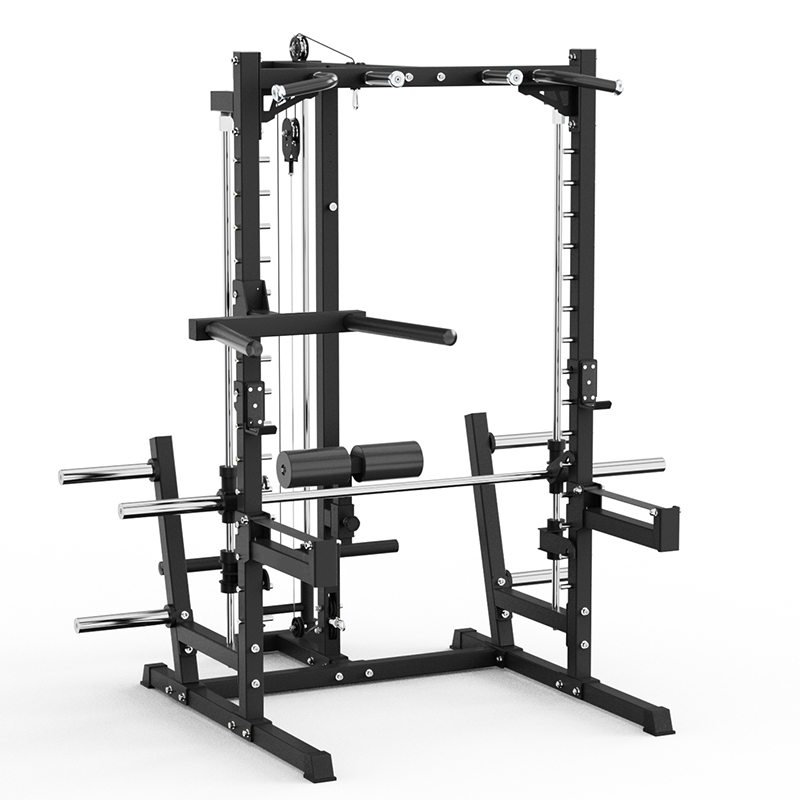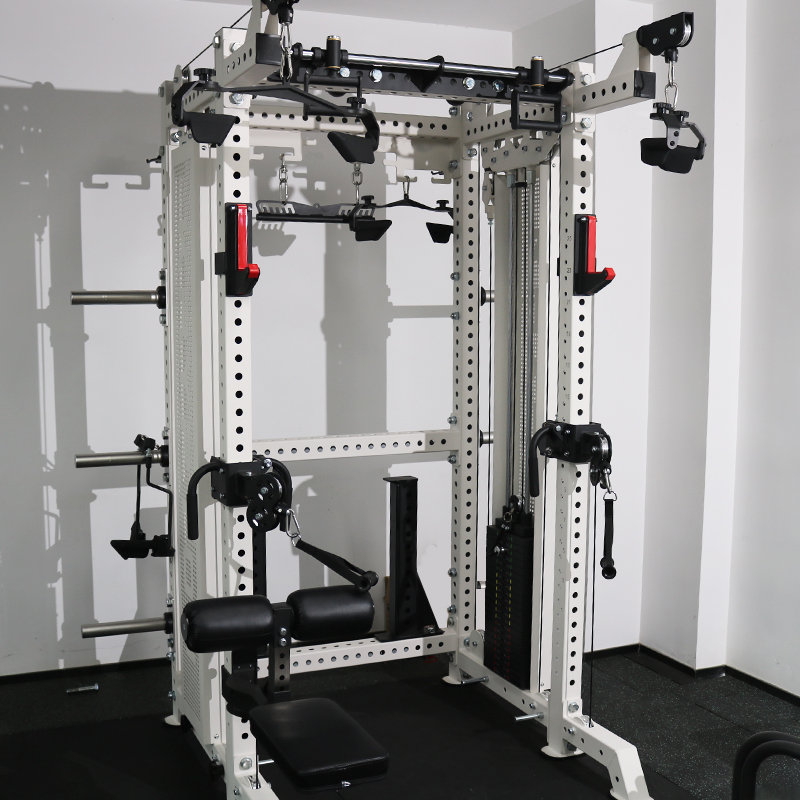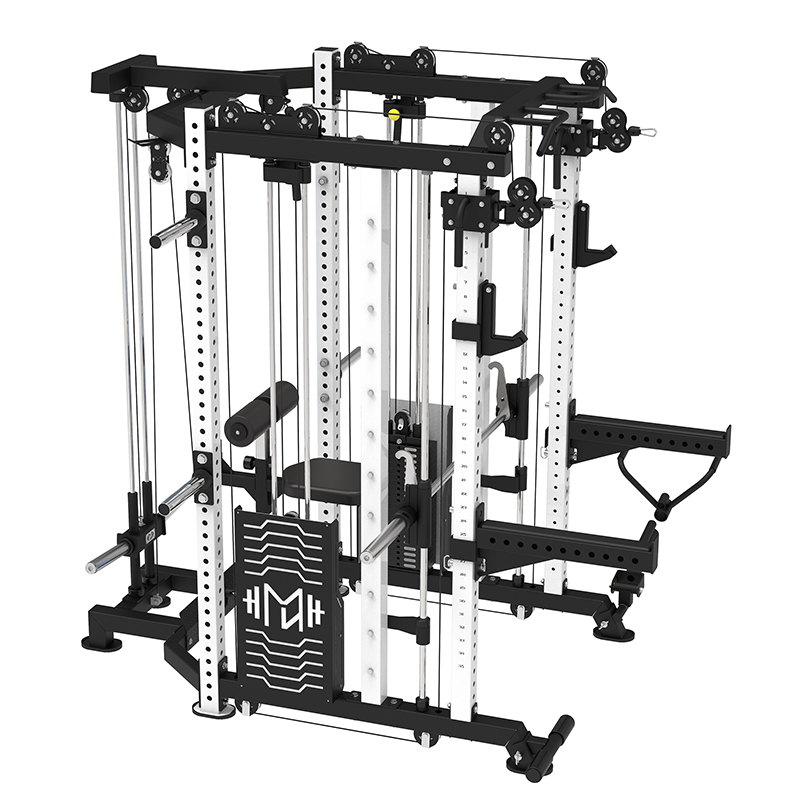
For commercial gym operators and serious home gym owners, the barbell bench press smith machine often presents a confusing value proposition. Is it a safer alternative to free weights, a restricted movement pattern with limited carryover, or simply a versatile tool for training to failure? The answer depends entirely on the facility's member demographics and training culture. Unlike a standalone bench or a power rack, this machine locks the barbell onto vertical or slightly inclined steel rails, eliminating virtually all lateral and anterior-posterior bar oscillation. The primary benefit is unequivocal: spotter-free training at high intensities. A user can load the bar, press until concentric failure, and simply twist the wrists to re-engage safety hooks at any point in the repetition. This mechanical reality makes the Smith machine one of the safest options for unsupervised training zones, hotel fitness centers, and multi-tenant residential gyms where a dedicated spotting partner is never guaranteed.
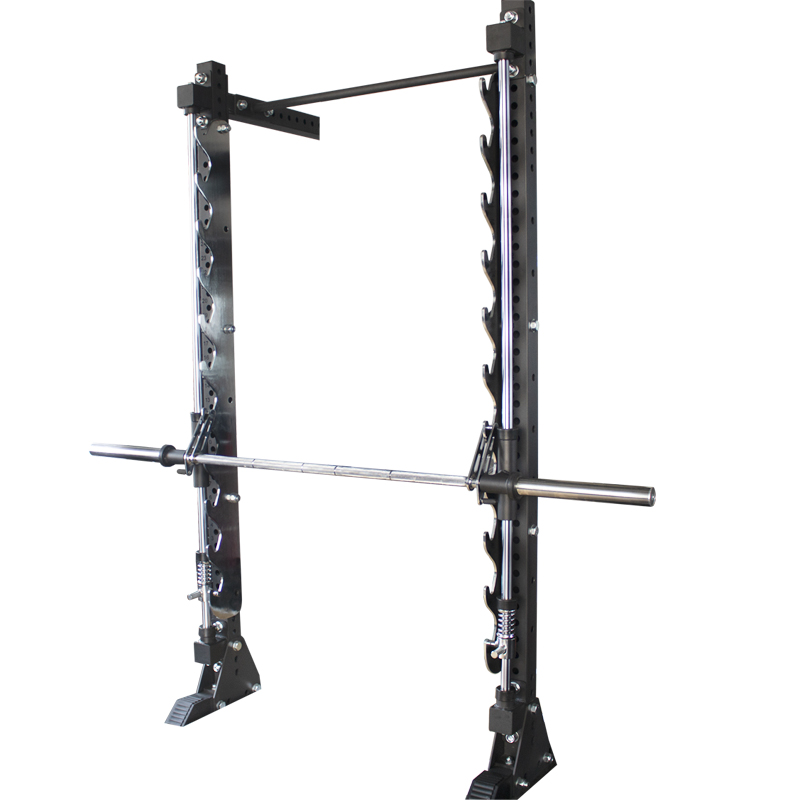
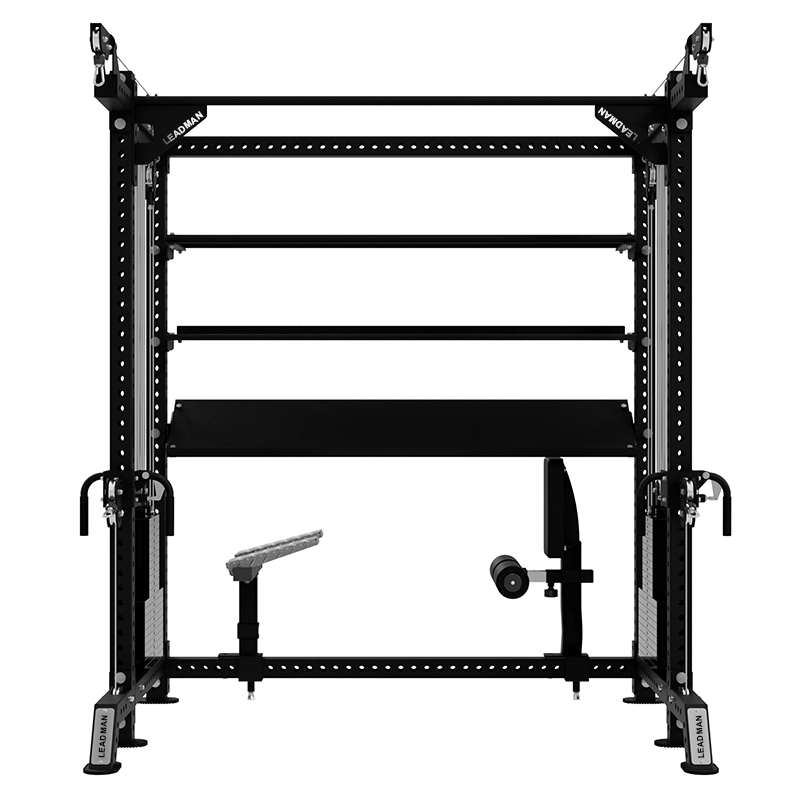
From a mechanical engineering perspective, the barbell bench press smith machine is defined by its guidance system and counterbalance mechanism. The core components include two chrome-plated or stainless steel guide rods, a linear bearing carriage attached to the barbell, and a selection of fixed safety hooks along the uprights. Bearing quality is the single most significant predictor of long-term user satisfaction. High-end commercial machines utilize sealed linear ball bearings with nylon ball retainers. These provide exceptionally smooth, nearly silent travel. In contrast, budget units often use open bronze or plastic bushings sliding directly on the guide rods. These produce friction, audible grinding, and accelerated wear, often becoming unusably "sticky" or loud within 12-18 months of heavy use. Counterbalance systems represent another engineering differentiator. A well-designed system uses a weight stack or gas springs to offset 15-25 pounds of the barbell's resting mass. This reduces the initial inertia the lifter must overcome, allowing for smoother acceleration and more natural movement patterning. A machine lacking a counterbalance often feels deceptive—the empty bar may weigh 30-40 pounds but resists acceleration, leading to jerky, uncontrolled reps, especially during explosive or ballistic pressing variations.
Beyond the raw mechanics, the fixed bar path of the barbell bench press smith machine has profound implications for user biomechanics and program design. The free-weight barbell bench press follows a slight "J-curve" arc: the bar lowers to the lower sternum or xiphoid process, then travels back and slightly up toward the shoulder joint as it presses. A purely vertical Smith machine forces a linear descent. For lifters with healthy, mobile shoulders, this difference is often negligible. However, for those with a history of impingement, rotator cuff issues, or thoracic mobility restrictions, a vertical path can increase anterior shear forces on the glenohumeral joint. This is why premium manufacturers often angle the guide rods 7-10 degrees from vertical. This "angled Smith" much more closely mimics the natural free-weight arc, reducing joint stress while retaining the safety benefits of the guided mechanism. For procurement, the distinction matters. If your facility serves a general, aging, or rehabilitative population, an angled Smith is significantly more appropriate. For a hardcore strength or powerlifting facility where members typically know how to bail a failed rep, a traditional power rack with a free barbell remains the gold standard, and a vertical Smith may only be used for accessory or high-volume pump work.

Let our experts design the perfect gym solution for your business. Get a free consultation and quote today.