

Why Gym Safety Clearance Matters for Member Safety: A Technical Guide for Facility Operators
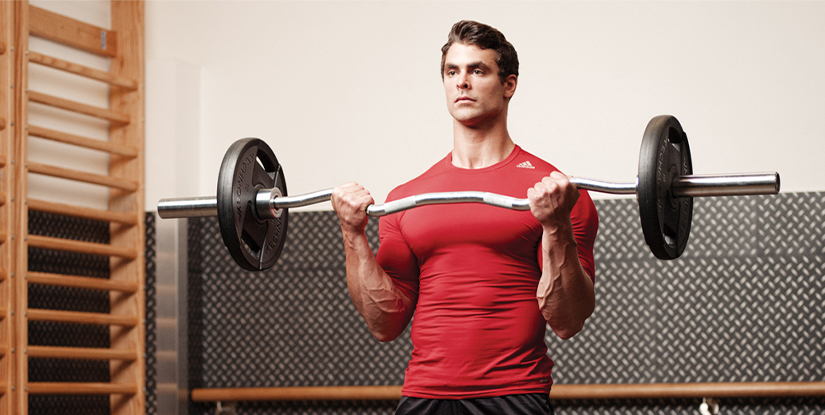
Many facility managers operate under the misconception that as long as equipment is mechanically sound, the space around it is secondary. This oversight leads to high-risk environments where even perfectly functioning machines become hazards due to proximity issues. Understanding why gym safety clearance matters for member safety requires a shift from looking at the machine as an isolated unit to viewing it as part of a dynamic kinetic system.
The Physics of Kinetic Movement and Operational Buffers
A common error in gym layout design is calculating clearance based solely on the static footprint of the equipment. This approach ignores the actual motion paths of the user and the mechanical components. When a member engages in a high-intensity set, their center of mass shifts, and the machine's moving parts—such as weight stacks or rotating arms—expand into the surrounding space.
Mechanical Tolerance vs. User Movement
It is vital to differentiate between the machine's internal mechanical tolerance and the external operational buffer required for human movement. A weight stack might have a vertical travel limit, but the lateral sway of the cable during a heavy lift can increase its effective width. Operators must account for these dynamic variables to prevent collisions.
Static Footprint: The dimensions of the machine when at rest.Failure to implement these buffers often results in secondary injuries, where a user strikes a neighboring machine or a bystander, rather than the machine itself. This distinction leads us to the specific spatial requirements for different equipment categories.
Categorizing Equipment Clearance Requirements
Not all equipment demands the same level of spatial oversight. A stationary cycle requires a fundamentally different clearance profile than a heavy-duty power rack or a multi-functional cable station. Misjudging these specific needs is a primary cause of floor-space congestion and subsequent accidents.
| Equipment Type | Primary Motion Variable | Recommended Minimum Clearance (Per Side) | Critical Failure Mode |
|---|---|---|---|
| Cardio (Treadmill/Cycle) | User Exit/Step-off | High (Must allow for lateral step) | Member falling off side during fatigue |
| Strength (Selectorized) | Weight Stack Oscillation | Medium (Account for cable sway) | Stack hitting adjacent equipment |
| Free Weights (Racks/Benches) | Unrestricted Weight Path | Very High (Unobstructed radius) | Dropped weights hitting bystanders |
| Cable Machines | Multi-directional Pulley Path | Medium-High (Circular radius) | Cable interference with passing members |
By categorizing equipment this way, operators can move from a one-size-fits-all approach to a nuanced, risk-based layout strategy. This differentiation is essential for ensuring that even during high-traffic periods, the safety margins remain intact.
Identifying and Mitigating High-Risk Proximity Failures
Even with a well-planned layout, real-world operational changes can erode safety margins. Proximity failures typically occur when the intended "empty space" is encroached upon by non-standard items or unauthorized equipment. Identifying these failure modes before they result in an incident is a key responsibility of facility management.
Common Encroachment Scenarios
One of the most frequent mistakes involves the placement of secondary items such as water bottles, personal bags, or even portable mobile devices in the designated clearance zones. While small, these items create trip hazards that are exacerbated when a member is exiting a machine or adjusting their position.
- Improper Accessory Storage: Leaving weight plates or dumbbells in the path of moving parts.
- Congestion from Bystanders: Members standing too close to a lifter to provide "spotting" without a defined safety zone.
- Improper Matting: Using floor mats that do not align with the equipment's movement, creating lips or uneven surfaces at the edge of the clearance zone.
The root cause is often a lack of clear visual or physical demarcation. To prevent this, operators must implement a rigorous verification process to ensure the safety perimeter remains unobstructed.
Explore the complete technical specifications:
Power Lift Gym Equipment: Engineered for Strength Performance
Establishing a Standardized Inspection and Verification Protocol
A safety protocol is only as effective as its last inspection. Relying on visual intuition is insufficient for commercial-grade environments where subtle shifts in equipment positioning can occur due to floor vibration or heavy use. Operators should transition to a documented, measurable verification process.
The Three-Tiered Inspection Checklist
To maintain optimal safety, we recommend a tiered inspection approach that addresses different levels of movement and wear. This ensures that clearance is not just a theoretical concept, but a daily operational reality.
| Inspection Level | Frequency | Primary Focus Area | Verification Metric |
|---|---|---|---|
| Daily Walk-Through | Every Shift Change | Visual obstructions (bags, towels, loose weights) | Clear sightline and path clearance |
| Weekly Technical Check | Once per Week | Equipment positioning and bolt tightness | Tape-measured distance from fixed points |
| Monthly Deep Audit | Monthly | Structural integrity and floor surface/matting alignment | Full compliance with manufacturer specs |
Using a tape measure to verify distances—rather than just looking—provides the hard data necessary to prove that the facility meets safety standards. Once the inspection routine is established, the next step is training the staff to enforce these findings.
Explore the complete technical specifications:
Optimizing Floor Layout for Long-Term Reliability
A technical approach to layout is not just about immediate prevention; it is about the structural longevity of the facility. When designing a layout, operators must consider the friction between equipment placement and floor-based mechanical stressors. Overcrowding often leads to a cascade of mechanical failures that are costly to repair.
The Impact of Proximity on Equipment Lifecycle
When machines are placed too close together, the cumulative vibrations from multiple users can create resonance issues. If two large strength machines are positioned within a narrow margin of each other, their simultaneous use may create a frequency that accelerates the loosening of chassis bolts or the wear of pivot points.
- Resonance Risks: High-density layouts can lead to unintentional harmonic vibrations.
- Structural Fatigue: Indirect contact or near-misses during heavy lifts causes microscopic fractures in metal frames.
- Maintenance Costs: Tight spacing makes it difficult for technicians to access bolts and grease points, leading to neglected maintenance.
By prioritizing slightly wider clearances during the initial floor plan phase, you reduce the frequency of both human error and mechanical breakdown. This sets the stage for high-performance equipment maintenance.
Staff Training and Enforcement Logic
The technical standard cannot exist in a vacuum; it requires human enforcement. Staff members should be trained to recognize not just a "messy floor," but a "violation of the safety clearance zone." This involves teaching them the specific dimensions required for certain machines so they can explain the risk to members effectively.
A clear way to do this is through the concept of the "Kinetic Radius." If a staff member sees a member using a cable machine, they should visually estimate the arc of the weight and ensure no one is within that arc. This proactive stance prevents the accident before the machine's mechanical limit is ever reached.
The Long-Term Impact of Clearance Maintenance on ROI and Liability
While focusing on safety might seem like a cost center, it is actually a critical component of long-term financial stability. Neglecting the clearance zones increases the likelihood of liability claims and, more importantly, decreases the lifespan of the equipment itself. Frequent collisions between machines and moving parts cause structural fatigue that is often invisible to the naked eye.
Preventing Mechanical Fatigue through Spacing
When a weight stack or a moving arm repeatedly strikes an adjacent object or a piece of nearby equipment, the shockwaves travel through the frame. This vibration can loosen bolts, degrade bearings, and eventually lead to catastrophic component failure. By maintaining strict clearance, you are essentially performing preventative maintenance on the machine's structural integrity.
Reduced Repair Costs: Fewer accidental strikes mean less frequent part replacements.A facility that prioritizes these technical details is not just safer for its members; it is also more profitable and sustainable for its owners. As we move toward more automated and high-tech fitness environments, the principles of spatial discipline will only become more vital.
Future-Proofing Your Facility Layout
As gym technology evolves, the space required for movement is changing. The rise of highly specialized strength equipment and more complex cardio machines means that the "safety clearance" of today may not be sufficient for the equipment of tomorrow. Operators must design with scalability and flexibility in mind.
Modular Design and Scalable Clearances
When planning a layout, it is wise to design for the "maximum footprint" of potential future upgrades. This might involve leaving slightly more floor space than currently required to accommodate the next generation of machines. A modular approach to flooring and equipment placement allows for rapid adjustments without compromising the safety of the member experience.
In conclusion, why gym safety clearance matters for member safety is a question of both human physiology and mechanical engineering. By treating the space around the machine with the same technical rigor as the machine itself, operators can ensure a high-performance environment that is both safe and durable.