

Maximizing Facility Efficiency: The Organization Benefits of Weight Racks

Eliminating Operational Chaos via Structured Storage
In high-traffic strength training environments, the transition from a professional facility to a disorganized space often happens incrementally. The primary symptom is not a single catastrophic event, but a gradual decay in workflow efficiency. When weight plates and dumbbells are scattered across the floor, operators face three distinct failure modes: increased injury risk due to tripping hazards, excessive downtime as clients search for specific denominations, and accelerated equipment degradation caused by improper storage contact. The core cause of this friction is often a lack of dedicated, high-capacity storage geometry designed to handle specific load profiles.
Implementing a centralized storage system transforms these variables. Rather than treating storage as an afterthought, facility managers must view it as a fundamental component of the training floor's operational architecture. By prioritizing the organization benefits of weight racks, an operator moves from reactive cleaning to proactive space management. This structural shift necessitates a detailed understanding of how different rack types interact with various equipment geometries, a topic we will explore through specific selection criteria.
Common Failure Scenarios in Unstructured Gyms
- Tripping Hazards: Dumbbells left on the floor create immediate liability and impede movement pathways.
- Equipment Scuffing: Plates stored against walls or without upright supports suffer from edge chipping and surface oxidation.
- The Search Latency Problem: Athletes spending more time locating a 25lb plate than performing the actual set, which lowers overall facility throughput.
Understanding these baseline risks establishes the need for a more disciplined approach to equipment selection and layout. Before purchasing, an operator must evaluate the compatibility between their current inventory and the intended storage unit.
Selection Criteria for High-Capacity Weight Storage
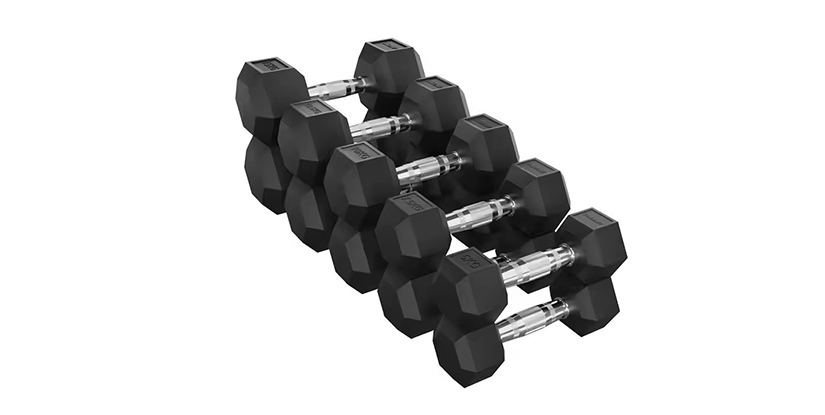
Transitioning from a problem-oriented view to a solution-oriented procurement strategy requires a rigorous evaluation of capacity and load distribution. A common mistake in facility setup is purchasing racks based solely on aesthetic uniformity rather than mechanical compatibility. A rack that looks impressive but lacks the correct center of gravity or tier spacing will eventually become a safety liability under full load.
To select the correct unit, operators should utilize a decision matrix that balances physical footprint with weight-bearing capability. The following table outlines the key parameters an operator must verify before finalizing a procurement order.
| Selection Metric | Critical Consideration | Failure Mode if Ignored |
|---|---|---|
| Load Capacity (Static) | Maximum weight per tier or peg. | Structural bending or catastrophic collapse. |
| Tier Depth | Ensuring plates or dumbbells sit flush. | Equipment overhang causing center-of-gravity shifts. |
| Footprint Ratio | Ratio of storage volume to floor area used. | Reduced movement space for athletes and trainers. |
| Material Gauge | Thickness of steel used in uprights. | Structural fatigue under repeated loading cycles. |
By utilizing these metrics, a facility manager can ensure the chosen equipment supports the intended training volume. Once the hardware is selected and placed, the focus must shift toward the specific mechanical advantages of different rack architectures.
Dumbbell Rack Optimization and Ergonomic Workflow

While plate racks handle bulk mass, dumbbell racks are the frontline of ergonomic efficiency. The organization benefits of weight racks specifically for dumbbells involve more than just clearing the floor; they dictate the speed of an entire circuit-based training session. An incorrectly configured dumbbell rack can bottleneck a facility, especially during peak hours when multiple users require the same weight increments.
Optimal dumbbell organization relies on a logical progression of weight increments. A professional-grade setup should utilize a tiered or staggered system that allows for high visibility of the weight markings. If the markings are obscured by the angle of the rack or the shape of the dumbbell handles, the 'search latency' mentioned earlier becomes unavoidable.
Strategic Placement Protocols
- The Zone Method: Grouping heavy dumbbells (30lbs+) on lower tiers to maintain a low center of gravity, while keeping lighter weights at eye level.
- The Clearance Buffer: Maintaining a minimum of 3 feet of clearance around the rack to prevent bottlenecks during high-intensity intervals.
- Weight Increment Continuity: Ensuring the sequence of weights follows a standard, predictable pattern to minimize cognitive load on the athlete.
- Fastener Torque Verification: Use a wrench to check that all structural bolts remain tightened to specification. Loosened bolts are the leading cause of rack wobbling.
- Weld Integrity Check: Visually inspect all joinery points for hairline cracks or signs of stress deformation.
- Coating and Surface Inspection: Check for chipped powder coating or rust. Exposed metal can lead to oxidation and eventually weaken the structural profile.
- Level and Alignment: Ensure the rack has not shifted or tilted due to uneven floor loading or subfloor settling.
Proper dumbbell management ensures that the transition between exercises is seamless. However, even the most organized dumbbell area can be undermined if the larger, bulkier plate storage is not equally scrutinized.
Plate Storage Mechanics: Stability and Structural Integrity
Weight plates represent the highest concentrated mass in a facility, making their storage a critical safety concern. The primary failure mode for plate storage is instability caused by uneven weight distribution or improper peg alignment. If an operator relies on single-tier pegs without considering the lateral load, the rack may tip during rapid loading and unloading cycles.
To mitigate these risks, operators must distinguish between different storage geometries. Plate trees are excellent for mobility and temporary use, whereas integrated plate storage on a power rack provides a more permanent, stable solution. The core mechanism of stability in these units is the base width relative to the maximum potential load. A narrow base with heavy plates on top is a recipe for structural failure.
Comparison of Plate Storage Modalities
| Storage Type | Primary Advantage | Ideal Use Case | Operational Risk |
|---|---|---|---|
| A-Frame Plate Tree | High mobility and easy access. | Dynamic environments/small spaces. | High tip risk if unbalanced. |
| Integrated Rack Storage | Maximum stability and footprint efficiency. | Permanent strength training stations. | Difficult to reposition once set. |
| Wall-Mounted Pegs | Zero floor footprint. | Compact studio settings. | Requires professional wall-anchoring. |
When selecting a plate storage solution, the mechanical stability of the unit is just as important as its capacity. With the physical stability of the equipment secured, the next critical step is the routine maintenance required to keep these systems functional.
Preventative Maintenance and Inspection Protocols
Even the most robust storage system will eventually degrade due to mechanical fatigue, oxidation, or improper use. A common oversight in facility management is treating weight racks as 'set and forget' equipment. In reality, the high-frequency loading and unloading of heavy steel creates constant stress on bolts, welds, and coatings.
A systematic inspection cadence is required to ensure the continued organization benefits of weight racks. This is not merely a visual check, but a technical verification of structural integrity. Operators should implement a two-tiered inspection system: a daily visual check for immediate hazards and a monthly deep-dive inspection for mechanical fatigue.
The Monthly Inspection Checklist
By treating maintenance as a technical requirement rather than an optional chore, operators prevent the gradual structural decay that leads to unsafe environments. This rigorous upkeep ensures that the storage remains a reliable asset rather than a liability.
Common Operational Errors in Rack Management
Despite having high-quality equipment, many facilities fail to realize the organization benefits of weight racks due to poor operational habits. These errors often stem from a lack of staff training or a failure to establish clear usage standards for clients. The most prevalent error is the 'miscellaneous loading' habit, where users place equipment on parts of the rack not designed for that specific load.
For example, placing heavy Olympic plates on a lightweight dumbbell rack or using a power rack's uprights for non-standard weight storage can cause permanent deformation. This behavior is often a result of the 'path of least resistance'—if a specialized rack is full or slightly out of reach, users will default to the nearest available surface.
Mitigating Misuse Through Policy and Design
To combat these errors, facilities should implement both physical and procedural barriers. Physically, this means ensuring that every piece of equipment has a dedicated, highly visible home. A plate tree with clear weight markings or a dumbbell rack with etched weight levels provides a visual cue that is difficult to ignore.
Procedially, management should establish and communicate clear 'end-of-set' protocols. This includes reinforcing the idea that a set is not complete until the equipment is returned to its specific designated position. Verifying these habits through random floor checks and staff presence is essential for maintaining the long-term integrity of the storage systems.
Scaling Storage Systems for Future Facility Growth
As a facility grows, the initial storage solutions that once seemed adequate will eventually become bottlenecks. An operator who fails to plan for scalability will find themselves in a cycle of 'reactive purchasing'—buying small, disconnected units that do not integrate with the existing floor plan. This lack of cohesion negates the long-term organization benefits of weight racks by creating a fragmented and disjointed workspace.
The key to scaling effectively is modularity. Instead of purchasing independent, single-use racks, look for systems that can be linked or expanded. For instance, a modular barbell and plate storage system can grow alongside your inventory of specialized bars and fractional plates. This allows you to add capacity without completely redesigning your floor layout every twelve months.
Scalability Strategy Matrix
| Growth Phase | Primary Objective | Recommended Investment |
|---|---|---|
| Startup / Small Studio | Footprint Minimization | Wall-mounted or multi-functional racks. |
| Mid-Sized Commercial | Workflow Efficiency | Integrated plate/dumbbell storage units. |
| Large-Scale Facility | High-Volume Throughput | Zoned, modular, and highly specialized systems. |
A proactive approach to scaling ensures that your storage infrastructure remains a support mechanism for your business rather than a constant source of logistical friction. This final consideration ties together the themes of maintenance, safety, and operational efficiency discussed throughout the guide.