

How to Select Commercial Weight Lifting Equipment: A Procurement Strategy
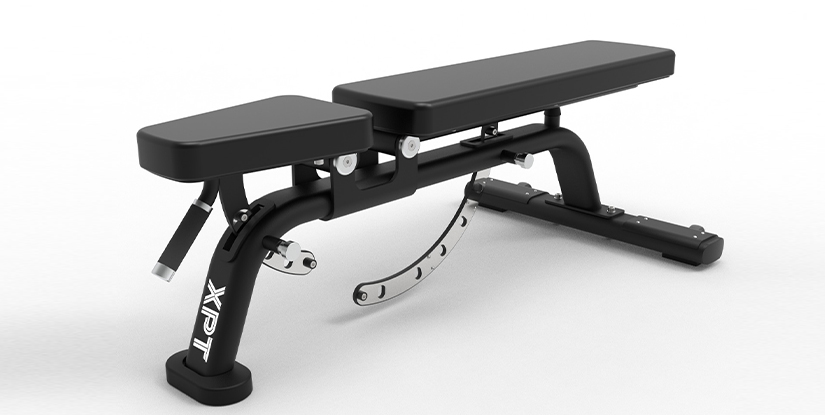
Procuring high-end fitness assets requires a shift in mindset from simple purchasing to strategic asset management. Whether you are outfitting a boutique studio, a high-traffic gymnasium, or a professional training facility, the selection process dictates your long-term operational overhead. This guide provides a technical framework for evaluating durability, functionality, and longevity.
1. Analyzing Material Density and Structural Steel Specifications
The foundation of any durable piece of equipment is its skeletal structure. When evaluating commercial-grade machines, the first technical parameter to analyze is the steel gauge. High-traffic environments demand thicker, higher-gauge steel to prevent structural deformation over years of repetitive loading.
A common mistake among novice procurement officers is focusing solely on the external aesthetic rather than the internal frame integrity. For instance, a frame utilizing thinner-gauge steel may look robust but can develop micro-fractures or bending issues under heavy dynamic loads. When conducting inspections, look for continuous welds rather than intermittent spot welds, as continuous welding provides superior load distribution. A technical checklist for structural evaluation should include:
- Steel Gauge Verification: Preference for thicker-walled tubing in high-impact zones.
- Weld Consistency: Examination of the smoothness and continuity of joints.
- Powder Coating Quality: Checking for uniform thickness and resistance to chipping.
2. Evaluating Kinetic Smoothness and Bearing Systems
The quality of a weight-lifting machine is most felt during the eccentric and concentric phases of a movement. Smoothness is not merely a luxury; it is a safety requirement. Resistance inconsistencies caused by poor mechanical parts can lead to sudden jolts, increasing the risk of user injury. To ensure high-quality kinetic output, you must scrutinize the bearing systems and pulley mechanisms.
High-performance equipment typically utilizes precision-engineered bearings that offer low-friction movement even under high tension. A common failure mode in lower-tier equipment is the use of generic bushings that wear down quickly, leading to 'stuttering' or jerky movements. To avoid this, evaluate the following parameters:
- Bearing Type: Preference for sealed, high-precision ball bearings over simple bushings.
- Cable Composition: Check for high-tensile, nylon-coated cables that resist fraying.
- Pulley Fluidity: A manual test of the resistance path to detect any friction spikes or lateral wobbling.
3. Ergonomics, Adjustability, and User Interface
Commercial equipment must serve a wide spectrum of body types, from elite athletes to general fitness enthusiasts. If a machine is not easily adjustable, it becomes a bottleneck in a busy facility, leading to user frustration and decreased efficiency. True commercial-grade ergonomics go beyond seat height; they involve multi-axial adjustments and intuitive control interfaces.
A critical decision criterion is the 'speed of adjustment.' In a high-volume setting, a machine that takes sixty seconds to adjust via complex levers is less valuable than one that adjusts in five seconds via high-visibility pins. Common mistakes include neglecting the range of motion (ROM) compatibility for different limb lengths. Consider this comparison for adjustment mechanisms:
| Feature | Standard Commercial Spec | Substandard/Residential Spec |
|---|---|---|
| Adjustment Mechanism | High-visibility spring-loaded pins | Manual screw-based or friction-fit |
| Seat/Back Support | Multi-angle, high-density foam | Fixed or limited-angle adjustment |
| Handle/Grip Versatility | Variable grip positions (neutral/pronated) | Static, single-position grips |
Explore the complete technical specifications:
4. Implementing Preventative Maintenance Protocols
The total cost of ownership (TCO) is heavily influenced by your ability to maintain equipment in peak condition. Many facilities fail because they treat maintenance as a reactive necessity rather than a proactive strategy. A machine that breaks down is a lost revenue opportunity and a potential liability.
To protect your investment, you must establish a tiered maintenance schedule. This involves daily visual inspections, weekly mechanical checks, and monthly deep-cleaning/lubrication. A failure to maintain cable tension or lubricate guide rods will lead to premature bearing failure and increased friction. Key maintenance checkpoints include:
- Cable Tension: Regular inspection for fraying or loss of tension.
- Lubrication Points: Scheduled application of specialized lubricants to guide rods and pulleys.
- Bolt Integrity: Checking for vibration-induced loosening of structural bolts.
5. Strategic Operational Integration and Space Optimization
Selecting equipment is not just about the machines themselves, but how they function within your physical environment. Efficient space management is a cornerstone of professional facility design. You must account for the 'usage radius' of every piece of equipment to ensure user safety and optimal traffic flow.
A common error in procurement is purchasing based on the footprint of the machine alone, forgetting the total area occupied during a full range of motion. If two machines are placed too close, users may collide during heavy lifts. To optimize your layout, use the following strategy:
- Calculate the Usage Radius: Footprint + Max limb extension + 3 feet of safety clearance.
- Flow Analysis: Design paths that prevent bottlenecks around high-use machines.
- Power/Utility Access: Ensure electrical or specialized wiring is accessible without creating trip hazards.
6. Future-Proofing and Scalability of Your Equipment Fleet
The fitness landscape evolves rapidly. A procurement strategy that only looks at today's needs may leave you with obsolete equipment in three years. Future-proofing involves selecting equipment that is modular, upgradeable, and compatible with emerging training trends.
When evaluating suppliers, look for those who offer modular components. For example, a strength training station that allows for the addition of new cable attachments or specialized modules is far more valuable than a static, single-use unit. A decision-making matrix for scalability should consider:
- Modularity: Can the machine be upgraded with new modules or parts?
- Trend Compatibility: Does the equipment support current training modalities (e.g., functional training, plyometrics)?
- Supplier Support: Does the supplier offer long-term parts availability for legacy models?
7. Flooring Systems and Impact Mitigation
Many procurement officers overlook the relationship between heavy lifting equipment and the subfloor. High-impact training generates massive kinetic energy. Without a proper dissipation system, this energy travels into the building's structure, causing vibrations and potential long-term damage to the equipment's calibration.
The goal is to mitigate impact through specialized flooring solutions. Using standard thin rubber mats is a frequent mistake that fails to protect heavy weight stacks or drop-zones. For professional environments, consider these density requirements:
- Impact Dissipation: Use high-density rubberized platforms in free-weight zones.
- Vibration Dampening: Select materials that reduce the transfer of low-frequency vibrations.
- Equipment Stability: Ensure the floor provides a level, non-slip surface for machine mounting.
8. Assessing Total Cost of Ownership (TCO) vs. Initial Price
The final step in selecting commercial weight lifting equipment is moving beyond the initial purchase price to evaluate the Total Cost of Ownership. A cheap machine that requires frequent parts replacement and high labor costs for maintenance is significantly more expensive than a premium machine in the long run.
A professional procurement strategy calculates TCO by factoring in: initial cost, expected lifespan, replacement part frequency, and potential downtime. A comparative checklist for TCO analysis includes:
- Annual Maintenance Costs: Estimated cost of lubricants, cables, and technician visits.
- Depreciation Rate: How quickly the asset loses value/utility.
- Operational Downtime Risk: The cost of losing a machine's availability during peak hours.