

Strategic Procurement: How to Choose Weight Training Products for Your Gym
Navigating Market Volatility in Weight Training Product Procurement
The primary failure mode in gym expansion or replacement cycles is not a lack of capital, but a lack of foresight regarding material lifecycle and supply chain fluctuations. Many operators experience a rapid decline in equipment utility within 18 months due to choosing products based on initial price points rather than total cost of ownership (TCO). This decision often stems from a misunder lack of visibility into raw material quality and the long-term durability of coatings and bearings.
To mitigate this, an operator must shift focus from the procurement price to the operational durability of the unit. A low-cost barbell that undergoes significant permanent deformation under moderate load is a liability, not a savings. Understanding the relationship between raw material grades and long-term maintenance requirements is the first step in building a high-performing facility. As we move from understanding market risks to specific material properties, the importance of structural integrity becomes clear.
Identifying Low-Value Procurement Patterns
- Over-reliance on entry-level steel: Opting for thinner gauge tubing to save on shipping costs.
- Ignoring coating longevity: Selecting powder coatings that flake under high-friction usage.
- Neglecting bearing types: Opting for bushings where high-speed needle bearings are required for longevity.
With the macroeconomic risks identified, the technical focus must shift toward the microscopic level: the materials themselves.
Analyzing Material Specifications for Durability and Longevity
Understanding the structural integrity of weight training products requires a deep dive into the metallurgical standards and surface finishes used in commercial-grade manufacturing. A common mistake among gym owners is assuming that 'heavy-duty' is a standardized term, whereas it is often a marketing descriptor rather than a technical specification.
When evaluating strength training equipment, the distinction between mild steel and high-tensile steel is critical. High-tensile steel offers a superior strength-to-weight ratio, allowing for lighter but more durable frames, which reduces the physical footprint of the machine while increasing its lifespan. Furthermore, the quality of the upholstery and the density of the foam padding dictate the replacement frequency of contact points.
| Component | Standard Material Requirement | Common Failure Mode | Verification Metric |
|---|---|---|---|
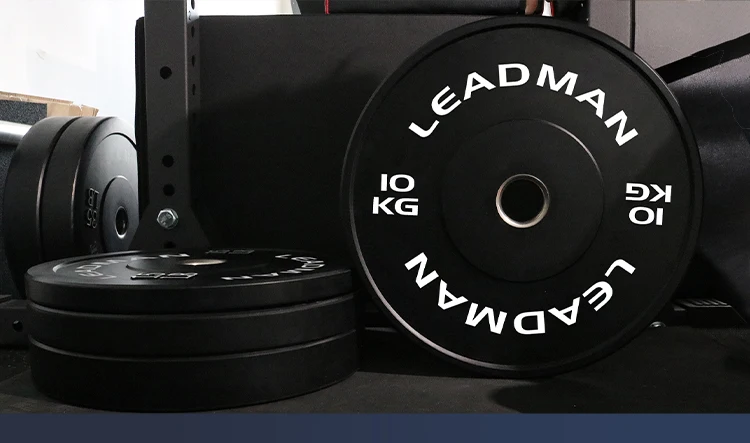
| Weight Plates | High-density vulcanized rubber | Cracking or 'smell' issues | Compression test/Odor check |
| Dumbbell Handles | Chrome or Stainless Steel | Rust or grip degradation | Surface smoothness/Oxidation check |
| Machine Frames | 11-gauge or 12-gauge steel | Structural bowing/Wobble | Weight load/Rigidity test |
| Upholstery | High-density PU Leather | Tearing or cracking | Flexibility/Stitch integrity |
By verifying these metrics during the sampling phase, an operator can prevent the premature obsolescence of their inventory. These material decisions directly influence the mechanical components that drive movement, which leads us to the precision of internal mechanics.
Mechanical Precision: Evaluating Bearings and Pulley Systems
The difference between a fluid, high-end training experience and a jerky, frustrating one lies in the precision of the internal mechanical systems. A common pain point for users is the 'catching' sensation during a repetition, often caused by poor-quality bushings or improperly aligned pulleys. This is not just a user preference issue; it is a mechanical failure that leads to accelerated wear on the cables and increased risk of injury.
In high-performance weight training products, the quality of the bearing system is the most critical technical differentiator. Operators should distinguish between bushings and ball bearings. While bushings are cost-effective and durable for slow, high-load movements, needle bearings are essential for high-velocity rotational movements to ensure smooth kinetic energy transfer.
Decision Criteria for Pulley Systems
- Bearing Type: Prefer sealed ball bearings for cable machines to prevent dust ingress and friction.
- Pulley Diameter: Larger diameter pulleys generally provide a smoother path for the cable and reduce friction-induced heat.
- Cable Composition: Verify the presence of a high-tensile core with a protective coating to prevent fraying.
Checking these mechanical specifications ensures that the equipment remains an asset rather than a maintenance burden. Once the movement mechanics are secured, the focus must turn to the stability of the entire structure.
Explore the complete technical specifications:
Structural Stability and the Impact of Footprint Optimization
Once the internal mechanics are understood, the next level of scrutiny involves the external stability of the equipment. A machine may have perfect bearings, but if the frame lacks the necessary mass or geometry to remain stable under load, it poses a significant safety hazard. This is frequently observed in 'compact' models that trade structural footprint for space-saving benefits without adjusting the center of gravity.
The cause of instability is often a high center of gravity paired with insufficient base width. To verify stability, an operator should observe the 'oscillation threshold'—how much the machine moves when a user performs a dynamic, non-linear movement. A truly stable machine should remain virtually stationary during standard heavy lifting.
Stability Verification Checklist
- Base Width Ratio: Does the base width provide a sufficient footprint relative to the height of the machine?
- Floor Contact: Are the leveling feet adjustable and capable of compensating for slight floor unevenness?
- Bolting and Fasteners: Are all connections using grade-8 or high-strength hardware to prevent vibration loosening?
A stable frame provides the foundation for consistent movement. However, the foundation is only as good as the maintenance protocols in place to preserve it.
Explore the complete technical specifications:
Implementing Preventative Maintenance and Lifecycle Management
The failure to implement a rigorous maintenance schedule is the leading cause of equipment downtime in mid-sized gyms. When an operator views weight training products as 'set and forget' assets, they are setting the stage for catastrophic failure. Maintenance is not merely about cleaning; it is about the proactive identification of mechanical drift.
Effective lifecycle management requires a documented cadence of inspection. For example, a high-traffic commercial gym should not wait for a cable to fray before replacing it. Instead, a preemptive replacement cycle based on usage-hours or visual inspection intervals is more cost-effective than emergency repairs and lost member satisfaction.
| Frequency | Task Type | Focus Area | Target Outcome |
|---|---|---|---|
| Daily | Visual/Surface | Upholstery and Grip | Hygiene and immediate safety |
| Weekly | Mechanical/Lubrication | Cables and Pulleys | Friction reduction and cable life |
| Monthly | Structural/Torque | Bolts and Welds | Prevention of frame looseness |
| Quarterly | Full System Audit | Bearings and Alignment | Long-term operational efficiency |
Regularly adhering to these intervals ensures that the high-quality products selected during procurement reach their full intended lifespan. With the maintenance protocols defined, the focus shifts to the final tier of selection: the human-interface components.
Human-Interface Ergonomics and User Safety Standards
The final stage in understanding how to choose weight training products for your gym is the evaluation of the user-interface—the parts the human body actually touches. Ergonomic failure is a silent killer of member retention. If a machine feels uncomfortable or the grip is suboptimal, users will naturally gravitate toward other facilities, regardless of how high-quality the heavy steel frames are.
The 'cause' of ergonomic dissatisfaction is often a mismatch between machine geometry and human anthropometric data. A machine designed for a specific percentile of body types will inevitably fail a significant portion of your user base. Therefore, verifying the adjustability range of seats, handles, and pedal positions is non-negotiable.
Critical Ergonomic Verification Points
- Adjustment Range: Can the seat accommodate both the 5th percentile female and the 95th percentile male?
- Grip Diameter: Is the bar or handle diameter optimized for both heavy lifting and high-repetition endurance?
- Contour Alignment: Do the pads follow natural anatomical curves to prevent joint impingement during movement?
Prioritizing these human-centric details completes the procurement cycle, moving from market-level risk to the individual user experience.
Maximizing Operational Efficiency and ROI Through Smart Selection
Selecting the right equipment is ultimately a financial decision disguised as a physical one. The goal of any gym operator is to maximize the return on investment (ROI) through high equipment uptime and low maintenance costs. To achieve this, one must view procurement through the lens of 'Efficiency per Square Foot'.
High-density gyms often fall into the trap of buying multiple single-purpose machines to satisfy a variety of users. However, a more efficient approach involves investing in multi-functional stations that offer high utility with a smaller permanent footprint. This maximizes the revenue-generating potential of every square meter of your facility.
The ROI Calculation Model
To accurately judge the value of a product, do not look at the sticker price. Instead, use the following formulaic logic: (Total Lifespan in Months / Monthly Maintenance Cost) x Expected Usage Density. A machine that is $500 more expensive but lasts 24 months longer and requires half the lubrication will always provide a superior ROI.
By focusing on these long-term metrics, an operator moves from being a consumer of equipment to a strategic manager of a high-performing athletic asset.