

How to Choose the Right Weight Lifting Equipment for Serious Lifters
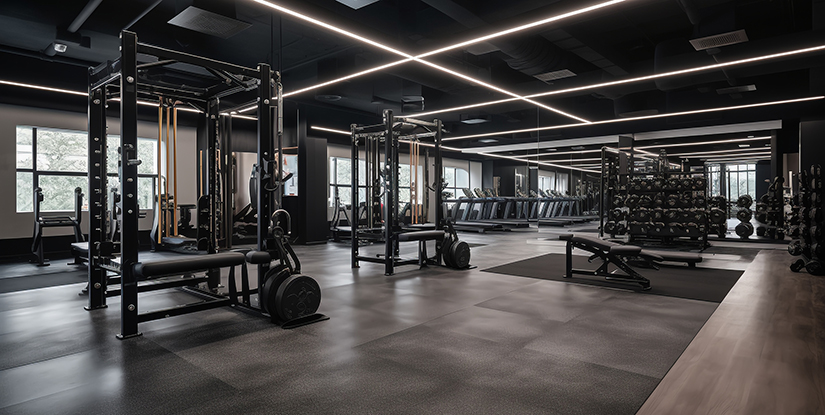
Material Integrity and Structural Durability Standards
Serious lifting environments—whether professional training facilities or high-end home gyms—face a recurring failure mode: premature structural fatigue. This is often caused by a mismatch between the intended load capacity and the actual material grade of the equipment. When a lifter moves from moderate resistance to maximal effort, the stress on steel components and upholstery increases exponentially. Choosing equipment based solely on aesthetics rather than metallurgical specifications leads to catastrophic failures like bent barbell shafts or snapped weight pins.
To avoid these risks, a professional buyer must look beyond the surface. For example, a barbell designed for high-frequency Olympic lifting requires a specific degree of tensile strength and whip to handle the dynamic impact of heavy cleans and snatches. A common mistake is purchasing standard steel bars that lack the elasticity required for high-velocity movements, resulting in permanent deformation under heavy loads. To verify quality, always request the steel grade and tensile strength specifications from the supplier.
| Equipment Category | Preferred Material/Specification | Common Failure Mode |
|---|---|---|
| Olympic Barbells | High-tensile steel with specific whip/knurling | Permanent bending or snapping under dynamic load |
| Power Racks | Heavy-gauge steel (11-gauge or thicker) | Structural wobble or weld fractures during heavy lifts |
| Weight Plates | Cast iron or high-density vulcanized rubber | Cracking or uneven weight distribution |
| Bench Presses | Reinforced steel frame with high-density foam | Frame sagging or upholstery tearing |
Understanding these material requirements ensures that your investment survives the lifecycle of your progression. Once the structural foundation of the equipment is verified, the next critical decision involves the precise mechanical tolerances of the moving parts.
Mechanical Tolerances and Precision Bearing Systems
The transition from structural stability to mechanical precision is where most equipment differentiation occurs. For serious lifters, the difference between a standard barbell and a high-performance training bar lies in the bearing system. A lack of precision in the rotation of the sleeves can lead to excessive wrist strain and a loss of kinetic efficiency during complex movements. This technical deficiency is frequently the cause of long-term overuse injuries in competitive athletes.
<Bushings vs. Needle Bearings
When evaluating rotation, you must decide between bushing systems and needle bearing systems. Bushings are generally more durable and better suited for heavy, slower movements like deadlifts, whereas needle bearings offer superior, smoother rotation required for the high-speed transitions found in Olympic weightlifting. Choosing the wrong system for your specific discipline is a frequent error; using a bushing-only bar for high-frequency snatches may result in poor rotational fluidity and increased joint stress.
- Bushings: Ideal for durability, lower maintenance, and heavy powerlifting movements.
- Needle Bearings: Optimized for smooth, fast rotation and high-velocity Olympic disciplines.
- Verification: Spin the loaded sleeve by hand; it should exhibit a controlled, smooth deceleration without any grinding or inconsistent speed.
While the rotation of the bar is vital for movement fluidity, the stability of the rack it rests upon is the fundamental safety requirement. This brings us to the necessity of rigid support structures.
Rack Stability and Footprint Optimization
A common pain point for serious lifters is the sensation of instability during a maximal attempt. This instability is rarely a user error; it is almost always a direct consequence of an undersized footprint or inadequate floor anchoring. If a power rack or squat stand lacks the necessary weight or a wide enough base, the lateral forces generated during a heavy lift can cause the entire unit to shift or even tip, posing a severe safety risk.
To mitigate this, an operator must consider the relationship between the load weight and the rack's stability. A high-quality rack should be designed to handle not just the weight on the bar, but the dynamic energy of the lifter's movement. A common mistake is neglecting the floor attachment process, assuming the weight of the rack alone will provide stability. However, for serious lifting, mechanical anchoring is often a prerequisite for safety.
Rack Specification Checklist
- Gauge Thickness: Verify that the steel is at least 11-gauge for heavy-duty use.
- Base Width: Ensure the footprint is wide enough to accommodate lateral barbell oscillations.
- Failure Mode: Lack of floor bolting leading to uncommanded movement during heavy reps.
- Verification: Apply moderate lateral pressure to the uprights; the frame should remain rigid with zero measurable sway.
Securing the rack provides a stable platform, but the precision of the actual lifting tools—the bars and weights—must match that stability to ensure a cohesive training environment.
Explore the complete technical specifications:
Weight Plate Calibration and Standardization
Discrepancies in weight distribution can disrupt a lifter's center of mass, leading to technical breakdowns in the middle of a set. This problem is often caused by poorly manufactured plates that do not adhere to strict calibration standards. For the serious lifter, a 2kg discrepancy between the left and right side of a barbell is not just an annoyance; it is a mechanical imbalance that can cause spinal misalignment and uneven muscle fatigue.
When sourcing weight plates, the primary metric to verify is the tolerance range. High-end competition plates typically have a tolerance of less than 1%, whereas cheaper, consumer-grade plates can vary by as much as 5%. This variance is the root cause of the "unbalanced barbell" sensation. To ensure accuracy, professional operators should periodically verify plate weights using a calibrated scale.
| Plate Type | Standard Tolerance | Best Use Case |
|---|---|---|
| Competition Bumper Plates | Extremely High (±1% or less) | Olympic lifting and high-impact drops |
| Standard Bumper Plates | Moderate (±2% to 3%) | General strength training and conditioning |
| Cast Iron Plates | Low (±5% or more) | Static movements and budget-conscious setups |
A properly calibrated set of plates ensures that the mechanical energy you put into the movement is reflected accurately in the resistance. However, maintaining this precision requires consistent care of the barbell itself.
Explore the complete technical specifications:
Kettlebell Size Guide | How to Choose the Right Weight for Training
Barbell Maintenance and Long-Term Longevity
Even the highest quality barbell will eventually degrade if maintenance protocols are neglected. The primary cause of barbell failure is oxidation (rust) and the accumulation of debris within the bearing housings. Once moisture enters the sleeve, it can degrade the lubrication and cause the internal components to seize or grind, destroying the very rotational precision that makes high-end bars valuable.
To prevent this, a routine maintenance schedule must be implemented. This involves more than just occasional cleaning; it requires a systematic approach to moisture control and lubrication. A common mistake is using improper lubricants, such as WD-40, which can actually strip away the specialized grease required for long-term bearing health. Instead, use a dedicated bearing grease or high-quality machine oil when necessary.
Annual Maintenance Routine
- Visual Inspection: Check for any signs of surface rust or pitting on the shaft.
- Knurling Clean: Use a stiff brush to remove chalk buildup and skin oils.
- Sleeve Lubrication: Apply a small amount of specialized grease to the bearing gaps to ensure fluid rotation.
- Verification: Rotate the sleeves under a light load; if there is any 'catch' or hesitation, the bearings require professional servicing.
By adhering to these maintenance steps, you protect your investment and ensure that your tools remain as precise as your training. This level of care extends to the larger accessories, such as the benches and platforms used during training.
Bench Upholstery and Support Integrity
A frequently overlooked aspect of equipment selection is the longevity of the support surfaces. For lifters performing heavy presses, the bench is a critical component of the kinetic chain. The failure of bench upholstery—either through tearing or compression of the padding—is usually caused by the use of low-density foam that cannot withstand the repeated high-pressure loads of a serious lifter. A collapsing bench is a significant safety hazard that can cause a lifter to lose their footing or stability during a heavy lift.
To avoid this, look for benches that utilize high-density, closed-cell foam. Unlike standard foam, closed-cell foam retains its shape and resists moisture absorption from sweat. A common mistake is choosing a bench based on the thickness of the padding rather than the density of the material. A thick piece of low-density foam will flatten quickly, whereas a thinner piece of high-density foam will maintain its support for years.
- Decision Criteria: Seek foam densities that are rated for high-impact and heavy-load resistance.
- Failure Mode: 'Bottoming out' on the bench, where the lifter feels the hard frame beneath the padding.
- Verification: Apply heavy downward pressure with your hands; the padding should compress and then immediately bounce back to its original shape.
Reliable support surfaces are the backbone of a safe press, but they must be part of a wider ecosystem of equipment that functions with technical precision.
Floor Surfacing and Impact Absorption Requirements
The foundation of any lifting area is not just the floor itself, but the surfacing applied to it. Many lifters underestimate the impact of dropping heavy weights on a hard surface, leading to two major problems: damage to the equipment and damage to the building structure. Without adequate impact absorption, the kinetic energy from a dropped barbell can cause micro-fractures in concrete or even damage the internal components of the barbell's sleeves.
Choosing the right flooring involves understanding the difference between simple rubber mats and professional-grade lifting platforms. A common mistake is using thin, cheap rubber mats that provide aesthetics but lack the mass and density to absorb significant impact. For serious lifters, especially those performing Olympic lifts, a dedicated lifting platform is a non-negotiable requirement for both safety and equipment longevity.
Flooring Selection Guide
| Surface Type | Impact Absorption | Ideal For |
|---|---|---|
| Basic Rubber Mats | Low | Light dumbbell work and general movement |
| High-Density Rubber Tiles | Medium | Heavy deadlifting and strength training |
| Multi-Layered Lifting Platform | High | Olympic lifting and maximal weight drops |
A proper surface protects your equipment and your environment, creating a professional-grade setting where you can focus entirely on the lift itself.
Procurement Strategy and Long-Term ROI
Finalizing the selection of equipment requires a shift from a consumer mindset to a strategic procurement mindset. For a serious lifter, the goal is not to find the cheapest option, but to find the one with the best Return on Investment (ROI). The cheapest equipment often carries hidden costs in the form of frequent replacements, downtime due to repairs, and the potential for injury-related setbacks.
A professional procurement strategy involves calculating the total cost of ownership. This includes the initial purchase price plus the anticipated costs of maintenance, potential replacement parts, and the long-term value of the equipment's durability. When comparing two pieces of equipment, do not just look at the sticker price; look at the specification sheet and the serviceability of the item. Is it easy to replace a bolt? Can the bearings be serviced? High-quality, serviceable equipment is always the superior long-term financial decision.
By prioritizing technical specifications, material integrity, and maintenance protocols, you ensure that your lifting environment evolves alongside your strength. Whether you are building a single specialized station or a full training facility, the focus must always remain on the intersection of mechanical precision and structural durability.