

How a Gym Equipment Strategy Supports Your Business Success
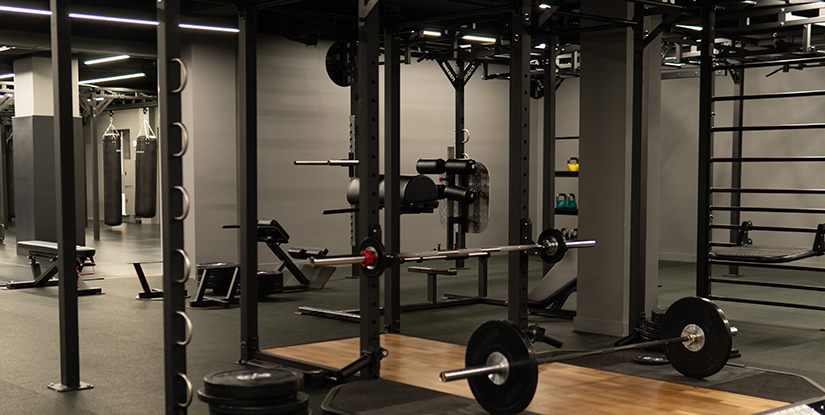
Operational failure in a fitness facility often stems from a single, overlooked variable: the absence of a cohesive procurement and maintenance roadmap. Many facility managers treat equipment acquisition as a series of reactive purchases—replacing a broken machine today to solve a problem for tomorrow. This fragmented approach leads to inconsistent floor layouts, premature depreciation, and unpredictable capital expenditure spikes. To build a resilient business, one must move from reactive replacement to a proactive, integrated equipment lifecycle. Understanding how a gym equipment strategy supports your business requires shifting focus from the individual machine to the systemic value of your entire inventory.
The Financial Impact of Uncoordinated Equipment Procurement
The primary driver of declining margins in mid-to-high-tier fitness facilities is the 'hidden cost' of uncoordinated purchasing. When equipment is bought in isolation, the business loses the ability to leverage volume discounts and, more importantly, fails to harmonize the user experience. A disconnected procurement process results in a facility that feels mismatched, which directly correlates with decreased member retention rates.
The Cost of Reactive Replacement vs. Planned Cycles
Reactive replacement occurs when a piece of equipment reaches a critical failure point before a budget is allocated. This creates a 'maintenance trap' where funds are diverted from growth initiatives to emergency repairs. A strategic approach, by contrast, utilizes depreciation-aligned replacement cycles to stabilize cash flow.
| Metric | Reactive Procurement Model | Strategic Lifecycle Model |
|---|---|---|
| Capital Expenditure | Unpredictable, high-frequency spikes | Predictable, scheduled increments |
| Member Retention | Decreases due to 'out of order' signs | Stable due to modern, working inventory |
| Negotiation Power | Weak; single-item orders | Strong; volume-based procurement |
| Operational Downtime | High; emergency repairs required | Minimal; planned maintenance intervals |
By analyzing these financial deviations, operators can see that a strategy is not just a purchasing list, but a financial tool. Once the financial rationale is clear, the next logical step is determining how to select the specific assets that fit your niche.
Aligning Equipment Selection with Target Demographics
A common mistake in facility management is the 'jack of all trades' fallacy—attempting to provide every type of machine to satisfy every possible user. This lack of focus dilutes your brand identity and complicates your inventory management. A robust strategy requires defining your target demographic before a single order is placed.
Niche-Specific Equipment Archetypes
The technical specifications and durability requirements change drastically depending on whether you are running a boutique HIIT studio, a high-end wellness club, or a high-traffic commercial gym. For instance, a boutique studio might prioritize aesthetic finish and space-saving footprints, whereas a heavy-use commercial gym must prioritize high-tolerance mechanical components and heavy-gauge steel construction.
- Strength-Focused Centers: Prioritize heavy-duty free weights, calibrated barbell sets, and high-tolerance racks.
- Cardio-Centric Clubs: Prioritize electronic integration capabilities and high-duty cycle motors.
- Functional Training Spaces: Prioritize modularity and versatile floor-based implements.
Selecting equipment without demographic alignment creates 'dead zones' in your facility—areas with expensive, underutilized machinery that contributes nothing to member satisfaction. After ensuring the equipment matches your audience, you must address the technical standards required to sustain that investment.
Explore the complete technical specifications:
Technical Specifications and Material Durability Standards
The difference between a machine that lasts three years and one that lasts ten often lies in the unglamorous details: steel gauge, bearing quality, and upholstery grade. A professional strategy demands a deep dive into technical spec sheets to ensure the hardware can withstand your facility's specific load profile.
Critical Component Verification Checklist
Before finalizing any large-scale purchase, operators should verify the following technical parameters to prevent premature mechanical failure:
- Steel Gauge Integrity: Verify the thickness of the frame (e.g., 11-gauge or 12-gauge steel) to ensure structural rigidity under heavy loads.
- Bearing and Bushing Quality: Ensure high-quality, sealed bearings are used in pivot points to prevent friction-induced heat and noise.
- Upholstery Tensile Strength: Check the grade of vinyl or leather substitutes for sweat resistance and puncture resistance.
- Cable Tensile Capacity: Confirm that all pulley systems utilize cables rated for at least 2x the expected maximum load.
Ignoring these technical nuances leads to frequent 'out of order' notices, which erodes member trust. However, even the highest-quality steel requires a rigorous operational framework to maintain its peak performance.
Explore the complete technical specifications:
Standardizing Preventative Maintenance Protocols
Even the most expensive equipment will fail if it is neglected. A professional gym equipment strategy must include a standardized, repeatable maintenance schedule that moves beyond simple cleaning. Neglecting this step causes mechanical friction, which leads to part degradation and eventually, total component failure.
The Three-Tiered Maintenance Framework
To manage large-scale inventories effectively, operators should implement a tiered approach to upkeep, categorizing tasks by frequency and complexity.
| Frequency | Task Category | Standard Actions |
|---|---|---|
| Daily | Sanitization & Visual | Wipe down contact points; check for obvious loose bolts or frayed cables. |
| Weekly | Lubrication & Tension | Lubricate guide rods; check tension in resistance cables and belts. |
| Monthly/Quarterly | Deep Mechanical Inspection | Check bolt torque; inspect motor brushes; test electronic console functionality. |
A failure in this tier results in a cascading effect: a small vibration becomes a loose bolt, which becomes a shattered bearing, which becomes a dead machine. By standardizing these protocols, you create a predictable environment for both staff and members.
Common Failures in Equipment Management
Most facility failures are not caused by bad luck, but by predictable management errors. Identifying these pitfalls allows an operator to build a defensive layer around their capital investment. A strategy that ignores human and operational variables is incomplete.
Identifying and Avoiding Management Pitfalls
One of the most frequent mistakes is the 'Buy and Forget' mentality, where new equipment is celebrated upon installation but ignored during the operational phase. Another significant error is the lack of documented inspection logs, making it impossible to track the true lifespan of an asset.
The 'Improper Lubrication' Counterexample: Using the wrong type of lubricant (e.g., using silicone spray on a component that requires lithium grease) can actually attract dust and accelerate wear, leading to the exact failure the operator was trying to prevent. This demonstrates why technical training for staff is as important as the equipment itself.
Verifying the efficacy of these maintenance tasks requires a structured approach to documentation and testing. Without a way to prove that the machines are actually being maintained, the strategy remains purely theoretical.
Verifying Equipment Performance and Lifecycle Accuracy
How do you know if your strategy is actually working? A professional operator does not rely on feeling; they rely on data and standardized verification. To ensure that your maintenance and procurement cycles are meeting their targets, you must implement formal verification checkpoints.
Establishing Key Performance Indicators (KPIs) for Assets
A successful strategy tracks the relationship between maintenance expenditure and equipment uptime. If your maintenance costs are rising without a corresponding increase in machine availability, your strategy is failing.
- Uptime Percentage: The ratio of time a machine is available for use versus the total operational hours.
- Mean Time Between Failures (MTBF): The average time elapsed between one mechanical failure and the next.
- Maintenance ROI: Comparing the cost of preventative maintenance against the cost of total replacement or emergency service calls.
By monitoring these metrics, you transition from a 'guesswork' model to an 'evidence-based' model. This level of control allows for much more precise long-term planning, especially when it comes to the next large-scale capital injection.
Long-Term ROI and the Future of Facility Evolution
As your business grows, your equipment needs will evolve. A strategy that worked for a 1,000-square-foot studio will fail when you scale to a 10,000-square-foot multi-functional facility. The ultimate goal of a gym equipment strategy is to provide a scalable foundation that supports business expansion rather than hindering it.
Effective scaling involves building 'modular capacity.' This means purchasing equipment that can be easily integrated, reconfigured, or upgraded. For example, choosing weight systems with standardized footprints allows you to expand your strength area without needing to redesign the entire floor layout. This foresight prevents the need for expensive, disruptive renovations every time the business enters a new growth phase.
Ultimately, the synergy between procurement, maintenance, and demographic alignment creates a self-sustaining ecosystem. When you treat your equipment as a strategic asset rather than a revolving expense, you secure the long-term viability of your fitness business.