

Strategic Sourcing: Choosing Chinese Gym Equipment Manufacturers for Your Project
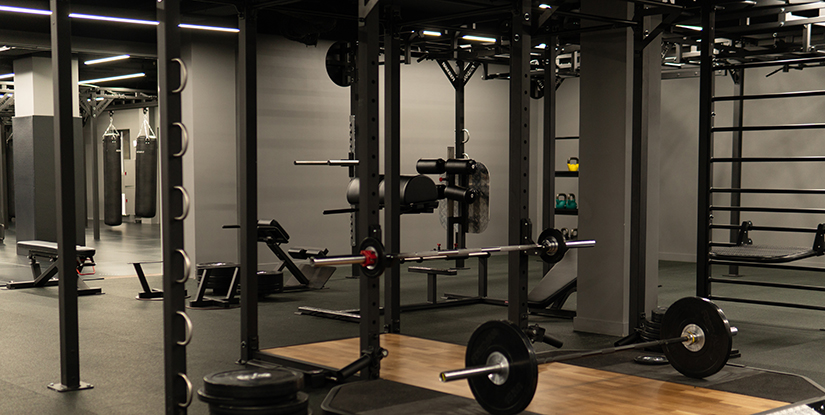
Navigating the Complexity of Global Sourcing and Project Scaling
Entering the procurement phase for a large-scale fitness facility requires more than just a budget; it requires a deep understanding of the supply chain architecture. When choosing Chinese gym equipment manufacturers for your project, most buyers fail because they treat the process as a simple transaction rather than a multi-stage technical integration. The primary pain point is rarely the initial price—it is the catastrophic cost of receiving equipment that fails to meet structural tolerances or arrives with incompatible dimensions for your floor plan.
A successful project lifecycle begins with a rigorous specification phase. If your initial technical requirements are vague, the manufacturer will default to their most cost-effective standard, which rarely aligns with high-end commercial needs. This mismatch leads to premature component wear and high maintenance costs. Understanding the distinction between a trading company and a direct manufacturer is the first step in mitigating these structural risks. Once the supplier's true identity is established, you can proceed to the critical task of auditing their material selection and fabrication capabilities.
Defining Project Requirements Early
Before contacting any supplier, you must define the intensity of use. Commercial gyms, hotel fitness centers, and home studio equipment have vastly different fatigue resistance requirements. A failure to specify the intended load capacity often results in frame buckling or cable snapping under heavy use. By establishing these benchmarks first, you create a baseline for the technical audits that follow.
Material Selection and Structural Integrity Standards
The core of any high-quality piece of fitness equipment lies in its skeleton. A common mistake is focusing solely on the aesthetics of a machine while ignoring the metallurgical properties of the steel frame. In the manufacturing process, the input material determines the long-term stability of the equipment. High-grade steel with consistent thickness is non-negotiable for commercial-grade installations.
When evaluating a manufacturer, you must demand clarity on the steel grade and the wall thickness of the tubing. Many lower-tier suppliers use thinner-walled steel to reduce shipping weight and material costs, which directly leads to frame oscillation during heavy lifting. A heavy-duty resistance machine should ideally utilize heavy-gauge steel that can withstand repetitive high-impact stress without permanent deformation.
| Component Type | Low-Tier Specification (Risk) | High-Tier Specification (Target) | Verification Method |
|---|---|---|---|
| Frame Tubing | 1.5mm - 2.0mm thin-walled steel | 2.5mm - 3.5mm heavy-gauge steel | Digital Caliper Measurement |
| Weight Stack Plate | Pressed steel or thin iron | Solid cast iron or high-density steel | Visual Density/Weight Check |
| Bearing Assemblies | Single-shielded bushings | Dual-sealed precision bearings | Manual Rotation Smoothness |
| Upholstery Material | Thin PU/Vinyl (prone to cracking) | High-density foam with heavy-duty PU | Compression/Indentation Test |
This material hierarchy ensures that your investment survives the initial 24 months of peak usage. However, even the best steel is useless if the fabrication process introduces weak points. This leads us to the necessity of examining the welding and assembly techniques used in the factory.
The Critical Role of Welding Precision and Surface Finish
A seamless transition from raw steel to a finished machine involves several high-stakes processes: cutting, bending, welding, and coating. In many cases, the failure of a machine is not due to a bad material, but a bad weld. Poorly executed welds create stress concentators that eventually lead to catastrophic fractures under heavy loads.
Welding Techniques: MIG vs. TIG
Most commercial equipment is produced using MIG (Metal Inert Gas) welding due to its efficiency. However, the quality of the weld bead and the depth of penetration are what truly matter. A manufacturer that relies on shallow, surface-level welds is a red flag. You should look for evidence of continuous welding rather than intermittent or "tack" welding on critical load-bearing joints. Continuous welds ensure that the structural integrity is uniform across the entire junction.
Surface Treatment and Corrosion Resistance
The secondary failure mode in gym equipment is often aesthetic or corrosive. If the powder coating process is rushed, the finish will chip under the slightest impact, exposing the raw metal to oxidation and moisture from sweat. High-quality manufacturers utilize multi-stage electrostatic powder coating processes. This provides a durable, high-micron layer that protects the metal and maintains a professional look over years of service.
Ensuring these structural details are correct is vital, but even a perfectly built machine will fail if the moving parts are not calibrated. We must now look at the mechanical assembly and the tolerances of moving components.
Explore the complete technical specifications:
Mechanical Tolerance and Motion Smoothness
The true test of a piece of equipment's quality is the "feel" of the motion. Whether it is a cable machine or a weight stack, the resistance must be constant and the movement must be fluid. Friction is the enemy of both user experience and component longevity. If a machine has a 'jerky' motion, it is usually an indication of poor tolerance management or low-quality bearings.
Precision in the assembly of pulleys, cables, and guide rods is what separates premium equipment from entry-level models. A mechanical system with high friction requires more force to initiate movement, which can lead to uneven muscle engagement and potential injury for the user. This is particularly dangerous in high-intensity training environments where momentum is high.
- Cable Systems: Verify the use of high-tensile, nylon-coated steel cables with specialized end-caps to prevent fraying.
- Pulley Systems: Ensure pulleys are made of aluminum or high-strength nylon with precision bearings that do not deviate under load.
- Weight Stacks: Check that guide rods are perfectly straight and coated with a low-friction finish to prevent the weight stack from 'stuttering'.
When testing these components, do not just check for smoothness at low weights; simulate the load and observe the resistance throughout the entire range of motion. This rigorous testing informs the final step of the quality control process.
Establishing a Robust Quality Control (QC) Protocol
Once you have identified the right technical specifications, you must implement a verification system that does not rely solely on the manufacturer's word. A common failure point in international procurement is the 'as-ordered vs. as-shipped' discrepancy. What you see in a showroom sample is rarely exactly what arrives in a shipping container if a rigorous QC protocol is not in place.
Pre-Shipment Inspection (PSI) Essentials
A professional buyer should never authorize a final payment without a third-party or highly detailed internal inspection. The inspection must move beyond visual aesthetics and focus on the functional variables discussed previously. You are looking for the 'hidden' defects that only appear during operation.
| Inspection Phase | Checklist Item | Common Defect to Watch For | Criticality |
|---|---|---|---|
| Dimensional Audit | Frame length, width, and height | Non-compliance with floor plan/clearance | High |
| Load Testing | Weight stack max capacity test | Bending or frame vibration under load | Critical |
| Surface Check | Coating thickness and scratch resistance | Uneven powder coating or exposed metal | Medium |
| Mechanical Test | Smoothness of pulley/cable rotation | Grinding sounds or jerky resistance | High |
By following this checklist, you transition from being a passive recipient to an active quality controller. Once the equipment has cleared the factory gates, the focus shifts from procurement to long-term operational maintenance.
Long-Term Maintenance and Operational Longevity
The final phase of the lifecycle is the transition from a project to an active facility. Even the highest quality equipment requires a systematic maintenance schedule to prevent the gradual degradation of moving parts. Many operators view maintenance as a reactive process—fixing things when they break—rather than a proactive one. This is a mistake that significantly short-turns the ROI of your equipment investment.
To maintain the high standards set during the procurement and inspection phases, you must establish a routine for lubrication, tightening, and inspection. A small amount of negligence in the first six months can lead to permanent mechanical failure within two years.
Proactive Maintenance Cadence
A professional facility manager should implement the following:
- Weekly: Visual inspection for loose bolts, frayed cables, and worn upholstery.
- Monthly: Lubrication of guide rods and checking the tension of all moving cables.
- Quarterly: Comprehensive audit of all bearings and checking for any structural creaks or abnormal vibrations.
The ability to maintain these standards is the final link in the chain of choosing Chinese gym equipment manufacturers for your project. By understanding the process from raw steel to the maintenance of the finished product, you ensure that your initial procurement decisions lead to a durable, high-performing fitness environment.
Future-Proofing Your Equipment Investments
As the fitness industry evolves toward more integrated and smart technologies, the hardware itself is becoming more complex. While heavy-duty mechanical stability remains the foundation, you must also consider the integration of digital interfaces and electronic components. Future-proofing involves choosing manufacturers who not only excel in traditional steel fabrication but also have the capacity for electronic integration and software stability. This foresight ensures that your facility remains competitive as consumer expectations for 'smart' fitness continue to rise.