

Maximizing Athletic Performance: The Benefits of Functional Strength Training Equipment
The Transition from Isolate to Integrative Training Modalities
High-performance training environments frequently encounter a plateau where athletes possess high levels of muscular volume but lack the kinetic connectivity required for high-intensity sport. This discrepancy often stems from an over-reliance on traditional, single-plane resistance machines that isolate specific muscle groups while neglecting the stabilizing secondary and tertiary muscles. For the professional strength coach or facility manager, the problem is a mismatch between the training stimulus and the biological demands of the sport. The cause is typically a training architecture that lacks multi-planar movement patterns.
To resolve this, one must integrate functional strength training equipment that facilitates multi-directional force production. By utilizing tools that require postural control and unilateral stability, athletes bridge the gap between raw strength and field-ready power. The primary benefit is the development of 'functional' muscle—tissue that performs effectively under the unpredictable, non-linear loads typical of competitive environments. Once the conceptual shift from isolation to integration is established, the next step is identifying the specific equipment categories that drive these physiological adaptations.
Optimizing Force Transfer via Variable Resistance Tools
The pursuit of explosive power often hits a bottleneck when traditional iron plates provide a static resistance curve. In many athletic contexts, the 'sticking point' is not a lack of strength, but a lack of acceleration through the entire range of motion. Standard barbells follow a predictable linear path, but athletic movement is rarely linear. This is where the implementation of variable resistance through resistance bands and specialized weight systems becomes critical.
Technical Selection Criteria for Resistance Modalities
When selecting equipment to augment traditional lifting, operators must consider the elasticity coefficient and the durability of the material. Low-grade rubber bands can experience rapid fatigue, leading to inconsistent tension levels that compromise training consistency. The following table outlines the selection criteria for professional environments:
| Equipment Type | Primary Mechanical Benefit | Ideal Use Case | Verification Metric |
|---|---|---|---|
| Resistance Bands | Variable Load/Acceleration | Strength-Speed Development | Consistent Elasticity/No Cracking |
| Kettlebells | Offset Center of Gravity | Dynamic Stability/Core Control | Handle Smoothness/Weight Precision |
| Sleds (Prowler/Push) | Constant Friction/Horizontal Force | Linear Acceleration/Endurance | Runner/Bearing Smoothness |
| Medicine Balls | Deceleration/Reactive Power | Plyometric Integration | Impact Durability/Weight Consistency |
By selecting equipment that challenges the athlete's ability to manage changing centers of gravity, coaches can ensure that strength gains translate into more effective acceleration and deceleration capabilities. Understanding these load profiles is a prerequisite for designing a high-level facility layout.
Developing Unilateral Stability with Free Weight Implementations
While bilateral lifts like the back squat are foundational, many sports are inherently unilateral. An athlete who is dominant on one side but lacks stability on the other is highly susceptible to injury during rapid directional changes. The failure to train unilateral stability often manifests as a loss of kinetic energy during a single-leg jump or a stride, directly impacting competitive performance.
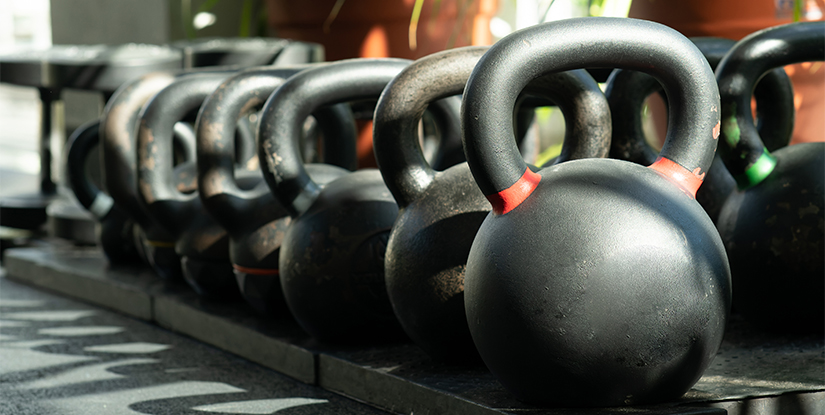
Functional strength training equipment, such as unilateral dumbbells, kettlebells, and specialized step platforms, forces the neuromuscular system to engage stabilizer muscles (the gluteus medius, core, and ankle stabilizers) in ways a seated machine cannot. This builds a level of structural integrity that prevents the 'energy leaks' seen in less conditioned athletes. To verify that the equipment is providing the intended benefit, operators should observe the athlete's ability to maintain a neutral pelvis and stable trunk during single-leg movements.
Mitigating the Risk of Unilateral Imbalance
A common mistake in facility management is providing excessive amounts of heavy machines while neglecting the smaller, functional tools. A balanced facility should prioritize a high ratio of free weights and unconventional implements to machines. If the facility is 90% machine-based, the athletes will likely develop a highly specific, non-transferable strength profile. A more effective ratio moves closer to 60/40 free-to-machine weight to foster holistic development.
Establishing this balance in the weight room sets the stage for more complex, systemic training methods involving explosive energy production.
Explore the complete technical specifications:
Enhancing Rotational Power through Multi-Planar Resistance
Most traditional strength training occurs in the sagittal plane (forward and backward). However, the majority of athletic movements—such as swinging a bat, throwing a punch, or changing direction—occur in the transverse (rotational) plane. If an athlete’s equipment selection is limited to linear movement, their rotational power will remain stunted, creating a vulnerability in high-speed collisions or rapid turns.
The integration of rotational tools, such as medicine balls for wall slams or cable systems with varied attachment points, allows for the development of the 'X-factor'—the ability to transfer force from the lower body through the core to the upper extremities. This mechanical efficiency is what separates elite performers from high-level amateurs. A professional implementation requires monitoring the torque generation and the ability of the athlete to maintain core rigidity during rotational deceleration.
The Impact of Rotational Load on Core Integrity
To ensure the training is productive, the equipment must allow for a full range of motion without restricting the natural twist of the spine. This leads us to a critical discussion on the durability and safety of these complex systems. To achieve a high return on investment, facility operators must implement a rigorous inspection schedule for rotational and cable-based equipment.
Preventative Maintenance Protocols for High-Usage Equipment
The dynamic and often high-impact nature of functional training means that equipment is subject to much higher levels of mechanical stress than standard commercial gym machines. A failure to implement a strict maintenance schedule can lead to catastrophic failure, such as a snapped resistance band or a broken cable, which poses a direct threat to athlete safety. The cause of most failures is either material fatigue from over-use or the lack of regular lubrication in moving parts.
Essential Inspection Checklist for Facility Managers
- Cable Systems: Inspect for fraying, kinking, or exposed wires every 30 days. Check pulleys for smooth rotation.
- Resistance Bands: Perform a visual inspection for micro-cracks or discoloration weekly. Replace immediately if elasticity feels inconsistent.
- Kettlebells/Dumbbells: Check for surface rust and ensure handles are free of burrs or sharp edges.
- Sleds/Push Tracks: Verify that runners or wheels are clean and that the base is not dented or warped.
- Floor Surfaces: Ensure high-impact areas (medicine ball zones) are not developing divots that could cause tripping.
Regularly verifying the integrity of these components ensures that the training environment remains safe and the equipment remains high-performing. This maintenance-first mindset also extends to how the equipment is actually utilized by the athletes themselves.
Common Operational Failures in Functional Training Environments
Even with high-quality equipment, the benefits can be negated by improper usage and poor facility oversight. A significant failure mode in professional training centers is the 'over-reliance on complexity.' This occurs when coaches introduce highly complex, unstable implements before the athlete has mastered the basic foundational mechanics. This doesn't just slow down progress; it increases the risk of acute injury due to a lack of neuromuscular control.
To avoid this, the implementation should follow a tiered progression: moving from stable to unstable, and from linear to multi-planar. For example, an athlete should master the standard kettlebell deadlift before moving to an offset-weight kettlebell swing. Operators can verify successful implementation by tracking whether the athlete's performance improves in traditional movements before being challenged with the functional variant.
Equipment Misuse and Injury Risk
Another frequent mistake is the neglect of the 'recovery' aspect of functional training. While equipment like weighted sleds and heavy medicine balls are excellent for power, they can lead to significant central nervous system (CNS) fatigue. If a facility is designed solely for high-intensity functional output without providing adequate space for mobility and active recovery, the long-term athletic output will diminish through overtraining and chronic inflammation.
Effective facility design must account for this by integrating mobility tools and space for low-intensity, high-quality movement. Moving from usage patterns to long-term strategic planning is the final stage of a professional implementation.
Long-Term ROI and the Economic Value of Functional Equipment
From a commercial and operational standpoint, investing in functional strength training equipment is not just a matter of athletic excellence; it is a matter of long-term asset value. Traditional machines are often single-purpose, meaning their utility is highly limited. In contrast, versatile implements like kettlebells, sandbags, and various resistance tools offer a much higher 'utility-per-square-foot' ratio. This versatility makes them more resilient to changing training trends and more appealing to a wider range of clienteles, from professional athletes to general fitness enthusiasts.
Comparing Equipment Longevity and Utility
| Metric | Traditional Resistance Machines | Functional Implements (Free Weight/Unconventional) |
|---|---|---|
| Versatility | Low (Specific to one movement) | High (Multiple movement patterns) |
| Maintenance Requirement | High (Motors, electronics, cables) | Low (Primarily visual/manual checks) |
| Lifespan (Durability) | Moderate (Susceptible to electronic failure) | High (Highly durable, minimal parts) |
| Footprint Efficiency | Low (Large, fixed footprint) | High (Compact and easily storable) |
When calculating the Return on Investment (ROI), one must factor in both the mechanical durability and the breadth of the training applications. A facility optimized with the right blend of functional equipment will see higher athlete retention and lower long-term replacement costs. As the industry continues to move toward specialized, high-performance models, the ability to provide these diverse, high-utility tools will be a key differentiator for any elite training center.