

Maximizing Footprint Efficiency: Why Multi Functional Gym Equipment Saves Space
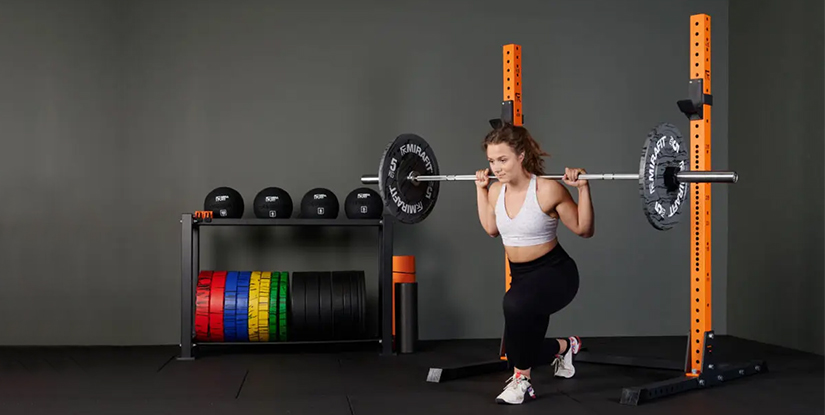
Navigating Spatial Constraints in Facility Planning
Facility managers and private studio owners frequently encounter a recurring dilemma: the desire to offer a comprehensive range of training modalities versus the rigid reality of limited square footage. This tension often leads to the procurement of single-use machines that occupy vast amounts of floor area, eventually creating a cluttered environment that hampers movement and reduces the perceived value of the facility. The core problem is not merely the physical dimensions of the machines, but the 'operational footprint'—the total area required for a user to safely perform an exercise, including weight plates, bench movement, and safety clearance.
When a facility relies on a collection of disparate, single-function machines, the cumulative footprint expands exponentially. A standard chest press machine, a dedicated leg extension station, and a separate cable crossover system may each require their own dedicated zone. This fragmentation leads to 'dead zones' where space is unusable for any other activity. Understanding the mechanical versatility of integrated systems is the first step in shifting from a quantity-based equipment strategy to a density-based one.
By transitioning to integrated systems, operators can consolidate multiple movement patterns into a single structural frame. This approach does more than just save floor space; it optimizes the logistical flow of the facility. Once the fundamental logic of spatial consolidation is understood, we must examine the technical components that allow these machines to perform multiple functions without compromising structural integrity.
Mechanical Integration and Structural Integrity
The primary technical reason why multi functional gym equipment saves space is the utilization of a single, high-strength chassis to support diverse resistance profiles. Instead of multiple independent frames, an integrated unit uses a centralized upright structure with interchangeable or adjustable attachment points. This allows a single footprint to accommodate upper body pushes, lower body movements, and functional cable work.
The Role of Versatile Resistance Systems
In a multi-functional setup, the resistance source is often a single weight stack or a highly adjustable plate-loaded system. This centralizes the heaviest component of the gym, preventing the need for multiple weight stacks scattered throughout the room. The efficiency is achieved through modular accessory interfaces, such as high-grade carabiners, adjustable pulleys, and swiveling lever arms.
Integrated Cable Systems: A single cable tower can transition from a lat pulldown to a seated row by simply adjusting the pulley height and seat position.However, the reliance on a single frame means that the mechanical load is distributed across a more complex assembly. Operators must recognize that higher versatility often requires higher precision in hardware. If the structural components are not rated for the combined stresses of different movement patterns, the machine becomes a liability. With the mechanism of integration established, we must look at the specific selection criteria for these high-density units.
Technical Specifications for High-Density Equipment
When evaluating equipment, professional buyers should not just look at the number of functions, but the quality of the transitions between those functions. A machine that takes five minutes to reconfigure for a new exercise is not truly space-efficient in a commercial setting where throughput is key.
| Feature Parameter | Single-Function Machine | Multi-Functional System | Selection Criteria |
|---|---|---|---|
| Footprint Ratio | High (1 machine : 1 function) | Low (1 machine : 4+ functions) | Target < 1.5m² per function |
| Transition Speed | N/A (Machine is fixed) | Variable (Adjustment time) | Aim for < 60 seconds |
| Structural Load | Localized to one movement | Distributed across frame | Verify max weight per limb/cable |
| Maintenance Complexity | Low (Single mechanism) | Moderate (Multiple adjustment points) | Check part availability |
Evaluating these parameters ensures that the pursuit of space-saving does not lead to a reduction in training quality. The next critical phase in a successful procurement strategy is identifying the mistakes that lead to wasted investment.
Avoiding the Versatility Trap: Common Procurement Errors
A common mistake made by new facility operators is prioritizing the 'list of features' over the 'quality of implementation.' It is easy to be swayed by a machine that claims to perform twelve different exercises, but if the biomechanical alignment is poorly designed for even three of those exercises, the equipment is effectively a waste of space. This is the 'versatility trap'—where high feature counts mask low-quality functional design.
The Problem of Biomechanical Misalignment
In many space-saving designs, the geometry of the frame is optimized for a standard movement (like a squat) and then 'retrofitted' for others. This often results in awkward angles that do not align with human joint mechanics. For example, a cable machine that works well for a high-to-low movement might be completely unusable for a horizontal row because the pulley path is too restrictive. This limitation essentially renders parts of the machine 'dead space' for certain training styles.
Common Mistake 1: Ignoring the 'Safety Radius.' Even if a machine's base is small, the user's limbs or the moving weight may extend far beyond that footprint during an exercise.To avoid these pitfalls, one must verify the equipment's performance through rigorous testing of its most 'extreme' movement settings. After identifying these risks, the focus shifts to how to actually implement a layout that maximizes these gains.
Explore the complete technical specifications:
Pull Up Rack: Commercial Specifications, Installation, and Selection
Optimizing Gym Layout for Maximum Density
Once the correct multi-functional equipment has been selected, the final step is the strategic placement within the facility. Even the most efficient machine can become a bottleneck if it is positioned poorly within the room's flow. Space-saving is a dual-pronged approach: the quality of the machine and the intelligence of the layout.
The 'Zone-Based' Implementation Strategy
Instead of scattering equipment throughout the floor, professional facility designers use a zone-based approach. This involves grouping multi-functional units by their primary movement patterns to create logical training hubs. For instance, a 'Strength Zone' might contain a heavy-duty multi-functional rack, while a 'Functional Zone' contains a more mobile, cable-driven system.
Checklist for Effective Space Integration
Before finalizing your equipment layout, use the following checklist to verify that your space-saving goals are being met:
- Clearance Verification: Have you measured the maximum extension of the equipment (e.g., when a user is performing a wide lateral raise)?
- Traffic Flow Analysis: Does the movement of a user around the machine interfere with the paths between other stations?
- Power and Cable Management: For electronic or high-end cable machines, are the power cords and weight stacks positioned to avoid tripping hazards?
- Vertical Space Utilization: Are you using wall-mounted accessories (like plate trees or dumbbell racks) to keep the floor clear around your central multi-functional unit?
| Layout Phase | Action Step | Verification Method |
|---|---|---|
| Pre-Planning | Map out 'Fixed' vs 'Mobile' zones | Use floor markers or tape to simulate footprints |
| Procurement | Prioritize high-function/low-base footprint units | Compare actual base dimensions vs advertised area |
| Installation | Ensure level footing for heavy frames | Check with a spirit level under full load |
| Daily Operation | Audit the 'Safety Radius' of machines | Observe a user performing maximum-range movements |
By following this systematic approach, you ensure that the efficiency gained from the equipment is actually realized in the day-to-day operation of the facility. Effective layout management leads directly to the final stage: long-term maintenance and longevity.
Explore the complete technical specifications:
Multi Station Commercial Gym | Space-Saving 2-4 Station Cable Machines
Ensuring Longevity Through Rigorous Maintenance Protocols
The transition from single-use to multi-functional equipment inherently increases the complexity of the machinery. A single weight stack or pulley system is now being subjected to a wider variety of lateral and vertical forces than it was originally designed for in its simplest form. This makes a rigorous, scheduled maintenance protocol non-negotiable for any serious operator.
Key Inspection Points for Multi-Functional Units
Because these machines are used for a diverse range of movements, the points of wear are more varied. A standard inspection must go beyond simple visual checks and include deep-dive mechanical verification.
- Cable Integrity: Cables in multi-functional machines experience more complex paths. Check for fraying or slight kinks at every turn of the pulley system.
- Adjustment Pin Friction: Since users will be changing heights and angles more frequently, the adjustment pins and holes are high-wear areas. Ensure they move smoothly and lock securely without play.
- Bolt Torque Verification: The various attachments (dip bars, pull-up handles, etc.) are frequently swapped. These high-use connection points must be checked for tightness regularly to prevent catastrophic failure.
- Weight Stack Alignment: Ensure the weight stack remains centered throughout the entire range of motion, especially when using the machine for non-standard, lateral-heavy exercises.
Failure to maintain these components can lead to a rapid decline in the machine's versatility. If a pulley is stuck, the machine effectively reverts to a single-function device, negating your initial space-saving investment. Maintaining a high standard of care preserves both the ROI and the safety of the users.
The Long-Term ROI of Consolidated Equipment Investment
Ultimately, the decision to invest in multi-functional gym equipment is a strategic financial decision. While the initial capital expenditure (CAPEX) for a single high-quality integrated unit may be higher than several cheaper, single-function machines, the total cost of ownership (TCO) and return on investment (ROI) often favor the versatile option in the long run. A consolidated equipment strategy allows for higher density, which directly correlates to higher revenue-generating capacity per square meter. By optimizing the physical footprint, you are not just saving space; you are maximizing the economic potential of every square inch of your facility.