

Why Commercial Fitness Equipment Manufacturers Are Key to Your Success
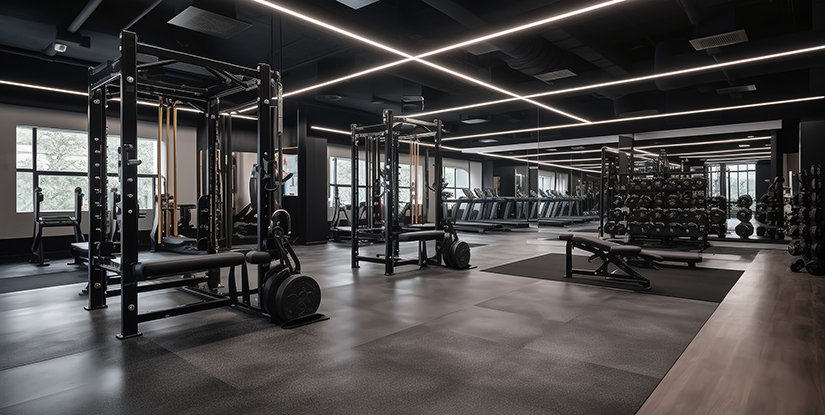
Navigating the procurement cycle of a high-traffic fitness facility requires more than just selecting aesthetically pleasing machines. It requires a deep understanding of the manufacturing lineage behind every piece of iron and electronics. From the initial raw material sourcing to the final quality control gate, the manufacturer's technical rigor directly dictates your operational uptime and long-term ROI. A single oversight in the manufacturing process—such as a suboptimal weld or a low-grade bearing—can evolve from a minor squeak into a catastrophic mechanical failure that shuts down a production line or, worse, creates a liability for your facility. This guide explores the technical layers of production and why your choice of manufacturer is the most significant decision in your facility's lifecycle.
The Foundation of Durability: Material Selection and Raw Input Control
The journey of commercial-grade equipment begins long before the first component is assembled. High-tier manufacturers focus heavily on the chemical and structural integrity of their inputs. When a manufacturer cuts corners on raw materials, the resulting equipment may look identical to high-end models in a showroom but will fail under the heavy-duty load of a commercial environment.
Steel Grades and Tubing Specifications
Most heavy-duty frames are constructed from cold-rolled or hot-rolled steel tubing. A professional-grade manufacturer will specify the gauge thickness (typically 11-gauge or 12-gauge for strength) and the metallurgical composition. The risk of using inferior steel is significant: thin-walled tubing is prone to deformation under heavy weight, which leads to structural fatigue and eventual cracking at the weld points. You must verify that the manufacturer provides technical spec sheets detailing the steel grade used in their primary frames.
Component Materiality: Bearings and Bushings
Moving parts, such as the pivot points in selectorized machines, rely on bearings or bushings. In high-use settings, a common failure mode is the rapid degradation of plastic bushings, leading to 'slop' or uneven movement. High-quality manufacturers utilize high-density polymers or high-precision steel bearings to ensure smooth, consistent motion. If the movement feels jerky during the initial inspection, it is a sign of poor material density or improper bearing tolerances.
Selecting the right materials ensures that the structural skeleton of your equipment can withstand years of repetitive stress. Once the material integrity is secured, the next critical phase involves the precision of the fabrication process.
Precision Fabrication: The Role of Welding and Tolerance Management
Even the highest grade steel will fail if the geometry of the machine is inconsistent. The transition from raw tubing to a functional machine happens in the fabrication shop, where precision welding and CNC machining dictate the longevity of the product. A manufacturer with sophisticated fabrication capabilities can maintain the tight tolerances necessary for high-performance fitness equipment.
Welding Integrity and Penetration Standards
Welding is the most critical step in frame construction. Poor welding is often the primary cause of catastrophic failure in commercial strength equipment. We typically look for full-penetration welds rather than surface-level beads. A common mistake in lower-tier manufacturing is 'tack welding' or using excessive heat that warps the metal, which compromises the structural integrity of the frame. A professional manufacturer uses automated or highly skilled manual MIG/TIG welding processes to ensure uniform strength throughout the joint.
CNC Machining and Component Alignment
For machines with complex movement paths, such as cable machines or dual-function trainers, the precision of the CNC-machined parts is non-negotiable. If the pulleys or guide rods are even slightly misaligned due to poor machining, the friction will increase exponentially over time. This results in uneven wear on cables and a frustrating user experience. Verify if the manufacturer uses CNC-machined parts for all critical adjustment points and movement-path interfaces.
| Feature | Standard Commercial Grade | Low-Tier/Residential Grade |
|---|---|---|
| Weld Type | Full-penetration, reinforced joints | Surface-level beads or tack welds |
| Tube Gauge | 11-12 Gauge Steel | 14-16+ Gauge Steel |
| Bearing Style | Sealed high-precision ball bearings | Basic bushings or unsealed bearings |
| Adjustment Mechanism | CNC-machined precision pins/holes | Standard punched holes with slight play |
A robust fabrication process ensures that the machine's geometry remains stable over thousands of repetitions. However, structural strength is irrelevant if the machine's electronic or mechanical components cannot survive the environmental and physical stresses of a gym floor.
Explore the complete technical specifications:
Assembly and Component Integration: Managing Mechanical Synergy
Once the frames are fabricated, they enter the assembly phase. This is where hundreds of individual parts—cables, pulleys, weights, and electronics—must work in perfect synergy. The success of this stage relies on the manufacturer's ability to manage component integration and tensioning.
Cable Strength and Pulley Systems
The cable is the lifeblood of most functional and selectorized training equipment. A common failure point is cable fraying or internal strand breakage. A high-quality manufacturer will use aircraft-grade, nylon-coated steel cables that are designed to resist abrasion. Furthermore, the pulley wheels must be constructed from high-impact nylon or aluminum to prevent the cable from 'digging' into the wheel under load. If the manufacturer cannot provide the breaking strength (tensile strength) specifications for their cables, it is a major red flag.
The Complexity of Electronic Integration
In the era of smart gyms, the integration of consoles and connectivity is a high-risk area. A professional manufacturer treats electronics as a core component, not an add-on. This means ensuring that electrical connections are shielded from vibrations and that the firmware is stable. A common failure mode in lower-tier electronic integration is the sudden death of a console due to moisture ingress or cable vibration causing a disconnect. Ask potential manufacturers about their testing protocols for electronic-mechanical interference.
The synergy between these components determines the 'feel' of the machine. With a successful assembly, the next focus shifts toward the final verification: the rigorous quality control testing that must occur before the product leaves the factory floor.
Rigorous Quality Control: The Gatekeeper of Operational Uptime
Quality Control (QC) is not just a single inspection at the end of a line; it is a continuous process throughout the manufacturing lifecycle. A manufacturer that treats QC as a 'final check' is a manufacturer that will eventually cause you downtime. A truly professional manufacturer utilizes multiple stages of testing to identify defects before they are even packaged.
Load Testing and Stress Analysis
Commercial equipment must be tested under extreme loads. A reliable manufacturer will perform periodic load tests on a sample of every production run. This involves applying weights that exceed the stated maximum capacity to ensure the frame and the cables do not deform or snap. You should verify if the manufacturer conducts standardized load testing and if they have documented results for their strength-training lines.
The Inspection Checklist for Buyers
When reviewing a manufacturer's capability, you should look for specific QC checkpoints. A professional inspection regime includes more than just a visual check; it includes functional and structural verification. Use the following checklist to evaluate a manufacturer's technical depth:
- Dimensional Accuracy: Are the adjustment points and machine footprints consistent across multiple units?
- Tolerance Testing: Do the moving parts have a consistent level of 'play' or friction?
- Surface Finish Inspection: Is the powder coating even, and are there any exposed metal edges that could lead to rust?
- Electronic Cycle Test: Do the consoles and sensors undergo repetitive function testing during the assembly phase?
- Hardware Torque Check: Are critical bolts and nuts checked for specific torque settings to prevent loosening over time?
By verifying these control points, you move from being a passive buyer to a proactive partner in quality. Once you have validated the manufacturing prowess, the final stage of the lifecycle is understanding how to maintain that excellence through proper deployment and maintenance.
The Digital Interface: Ensuring Connectivity and Software Stability
Modern fitness facilities are increasingly defined by their digital integration. Whether it is a high-end treadmill with a touchscreen or a strength machine that tracks reps via Bluetooth, the digital component is often the first thing to fail if not manufactured with extreme precision. High-quality manufacturers understand that software is just as vital as steel.
Hardware-Software Synchronization
A common failure mode in commercial gym technology is the latency between a user's physical movement and the digital readout. This lack of synchronization can ruin the user experience and lead to inaccurate tracking. Professional manufacturers conduct extensive stress testing on their sensors (such as accelerometers and load cells) to ensure that data is captured in real-time without drift. When evaluating equipment, ask if the manufacturer performs "end-to-end" testing, which includes the physical sensor, the onboard processor, and the cloud-based data transmission.
Environmental Durability of Electronics
Gym environments are harsh—high humidity, fluctuating temperatures, and constant vibration. A common mistake is using consumer-grade electronic housings that are not rated for such environments. You should look for manufacturers that use IP-rated (Ingress Protection) enclosures for their consoles and internal circuitry. This prevents the two most common causes of electronic death: moisture buildup from perspiration and loose connections caused by mechanical vibrations.
Securing a robust digital interface ensures that your facility remains at the cutting edge of the fitness industry. However, a machine's utility is only as good as its uptime, which leads us to the long-term management of the equipment.
Strategic Deployment and Long-Term Lifecycle Management
The final step in the lifecycle—from procurement to the eventual retirement of the equipment—is governed by how well the manufacturer's design supports the operator. A well-manufactured machine is designed with serviceability in mind, allowing for easy maintenance and parts replacement without extensive downtime.
Designing for Serviceability
A major pain point for gym operators is 'dead equipment'—machines that are out of order for weeks because a single, obscure part cannot be sourced or replaced. High-quality manufacturers design their machines with accessibility in mind. This means using standardized bearings, bolts, and cables that are easy to swap. When evaluating a manufacturer, ask about the availability of replacement parts and the 'ease of service' for common wear items like cables and upholstery.
Predictive Maintenance vs. Reactive Repair
The goal of a professional operator is to move from reactive repair (fixing things when they break) to predictive maintenance (servicing things before they fail). A manufacturer who provides detailed maintenance schedules and clear technical documentation is setting you up for success. For example, a manufacturer should clearly state the interval for lubrication of pulleys or the frequency for checking cable tension. This transparency is a key indicator of why commercial fitness equipment manufacturers are key to your success.
In conclusion, the value of a manufacturer is not found in the price tag of the machine, but in the reliability of the process that created it. From the metallurgy of the steel to the sophistication of the electronic integration, every layer of manufacturing is a potential failure point. By prioritizing manufacturers that emphasize material integrity, precision fabrication, and rigorous quality control, you protect your facility's reputation and ensure the highest possible ROI for your investment.