

Why Commercial Fitness Equipment Companies Are Expanding Globally
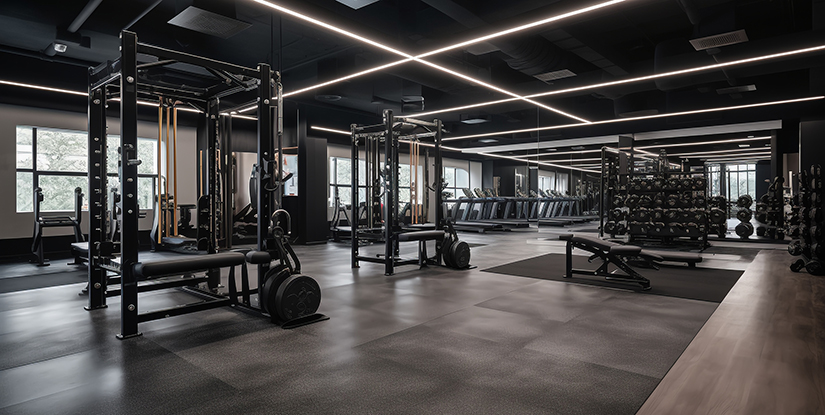
The Strategic Drivers Behind Global Expansion in Fitness Manufacturing
The commercial fitness landscape is undergoing a radical structural shift. While localized markets once sufficed for regional manufacturers, the current industry trajectory shows a definitive push toward internationalized supply chains and global distribution networks. For facility operators and procurement professionals, understanding why commercial fitness equipment companies are expanding globally is not merely an academic exercise; it is a prerequisite for predicting market availability, pricing stability, and technological standardization.
The expansion is driven by a combination of maturing domestic markets and the necessity of achieving economies of scale in high-precision manufacturing. As production costs for advanced electronics and high-grade steel rise, manufacturers must tap into diverse revenue streams to sustain R&D cycles. This strategic movement influences everything from the metallurgy of weight stacks to the software architecture of smart cardio machines. With the foundational drivers established, we must now examine the technical infrastructure required to support such a massive footprint.
Optimizing Global Supply Chain Resilience and Manufacturing Standards
As companies move into new territories, the primary challenge shifts from simple logistics to maintaining rigorous technical consistency. A manufacturer based in one continent must ensure that a treadmill shipped to a different hemisphere meets the exact same tolerance levels and durability benchmarks. This requires a sophisticated approach to material procurement and quality control protocols.
Material Standardization and Global Compliance
One of the most significant hurdles in global expansion is the variation in regional material standards. For instance, the grade of steel used in heavy-duty power racks must remain consistent regardless of where the end-user is located. A failure in material consistency leads to catastrophic structural fatigue in high-load equipment.
- Steel Tensile Strength: Ensuring that all structural components meet ASTM or ISO standards to prevent buckling under peak loads.
- Powder Coating Durability: Adapting coating thicknesses to withstand varying humidity levels in tropical versus temperate climates.
- Bearing Precision: Maintaining micron-level tolerances in rotational components to ensure longevity in high-traffic environments.
To manage these variables, leading companies implement a rigorous verification matrix. The following table outlines the typical criteria used to ensure product uniformity across different manufacturing hubs.
| Critical Parameter | Standard Requirement | Verification Method | Common Failure Mode |
|---|---|---|---|
| Structural Steel Grade | High-tensile ASTM/ISO compliant | Spectroscopy/Material Test Report | Unexpected structural deformation |
| Bearing Tolerance | Precision-engineered < 0.05mm | Micrometer Measurement | Increased friction/excessive noise |
| Electronic Voltage | Adaptive/Universal Input | Load Testing/Multimeter | Component burnout due to power fluctuations |
| Coating Adhesion | Cross-hatch scratch test pass | ASTM D3359 Test | Peeling or corrosion in high-humidity zones |
By adhering to these benchmarks, companies mitigate the risk of localized product failures. Once the manufacturing integrity is secured, the focus naturally moves toward the technical challenges of regional installation and site-specific deployment.
Navigating Regional Technical Requirements and Installation Logistics
Expanding globally is not just about shipping products; it is about the localized ability to install and calibrate them. A common mistake made by expanding firms is neglecting the technical nuances of regional power grids and local building codes, which can lead to significant downtime during the commissioning phase.
Electrical and Digital Integration Challenges
Modern commercial fitness equipment is increasingly reliant on complex digital ecosystems. When a company expands into a new market, the integration of their proprietary software with local network infrastructures and varying electrical standards becomes a critical friction point. For example, a high-end treadmill with an integrated touchscreen must be able to navigate varying frequency (Hz) and voltage cycles without compromising the sensitive internal logic boards.
Common Technical Pitfalls in Deployment:
- Voltage Mismatch: Utilizing equipment designed for 60Hz regions in 50Hz markets without proper conversion, leading to motor overheating.
- Network Latency: Software-driven equipment failing to sync with local cloud servers due to regional firewall restrictions.
- Power Surge Vulnerability: Lack of localized surge protection in regions with unstable electrical grids.
Operators must verify that the technical support teams in their region are capable of performing advanced firmware updates and hardware calibration. This necessity for localized expertise is a direct consequence of the increased technical complexity inherent in globalized product lines. As these technical requirements become more specialized, the focus shifts to how these globalized products are maintained over their lifecycle.
Lifecycle Management and Globalized Maintenance Protocols
The expansion of fitness equipment manufacturers brings a high-tech approach to maintenance, but it also introduces new complexities in parts availability. A facility manager in a developing market may face much longer lead times for a specific proprietary sensor compared to a manager in a primary manufacturing hub.
Developing a Proactive Global Maintenance Schedule
To combat the risk of extended downtime, professional operators should transition from reactive repairs to a rigorous, data-driven maintenance schedule. This is especially vital when dealing with equipment produced under globalized manufacturing streams where specific component availability may fluctuate.
| Maintenance Tier | Frequency | Focus Area | Required Tooling/Skill |
|---|---|---|---|
| Tier 1: Visual/Manual | Daily/Weekly | Cables, Upholstery, Bolt Tension | Basic Inspection/Wrench |
| Tier 2: Preventative | Quarterly | Lubrication, Motor Brushes, Sensor Cleaning | Standard Mechanical Toolkit |
| Tier 3: Technical/Deep | Annually | Control Board Diagnostics, Bearing Replacement | Digital Diagnostic Interface |
A critical part of this process is the verification of component compatibility. When ordering replacement parts from a globalized supplier, the operator must verify the part number against the specific manufacturing batch of the machine, as globalized production often involves multiple iterations of a single model.
Verification of Component Authenticity
When expanding globally, manufacturers often utilize various sub-suppliers for components. For the end-user, this means the risk of receiving a non-compliant or inferior replacement part. Operators should utilize the following checklist when receiving critical replacement parts:
- Check the manufacturer's serial number against the component's batch code.
- Verify that the component meets the specific electrical or mechanical specifications listed in the technical manual.
- Inspect the packaging for signs of tampering or unauthorized third-party substitution.
- Test the component on a non-critical unit if possible before full-scale deployment.
Through these stringent checks, the long-term ROI of the equipment can be protected despite the complexities of a global supply chain. This leads us to the ultimate goal of such expansion: the creation of a truly globalized fitness standard.
The Evolution of Globalized Training and Software Ecosystems
The technical expansion of fitness companies extends far beyond the physical machine; it includes the digital and educational ecosystems that support them. As companies scale globally, they must also scale their training modules for both users and professional technicians. This creates a standardized user experience that transcends geographic boundaries.
Standardizing the User and Operator Experience
The goal of a globalized company is to ensure that a user in London and a user in Tokyo receive the same level of technical precision and data-driven feedback. This requires a seamless integration of cloud-based training and digital support systems. However, this reliance on digital infrastructure introduces new vectors for failure, such as software bugs or regional connectivity issues.
The Role of Digital Verification in Global Scaling:
Companies are now using IoT (Internet of Things) capabilities to remotely monitor machine health. This allows a central technical team to diagnose a mechanical issue in a different continent in real-time. While this reduces the need for on-site troubleshooting, it requires the operator to have a highly stable and secure network environment.
- Real-time Telemetry: Monitoring motor temperature, belt speed, and resistance levels to predict failures before they occur.
- Automated Firmware Deployment: Ensuring all machines across a global fleet are running the latest, most secure software versions.
- Digital Troubleshooting Guides: Providing local technicians with augmented reality (AR) or high-definition video tutorials for complex repairs.
As these technologies mature, the line between physical hardware and digital services continues to blur. The global expansion of fitness equipment companies is not just a change in geography, but a profound evolution in how exercise technology is engineered, distributed, and maintained.
Market Diversification and Global Economic Resilience
Beyond technical considerations, there is a profound economic motivation for global expansion. By diversifying their market presence, manufacturers can insulate themselves from localized economic downturns. A slump in the fitness sector in one region can be offset by rapid growth in another, ensuring a stable production cadence.
Economic Variables in Global Scaling
When deciding which market to enter next, manufacturers must weigh several economic parameters. The decision is rarely just about population size; it is about the technical readiness of the local economy to support high-end fitness infrastructure.
- Infrastructure Readiness: The availability of stable electrical grids and high-speed internet for IoT-connected machines.
- Labor Specialization: The density of skilled technicians capable of performing high-level repairs in the target region.
- Import/Export Compliance: The ease of moving high-value mechanical goods across regional borders without prohibitive tariffs.
This economic complexity ensures that only the most technically capable organizations survive the transition to a global model. This brings us to the final outlook on where these technical and economic trends are heading.
The Future Outlook of Globalized Fitness Technology
Looking ahead, the trajectory of the industry suggests even deeper integration of localized manufacturing with globalized design. We will likely see more "distributed manufacturing" where the high-level design is centralized, but the heavy structural components are produced in regional hubs to reduce carbon footprints and shipping costs. This will further complicate the technical oversight required by buyers and operators, making adherence to the standards discussed in this guide even more vital.