

What Your Barbell Supplier Isn't Telling You
What Your Barbell Supplier Is Not Telling You
When procuring barbells, every supplier will tell you similar claims: commercial grade, premium high-carbon steel, 1,500 pound weight capacity, non-slip knurling. These statements sound professional, but the critical details that truly determine a barbell's quality are rarely offered upfront. Suppliers are not necessarily trying to deceive you. The reality is that if you do not ask specific questions, they have no obligation to volunteer the information. This article combines industry data and real-world procurement experience to reveal what your barbell supplier is not telling you.
1. Commercial Grade Means Nothing Without Evidence
The term commercial grade is widely used but has no official definition. There is no ISO standard, no ASTM test requirement, and no independent certification for this label. Any supplier can describe any barbell as commercial grade without providing any supporting evidence.
A truly commercial grade barbell should meet several basic requirements: all-steel or all-alloy construction throughout, tensile strength of at least 150,000 PSI, ergonomic knurling that provides secure grip without excessive abrasion, and verified durability to withstand daily use in a busy facility. The USA Weightlifting facility guidelines note that commercial barbells should endure at least 50 hours of continuous use per week without significant performance loss.
Many barbells labeled as commercial grade are actually only suitable for home gyms used two to three times per week. Do not accept the term at face value. Ask for specific material grades, tensile strength test results, and references from commercial facilities that have used the product for extended periods.
2. Steel Grade Reveals True Quality
The phrase high-carbon steel sounds impressive, but it tells you very little. Steel grade is the most important factor in determining barbell strength, flexibility, and fatigue resistance. Different grades have dramatically different performance characteristics.
Below is a comparison of common barbell steel grades:
| Steel Grade | Tensile Strength (PSI) | Typical Application | Relative Price |
|---|---|---|---|
| 1144 | Approximately 150,000 | Entry-level barbells | Low |
| 1550 | 180,000 to 190,000 | Mid-range commercial barbells | Medium |
| 1566 | 190,000 to 210,000 | High-end powerlifting and Olympic barbells | Medium-high |
| 17-4PH Stainless | 180,000 to 200,000 | Competition-grade barbells | High |
Many barbells labeled as high-carbon steel actually use un-graded recycled material or low-grade steel sold at inflated prices. A procurement consultant with 15 years of industry experience shared a real case. A gym chain ordered 40 barbells claimed to be 1550 steel. After independent third-party testing, the actual tensile strength was only 120,000 PSI.
Without third-party test reports, verbal claims about steel grade are meaningless. Request material certificates and verify that the grade listed matches the product delivered. An additional hidden factor is that steel from the same grade can vary significantly based on the supplier, heat number, and heat treatment process. Professional manufacturers perform incoming material inspections on every batch. Many assembly shops do not. Your supplier will not volunteer this difference.
Related reading: Professional Fitness Equipment Manufacturer Certifications
3. Knurling Details Affect Grip and Durability
Knurling is the part of the barbell that users touch with every rep, yet it receives very little attention during procurement. Knurling type, depth, spacing, and manufacturing method directly affect grip security and user comfort. According to procurement surveys from multiple large gym chains, knurling issues are the third most common user complaint, ranking behind only rust and sleeve sticking.
Knurling falls into three main categories. Aggressive knurling has coarse, sharp peaks with teeth per inch typically between 18 and 22. This pattern provides secure grip under heavy loads exceeding 200 kilograms, but it can wear on the skin during long training sessions. Standard knurling runs between 24 and 28 teeth per inch and appears on most Olympic and powerlifting barbells. It balances grip and comfort for most users. Passive knurling is shallower with over 30 teeth per inch, suitable for beginners, rehabilitation settings, or high-repetition training where aggressive grip is not necessary.
The manufacturing method also matters. Cut knurling is machined directly into the steel using cutting tools. This process produces high precision, sharp teeth, and excellent wear resistance. Rolled knurling is impressed into the surface using pressure rollers. It costs less and produces faster, but the teeth are shallower and flatten more quickly. In a commercial gym environment with over 50 hours of weekly use, rolled knurling typically lasts 12 to 18 months before grip performance noticeably declines. Cut knurling can last three to five years.
Suppliers will not advertise which method they use. To tell the difference, run your finger across the knurling. Cut knurling feels sharp, uniform, and precise. Rolled knurling feels rounded, uneven, and shallow. Cut knurling costs 30 to 50 percent more than rolled. If a supplier claims cut knurling at a very low price, be skeptical.
4. Bearings Versus Bushings: An Important Distinction
Sleeve rotation performance determines how freely weight plates can spin during lifts. This is essential for Olympic lifts like the snatch and clean and jerk, but it is much less important for squats, bench presses, and deadlifts. Suppliers will emphasize bearing count as a selling point, but bearing count alone does not tell the whole story.
Bearing barbells typically contain 4 to 10 needle bearings per sleeve. More bearings distribute load more evenly and provide smoother rotation. However, bearing quality is equally important. Low-quality bearings use plastic retainers and low-precision needles. They often develop noise, sticking, or complete failure within months of commercial use. Maintenance data from commercial gyms shows that low-quality bearing barbells fail at a rate five to eight times higher than high-quality bearing barbells, with bearing seizure being the most common failure.
Bushing barbells use bronze or brass bushings instead of bearings. Rotation resistance is higher than bearing barbells, but durability is excellent and maintenance requirements are almost zero. For facilities focused on powerlifting, bushing barbells are often a better choice. They are more durable, require less maintenance, and powerlifting movements do not require high-speed sleeve rotation.
What suppliers will not tell you is that bearings are not necessary for most strength training. Spending 30 percent more for a bearing barbell may be wasted if your users primarily squat, bench press, and deadlift. However, if you are procuring for Olympic weightlifting or CrossFit, bearing quantity and quality become critical. Ask about bearing materials, specifically whether the retainers are steel or plastic. Ask about needle count and dimensions. Request third-party spin test data.
A simple field test is to spin the sleeve by hand and listen. Quality bearings produce a low, uniform sound. Low-quality bearings produce sharp friction sounds or intermittent sticking. Also check axial play, which is the distance the sleeve moves side to side. Quality barbells typically keep axial play within 0.5 millimeters. Cheap barbells may show two to three millimeters of movement, which causes plates to wobble during lifts.
Related reading: Why Mass Production Differs from the Sample
5. Surface Finish Determines Lifespan
A barbell's surface finish directly affects corrosion resistance and cosmetic lifespan. Common finishes include hard chrome, black oxide, ceramic coating, nitriding, and bare steel. Each option has dramatically different performance and cost characteristics.
Below is a performance comparison of common surface finishes:
| Finish Type | Corrosion Resistance | Wear Resistance | Feel | Expected Commercial Lifespan |
|---|---|---|---|---|
| Quality Hard Chrome | Excellent | Excellent | Good | 5 to 8 years |
| Poor Hard Chrome | Fair | Poor | Good | 1 to 2 years |
| Black Oxide | Poor | Good | Excellent | 1 to 3 years with regular maintenance |
| Ceramic Coating | Excellent | Excellent | Good | 5 to 10 years |
| Nitriding | Excellent | Excellent | Excellent | 5 to 8 years |
Hard chrome is the most common finish because it offers good wear resistance, corrosion protection, and easy cleaning. However, quality depends entirely on plating thickness and process control. Quality hard chrome plating measures between 10 and 15 microns. Cheap barbells may have only three to five microns of plating. A threefold difference in thickness results in a threefold difference in lifespan. In one documented case, a buyer submitted a supplier's hard chrome barbell for independent testing. The report showed plating thickness of only 2.8 microns with uneven distribution and almost no plating on the inner sleeve surface.
Black oxide finishes cost less and feel great, but corrosion resistance is poor. In coastal areas or poorly ventilated gyms, black oxide barbells rust quickly and severely. Ceramic coatings offer excellent corrosion resistance but are expensive, and the coating layer can reduce grip by filling in the knurling.
Many barbells sold as hard chrome actually use decorative chrome rather than industrial hard chrome. Decorative chrome is thin, wears rapidly, and peels within months. Request plating thickness data and salt spray test reports. A neutral salt spray test of at least 48 hours with no red rust is a reasonable benchmark for commercial quality.
Product links: Barbell Collection | Barbell Manufacturing Factory | Olympic Bar
6. Weight Capacity Claims Are Often Misleading
A barbell rated for 1,500 pounds sounds impressive. However, suppliers rarely explain how that number was determined. Different test methods produce vastly different results, and suppliers typically choose the most favorable method for marketing purposes.
Load capacity is typically measured using one of three methods. Static load testing supports the barbell at both ends and adds weight at the center until failure. This method produces the highest numbers, often exceeding 2,000 pounds even for ordinary barbells. However, static testing does not reflect real-world repeated loading and has limited practical value. Dynamic load testing simulates real-world loading and unloading cycles, which is closer to actual use. However, different manufacturers use different cycle frequencies, loads, and durations, making cross-comparison difficult. Fatigue testing repeatedly loads and unloads the barbell at a specified weight to determine when permanent deformation or failure occurs. This is the most practically meaningful test, but it is also the most time-consuming, and suppliers rarely provide it proactively.
The International Weightlifting Federation requires competition barbells to show no permanent deformation under a 1,500 pound static load. This is the standard for competition barbells, not for general commercial barbells. For most commercial applications, the actual demand is far lower than this number.
A barbell rated for 1,500 pounds may already show fatigue under repeated 300 pound loads. Fatigue life depends on steel grade, heat treatment, and manufacturing tolerances, parameters rarely listed on spec sheets. Ask your supplier what test method was used, what standard was followed, and whether third-party test reports are available. Without this information, weight capacity claims are of very limited value.
7. Real-World Lifespan Data
Based on tracking data from multiple commercial gyms, the real-world lifespan of barbells varies significantly by quality level.
| Quality Tier | Typical Steel Grade | Expected Lifespan | Primary Failure Mode |
|---|---|---|---|
| Entry-level | Un-graded or 1045 | 6 to 12 months | Bending, plating peeling, knurling flattening |
| Mid-tier Commercial | 1144 or 1550 | 2 to 4 years | Bearing wear, plating wear |
| High-end Commercial | 1566 or 17-4PH | 5 to 8 years | Natural knurling wear |
Every dollar saved on the initial purchase can become higher replacement frequency and more user complaints later. An entry-level barbell may need replacement within 18 months. A high-end barbell can last over five years. On an annual cost basis, the high-end barbell is often cheaper.
8. Four Questions Your Supplier Will Not Answer Voluntarily
When procuring barbells, these four questions will reveal a great deal about your supplier. The answers will help you separate reliable manufacturers from those making inflated claims.
First, what steel grade do you use and do you have material certificates? Suppliers using quality steel will readily tell you the specific grade, such as 1550, 1566, or 17-4PH, and will provide material certificates. Suppliers who avoid this question or only say high-carbon steel are likely using un-graded recycled material. If a certificate is provided, check the heat number. Reputable suppliers have unique heat numbers for each batch, allowing traceability to specific production runs.
Second, is your knurling cut or rolled? This question directly reveals knurling quality. Cut knurling offers high precision and excellent wear resistance. Rolled knurling is lower cost and flattens quickly. A supplier who admits to rolled knurling is at least being honest. However, if a supplier claims cut knurling at an unusually low price, be suspicious. Cut knurling costs significantly more, and low prices cannot support quality cut knurling.
Third, do you have third-party test reports? Quality suppliers perform regular third-party testing and maintain complete reports covering tensile strength, hardness, salt spray resistance, and spin performance. Suppliers unable to provide reports either never test their products or the test results are unsatisfactory. Request reports from the last year and pay attention to the dates, test standards, and whether the laboratory is accredited.
Fourth, what is the axial play of your sleeves? This is a technical question that most buyers never ask. Axial play is the distance the sleeve can move along the barbell axis. Quality barbells typically keep axial play within 0.5 millimeters. Cheap barbells may show two to three millimeters of movement. Excessive axial play causes weight plates to wobble on the sleeve, affecting stability and safety during lifts.
Conclusion: The Differences Are in the Details
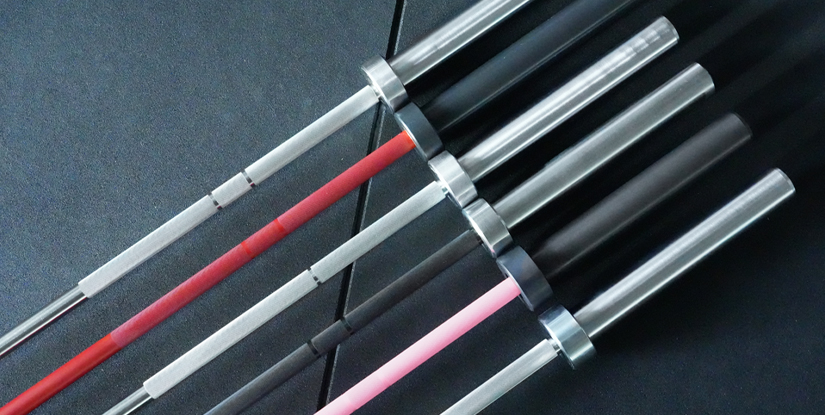
Two barbells may look identical from a distance. After close inspection, after months of use, after years of use, the differences become stark. Steel grade determines strength and lifespan. Knurling process determines grip and durability. Bearing or bushing choice determines spin performance and application fit. Surface finish determines corrosion resistance and maintenance cost.
These differences ultimately appear in the total cost of ownership. The purchase price is only the beginning. The real costs are replacement frequency, repair expenses, and user complaints. Suppliers will not voluntarily tell you these differences because not every buyer asks. However, you can ask. Ask the right questions, demand evidence, compare the details, and you will buy barbells that truly meet commercial needs.