

Commercial Power Rack: A Buyer's Guide to Safety and Durability
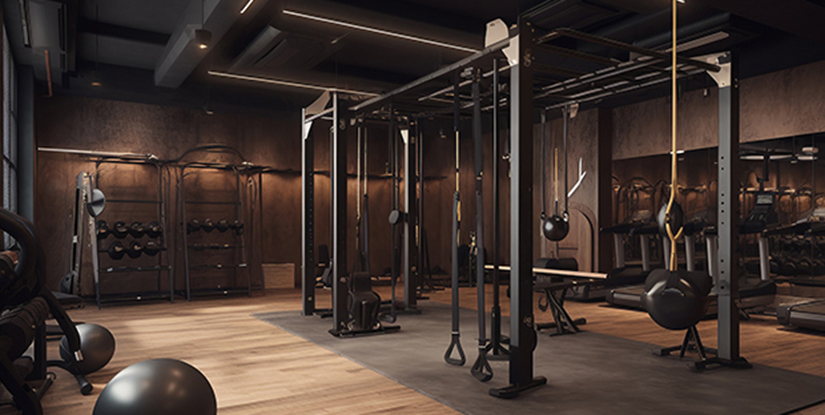
In any strength training facility, the power rack is one of the most visible, most frequently used, and most heavily loaded pieces of equipment. It gets slammed by thousands of kilograms of iron plates every day, enduring countless rackings, unrackings, and accidental drops. A well-built power rack can last ten years or more. A poorly built one may start wobbling, rusting, or showing safety issues within a single year.
Two racks can look similar from a distance, yet one costs a few hundred dollars and the other costs several thousand. What makes the difference? This article breaks down the core elements of commercial power rack safety and durability across five dimensions: steel, welding, safety attachments, surface finish, and hole design.
Related reading: Professional Fitness Equipment Manufacturer Certifications
Steel: The Skeleton of the Rack
Steel is the foundation of any power rack. Suppliers will tell you they use thick steel tubing, but they will not always tell you the exact specifications. Tube size and wall thickness directly determine load capacity and resistance to bending or twisting.
Tube size differences. Two-by-two inch tubing is typically found on home or entry-level racks, with load capacities around 300 to 500 pounds. Two-by-three inch tubing is common on mid-tier commercial racks, handling 700 to 1,000 pounds. Three-by-three inch tubing is the standard for commercial and professional powerlifting racks, exceeding 1,000 pounds while providing superior stability and torsional strength. The difference is not just in numbers but in how the rack feels during use. A three-by-three rack barely moves during heavy deadlifts or explosive movements. A two-by-two rack can wobble noticeably under heavy loads.
Wall thickness choices. Wall thickness determines how much force a tube can resist before bending. Two millimeter wall thickness is entry-level, acceptable for light use but prone to deformation under sustained heavy loading. Two and a half millimeter wall thickness is common on mid-tier commercial racks, balancing cost and durability. Three millimeter wall thickness is the true commercial and professional powerlifting standard, capable of years of repeated loading without permanent deformation. Each additional half millimeter adds about 20 to 30 percent to material cost, but can double the usable lifespan.
The blind spot of steel grade. Most suppliers will only say quality steel, without telling you whether they use commercial grade steel or higher-strength alloy steel. Standard commercial steel offers sufficient performance for most applications. Higher-strength alloy steel provides roughly 50 percent better yield strength, meaning the rack can absorb greater impact without permanent deformation. The difference shows up under extreme loads. When an accidental drop sends sudden impact through the rack, higher-grade steel can take the hit without bending.
What suppliers will not tell you is that many racks use non-standard tubing from secondary mills, with wall thickness falling outside accepted tolerances. A tube labeled three millimeters may actually measure only 2.7 millimeters. Request measured wall thickness data and material certificates. That is the most direct way to verify steel quality.
Welding: The Life of Every Joint
Welding is the process that connects individual steel tubes into a complete frame. Weld quality determines whether the rack will crack, loosen, or remain solid under repeated stress. Welds affect both appearance and safety.
Robotic versus manual welding. Robotic welding produces consistent welds with good penetration and few voids. Every weld follows precisely programmed parameters, with minimal variation in width and height. Manual welding depends entirely on the welder skill and their condition on any given day. Even the best welders cannot guarantee identical results on every weld. For batch production, robotic welding offers clear advantages in consistency and quality.
Full weld versus tack weld. A full weld means continuous welding along the entire joint, with an unbroken bead. A tack weld places small welds at intervals, leaving gaps. A fully welded rack distributes stress evenly along the joint, resisting cracks under torsional loads. A tack welded rack may look fine at delivery, but under repeated stress or accidental drops, stress concentrates at the points between welds, and cracks can propagate. Critical load-bearing joints must be fully welded.
The value of post-weld treatment. Welding introduces residual stresses that can cause minor distortion. High-quality manufacturers perform vibration stress relief or heat treatment on welded frames, removing internal stress and ensuring the frame remains straight. Racks that skip this step may have slightly bent uprights, misaligned holes, or welds that crack after months of use. Suppliers will not volunteer whether they perform stress relief, but you can check frame flatness. Place the rack on a level floor and see if all four corners touch evenly and if the uprights stand vertical.
Safety Attachments: The Last Line of Defense
J-hooks, safety spotter arms, and locking mechanisms are the parts that directly bear the weight and protect the lifter. The safety margin built into these attachments determines whether they will protect the athlete in the worst-case scenario.
J-hook thickness and pad material. J-hooks hold the barbell. Their thickness determines how much weight they can carry without bending. Commercial-grade J-hooks are typically made from 8 to 10 millimeter steel plate, cut by laser or punch, with load capacities exceeding 500 pounds. Budget rack J-hooks may use only 4 to 5 millimeter plate, which can bend under heavy loads. The pad material also matters. Quality pads use high-density polyethylene or polyurethane, at least 3 millimeters thick, protecting the barbell knurling. Cheap pads use ordinary plastic or thin rubber, which cracks or falls off within weeks.
Spotter arm strength and deformation control. Spotter arms are the safety device that catches the bar when a lifter fails a rep. Arm strength and deformation control are common places where corners are cut. Commercial-grade spotter arms use three-by-three inch or three-by-two inch steel tubing with wall thickness around 3 millimeters, handling over 700 pounds. Budget arms use thin-wall tubing with poor structural design, visibly deforming under heavy loads. More dangerously, budget arms often have insufficient insertion depth and weak locking mechanisms, potentially sliding out of the uprights under impact.
Locking mechanism safety margin. The locking mechanism secures the spotter arm to the upright. The simplest design uses a pin passing through holes in both the arm and the upright. This is reliable but slow to adjust. Spring-loaded pins allow quick adjustment, but spring durability and locking force are weak points. Cheap springs lose tension within months, failing to lock securely. The most robust design uses a cam-lock lever, offering quick adjustment with secure locking, but it costs more. Test any spring-loaded mechanism by locking and releasing it dozens of times, feeling for any loss of tension.
Safety attachments are not the place to save money. A J-hook may need to support hundreds of kilograms in a split second. Cheap plastic pads, thin steel plates, or unreliable locks can lead to serious consequences.
Surface Finish: The Invisible Front Against Rust and Wear
The surface finish determines how long the rack will maintain a professional appearance and how well it resists rust in humid environments. Differences in finish quality are invisible at delivery but become very obvious after a year or two.
Powder coating differences. Electrostatic powder coating is the most common finish. Powder is electrostatically charged and sprayed onto the steel surface, then baked to form a smooth, durable layer. Quality depends on powder type, spray parameters, and oven temperature control. Outdoor-grade polyester powder offers better weather resistance, UV resistance, and impact resistance than indoor-grade epoxy powder. Budget racks use indoor-grade epoxy powder, which fades and powders over time.
The importance of pretreatment. Pretreatment is the most frequently skipped step in the coating process. Oil, rust, and mill scale must be removed through degreasing, acid pickling, and phosphating. If the steel surface is not clean, powder will not adhere properly. Racks with inadequate pretreatment will develop peeling coating within months, exposing raw steel to rust. Suppliers will not volunteer whether they perform proper pretreatment. A simple test is to make a cross-cut in the coating with a utility knife, apply tape, and pull. If large pieces of coating come off, pretreatment or curing was inadequate.
Coverage inside the holes. This is the most easily overlooked blind spot. A power rack has dozens or even hundreds of holes. Quality manufacturers ensure the inside of each hole is coated, or they install protective plugs before coating that are removed after. Budget racks often leave the inside of holes completely bare, with no coating at all. Rust often starts in these hidden places and then spreads. A quick check is to run your finger inside a hole or use a flashlight to inspect for even coating coverage.
Related reading: Why Mass Production Differs from the Sample
Hole Spacing and Precision: Details Experienced Every Day
The holes in a power rack determine how precisely J-hooks and spotter arms can be adjusted. Smaller hole spacing allows finer adjustments. Hole precision determines whether J-hooks fit snugly or rattle. These details affect every single user, every single day.
Hole spacing design. Traditional power racks use 50 millimeter spacing. That means J-hooks and spotter arms adjust in 50 millimeter increments. For some lifters, 50 millimeters is too coarse. The J-hook may be too high, making the bar hard to unrack, or too low, requiring an excessively deep squat. Westside spacing is a finer design, typically reducing spacing to 25 millimeters in the middle region of the upright, providing more precise adjustment for squat and bench press heights. High-end racks feature full-height Westside spacing at 25 millimeters throughout, offering maximum adjustment flexibility.
Hole manufacturing method. The method used to create the holes affects both precision and appearance. Punching uses a press to force a tool through the steel. It is fast and low-cost, but leaves burrs on hole edges that require additional deburring. Laser cutting uses a high-energy beam to cut each hole. It is more precise, leaves smooth edges, and costs more. Laser-cut holes achieve millimeter-level precision. J-hooks inserted into laser-cut holes fit tightly without wobble. Punched holes typically have tolerances of plus or minus 0.5 to 1 millimeter, and some holes may be out of round, causing J-hooks to fit loosely or not at all.
Hole alignment precision. This is a core measure of manufacturing accuracy. Holes in the left and right uprights must align perfectly. If they do not, J-hooks cannot sit level. Welding distortion can cause uprights to twist slightly, leading to misalignment between left and right holes. Take a long straight bar and insert it through holes at the same height on both uprights. If it slides through smoothly, alignment is good. If it sticks or will not go through, alignment is poor.
Suppliers will not tell you their hole manufacturing method or precision tolerances. You can test alignment with a straight bar and inspect hole edges for burrs. Laser-cut holes have smooth edges. Punched holes show burr marks.
Real Power Rack Lifespan: What the Data Shows
Based on tracking data from multiple commercial gyms, the real-world lifespan of power racks varies significantly by quality level.
| Tier | Tube Size | Wall Thickness | Expected Lifespan | Primary Failure Mode |
|---|---|---|---|---|
| Entry-level | 2x2 inch | 2 mm | 1 to 2 years | Frame wobble, upright bending, weld cracking |
| Mid-tier Commercial | 2x3 inch | 2.5 mm | 3 to 5 years | Coating wear, J-hook pad aging |
| High-end Commercial | 3x3 inch | 3 mm | 8 to 10 years | Natural coating wear only |
Every dollar saved on the initial purchase can become higher replacement frequency and more safety concerns later. An entry-level rack may need replacement within 18 months. A high-end commercial rack can last eight to ten years. On an annual cost basis, the high-end rack is often cheaper, while also providing greater safety margin and better user experience.
Related reading: Identifying the Best Fitness Manufacturer for Commercial Use
Five Questions to Ask Your Power Rack Supplier
When procuring a power rack, these five questions will reveal a great deal about your supplier. The answers will help you separate reliable manufacturers from those making inflated claims.
First, what tube size and wall thickness do you use? Suppliers using quality steel will readily tell you exact specifications, such as three-by-three inch, three millimeter wall thickness, and will provide measured wall thickness data and material certificates. Suppliers who avoid this question or only say thick tubing are likely using non-standard tubes with wall thickness below specifications.
Second, what is the J-hook thickness and load rating? Quality suppliers will give you specific steel thickness numbers and maximum load capacity for their J-hooks, along with pad material specifications. Cheap J-hooks use thin plate, low load capacity, and poor pads. A vague answer suggests the J-hooks are a weak point.
Third, what is your hole spacing? Is it Westside spacing? This question tells you how fine the adjustment increments are. Westside spacing is an important feature of commercial and professional power racks. If the supplier does not know what Westside spacing means, or their spacing is 50 millimeters without finer adjustment in the middle region, the rack is likely more home or entry-level focused.
Fourth, what is your surface finish process and what is the coating thickness? Quality suppliers will explain their powder type, pretreatment process, and typical coating thickness range. Suppliers who can describe their pretreatment process are more likely to have done it properly. Those who cannot answer are likely skipping critical steps.
Fifth, do you have third-party load test reports? Quality suppliers perform regular third-party testing and maintain complete reports covering static load capacity, fatigue testing, and safety factors. Suppliers unable to provide reports either never test their racks or the test results are unsatisfactory. Rack safety should not rely on verbal promises alone.
Conclusion: A Power Rack Is Real Estate, Not an Accessory
Once a power rack is installed, it stays in the facility for many years. Replacing a rack is far more difficult than replacing weight plates or barbells. It requires disassembly, moving, and reassembly. More importantly, the power rack is the last line of defense for lifter safety.
Steel specifications determine structural strength and resistance to deformation. Weld quality determines whether the frame will crack under repeated stress. Safety attachment strength and design determine whether the rack will protect the athlete in the worst-case scenario. Surface finish determines whether the rack will maintain a professional appearance after years of use. These details ultimately show up in total cost of ownership and user safety.
Do not shop for a power rack by appearance alone. Nice colors and clean packaging do not indicate durability. What truly matters are the things you cannot see at first glance: actual wall thickness, weld penetration, J-hook plate thickness, hole precision, and coating adhesion. Ask the right questions, demand evidence, compare the details, and you will buy a power rack that truly meets commercial needs.