

What Makes a Power Rack Commercial Grade
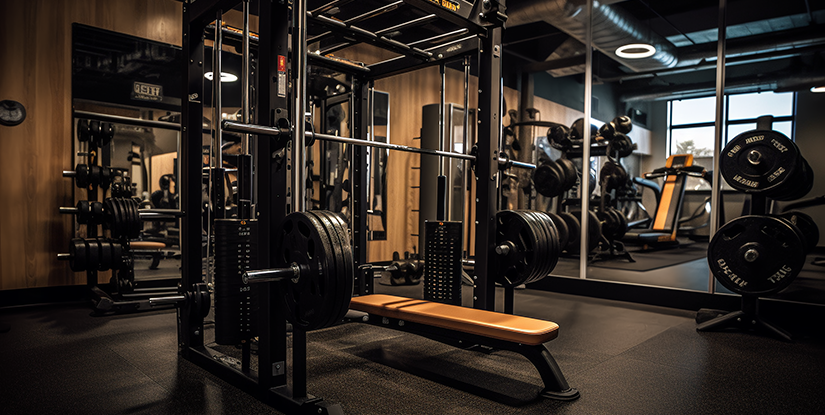
A commercial grade power rack is not defined by a label. It is defined by three numbers. Wall thickness. J-hook thickness. Hole alignment precision. These three numbers alone can filter out ninety percent of fake commercial grade products. Suppliers can write "commercial grade" anywhere on their website, but steel does not lie. Welds do not lie. A caliper does not lie.
Before looking at specifications, understand this: a true commercial rack is built to survive daily abuse in a facility that never closes. Home garage racks see a few hundred lifts per week. Commercial racks see thousands. The difference in material and construction is not small. It is the difference between a tool and a disposable product. Identifying the best fitness manufacturer for commercial use starts with understanding what commercial grade actually means.
Wall Thickness: 3mm Is the Red Line
The wall thickness of a power rack upright is the most direct number separating commercial grade from home use. Three millimeters is the real dividing line. Anything below 3mm will deform under tens of hours of weekly commercial use. Not maybe. Not possibly. It will deform.
Why 3mm? Because 3mm steel tubing maintains sufficient bending strength under repeated loading and unloading of hundreds of kilograms, including accidental drops. A 2.5mm tube might look fine for a year or two. But by year three, you will notice the uprights leaning inward slightly. J-hooks will not insert or remove smoothly. The whole rack will start to wobble. These changes happen slowly, but once they start, they cannot be reversed. If you have ever received a shipment where mass production differed from the sample, underspec tubing is often the hidden culprit.
The verification method is simple. Bring a caliper and measure the wall thickness. A supplier might say "we use national standard tubing with full thickness." National standards allow tolerances, but commercial grade should require measured wall thickness of no less than 2.8mm. If a supplier will not let you touch a caliper to their product, that is already an answer.
J-Hooks: The Weakest Link Determines the Safety Level of the Entire Rack
The rack frame might be solid, but the part that touches the barbell every single day is the J-hook. If the J-hook is not up to standard, the entire rack is just decoration.
J-hook steel plate thickness should be 8mm as a minimum. Many cheap racks come with J-hooks only 4 to 5mm thick. Under heavy loads, these visibly bend. More dangerously, this bending is permanent. Once bent, the barbell will slide forward on the hook, and every unrack and rerack requires extra caution.
The pad material matters just as much. High-density polyethylene pads at least 3mm thick are wear-resistant and will not damage barbell knurling. Recycled plastic pads are thin and brittle, cracking and falling off within months. Once the pad is gone, metal contacts metal, and your barbell knurling will be ground smooth within weeks.
Hook depth is another easily overlooked detail. J-hooks should extend forward roughly 8 to 10 centimeters. Too shallow, and the barbell can roll out. Too deep, and wrist angle feels unnatural during unrack. You can test this on site. Place a barbell on the J-hooks and push forward with force. See if it dislodges. Many buyers focus only on the frame and forget that hidden costs of choosing the wrong fitness equipment manufacturer often start with small components like J-hooks failing six months into operation.
Welding: Spot Welds on Any Load-Bearing Area Mean Automatic Rejection
Welds are where you need to look most carefully. A simple rule applies. Load-bearing areas must be fully welded. Spot welds in these areas mean automatic rejection.
What are load-bearing areas? Upright to base connections. Crossmember to upright connections. Any weld that must resist tension or shear forces. These must have continuous full welds. The weld bead must be complete, uninterrupted, and free of porosity.
Spot welds are only acceptable on non-load-bearing areas. Decorative trim. Nameplate mounts. Certain internal stiffeners. If a power rack has spot-welded upright bases, do not buy it. This is not about whether it might be good enough. It is about having no safety margin.
Inspecting welds with your eyes is straightforward. Look for uniform beads. No underfill. No undercut. No porosity. Robotic welding produces high consistency. Every weld looks similar. Manual welding shows some variation but should not have obvious defects. Run your fingernail along the weld edge to feel for sharp slag residue. Reputable factories grind and smooth welds after finishing. A factory that cuts corners on welding is likely cutting corners elsewhere. Knowing whether you are dealing with a real factory or a trading company helps predict weld quality, because only real factories control their own welding lines.
Hole Alignment: If Left and Right Holes Do Not Line Up, the Rack Is Junk
Hole alignment seems like a small detail, but it directly reflects manufacturing precision. Holes in the left and right uprights must align perfectly. If they do not, J-hooks cannot sit level.
The cause of misalignment is usually welding distortion. Steel tubes warp slightly under welding heat. If no correction is made after welding, the uprights will be twisted. A power rack with twisted uprights is unusable no matter how good the other components are.
The test method is extremely simple. Take a long straight bar or another J-hook and insert it through holes at the same height on both uprights. If it slides through smoothly, alignment is good. If it sticks or will not go in at all, the rack fails manufacturing tolerance.
The hole cutting method also affects user experience. Laser-cut holes have smooth edges. J-hooks insert and remove easily. Punched holes have burrs on the edges. Over time, these burrs scratch the coating off J-hooks and can make insertion and removal difficult. Run your finger inside a hole. Laser-cut holes feel smooth. Punched holes feel rough and sharp. A rack with poorly aligned or roughly cut holes will frustrate users every single day. This is not a cosmetic issue. It is a functional failure.
Also read: Professional Fitness Equipment Manufacturer Certifications — a certified manufacturer is more likely to hold tight tolerances on hole alignment.
Anchor Bolts: A Rack That Is Not Bolted Down Is Not Commercial Grade
A freestanding power rack might look stable under light loads. But when you start doing weighted pull-ups, heavy squats, or any explosive movement, the problem appears.
A commercial grade power rack must be bolted to the floor with expansion anchors. This is not a suggestion. It is a requirement. Any freestanding rack will shift under dynamic loads of hundreds of kilograms. Over time, you will find the rack has moved from its original position, or the gap between the base and the floor has grown.
Expansion anchor specifications should be at least M10 with embedment depth of no less than 60 millimeters. Ask your supplier for their anchoring recommendation and what floor conditions they assume. If your floor is not reinforced concrete, such as raised flooring or tiled surfaces, the anchoring solution needs separate discussion. Suppliers will not volunteer this information because they do not know your site conditions. But you should ask. And you should demand a professional answer.
Price: Commercial Grade Has a Minimum Cost Floor
The raw material cost of a power rack is relatively transparent. Steel is priced by the ton. Add welding, powder coating, packaging, and shipping. Each step has a minimum cost. A power rack priced significantly below market norms cannot possibly use sufficient material.
A 3x3 inch, 3mm wall commercial grade power rack has a baseline steel cost alone. Add J-hooks, spotter arms, bolts, coating, packaging. The price cannot be too low. If someone sells at a price that is obviously below market, corners were cut somewhere. Maybe the wall is 0.5mm thinner. Maybe the J-hooks use 4mm plate instead of 8mm. Maybe full welds became tack welds. Whatever was cut, the supplier will not write it on the spec sheet.
When procuring a power rack, do not fixate on the lowest price option. A price too low to be reasonable guarantees that costs were cut somewhere you cannot see. And those hidden cuts will show up later as wobble, rust, or failure.
Summary: Three Numbers and One Test Are Enough
To determine whether a power rack is truly commercial grade, you do not need to read through long specification sheets. Wall thickness at 3mm. J-hook thickness at 8mm or more. Full welds on all load-bearing areas. And one hole alignment test. That is enough.
Wall thickness determines whether the frame will deform. J-hook thickness determines the daily safety margin. Weld quality determines whether the rack will crack under repeated impact. Hole alignment determines the user experience every single day. Pass these checks, and the rack has the basic qualities of commercial grade.
Do not rely on marketing language. Bring a caliper. Perform the alignment test. Ask how the rack is welded. What the supplier says and what the product actually measures will tell you more than any "commercial grade" sticker ever could.