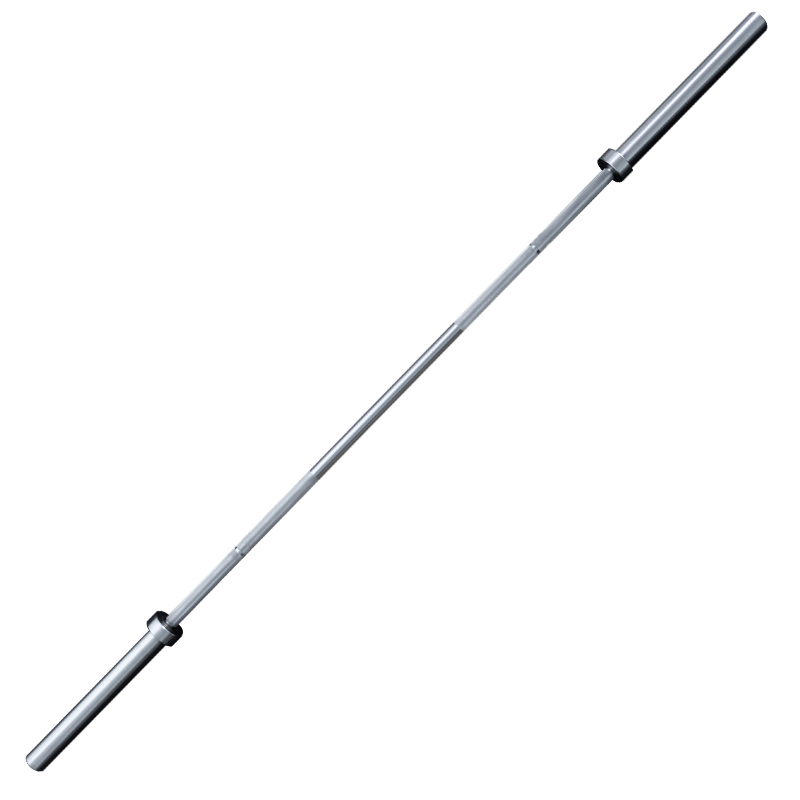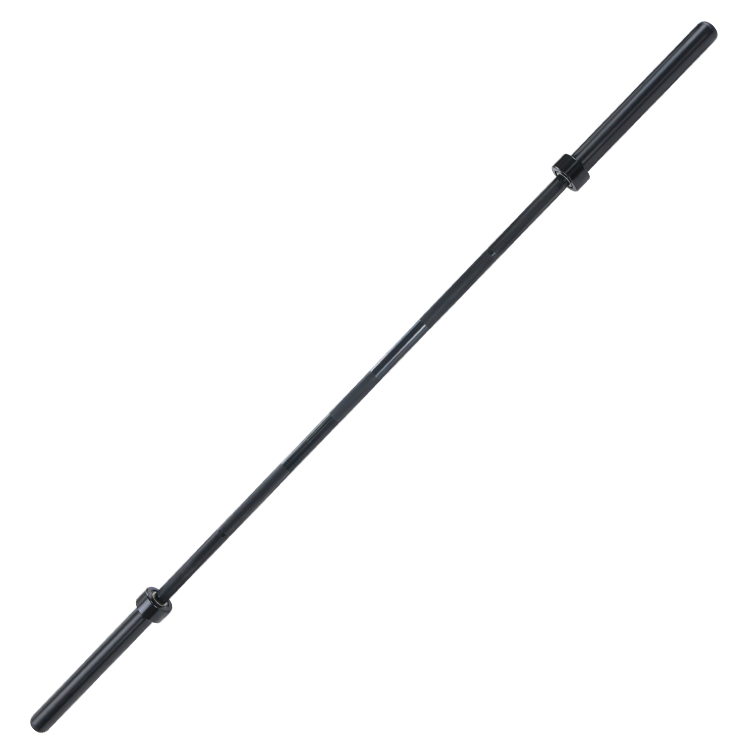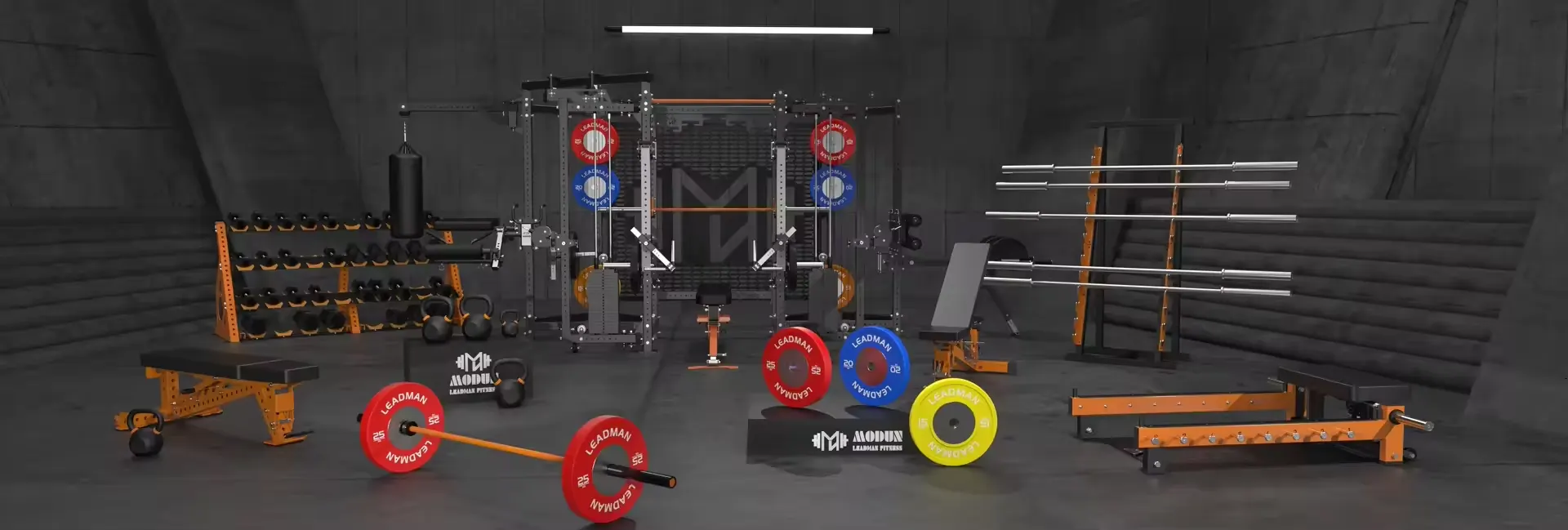
When discussing the standard size for barbell, the industry distinguishes between two primary shaft diameters: the Olympic standard of 28mm-29mm for men’s bars and the 25mm standard for women’s bars, as defined by the IWF and IPF. However, “standard” in the general fitness market often refers to the 1-inch (25.4mm) diameter bar with 1-inch plate holes, commonly found in budget home gyms. This distinction is critical because a 1-inch bar is incompatible with 50mm Olympic plates, and vice versa. For serious strength training, the 28mm-29mm Olympic shaft dominates commercial facilities, offering tensile strength of 190,000-220,000 psi to withstand repeated heavy loading without permanent bending.
The 50mm sleeve diameter accommodates all Olympic weight plates, while shaft diameter varies by discipline: IWF weightlifting bars measure 28mm for flexibility during snatches, IPF powerlifting bars use 29mm for stiffness under maximal loads, and women’s bars feature a 25mm shaft with identical 50mm sleeves. Length between collars ranges from 1302mm (weightlifting) to 1310mm (powerlifting), with overall bar length spanning 79 to 86.5 inches. The 1-inch legacy format, limited to 200-300lb capacity and fixed non-rotating sleeves, has seen sales decline 40% over the past decade, replaced by budget Olympic bars priced only $50-80 higher.
Knurling specifications follow strict guidelines: powerlifting bars use aggressive 20-22 TPI with 0.3-0.4mm depth, weightlifting bars use moderate 18-20 TPI at 0.2-0.3mm, and general-purpose bars use passive patterns insufficient for heavy deadlifts. Load ratings depend on steel alloy and heat treatment—entry-level Olympic bars handle 500lbs, mid-range reaches 800-1,000lbs, and competition-grade 190,000-220,000 psi steel supports 1,500+ lbs. For any facility expecting more than 200lbs of loaded weight, the 50mm Olympic standard is non-negotiable.
Let our experts design the perfect gym solution for your business. Get a free consultation and quote today.