

Evaluating Weight Bench Manufacturers: A Technical Manufacturing Guide
The Lifecycle of Professional Strength Equipment
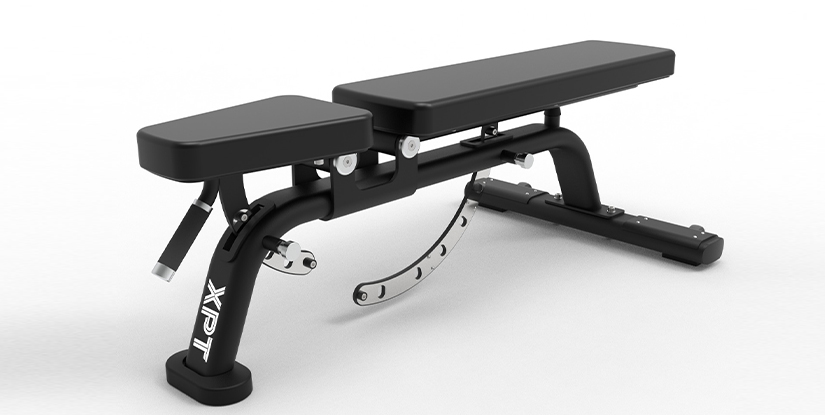
Understanding the technical depth of weight bench manufacturers requires looking beyond the final product to the entire industrial lifecycle. A professional-grade bench is not a static piece of furniture; it is a precision-engineered mechanical assembly designed to withstand repeated dynamic loading. The lifecycle begins with material specification, moves through complex fabrication processes, and concludes with rigorous field testing and long-term maintenance. For procurement specialists and gym owners, a failure to understand this progression often leads to premature equipment failure or safety liabilities.
The primary challenge in sourcing high-quality benches lies in the invisible variables: the grade of steel used, the quality of the weld penetration, and the density of the upholstery foam. When these elements are neglected, the result is structural instability or ergonomic degradation. To avoid these pitfalls, one must master the technical nuances of the production phase. This foundational knowledge sets the stage for evaluating the specific raw materials that dictate a bench's durability.
Raw Material Selection and Metallurgy Standards
Effective weight bench manufacturers start by selecting metallurgical profiles that balance tensile strength with weldability. The structural integrity of a bench depends entirely on the quality of its skeleton, which is typically composed of heavy-gauge steel tubing or rectangular hollow sections (RHS). Choosing the wrong material profile can lead to catastrophic failure under heavy loads.
Steel Grade and Wall Thickness Specifications
A common mistake in low-tier manufacturing is the use of thin-walled tubing to save on shipping costs. Professional-grade equipment requires a specific gauge to prevent buckling under compression. A higher gauge number indicates thinner metal, so buyers must look for lower gauge or specific millimeter thickness ratings.
- Mild Steel (ASTM A36 equivalent): Standard for most commercial benches due to its ease of welding and cost-effectiveness.
- High-Tensile Steel: Used in premium models to reduce overall weight while maintaining structural rigidity.
- Wall Thickness: Most professional manufacturers target a minimum of 2mm to 3mm for main structural rails.
Beyond the steel, the density of the padding is a critical specification. A bench that looks sturdy but uses low-density foam will suffer from 'bottoming out' within months of heavy use. High-quality manufacturers utilize dual-density foam, combining a firm base layer for structural support with a softer top layer for user comfort.
Material Comparison for Structural Components
| Material Component | Standard Grade | Premium/Commercial Grade | Primary Failure Mode |
|---|---|---|---|
| Steel Section | Thin-walled mild steel | Heavy-gauge structural steel | Structural buckling |
| Padding Core | Low-density polyurethane | High-density dual-layer foam | Rapid compression/bottoming |
| Upholstery | Standard PVC | Reinforced Vinyl or PU Leather | Tearing and moisture ingress |
| Adjustment Pins | Lightweight aluminum | Hardened steel/Chrome-plated | Shearing or bending |
Selecting the correct material profile ensures that the bench can handle both static weight and the dynamic forces generated during movement. Once the material standards are established, the focus shifts to the physical shaping and joining of these components.
Precision Fabrication and Welding Protocols
Once the raw materials are selected, the manufacturing process moves into the fabrication stage, where the geometry of the bench is established. This is where the difference between a consumer-grade and a commercial-grade product becomes physically manifest through the precision of the cuts and the strength of the joints.
The Importance of CNC Cutting and Bending
To ensure that adjustment mechanisms and rails align perfectly, manufacturers must use Computer Numerical Control (CNC) machinery. If a steel tube is bent manually or with low-precision equipment, the resulting slight deviations in angle can cause the adjustment pins to stick or create uneven weight distribution. A precision-cut component ensures that the bench remains symmetrical and stable throughout its range of motion.
Welding Integrity and Joint Strength
The most critical point of failure in any weight bench is the weld. Even the highest grade steel will fail if the weld penetration is shallow or inconsistent. Professional manufacturing facilities employ several specific techniques to ensure joint longevity:
- MIG (Metal Inert Gas) Welding: The industry standard for high-speed, high-strength welds on steel frames.
- Full-Penetration Welds: Ensuring the metal is fused through its entire thickness rather than just a surface bead.
- Grinding and Smoothing: While aesthetic, proper grinding also removes slag and imperfections that could become stress fractures.
A common defect observed in lower-quality production is 'cold welding,' where the metal appears fused but lacks deep structural integration. To verify quality, operators should inspect for uniform bead consistency and ensure there are no visible gaps or 'pitting' at the junction of the frame and the support legs. Successful welding prepares the frame for the final stages of surface protection.
Explore the complete technical specifications:
Surface Treatment and Corrosion Resistance
After the welding and fabrication stages are complete, the bare steel frame is highly susceptible to oxidation and environmental damage. Because weight benches are frequently subjected to sweat, humidity, and cleaning agents, the surface treatment process is vital for long-term durability.
Powder Coating vs. Liquid Painting
Most weight bench manufacturers utilize powder coating rather than traditional liquid paint. Powder coating involves applying a dry powder to the metal, which is then cured under heat to create a hard, durable finish. This process provides several advantages over liquid alternatives:
- Impact Resistance: Powder coating is less likely to chip when dumbbells or barbells strike the frame.
- Corrosion Protection: The coating creates a seamless, non-porous barrier against moisture.
- Uniform Thickness: It penetrates corners and crevices more effectively than liquid paint.
Failure to apply a sufficiently thick or high-quality coating results in 'edge chipping,' where the paint begins to flake at the corners of the steel tubing, exposing the raw metal to rust. This is especially prevalent in high-humidity environments like commercial gyms.
Testing for Surface Durability
A professional procurement checklist should include a verification of the coating's resistance. While a full salt spray test may not be possible on-site, observers can look for the presence of pre-treatment processes like phosphate coating, which significantly improves the adhesion of the powder coat. A well-coated bench will have a matte or semi-gloss finish that feels smooth and lacks any granular texture.
Explore the complete technical specifications:
Ergonomic Engineering and Adjustment Mechanics
With the structural and surface finishes secured, the manufacturing process turns to the functional elements: the adjustment mechanisms and the ergonomics of the bench. A bench must not only be strong but also highly adjustable to accommodate different user profiles and exercises.
The Precision of Adjustment Systems
The adjustment system—whether it is a pop-pin, a ladder system, or a hand-knob—is a high-wear component. If the tolerances in these parts are too loose, the bench will feel 'wobbly' or unstable when the user is in an inclined or declined position. This instability is often caused by poorly machined pivot points or low-quality adjustment pins.
Ergonomic Interface and User Safety
Ergonomics extend to the angles of the bench and the placement of the foot rollers or supports. A well-engineered bench ensures that the user's center of gravity remains stable during heavy lifts. Manufacturers must carefully calculate the pivot points to ensure that the transition between angles is smooth and that the bench does not experience 'unbalanced loading' at extreme inclinations.
| Adjustment Type | Pros | Cons | Verification Tip |
|---|---|---|---|
| Pop-Pin System | Fast and intuitive | Can be prone to jamming if dirty | Ensure pins snap into place without force. |
| Ladder/Slot System | Extremely stable | Slower to adjust | Check for smooth vertical movement in the slot. |
| Hand-Lever/Knob | High precision | Can loosen over time | Ensure the lever provides enough torque to tighten. |
An unstable adjustment mechanism is a significant safety hazard, especially during high-intensity movements. Ensuring these mechanical interfaces are built to tight tolerances is the final step in the physical assembly of the bench.
Explore the complete technical specifications:
Quality Control and Load Testing Protocols
Before a weight bench leaves the factory, it must undergo a series of rigorous quality control (QC) checks. This stage is the final barrier against defective products reaching the consumer. Manufacturers use both visual and mechanical testing to validate their output.
Static vs. Dynamic Load Testing
A common mistake in quality oversight is only performing static load tests. A static test simply involves placing weight on the bench to see if it holds. However, a professional-grade bench must also be able to withstand dynamic loads—the sudden, jarring force of a user dropping a weight or shifting their weight rapidly.
- Static Test: Verifies the maximum weight capacity under steady pressure.
- Dynamic Test: Simulates real-world usage, including movement and impact.
- Tolerance Check: Verifies that all moving parts (pins, levers, seat) operate within specified millimeter ranges.
Common Manufacturing Defects to Inspect
During a technical audit or upon receipt of a shipment, observers should look for specific red flags that indicate a breakdown in the manufacturing process. These defects are often early indicators of a much larger structural problem.
- Uneven Weld Beads: Indicates inconsistent welding speed or poor gas coverage.
- Structural Misalignment: Suggests poor jigging or cutting precision during fabrication.
- Seam Gaps: Often found where the upholstery meets the frame, leading to moisture buildup.
Identifying these defects during the receiving phase can save a facility significant capital by preventing the purchase of substandard equipment. Once a bench passes these internal checks, it moves to the final deployment and maintenance stage.
Explore the complete technical specifications:
Operational Deployment and Maintenance Best Practices
Even the highest quality equipment from the best weight bench manufacturers requires a structured maintenance plan to reach its full theoretical lifespan. Once the product is deployed in a commercial or home environment, the focus shifts from manufacturing tolerances to operational durability.
Routine Inspection Schedules
A professional maintenance schedule should be integrated into the facility's standard operating procedures. This ensures that minor wear and tear does not escalate into a safety incident. Most facilities should implement a three-tier inspection system:
- Daily/Weekly: Visual check for upholstery tears or visible rust.
- Monthly: Testing the smoothness of all adjustment mechanisms and checking for loose bolts.
- Quarterly: A comprehensive structural audit, including checking the torque of all major fasteners and the integrity of the frame joints.
Longevity Through Environmental Control
The environment in which the bench is used significantly impacts its longevity. High-humidity or non-climate-controlled environments will accelerate the degradation of both the metal coating and the upholstery. To maximize the ROI on heavy-duty equipment, operators should ensure that the training area is well-ventilated and that cleaning agents used on the equipment are non-abrasive and pH-neutral.
Explore the complete technical specifications:
Future Trends in Strength Equipment Manufacturing
As the industry evolves, weight bench manufacturing is beginning to incorporate more advanced technologies. The move toward smarter, more integrated equipment is becoming a hallmark of the high-end market. While traditional steel construction remains the foundation, new innovations are altering the landscape of strength training.
Integration of Digital Feedback and Smart Sensors
We are seeing a trend toward benches that include embedded sensors to track bar path, velocity, and incline angles. This moves the product from a passive support structure to an active coaching tool. While this increases the complexity of the manufacturing process, it provides unparalleled data for serious athletes.
Advanced Composite Materials
There is also growing research into using high-strength composites to reduce the weight of the frame without compromising the durability of the steel. This would make the equipment more portable and easier to reconfigure within a facility, though it requires much more sophisticated manufacturing techniques than traditional welding and fabrication.