

Selecting Functional Gym Equipment That Delivers Results
The Economic Reality of High-Performance Training Assets
In the current commercial fitness landscape, procurement is no longer just about purchasing machines; it is about managing capital depreciation and maximizing user engagement. A frequent failure mode among gym operators is the 'commodity trap,' where low-cost, low-durability equipment is selected to minimize initial CAPEX, only to face skyrocketing OPEX through constant repairs and user dissatisfaction. When selecting functional gym equipment that delivers results, one must view the acquisition through the lens of lifecycle value rather than the initial invoice price.
The core problem stems from a lack of distinction between residential-grade hardware and commercial-grade structural integrity. Residential equipment often lacks the bearing density and weld strength required for high-frequency, high-impact functional movements. This mismatch leads to premature mechanical failure, often within the first 18 months of heavy use. To avoid this, operators must prioritize structural specifications over aesthetic variations. Understanding these material fundamentals is the prerequisite for moving into the specific technical requirements of functional modalities.
Identifying the CAPEX vs. OPEX Imbalance
A common mistake is failing to calculate the Total Cost of Ownership (TCO). A machine that costs 20% less upfront but requires quarterly component replacements will quickly erode profit margins. Professionals should demand technical spec sheets that explicitly state the load-bearing capacity and the grade of steel utilized in the frame construction.
| Metric | Residential/Light Grade | Commercial/High-Performance Grade |
|---|---|---|
| Steel Gauge | 14-16 Gauge | 11-12 Gauge (High Strength) |
| Bearing Type | Standard Bushings | Sealed Precision Ball Bearings |
| Weld Style | Spot/Manual Welding | Full-Perimeter Continuous Welding |
| Lifecycle Expectancy | 2-3 Years (High Use) | 8-12+ Years (High Use) |
By recognizing these hardware distinctions early, a facility manager can transition from simple purchasing to strategic asset management. Once the economic framework is established, the focus must shift toward the mechanical precision required for varied movement patterns.
Mechanical Precision and Biomechanical Alignment Standards
Building on the necessity of high-grade structural materials, the next critical tier of selection involves the mechanical precision of moving parts. Functional training often involves multi-planar movements that place non-linear stress on equipment. If the mechanical tolerances are loose, the equipment will not only feel 'cheap' but can actively interfere with a user's natural biomechanical path, increasing injury risk.
The cause of most 'clunky' movement in functional machines is insufficient tolerance control in the pivot points or poor alignment in cable-driven systems. When selecting functional gym equipment that delivers results, the way a machine handles resistance changes—both linear and angular—is the ultimate litmus test. For instance, a functional trainer must maintain consistent resistance throughout a full 180-degree arc without 'dead spots' or sudden friction spikes.
Verifying Resistance Consistency
To verify the quality of a cable or weight-stack system, operators should perform a 'resistance sweep.' This involves moving the weight through its entire range of motion at a slow, constant velocity to check for hesitation or irregular tension. If the resistance fluctuates, the internal pulley system or cable routing is poorly engineered.
- Check for Cable Stretch: High-quality cables should have minimal elongation under tension.
- Inspect Pulley Alignment: Ensure the cable tracks perfectly within the pulley groove without rubbing against the housing.
- Test Pivot Smoothness: In weight machines, the pivot point should remain fluid even at the extreme ends of the range of motion.
Refining these mechanical expectations ensures that the equipment supports rather than restricts human movement. However, even the most precise machine is useless if it is not utilized within a safe and optimized operational environment.
Optimizing Spatial Footprint and Ergonomic Flow
Even high-spec equipment can fail to deliver results if the layout creates bottlenecks or safety hazards. The transition from mechanical assessment to spatial planning is a critical step in facility optimization. A common error is purchasing oversized functional rigs without accounting for the 'user zone'—the area required for a human to move around the machine safely.
A cramped layout leads to more than just aesthetic issues; it leads to equipment collision and increased liability. When a user is performing dynamic movements like kettlebell swings or lateral lunges near a fixed piece of equipment, the buffer zone must be strictly maintained. The cause of these issues is often a failure to account for the 'dynamic radius' of a movement during the procurement phase.
The Dynamic Radius Calculation
When planning a layout, do not just measure the footprint of the machine. You must measure the maximum reach of a user performing a dynamic movement in that area. For example, a functional trainer requires the footprint of the machine plus a 1.5-meter radius for lateral movement.
| Equipment Type | Static Footprint | Recommended Safety Buffer | Reason for Buffer |
|---|---|---|---|
| Functional Trainer | Medium | 1.5m (All sides) | Lateral movements and cable reach |
| Squat Rack / Rig | Large | 1.0m (Rear/Sides) | Barbell path and plates clearance |
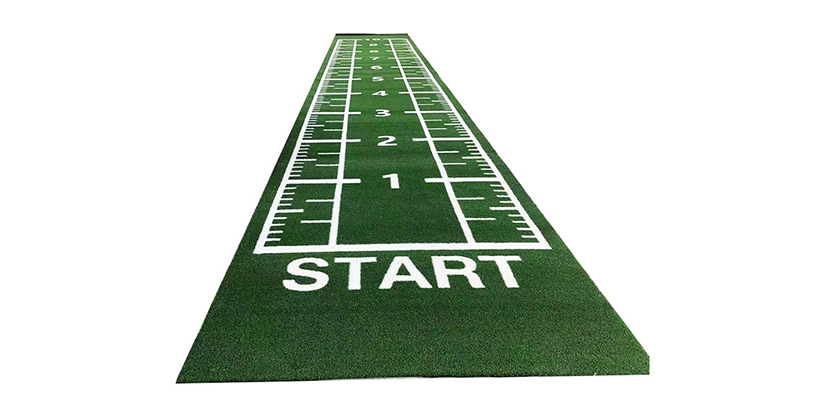
| Sled / Turf Area | Very Large | 2.0m (Perimeter) | Sled deceleration and human movement |
Establishing these zones ensures that the high-performance machines you have selected can be used effectively without constant interference. With the layout secured, the focus turns to the inevitable necessity of rigorous maintenance cycles.
Explore the complete technical specifications:
Developing a Preventative Maintenance Protocol
The high-performance equipment described in the previous sections requires a structured maintenance culture to prevent the very mechanical failures we aim to avoid. A common mistake in facility management is the 'run-to-failure' approach, where maintenance is only performed when a machine stops working. This is the most expensive way to manage a gym.
The cause of premature wear in functional gear is often neglect of the lubrication and tensioning systems. For cable-driven equipment, the friction generated by micro-dust and lack of lubrication can lead to cable fraying and pulley seizure. A preventative approach shifts the focus from fixing broken parts to maintaining optimal performance through scheduled inspections.
The Tiered Inspection Checklist
To maintain high-performance standards, implement a three-tiered inspection system based on frequency and depth. This ensures that small issues are caught before they become catastrophic failures.
- Daily Visual Check: Inspect cables for fraying, ensure bolts are seated, and check for obvious fluid or debris leaks.
- Weekly Mechanical Test: Test the resistance smoothness of all cable machines and check the tension of all adjustable pins.
- Monthly Deep Audit: Lubricate all pivot points, check bolt torque on structural frames, and inspect cable housing for wear.
Following this protocol ensures that the investment made during the selection process continues to yield a high return in both user satisfaction and equipment longevity. However, even the best-maintained equipment can be misused, making operator training and safety oversight essential.
Explore the complete technical specifications:
Custom Made Gym Equipment | Bespoke Strength & Functional Training
Mitigating Risk Through User Training and Supervision
Rigorous maintenance is only one side of the safety equation; the other is how the equipment is interacted with by the end-user. The move from technical maintenance to operational safety addresses the human element of the equation. A major failure mode is the 'misuse of dynamic equipment,' where users attempt to use functional tools in ways they were not designed for.
For example, a user might attempt to use a cable machine to pull a weight that exceeds the cable's lateral tension limit, leading to a snapped cable. The cause is often a lack of clear instruction or inadequate signage. To mitigate this, the facility must bridge the gap between the technical capability of the machine and the user's physical competence.
Establishing Operational Guardrails
To ensure that your selection of functional gym equipment continues to deliver results safely, implement the following operational controls:
- Instructional Integration: Ensure every piece of specialized functional equipment has a clear, visual 'Intended Use' guide nearby.
- Weight Limit Transparency: Clearly mark the maximum load for both the machines and the adjustable components (like bench settings).
- Staff Competency: Train all floor staff to recognize the specific 'failure sounds' of equipment, such as grinding in a bearing or a rhythmic clicking in a cable.
When users are both well-trained and the equipment is well-maintained, the facility achieves peak operational efficiency. This brings us back to the overarching goal: ensuring that every dollar spent on equipment contributes to long-term facility success.
Evaluating Long-Term ROI and Future-Proofing Your Selection
The final stage of selecting functional gym equipment that delivers results is the evaluation of long-term return on investment (ROI). Looking back at our journey from material selection to maintenance, it is clear that the most successful operators do not look at the price tag, but at the 'cost per use' and the 'value per square foot.'
The mistake of not future-proofing is particularly dangerous in the functional training sector, where technology and movement trends evolve rapidly. If you purchase highly specialized, niche-only equipment, you risk having 'dead space' in your facility if that specific training style loses popularity. A more resilient strategy involves selecting versatile, modular equipment that can adapt to different training needs.
The Future-Proofing Matrix
Before finalizing any large purchase, run your selection through this decision-making matrix to evaluate long-term viability.
| Selection Criterion | Low Future-Proof Score | High Future-Proof Score |
|---|---|---|
| Versatility | Single-function/Niche purpose | Multi-functional/Modular design |
| Repairability | Proprietary/Hard-to-source parts | Standardized/Universal components |
| Scalability | Fixed/Non-adjustable dimensions | Adjustable/Expandable configurations |
| Technological Integration | Static/Analog only | Digital-ready/Sensor-capable |
By applying these rigorous technical and economic standards, you move from being a mere equipment purchaser to a strategic facility architect. High-performance equipment, when selected with this depth of scrutiny, becomes a durable asset that drives both user results and business growth.
The Role of Environmental Stability in Equipment Longevity
Beyond the mechanical and economic factors, the physical environment where the equipment resides plays a significant role in its performance lifespan. A frequently overlooked failure mode is the impact of uncontrolled ambient conditions on precision components. When selecting functional gym equipment that delivers results, you must consider how temperature, humidity, and even floor vibration interact with your hardware.
High humidity levels can lead to micro-corrosion on exposed steel surfaces and within the internal housing of weight stacks, while excessive heat can degrade the synthetic coatings on cables and pulleys. Furthermore, if the flooring system does not provide adequate vibration damping, the constant impact from functional movements like medicine ball slams or heavy sled pushes can loosen the structural bolts of nearby rigs over time.
Environmental Control Checklist
To protect your long-term investment, evaluate these environmental parameters during your facility planning:
- Humidity Management: Ensure the HVAC system maintains a stable humidity level to prevent rust on steel components and degradation of upholstery.
- Flooring Compliance: Use high-density rubber matting or specialized turf to dampen impact and prevent structural loosening from kinetic energy.
- Thermal Stability: Avoid placing high-use mechanical equipment directly in front of high-output heat vents, which can cause uneven thermal expansion of metal parts.
By integrating environmental considerations into your procurement and facility design, you create a stable ecosystem where high-performance machines can reach their full theoretical lifecycle. This holistic approach ensures that your equipment remains a reliable tool for training rather than a constant source of maintenance headaches.