

The Role of Robotic Welding in Modern Fitness Equipment Production
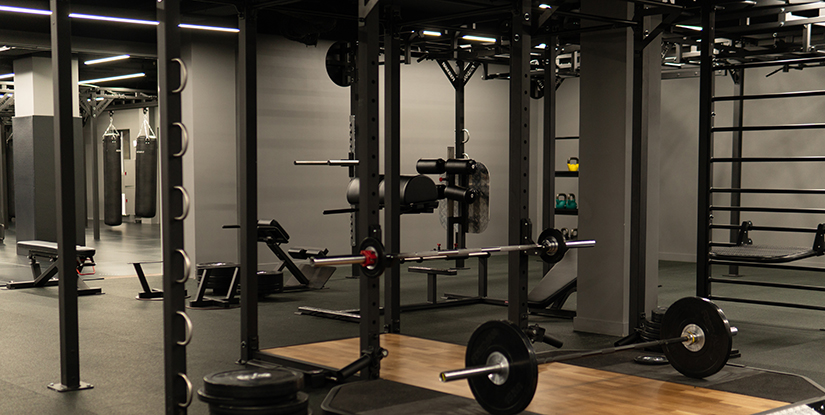
Optimizing the Production Lifecycle with Automated Welding Systems
The production of high-performance fitness equipment—ranging from heavy-duty power racks to precision resistance machines—demands a level of structural reliability that human manual welding often struggles to achieve consistently at scale. The transition from manual labor to automated systems is not merely a trend toward automation; it is a fundamental shift in how manufacturers address the primary pain point of structural fatigue. When a commercial-grade strength machine fails, the cause is rarely a single catastrophic event but rather a series of micro-defects in the weld bead that compromise the integrity of the steel frame. Robotic welding mitigates these risks by providing repeatable, high-precision thermal control. Understanding this lifecycle, from the initial material selection to the final structural verification, is essential for any operator looking to elevate their manufacturing standards.
By establishing a rigorous automated baseline, manufacturers can move from reactive troubleshooting to proactive quality management. This foundational control over the welding process is what allows for the complex geometries required in modern ergonomic gym equipment.
Explore the complete technical specifications:
Material Selection and Preparation for Robotic Welding Accuracy
Before a robotic arm even approaches a workpiece, the quality of the finished product is already determined by the metallurgical properties of the input materials. In the fitness equipment sector, the most common materials are high-strength low-alloy (HSLA) steel tubes and heavy-duty sheet metal. A common failure in production occurs when there is a mismatch between the material's carbon content and the welding wire specification, leading to brittle welds that crack under the dynamic loads typical of weightlifting equipment.
Managing Material Consistency and Surface Contamination
Robotic systems require highly predictable surfaces to function correctly. Any deviation in the diameter of a steel tube or the presence of surface oils and oxidation can lead to erratic arc behavior. Operators must ensure that all steel tubing is cleaned of mill scale and lubricants prior to entering the welding cell. Failure to do so causes arc instability, which manifests as porosity or incomplete penetration—defects that are difficult to detect without advanced non-destructive testing.
| Material Type | Common Application | Welding Challenge | Robotic Solution |
|---|---|---|---|
| Mild Steel Tubing | Rack Frames, Benches | Heat Distortion | Controlled Pulse Welding |
| High-Strength Steel | Weight Machines | Brittle Heat-Affected Zones | Optimized Heat Input Control |
| Stainless Steel | Precision Adjusters | Oxidation/Discoloration | Gas Shielding Precision |
| Aluminum Alloy | Lightweight Cardio Units | High Thermal Conductivity | High-Frequency Pulsed Arc |
Selecting the correct material and ensuring its purity is the first step in a successful production run. Once the materials are verified and prepared, the focus shifts to the technical mechanics of the welding process itself.
The Mechanics of Robotic Arc Welding in Complex Geometries
The core strength of robotic welding in fitness manufacturing lies in its ability to navigate complex, multi-axial geometries—such as the curved arms of a rowing machine or the angled supports of a squat rack—with mathematical precision. Manual welders often struggle with maintaining a consistent torch angle and travel speed when working on non-linear paths, leading to uneven bead thickness. A robotic system, however, utilizes pre-programmed tool paths (TCP) to maintain an exact relationship between the torch and the workpiece at all times.
Mastering Gas Metal Arc Welding (GMAW) Parameters
Most modern fitness equipment utilizes the Gas Metal Arc Welding (GMAW) process, often referred to as MIG welding, due to its high deposition rates and efficiency. The robot controls several critical variables simultaneously: wire feed speed, voltage, gas flow rate, and travel speed. In a high-volume production environment, a 1% fluctuation in voltage can lead to a measurable drop in weld strength. By utilizing sophisticated sensors, the robot can compensate for these variables in real-time, ensuring that every joint on a 200kg piece of equipment is as strong as the first.
Addressing the Problem of Heat-Affected Zone (HAZ) Expansion
A significant risk in welding structural steel is the creation of an oversized Heat-Affected Zone (HAZ). Excessive heat can soften the surrounding metal, reducing the overall load-bearing capacity of the frame. This is a frequent cause of catastrophic failure in lower-tier equipment. To fix this, robotic systems employ 'pulse welding' techniques, where the current is rapidly modulated. This provides enough heat to achieve penetration while minimizing the total thermal energy transferred to the material, thereby preserving the structural integrity of the steel.
With the mechanical parameters locked in, the focus transitions from the process to the specific defects that must be proactively identified and eliminated.
Identifying and Mitigating Common Welding Defects in Gym Equipment
Even with high-end automation, the potential for defects exists if the system is not properly calibrated or if the input materials are substandard. For a manufacturer, identifying these defects early is the difference between a high-margin product and a costly product recall. In the fitness industry, structural failure is not just a quality issue; it is a liability issue. A weld that appears visually sound but lacks internal fusion can fail under the dynamic, repetitive stress of a user's workout.
Detection of Porosity, Undercutting, and Lack of Fusion
Porosity—the presence of small gas bubbles within the weld bead—is often caused by inadequate shielding gas or contaminated material. Undercutting, where the weld creates a groove into the base metal, is a common result of excessive voltage or incorrect torch angles. Both of these defects act as stress concentrators, where cracks are likely to initiate. To mitigate these, operators must perform regular 'check-and-verify' cycles on the welding consumables and the gas delivery systems.
- Porosity: Caused by gas turbulence or dirty tubes. Fix: Check gas shielding and clean surface.
- Undercutting: Caused by high heat or speed. Fix: Recalibrate voltage and travel speed.
- Lack of Fusion: Caused by low heat or poor angle. Fix: Increase wire feed and adjust torch orientation.
To ensure these defects do not reach the consumer, a rigorous quality control (QC) framework must be integrated into the production line, moving beyond simple visual inspection.
Implementing Advanced Quality Assurance and Verification Protocols
A robust quality assurance program does not wait for the finished product to reach the end of the line; it embeds verification into the manufacturing process itself. For fitness equipment, the goal is to verify both the surface aesthetics (for brand reputation) and the subsurface structural integrity (for user safety). Reliance on manual visual inspection is a common mistake that leads to inconsistent quality levels between different production shifts.
Non-Destructive Testing (NDT) and Visual Standards
The most effective way to verify a robotic weld is through a combination of automated visual monitoring and periodic non-destructive testing. High-resolution cameras mounted on or near the robotic cell can use AI-driven software to scan for surface irregularities like undercut or spatter in real-time. For critical load-bearing joints, such as those on a heavy-duty barbell rack, periodic ultrasonic testing or X-ray inspection is necessary to detect internal voids or lack of fusion that the eye cannot see.
| Inspection Method | Target Defect | Frequency | Implementation Requirement |
|---|---|---|---|
| Visual AI Monitoring | Surface Spatter/Undercut | Every Cycle | High-resolution camera + AI software |
| Ultrasonic Testing (UT) | Internal Porosity/Voids | Batch Sample (e.g., 1 in 50) | Certified NDT technician |
| Dye Penetrant Test | Surface Cracks | Weekly/Monthly | Chemical application kit |
| Load/Stress Testing | Structural Weakness | Pre-Shipment Sample | Controlled weight-load rig |
By following these verification steps, manufacturers can provide documented proof of structural compliance. This rigorous approach to quality leads directly into the long-term maintenance and operational success of the manufacturing facility.
Explore the complete technical specifications:
Optimizing Operational Efficiency and ROI through Robotic Integration
Implementing robotic welding is a significant capital investment, and its success is measured by the return on investment (ROI) generated through increased throughput and decreased scrap rates. To maximize this ROI, an operator must look beyond the mere purchase of a robot and focus on the entire operational ecosystem, including layout, maintenance, and training.
Facility Layout and Workflow Integration
A common mistake in setting up a welding cell is failing to account for the 'dwell time' of the parts. If the robot is welding at high speeds but the parts are being loaded and unloaded manually at a slow pace, the robot's efficiency is wasted. An optimized layout often includes automated material handling, such as rotary positioners or conveyors, that allow the robot to work on one side of a frame while a technician or another machine prepares the next piece. This synchronization is vital for maintaining a continuous production flow.
Preventative Maintenance and Downtime Reduction
Robotic welding systems are precision instruments that require strict adherence to maintenance schedules. A worn contact tip or a clogged gas nozzle can cause a cascade of defects that might not be caught until a batch has already been completed. A professional operator maintains a strict checklist for:
- Replacing contact tips and liners at set intervals.
- Calibrating the wire feeder tension.
- Cleaning the torch shroud and checking gas flow consistency.
- Checking the robot's axis backlash and cable wear.
Effective maintenance ensures that the high precision described in the earlier sections remains constant throughout the production cycle, protecting the long-term viability of the manufacturing process.
Explore the complete technical specifications:
Future Trends: The Evolution of Intelligent Welding in Fitness Manufacturing
As the technology matures, the role of robotic welding in fitness equipment production is moving toward even greater levels of autonomy and intelligence. We are seeing a shift from 'blind' robotics, which follow a fixed path, to 'sensing' robotics, which can adapt to real-time changes in the workpiece geometry. This evolution will redefine how even the most complex ergonomic equipment is manufactured.
The Rise of Vision-Guided Robotics and AI Integration
The next generation of welding cells will likely utilize advanced laser profiling sensors that can 'see' the seam of the metal before the arc even begins. This allows the robot to compensate for any slight misalignments in the metal tubing, effectively eliminating the problem of gap-width inconsistencies. Furthermore, the integration of machine learning (ML) will allow systems to analyze historical defect data to predict when a component—such as a motor or a wire feeder—is likely to fail, enabling true predictive maintenance.
Conclusion: The Indispensable Value of Automation
The transition to robotic welding is no longer optional for manufacturers aiming to compete in the high-end, commercial-grade fitness market. By addressing the core challenges of material preparation, heat-affected zone control, and defect mitigation through automation, manufacturers can guarantee the structural integrity required for heavy-duty usage. As the industry moves toward even more complex and intelligent systems, the manufacturers who invest in these rigorous, automated processes today will be the ones who lead the market in quality and reliability tomorrow.