

Analyzing the Economic and Physiological Value: Why Resistance Training Equipment Is Essential for All Fitness Levels
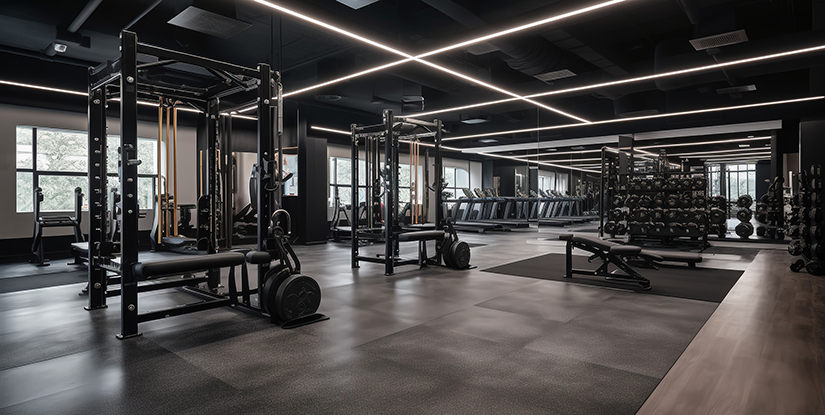
In the modern fitness landscape, the debate often centers on whether high-end machinery or basic bodyweight movements are superior. However, a deeper analysis reveals that resistance training equipment serves as the fundamental bedrock for physical longevity and economic stability in fitness ventures. Understanding why resistance training equipment is essential for all fitness levels requires looking beyond simple muscle building; it involves examining mechanical precision, progressive overload capabilities, and the structural integrity of human physiology.
1. The Physiological Imperative of Progressive Overload
The primary driver of muscular adaptation is progressive overload—the gradual increase of stress placed upon the body during exercise. While bodyweight exercises are effective initially, they often hit a plateau where the body's relative strength matches the resistance. Dedicated resistance equipment provides the precision necessary to bypass these plateaus.
Implementation Details: To achieve true progressive overload, users must be able to increment resistance in small, measurable stages. For example, a weight stack that allows for 2.5kg or 5lb increments is far more effective for long-term growth than machines that jump in 10kg increments.
Comparison: Bodyweight vs. Weighted Resistance
- Bodyweight: High accessibility, limited resistance modulation, difficult to quantify exact tension.
- Weighted Equipment: High precision, adjustable intensity, superior for targeted hypertrophy and strength.
This physiological necessity for precision leads us directly into the different types of modalities available in the market.
2. Categorizing Resistance Modalities for Diverse Users
Not all resistance is created equal. For a fitness center or a home gym to be effective, it must incorporate a variety of modalities to cater to different neurological and muscular demands. Understanding these categories helps in selecting the right tools for specific fitness goals.
Decision Criteria for Modalities:
- Free Weights (Dumbbells/Barbells): Best for functional stability and multi-planar movement.
- Selectorized Machines: Best for beginners and isolation training due to fixed paths of motion.
- Cable Systems: Offers constant tension throughout the entire range of motion, ideal for intermediate to advanced users.
- Resistance Bands: Provides variable resistance that increases as the band stretches, excellent for rehabilitation.
Choosing the right category is essential, but even the best modality fails if the procurement standards are neglected. This brings us to the critical aspect of equipment quality.
3. Procurement Standards: Quality Over Cost-Cutting
When investing in why resistance training equipment is essential, one must realize that cheap equipment is often the most expensive mistake a facility can make. Low-quality steel or subpar bearings lead to inconsistent resistance profiles, which can hinder user progress or even cause injury.
Technical Parameter Ranges:
- Steel Gauge: Commercial-grade frames should typically utilize a gauge that ensures zero structural flexion under heavy load (often 11-gauge steel or higher).
- Bearing Smoothness: Rotation points should feature high-grade bushings or sealed bearings to prevent friction-based resistance fluctuations.
- Upholstery Density: High-density foam (typically >40 kg/m³) is required to prevent bottoming out during heavy lifts.
Common Failure Mode: A common mistake in procurement is ignoring the 'weight stack smoothness.' If a weight stack jitters or catches during ascent, it creates micro-shocks to the joints, increasing injury risk. Ensuring a smooth, continuous movement is a non-negotiable standard.
Once the equipment is procured, the focus must shift from acquisition to preservation through rigorous maintenance.
4. Maintenance Protocols: Protecting the Investment
The longevity of resistance training equipment is directly proportional to the frequency and quality of its maintenance. A failure to maintain mechanical parts results in both safety hazards and diminished ROI.
Tiered Maintenance Checklist:
- Weekly: Visual inspection of cable fraying, checking for loose bolts on moving parts, and wiping down upholstery.
- Monthly: Lubricating guide rods with silicone-based lubricants and checking the tension of all pulleys.
- Quarterly: Full diagnostic of weight stack pins, cable integrity, and structural welding points.
Failure to Act: Neglecting even simple lubrication of a pulley system can lead to a complete cable snap, a common cause of both equipment replacement costs and user accidents. Effective maintenance ensures the equipment remains a reliable tool for all fitness levels.
Proper maintenance not only saves money but also ensures the equipment is positioned correctly within the facility's layout.
5. Optimizing Layout and Ergonomics
The way resistance equipment is arranged within a space dictates the flow of a workout and the overall user experience. Proper ergonomics ensure that the equipment serves the human body's natural mechanics rather than forcing the body to adapt to a poorly designed machine.
Layout Best Practices:
- Zone Segregation: Place free weights in areas with high floor clearance to prevent collisions.
- Access Clearance: Ensure at least 1 meter of space around selectorized machines for user safety and easy cleaning.
- Ergonomic Alignment: Place heavy resistance stations near structural supports to minimize vibration transfer to the building.
Common Mistake: Overcrowding machines to maximize 'unit count' often leads to an unoptimized environment where users feel restricted, ultimately reducing the effective utility of the equipment.
By optimizing the layout, a facility can better harness the economic and physiological value of its inventory.
6. Operational Errors and User Safety
Even with high-quality equipment and a great layout, human error remains a significant factor. Understanding the risks associated with misuse is a vital part of why resistance training equipment must be managed with expertise.
Typical User Errors:
- Exceeding Range of Motion: Using a machine beyond its intended mechanical limits, which can bend frames or snap cables.
- Improper Loading: Slamming weight stacks or dropping dumbbells, which causes structural fatigue over time.
- Incorrect Weight Selection: Choosing weight that is too heavy, leading to compensatory movements and joint strain.
Mitigation Strategy: Facilities should provide clear instructional signage and, where possible, implement a 'supervised-only' policy for high-intensity resistance areas to minimize these risks.
Avoiding these errors is essential for maintaining the physiological benefits that resistance training provides to all users.
7. The Economic Value: Long-Term ROI and Scalability
From a business perspective, resistance training equipment is not just a cost; it is a revenue-generating asset. High-quality equipment has a higher resale value and a longer lifecycle, making the initial investment more logical than constant replacements of low-tier products.
The ROI Calculation Factors:
- Durability vs. Lifespan: High-grade steel equipment may cost 30% more upfront but can last 3x longer than consumer-grade alternatives.
- User Retention: Consistent, smooth-operating equipment leads to better results, which directly correlates to higher client retention rates.
- Operational Overhead: Reliable equipment requires fewer emergency repairs and less downtime, stabilizing monthly maintenance budgets.
A well-managed inventory of resistance tools builds a reputation for quality that translates into long-term economic stability.
Ultimately, this economic value is fueled by the physiological results the equipment produces.
8. Conclusion: A Holistic View of Resistance Utility
In conclusion, the reason why resistance training equipment is essential for all fitness levels is rooted in a multi-faceted reality. It provides the precision required for biological adaptation, the durability needed for commercial success, and the mechanical diversity necessary for lifelong fitness. Whether one is a beginner seeking basic stability or an athlete chasing peak performance, the quality and maintenance of resistance tools will determine the success of their journey. By prioritizing high procurement standards, rigorous maintenance, and ergonomic optimization, both individuals and facility owners can maximize the true value of resistance training.