

Optimizing Procurement from Fitness Accessories Manufacturers: A Technical Guide
Material Integrity in Fitness Accessory Production
For procurement managers and fitness facility operators, the most immediate failure point in accessory lifecycle management is improper material selection. When sourcing from various fitness accessories manufacturers, the discrepancy between a technical specification sheet and the actual physical properties of the raw materials can lead to catastrophic product failure. A common issue occurs when high-density foam or specialized rubber is replaced by lower-grade polymers to reduce costs, resulting in rapid compression set and loss of ergonomic support.
Density and Compression Requirements
Selecting the correct density for items like yoga blocks, massage balls, or grip enhancers is not merely about texture; it is about long-term structural resilience. For instance, high-impact EVA (Ethylene Vinyl Acetate) foam must maintain a specific closed-cell structure to prevent moisture absorption and structural collapse under repeated weight. If the density is too low, the product will permanently deform within weeks of commercial use. Operators should demand technical data sheets (TDS) that specify the Shore hardness or density ranges for all polymer-based components.
Metals and Coating Durability
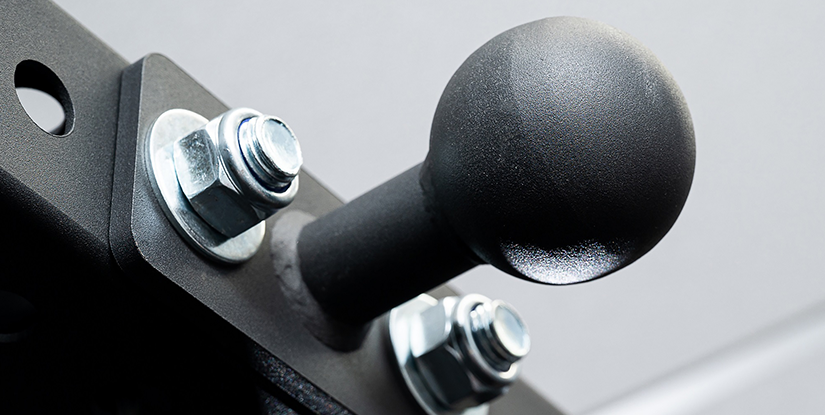
For metal-based accessories such as resistance band handles or weight plates, the focus shifts to oxidation resistance and surface finish. A frequent failure mode is the premature peeling of powder coatings or the emergence of rust on low-grade steel. This is often caused by insufficient pre-treatment during the coating process. To verify quality, one must check for a uniform thickness in the coating and ensure the substrate is a corrosion-resistant alloy or has been treated with an anti-corrosive zinc layer.
Establishing these material benchmarks is the first step in ensuring product longevity, which directly informs the precision required in the subsequent manufacturing stages.
| Material Type | Common High-Quality Spec | Typical Failure Mode | Verification Method |
|---|---|---|---|
| EVA Foam | High-density, closed-cell structure | Permanent compression/cracking | Shore A Hardness Test |
| TPE (Thermoplastic Elastomer) | Non-toxic, high elasticity | Loss of shape/elasticity | Compression set testing |
| Stainless Steel | Grade 304 or higher | Surface pitting/rust | Spectroscopy or acid test |
| Neoprene | High-grade synthetic rubber | Odor or skin irritation | Odor threshold & pH testing |
Once the material foundations are secured, the manufacturing process moves into the specialized shaping and assembly phases where precision becomes the primary driver of value.
Advanced Manufacturing Processes and Tooling Precision
Reliable fitness accessories manufacturers utilize highly specialized production lines that differ significantly between polymer extrusion and metal fabrication. The core problem in high-volume production is often the lack of consistency in tooling, leading to dimensional variations that make products difficult to stack, store, or use in unison.
Injection Molding vs. Compression Molding
For complex geometric shapes like kettlebell handles or ergonomic grip aids, injection molding is the standard. However, the success of this process depends entirely on the mold temperature and injection pressure. A common mistake is neglecting the cooling rate, which leads to internal stresses and warping. If the tool is not maintained to strict tolerances, the finished product may exhibit "sink marks" or inconsistent wall thicknesses. Operators must verify that the manufacturer utilizes multi-cavity molds with automated clamping systems to ensure consistency across thousands of units.
Extrusion and Calibration in Resistance Equipment
Resistance bands and tubes undergo a continuous extrusion process. The technical challenge here is maintaining a constant cross-sectional area throughout the entire length of the product. Any fluctuation in the extrusion speed or temperature results in 'weak spots'—areas where the material is thinner and more prone to snapping. To mitigate this, high-tier manufacturers employ real-time diameter monitoring systems. Verification should involve checking the uniformity of the diameter along at least 5-10 meters of the extruded material.
Controlling these mechanical outputs ensures that the physical form is correct, but the true test of a professional manufacturer lies in the rigorous scrutiny of the final product quality.
Quality Control Protocols and Defect Mitigation
A rigorous quality control (QC) framework is the only defense against the high rate of returns caused by manufacturing defects. In the fitness industry, a defect is not just a cosmetic flaw; it is a potential safety hazard. Whether it is a seam failure in a lifting strap or a structural crack in a weight accessory, the liability is significant.
Standardized Stress and Load Testing
Every accessory that undergoes tension—such as resistance bands, jump ropes, or heavy-duty straps—must undergo destructive and non-destructive testing. A common failure in low-tier manufacturing is the lack of a standardized load test, where products are only tested to a certain threshold but fail shortly thereafter in real-world use. Professionals should look for manufacturers that utilize a 'break-strength' protocol, where a sample from every batch is pulled until failure occurs to verify the safety margin.
Visual and Tactile Inspection Standards
Beyond mechanical testing, the aesthetic and tactile quality of the product dictates brand perception. Common defects include surface pitting in plastics, uneven coloring in rubber, and sharp edges on metal components. A robust QC process includes:
- Surface Roughness Analysis: Ensuring grip surfaces are consistent and non-abrasive.
- Color Consistency Checks: Using spectrophotometers to ensure dye batches match across different production runs.
- Edge Radiusing: Verifying that all molded or cut edges have been properly deburred to prevent user injury.
By implementing these multi-layered inspection stages, a manufacturer moves from basic production to high-performance engineering. This level of detail is essential when preparing for large-scale distribution and retail.
| Defect Type | Root Cause | Impact on User | Mitigation Strategy |
|---|---|---|---|
| Seam Failure | Poor thermal bonding or weak stitching | Product splits during use | Reinforced stitching or ultrasonic welding |
| Surface Pitting | Contaminated injection molds | Aesthetic downgrade/skin irritation | Regular mold cleaning and high-grade resin |
| Dimensional Variance | Inconsistent tooling or heat | Poor fit/stacking issues | Automated calibration and thermal control |
| Tensile Weakness | Inconsistent extrusion speed | Sudden snapping/injury risk | Continuous diameter monitoring |
As quality protocols stabilize the output, the focus must shift toward how these products are prepared for the global market through specialized packaging and logistics management.
Explore the complete technical specifications:
Logistics Optimization and Packaging Durability
Even a perfectly manufactured product can be rendered useless by inadequate packaging and logistics management. For heavy or high-volume accessories, the way they are bundled and protected during transit is a critical component of the total manufacturing process. Improper handling during the sea or air freight stages often leads to 'hidden' damage that only surfaces once the consumer opens the product.
Protective Packaging for High-Density Items
Heavy accessories like dumbbells or kettlebells exert significant pressure on the cardboard boxes they inhabit. A common mistake in procurement is overlooking the 'Bursting Strength' (Mullen Test) requirements for corrugated boxes. If the box is too weak, the weight of the product will cause the bottom to fail during stacking in a warehouse or shipping container. Manufacturers should use double-walled corrugated cardboard for any product exceeding a certain weight threshold to ensure structural integrity during long-haul transit.
Moisture and Environmental Control
For products made of organic materials or high-density foams, moisture is a silent killer. In transit through high-humidity zones, absorption can lead to mold growth or structural softening. To prevent this, professional manufacturers employ vacuum sealing or moisture-absorbent silica packets within the primary packaging. This is especially critical for neoprene-based accessories or items intended for high-humidity gym environments. Verify that the packaging provides a complete barrier against environmental contaminants before signing off on a production run.
With the logistics chain secured, the final step for any professional involves assessing the long-term operational value and maintenance requirements of the purchased inventory.
Explore the complete technical specifications:
Operational Longevity and Maintenance Strategies
Once the products reach the end-user, the manufacturing journey effectively ends, but the operational life of the accessory begins. A sophisticated buyer understands that the durability of the product is closely tied to the maintenance protocols established during the procurement phase. High-quality accessories require specific care to prevent the natural degradation of polymers and metals over time.
Preventative Maintenance for Commercial Environments
In a commercial gym setting, accessories are subjected to extreme usage, sweat, and environmental fluctuations. To extend the lifecycle of the accessories, operators must implement a regular inspection and cleaning schedule. For example, rubber-coated weights should be cleaned with a mild soap solution rather than harsh chemicals, which can cause the rubber to become brittle and crack over time. Similarly, resistance bands should be kept out of direct sunlight to prevent UV-induced degradation of the elastic polymers.
Lifecycle Assessment and Replacement Cycles
A professional approach to procurement involves calculating the expected replacement cycle for every class of accessory. Instead of waiting for a failure to occur, which can lead to safety incidents, inventory managers should use the technical data provided during the manufacturing stage to predict when an item will reach its 'end of useful life.' This proactive replacement model ensures that facility standards remain high and safety risks are minimized.
By mastering these stages—from material selection to end-of-life replacement—buyers can ensure they are working with the highest tier of fitness accessories manufacturers to build a durable and profitable product line.
Explore the complete technical specifications:
Final Procurement Checklist for Buyers
To ensure no technical detail is overlooked, use the following checklist when auditing potential fitness accessories manufacturers. This covers the spectrum from raw material verification to end-use stability.
- Material Documentation: Do they provide TDS and Certificate of Analysis (CoA) for all polymers and alloys?
- Machinery Capability: Do they utilize automated diameter monitoring for extrusion or multi-cavity molds for injection?
- Testing Protocols: Is there evidence of destructive 'break-strength' testing for tension-based accessories?
- Surface Standards: Are edge deburring and spectrophotometer color-matching included in the QC routine?
- Packaging Integrity: Does the manufacturer utilize double-walled corrugated boxes with documented Mullen Test ratings for heavy items?
- Sustainability/Safety: Are pH and VOC testing available for neoprene and synthetic rubber components?
Implementing these rigorous standards guarantees that the procurement process supports long-term operational success and minimizes the risks associated with large-scale facility management.