

Optimizing Performance and Longevity of Commercial Kettlebells
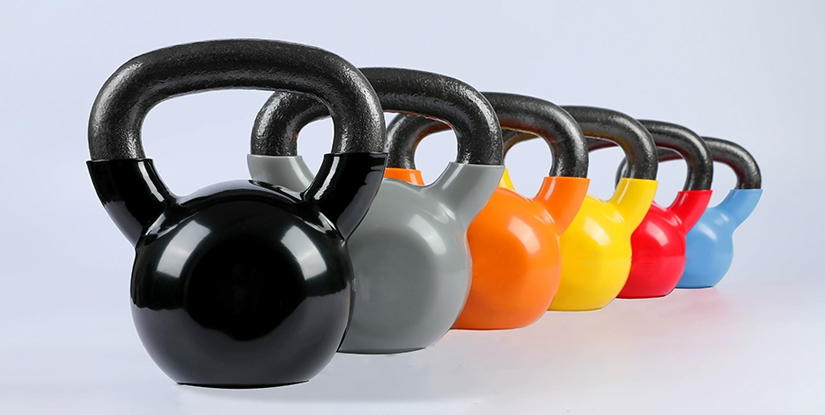
Addressing Material Fatigue and Weight Discrepancies in Commercial Kettlebells
Facility managers often encounter a frustrating phenomenon: a set of weights that appears uniform at a glance but reveals significant inconsistencies during high-intensity training sessions. These discrepancies typically manifest as uneven weight distribution or structural imbalances, which can lead to user fatigue or, in extreme cases, injury. The cause is rarely a single defect but rather a combination of substandard casting processes and low-grade metal alloys used in non-professional grade equipment. To prevent these issues, operators must move beyond superficial inspections and implement rigorous selection and verification protocols.
Common Weight Inconsistencies and Their Causes
When procuring Commercial Kettlebells, understanding the metallurgical and manufacturing causes of variance is critical. A common failure mode occurs when hollow-core designs are poorly filled, leading to 'dead spots' in the swing rhythm. Another frequent issue involves the casting of the handle-to-body transition, where improper cooling rates create structural weak points. To mitigate this, procurement teams should demand documentation regarding weight tolerance standards and casting consistency. Verifying the balance of a bell by swinging it in a controlled, low-velocity arc can reveal hidden center-of-gravity shifts before they become operational hazards.
Procurement Decision Matrix: Quality Verification
Before finalizing a large-scale purchase, use the following checklist to evaluate the structural integrity of a sample unit:
- Mass Variance Test: Weigh at least three units from the same production batch to ensure they fall within a +/- 1% tolerance range.
- Structural Equilibrium Check: Perform a static balance test on a flat surface to ensure the bell does not lean or tilt unexpectedly.
- Alloy Density Inspection: Check for surface porosity or air bubbles, which indicate inconsistent casting temperatures.
By mastering the selection process, facilities can ensure that their initial investment provides consistent resistance, setting the stage for the specialized maintenance required to preserve that integrity.
Evaluating Surface Finishes and Grip Integrity
Once high-quality equipment is onboarded, the focus shifts from selection to the physical interface between the athlete and the tool. A significant pain point for gym operators is the premature degradation of surface coatings, such as powder coating or rubberized skins. As users engage in high-repetition movements, the friction and impact against flooring can cause micro-cracking and peeling. If left unaddressed, these surface failures do not just look unkempt; they create abrasive surfaces that can damage a user's grip or even cause skin abrasions.
Comparison of Common Surface Treatments
| Finish Type | Durability Profile | Maintenance Requirement | Ideal Use Case |
|---|---|---|---|
| Cast Iron (Painted) | High; resistant to impact | Low; occasional wipe-down | General strength training |
| Competition Style (Steel) | Extreme; highest durability | Medium; requires oxidation monitoring | High-traffic competition gyms |
| Rubber Encased | Moderate; prone to tearing | High; inspect for seam failure | High-impact/Quiet environments |
| Stainless Steel | Highest; corrosion resistant | Minimal; very low maintenance | Outdoor or high-humidity areas |
The choice of finish should be dictated by the environmental variables of your facility, such as humidity levels and flooring types. A broken or peeling finish is a signal that the protective barrier has failed, necessitating a change in cleaning protocols or surface restoration. This brings us to the necessity of a systematic inspection routine to catch these failures early.
Explore the complete technical specifications:
55kg Dumbbell: Welded Caps, Handle Diameter & Urethane vs Rubber
Implementing a Robust Inspection and Maintenance Cadence
Relying on reactive repairs is a costly mistake that often leads to higher replacement frequencies. Instead, professional operators implement a proactive maintenance schedule that categorizes inspection tasks by frequency and severity. A successful regimen focuses on three primary areas: structural integrity, surface quality, and weight accuracy. Neglecting even one of these areas can compromise the entire functional utility of the equipment set.
The Three-Tiered Inspection Checklist
Daily Visual Scan: Check for obvious surface abrasions, loose handles, or visible cracks in the body or coating.Operators should document these checks in a digital log to track the lifecycle of the equipment. If a bell fails the weekly physical verification, it should be immediately removed from rotation to prevent use in high-velocity movements. Maintaining this level of rigor ensures that the equipment remains a reliable asset rather than a liability. With a consistent inspection routine established, the next critical step is understanding the technical nuances of handle ergonomics and diameter variations.
Explore the complete technical specifications:
Best Kettlebell Manufacturer: Casting Precision, Handle Seams & Tolerances
Analyzing Handle Diameter and Ergonomic Standards
A common mistake in facility design is failing to provide a diverse range of handle diameters, which can lead to grip fatigue and suboptimal technique. In a professional setting, the handle is not just a point of contact; it is a precisely engineered component that must accommodate different hand sizes and grip styles (such as the kettlebell snatch or the clean and jerk). If the handle is too narrow, it can cause excessive pressure on the knuckles; if it is too wide, it may impede the transition during high-repetition training.
Standard Grip Parameters for Professional Use
When evaluating a set of Commercial Kettlebells, ensure the handles meet professional ergonomic standards. Typically, high-quality bells will feature a diameter range that accommodates both high-volume lifting and specialized grip work. The texture of the handle—whether it is smooth, knurled, or powder-coated—also plays a decisive role in performance. A handle that is too smooth can become dangerously slippery when moisture is present, whereas an overly aggressive texture can cause skin irritation over time.
| Handle Feature | Standard Requirement | Operator Verification Method |
|---|---|---|
| Diameter Consistency | Uniform across the weight set | Measure with calipers across 3-5 samples |
| Surface Texture | Non-abrasive but high-friction | Manual tactile test under dry/wet conditions |
| Handle-to-Body Ratio | Optimal center of mass | Dynamic swing test for lateral stability |
Ensuring these ergonomic variables are met will drastically reduce the risk of grip-related failures during heavy lifting sessions. This level of detail leads directly into the long-term storage and environmental control requirements for the facility.
Explore the complete technical specifications:
Environmental Control and Long-Term Storage Protocols
Even the highest grade of equipment can suffer from premature degradation if stored in suboptimal environments. For instance, high humidity levels can trigger oxidation on cast iron surfaces, while extreme temperature fluctuations can affect the adhesion of rubberized coatings. This environmental vulnerability is a major cause of the 'rust-induced' surface failure often seen in poorly managed facilities.
Optimizing the Storage Environment
To protect your investment, implement a storage strategy that prioritizes stability. Using metal racks with rubberized feet can prevent direct contact with potentially damp floors, and ensuring the facility has adequate ventilation can mitigate humidity spikes. If your facility is located in a high-moisture area, it is highly recommended to select Stainless Steel Kettlebells, which are inherently more resistant to the environmental stressors described here.
Common Storage Failure Modes
Avoid these frequent operator errors to extend the life of your Commercial Kettlebells:
- Direct Floor Contact: Leaving bells on concrete without mats/racks, leading to moisture absorption and rust.
- Uneven Stacking: Stacking bells in unorganized piles, which causes localized pressure points and potential deformation.
- Unventilated Corners: Storing equipment in dead zones with low airflow, accelerating oxidation and coating degradation.
By controlling the storage conditions, you extend the functional life of the equipment and maintain the aesthetic standards of your facility. This concludes our deep dive into the lifecycle of professional-grade kettlebells, from procurement to preservation.