

Meeting Member Demand with Wholesale Weight Lifting Equipment
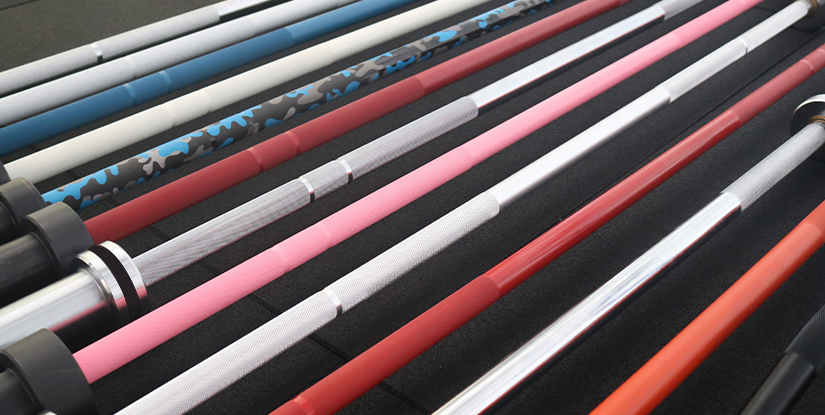
Establishing Selection Criteria for High-Volume Procurement
Navigating the complexities of a commercial fitness facility requires more than just filling floor space; it requires a strategic approach to meeting member demand with wholesale weight lifting equipment that balances durability with cost-efficiency. Most facility managers fail because they prioritize low initial purchase prices over the total cost of ownership (TCO). A cheap barbell that loses its knurling or a rack that develops structural sway within six months is a massive hidden expense that erodes profit margins through frequent replacement and member dissatisfaction.
To avoid these pitfalls, you must shift your focus from the price per unit to the technical specifications and material density of the equipment. Before placing a large-scale order, evaluate your specific facility type—whether it is a high-traffic commercial gym, a boutique strength studio, or a long-term hospitality fitness center—as each has drastically different wear-and-tear profiles. Selecting the wrong grade of steel or the wrong type of upholstery can lead to catastrophic failure in a high-intensity environment.
Material Density and Grade Comparison
| Equipment Category | Standard Consumer Grade | Professional Commercial Grade | Target Use Case |
|---|---|---|---|
| Free Weights (Dumbbells) | Cast Iron / Rubber Coated | Machined Steel / High-Density Urethane | Home gyms or low-traffic boutique studios |
| Weight Plates | Standard Rubberized | Calibrated Steel or High-Impact Polyurethane | High-volume training and competitive lifting |
| Power Racks | Mild Steel (Lower Gauge) | Heavy-Duty Alloy Steel (High Gauge) | Full-scale strength training facilities |
Defining these standards early in the procurement process ensures that the equipment arriving at your loading dock meets the physical demands of your membership base. Once your selection criteria are established, the next critical step is auditing the manufacturing processes of your wholesale suppliers to ensure quality consistency.
Auditing Supplier Manufacturing Standards and Material Quality
Once you have defined what your facility requires, you must verify that your wholesale partners can actually deliver those specifications consistently. A common industry failure mode occurs when a supplier provides a high-quality prototype but delivers lower-grade steel in the final bulk shipment. This discrepancy often results in equipment that fails under heavy load, creating significant liability for the operator.
A professional buyer must look beyond the glossy catalog. You need to verify the actual manufacturing techniques used for high-stress components. For instance, when sourcing weight lifting equipment, the quality of the welding (MIG vs. TIG) and the precision of the CNC machining are non-negotiable markers of long-term reliability. If a supplier cannot provide technical data sheets regarding the steel gauge or the composition of the coating, they are likely a middleman rather than a specialized manufacturer.
Verification Checklist for Structural Integrity
- Welding Consistency: Check for smooth, continuous beads without porosity or excessive splatter.
- Steel Gauge Verification: Confirm that the thickness of the uprights and crossmembers matches the technical spec sheet.
- Surface Finish: Ensure the powder coating or plating is uniform and lacks micro-cracks that lead to premature oxidation.
- Tolerance Check: For adjustable equipment, ensure there is no lateral play or 'wiggle' when the weight is loaded.
A rigorous audit of these manufacturing details significantly reduces the risk of receiving subpar goods. However, even the highest quality equipment requires a structured operational approach once it is on your gym floor to maintain its performance.
Optimizing Equipment Layout and Installation Protocols
Having secured high-quality equipment, the next challenge is the physical implementation within your facility. The way you layout and install your wholesale weight lifting equipment directly impacts the lifespan of the machines and the safety of your members. A common mistake is ignoring the structural load-bearing capacity of the floor or the necessary clearance zones around heavy lifting stations.
Improper installation often leads to uneven weight distribution, which can cause micro-fractures in the floor or instability in the equipment itself. For example, placing a heavy deadlift platform directly on a standard concrete slab without proper vibration damping can lead to structural fatigue in the building over time. You must plan for both the static weight of the equipment and the dynamic load generated during heavy lifting movements.
Optimal Installation Parameters
| Component | Standard Installation Requirement | Critical Failure Mode | Verification Method |
|---|---|---|---|
| Deadlift Platforms | Must include high-density rubber damping | Structural floor vibration / damage | Check for lateral shake during heavy drop |
| Power Racks | Floor-bolted to structural subfloor | Tip-over hazard / instability | Manual torque test on all mounting bolts |
| Weight Plate Trees | Centralized to high-traffic zones | Tip-over due to unbalanced loading | Verify center of gravity with full load |
Properly installed equipment acts as a long-term asset, whereas poorly installed equipment becomes a recurring maintenance burden. With the hardware safely in place, your focus must now shift toward a proactive maintenance schedule to prevent degradation.
Explore the complete technical specifications:
Designing a Preventative Maintenance and Inspection Cadence
Maintenance is not a reactive task; it is a proactive safeguard against both equipment failure and member injury. The primary reason for equipment downtime in commercial gyms is often neglect rather than inherent product failure. A robust maintenance cadence ensures that small issues, such as a loosening bolt or a dry bearing, are caught before they escalate into expensive repairs or safety incidents.
Operators should establish a multi-tiered inspection schedule that distinguishes between visual daily checks and deep technical monthly audits. For instance, while a staff member can easily spot a torn upholstery seam during a morning walkthrough, they cannot easily detect the internal wear on a cable machine's pulley or the fatigue in a barbell's shaft. These hidden issues require a more technical eye and specialized tools.
The Tiered Inspection Framework
Tier 1: Daily Visual Inspection (Staff Level)
Focus on high-visibility items: frayed cables, loose weight collars, torn upholstery, and surface rust. This is a non-technical check designed to catch obvious hazards.
Tier 2: Weekly Structural Check (Management Level)
Focus on mechanical connections: tightening bolts on racks, checking the lubrication of sliding mechanisms, and inspecting the integrity of weight plate holes. This level requires a standard wrench set and a basic checklist.
Tier 3: Quarterly Technical Audit (Expert Level)
Focus on deep mechanical integrity: testing the tension of cables, checking for micro-cracks in welds, and measuring the levelness of heavy machines. This should ideally be performed by a certified technician or a highly trained facility manager.
Regularly documenting these checks creates a paper trail that is essential for insurance compliance and demonstrates professional diligence in the event of an audit. Following a disciplined maintenance schedule leads directly into the final stage of operational success: troubleshooting and performance verification.
Explore the complete technical specifications:
Wholesale Price Gym Equipment | Selection & Maintenance Guide
Troubleshooting Mechanical Failures and Performance Deviations
Even with premium wholesale weight lifting equipment and a strict maintenance regimen, mechanical parts will eventually experience wear. The ability to troubleshoot these issues quickly determines whether a piece of equipment remains an asset or becomes a permanent 'out of order' sign that frustrates members.
When a piece of equipment begins to exhibit strange behavior—such as a new grinding sound, uneven resistance, or excessive lateral play—it is a signal that a specific mechanical component has reached its fatigue limit. The key to effective troubleshooting is to identify the root cause rather than simply masking the symptom. For example, adding more lubricant to a screeching pulley might solve the noise for a week, but if the bearing is actually failing, the noise will return, eventually leading to a total seizure.
Common Performance Issues and Resolutions
- Issue: Excessive Play in a Barbell
Cause: Worn-out bushings or bearings within the sleeve.
Fix: Replace the internal bearings or bushings with high-tolerance components.
Verification: Ensure the rotation is smooth and consistent under various load weights. - Issue: Cable Resistance Irregularity
Cause: Frayed internal wires or a bent pulley wheel.
Fix: Replace the cable assembly immediately; do not attempt to patch a frayed cable.
Verification: Test the full range of motion with a consistent weight to ensure smoothness. - Issue: Structural Rattle or Vibration
Cause: Loose fasteners or unlevel mounting surface.
Fix: Re-torque all bolts and check the floor leveling.
Verification: Perform a dynamic load test to ensure the rattle does not reappear.
By mastering these troubleshooting-to-verification loops, you ensure that your facility maintains high standards of excellence. This comprehensive approach—from selection to troubleshooting—is the only way to truly meet the complex and ever-changing demands of a modern fitness membership.
Scaling Facility Capacity via Strategic Inventory Management
As your membership grows, your ability to meet demand will rely on how you manage your existing inventory and plan for future expansion. A common mistake in scaling is waiting for equipment to break before ordering replacements. This reactive approach leads to downtime, which directly correlates with member churn. Instead, a proactive inventory management strategy should involve monitoring the usage-to-wear ratio of your most popular items.
Successful facility owners often utilize a "buffer stock" model for high-wear consumables, such as barbell collars, cable attachments, and replacement upholstery. By having these items on hand, you can perform repairs immediately rather than waiting weeks for a wholesale shipment to arrive. Furthermore, tracking the density of usage—such as how many hours a power rack is occupied daily—can help you predict when a full replacement cycle will be necessary.
Expansion Readiness Checklist
- Usage Tracking: Implement a log or digital system to track peak usage hours for high-intensity zones.
- Buffer Inventory: Maintain a minimum 15% stock of high-turnover components (e.g., weight plates, cables).
- Growth Forecasting: Review membership growth trends against current equipment capacity every six months.
- Lifecycle Budgeting: Allocate a percentage of monthly revenue toward a dedicated equipment replacement fund.
Integrating these long-term scaling strategies with your day-to-day maintenance and troubleshooting ensures that your facility remains a premier destination for athletes and enthusiasts alike.