

How to Assess Wholesale Weight Training Equipment with Professional Precision
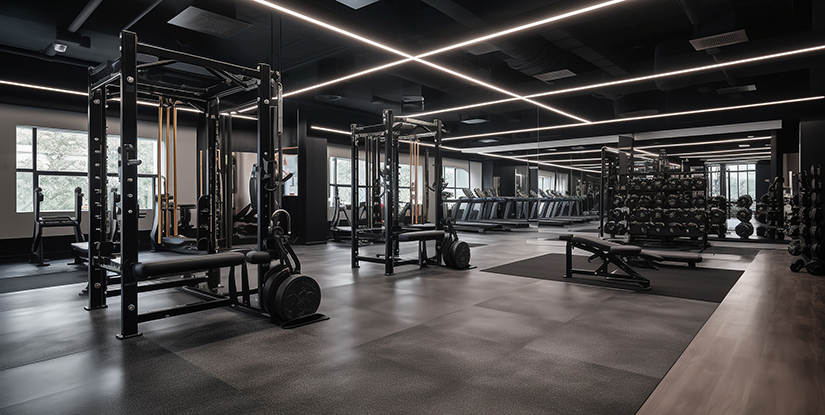
The Critical Risks of Unvetted Wholesale Procurement
In the high-stakes environment of commercial gym facility management, the difference between a profitable asset and a massive liability often comes down to a single procurement decision. When sourcing at scale, many buyers fall into the trap of prioritizing a low unit price over structural integrity. I have seen countless facility operators face catastrophic failures—not because they lacked a budget, but because they lacked a standardized assessment protocol for their wholesale orders. The fundamental problem is that wholesale catalogs often present idealized specifications that do not reflect the actual batch quality delivered to your loading dock.
The cause of these discrepancies usually stems from two factors: lack of rigorous material standardization and inadequate oversight during the fabrication process. To avoid the headache of returning non-compliant heavy steel or defective upholstery, you must move beyond the glossy catalog and adopt a technical verification mindset. Understanding how to dissect a product's build quality before the shipment leaves the factory is the only way to protect your ROI. Once you understand these foundational risks, we can move into the specific material standards that separate professional gear from amateur-grade surplus.
Evaluating Structural Steel and Frame Tolerances
Building on the understanding of procurement risks, the first technical pillar of any assessment is the metal frame itself. A common mistake is assuming that all 'heavy-duty' steel is created equal. In reality, the gauge of the steel tubing and the quality of the welding determine whether a squat rack remains stable under a 200kg load or begins to oscillate dangerously.
Identifying High-Grade Steel Gauges
When reviewing technical spec sheets, do not just look for the term 'heavy-duty.' You must demand the specific steel gauge. In the commercial sector, a 11-gauge (approximately 3mm) steel thickness is often the baseline for high-use strength equipment. If a supplier provides vague terms without specific millimeter or gauge measurements, it is a major red flag. A common failure mode occurs when a supplier uses thinner 14-gauge steel to save costs, which leads to frame bowing over time under repetitive high-impact loading.
The Importance of Weld Integrity and Joint Strength
Even the best steel will fail if the junctions are weak. You must inspect the weld beads at every major joint. A high-quality weld should be continuous, smooth, and show no signs of porosity (small holes) or 'undercutting' (where the weld eats into the base metal). I always recommend a visual check for 'tack welds' where a full structural weld was required. A single weak weld on a weight bench or a power rack can lead to sudden structural collapse during a heavy set.
| Feature | Standard Commercial Grade | Low-Quality Wholesale Warning |
|---|---|---|
| Steel Thickness | 11-gauge (3mm) or higher | 14-gauge (2mm) or unspecified |
| Weld Type | Full penetration, continuous bead | Tack welds or irregular/porous beads |
| Frame Coating | Electrostatic powder coating | Thin paint or uneven spray coverage |
| Joint Integrity | Fully welded junctions | Visible gaps or unsealed seams |
Verifying these structural benchmarks ensures the skeletal integrity of your equipment. However, a strong frame is useless if the moving parts—the bearings and cables—are prone to premature failure. This leads us directly to the mechanical components that dictate the 'feel' of the machine.
Assessing Mechanical Smoothness and Bearing Performance
After confirming the frame's stability, the focus must shift to the kinetic elements. A weight machine with a heavy-duty frame but mediocre bearings will feel 'clunky' and inconsistent, which frustrates users and leads to high maintenance costs. The mechanical smoothness of a piece of equipment is a direct indicator of the precision of its internal assembly.
Bearing Quality and Movement Fluidity
In selectorized machines or cable stacks, the quality of the bearings and bushings is paramount. A professional-grade machine should utilize high-grade steel ball bearings or precision bushings that offer minimal friction. A common mistake during wholesale assessment is failing to test the 'return speed' of a weight stack or the resistance of a cable pull. If there is a stutter or a 'catch' in the movement, it usually indicates poor bearing alignment or substandard manufacturing tolerances. This friction can cause heat buildup and eventually lead to cable fraying or complete mechanical seizure.
Cable Strength and Pulley Friction
For any equipment involving moving weights, the cable is the most vulnerable component. You must verify the cable's composition—typically a nylon-coated steel aircraft cable. Check the pulley wheels for their material construction: high-density nylon or aluminum pulleys are significantly more durable than lightweight plastic. A failure in this area is often caused by using cheap pulleys that deform under high tension, leading to uneven cable wear and eventual breakage.
- Verification Step: Perform a 'mid-range' test. Pull the cable through its entire range of motion at medium resistance to identify any dead spots or friction points.
- Verification Step: Inspect the pulley housing for any play or wobble when the weight is at its highest point.
Once you have mastered the assessment of moving parts, you must return to the physical interface—the areas where the human body actually touches the machine.
Explore the complete technical specifications:
Upholstery Durability and Ergonomic Compliance
While the frame and cables are the 'engine' of the equipment, the upholstery is the most frequent point of user contact and, consequently, the most common site of cosmetic and functional failure. High-traffic gyms see significant wear and tear on pads, and poor-quality materials will crack or tear within months of standard use.
Material Density and Stitching Integrity
The quality of an upholstery pad is determined by two factors: the density of the foam and the durability of the covering material. Many wholesale suppliers use low-density foam that collapses easily, losing its ergonomic shape after a few months of use. Furthermore, the covering (usually high-grade vinyl or synthetic leather) must be UV-resistant and sweat-resistant. Inspect the stitching carefully; it should be tight, even, and ideally use a double-stitch pattern to prevent the seams from bursting under the weight of an athlete. A common failure is seeing 'puckering' at the seams, which indicates the material is too tight or the sewing is substandard.
Ergonomic Alignment and User Comfort
Assessment is not just about durability, but also about how the equipment aligns with human biomechanics. A poorly designed pad may be durable, but if the angle is off by even a few degrees, it can cause discomfort or injury. When reviewing samples, always check the thickness of the padding. A thin pad provides zero shock absorption, which can lead to joint discomfort during heavy movements. A professional-grade pad should provide a balance of firm support and enough 'give' to contour to the body.
| Component | High-Quality Spec | Common Wholesale Failure |
|---|---|---|
| Foam Density | High-density, dual-layer foam | Low-density, single-layer sponge |
| Surface Material | Reinforced, sweat-resistant vinyl | Thin, easily crackable synthetic leather |
| Seam Construction | Double-stitched, reinforced edges | Single-stitch, prone to peeling |
| Pad Thickness | Consistent thickness throughout | Thinning at the edges or corners |
With the user interface confirmed, the final technical hurdle is the precision of the weight itself. The precision of the load determines whether the user's progress is accurately tracked or entirely fabricated.
Explore the complete technical specifications:
Verifying Weight Accuracy and Calibration
Perhaps the most deceptive aspect of wholesale equipment is the weight itself. It is remarkably common for a '20kg' plate or dumbbell to actually weigh 18.5kg or 22kg. This inaccuracy is not just a matter of precision; it can fundamentally compromise a user's training program and lead to significant dissatisfaction in a professional setting.
Calibration Standards for Free Weights and Plates
When assessing free weights like dumbbells, kettlebells, or Olympic plates, you must implement a strict verification process. A professional buyer should never trust the stamped number alone. Instead, use a calibrated digital scale to check the actual weight of a random sample from the shipment. For Olympic plates, check for the 'tolerance range.' High-quality plates should have a tolerance of within +/- 1% of the stated weight. If a supplier's plates consistently fall outside this range, the production calibration is flawed, and you should reject the batch.
Load Consistency in Selectorized Machines
For weight stacks in selectorized machines, the challenge is different. The weight is often a combination of metal plates and a stack of weights that might be subject to air resistance or friction. You must verify that the weight increments are consistent. For example, if the machine is marketed as having 5kg increments, each step should feel and weigh exactly the same. Inconsistencies here are often caused by poorly manufactured weight plates that have uneven thickness or volume, leading to an unbalanced stack that can tilt and jam the guide rods.
- Actionable Tip: Always test the weight stack at the highest and lowest points to ensure the weight increments remain consistent across the entire range of motion.
- Actionable Tip: Check for 'plate tilt'—if plates are unevenly cast, they will lean, causing friction and inconsistent resistance.
Having verified the weights, the final layer of assessment involves the small but critical details: the finishing touches that ensure long-term operation and safety.
Surface Finishes and Corrosion Resistance
The environmental impact on equipment is often underestimated during the wholesale selection process. A piece of equipment might look great on day one, but if the surface finish is substandard, it will begin to rust or peel within a single season of high-humidity use. This is especially critical if the facility is in a coastal region or a non-climate-controlled environment.
Powder Coating and Paint Durability
The metal frame must be protected by a high-quality finish. Most professional equipment uses electrostatic powder coating, which is more durable than standard liquid paint. When inspecting a sample, look for even coverage. Common failures include 'orange peel' textures (uneven thickness), drips, or areas where the coating is incredibly thin, particularly around the welds. These thin spots are the first places where oxidation will begin. A high-quality coating should feel smooth and should not chip easily when subjected to a light scrape from a weight plate.
The Role of Oxidation Prevention
In high-humidity environments, even powder coating might not be enough if the base metal is not prepared correctly. You should inquire about the pre-treatment process of the steel. Proper degreasing and a phosphate coating are essential steps to ensure the paint actually bonds to the metal. Without this, the coating is merely a surface layer that will eventually flake off, exposing the raw steel to moisture and rapid corrosion.
By maintaining a strict verification of these finishes, you extend the lifespan of your assets and reduce the frequency of costly replacement cycles. With all technical facets covered, you are now prepared to conduct a final, comprehensive audit of your equipment orders.
The Final Inspection Checklist for Receiving Shipments
The assessment process does not end when the order is placed; it truly begins when the container arrives at your facility. As a final layer of defense, you must have a standardized receiving protocol. This is your last opportunity to catch errors before the equipment is distributed throughout your gym floor.
The following checklist is designed to be used by a floor manager or procurement specialist during the unboxing and assembly phase. It covers the critical checkpoints we have discussed to ensure no defective units enter your inventory.
| Inspection Category | Checklist Item | Pass/Fail Criteria |
|---|---|---|
| Structure | Weld Inspection | No porosity, no gaps, continuous bead |
| Structure | Frame Gauge | Meets or exceeds specified mm/gauge |
| Movement | Bearing Smoothness | No stutter, no friction, fluid motion |
| Movement | Cable Integrity | Nylon coating intact, no fraying |
| Interface | Upholstery Seams | No puckering, tight stitching, no gaps |
| Precision | Weight Calibration | Within +/- 1-2% of stated weight |
| Finish | Coating Uniformity | No chips, no drips, no exposed metal |
A systematic approach to these checks will transform your procurement process from a gamble into a precise technical operation. By focusing on these granular details, you ensure that your facility's foundation is built on quality and safety.