

Maximizing Value from Wholesale Commercial Fitness Equipment
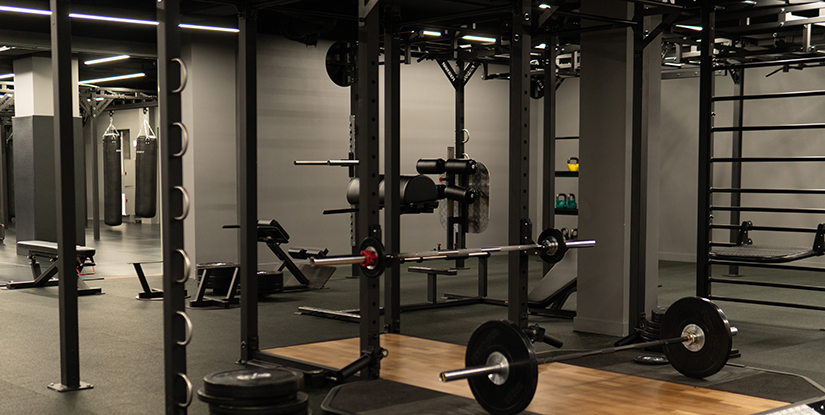
The Strategic Reality of Wholesale Procurement
When a procurement director or gym owner transitions from boutique retail models to large-scale wholesale sourcing, the primary risk shifts from 'availability' to 'long-term operational viability.' The lure of lower unit costs is often undermined by invisible costs: high failure rates, poor component compatibility, and insufficient technical support. Maximizing value from wholesale commercial fitness equipment requires moving beyond the purchase price and focusing on the Total Cost of Ownership (TCO). This means evaluating the durability of the steel, the quality of the bearings, and the ease of maintenance before the first shipping container leaves the port.
A common mistake is treating wholesale as a way to buy 'cheaper' equipment. In a commercial setting, 'cheap' equipment that breaks every six months is exponentially more expensive than 'premium' equipment that requires minimal intervention. We must look at the structural integrity and the mechanical tolerances that define professional-grade machinery. Understanding these foundational elements is the first step in ensuring your investment yields a high ROI rather than a maintenance nightmare.
Defining the Value-to-Cost Ratio
In the wholesale market, value is not a single number; it is a ratio of equipment uptime to initial capital expenditure. To calculate this, an operator must weigh the initial savings against the projected replacement frequency. If a wholesale lot offers a 30% discount but lacks modular parts for easy repair, that discount disappears the moment a single proprietary component fails. We will now examine how to differentiate between high-yield assets and low-quality liabilities through rigorous specification scrutiny.
Critical Material Specifications and Structural Integrity
Building on the need for long-term durability, we must look directly at the physical components that undergo the most stress. The core of any commercial strength machine is its steel frame and its welding quality. A frequent failure in low-tier wholesale orders is the use of thin-walled tubing that looks substantial but lacks the torsional rigidity required for high-intensity commercial use. This leads to frame fatigue and even catastrophic structural failure over time.
When reviewing technical data sheets, do not simply look for 'high-quality steel.' You must look for specific thickness ranges and material grades. For example, commercial-grade strength equipment should ideally utilize heavy-gauge steel for its main chassis to handle repetitive impact. Furthermore, the welding method—whether it is continuous seam welding or intermittent stitch welding—dictal the machine's lifespan. Intermittent welding often leaves structural gaps that eventually succumb to vibration-induced cracking.
| Component Type | Budget/Low-Tier Indicator | Commercial-Grade Standard | Verification Method |
|---|---|---|---|
| Frame Tubing | Thin-walled, light-gauge steel | Heavy-gauge, high-tensile steel | Digital caliper measurement of wall thickness |
| Welding Style | Spot or intermittent welding | Continuous, full-penetration welds | Visual inspection for consistent bead depth |
| Bearing Housing | Plastic or thin metal sleeves | Reinforced steel/bronze bushings | Check for lateral movement under load |
| Adjustment Pins | Light-weight, thin steel pins | High-tensity, heavy-duty steel pins | Resistance test of the pin under manual pressure |
By verifying these physical dimensions, you can prevent the common issue of 'structural settling,' where machines lose their alignment after only a few months of use. Once the structural foundation is verified, the next logical step is to scrutinize the moving parts that facilitate the user experience.
Mechanical Precision in Resistance and Load Systems
While the frame provides the skeleton, the resistance mechanisms—the pulleys, cables, and weight stacks—represent the nervous system of the equipment. A common pain point in wholesale acquisitions is the 'rough' feeling of the movement, which usually stems from substandard pulley systems or poor cable tensioning. This lack of smoothness doesn't just drive users away; it creates uneven wear that leads to premature system failure.
Evaluating Pulley and Cable Lifespan
In commercial environments, cables are high-wear consumables. If a wholesale supplier uses standard nylon-coated cables instead of high-tensile, galvanized steel cables, the replacement frequency will spike. Similarly, the pulley wheels must feature high-quality bearings that can handle both high RPMs and lateral pressure. If the pulleys are made of lightweight plastic rather than reinforced nylon or aluminum, they will degrade rapidly under heat and friction.
- The Friction Test: A professional should manually rotate the pulley system to check for 'stiction'—the tendency of a mechanism to catch or jerk during movement.
- The Tension Variance Check: Ensure that the resistance remains consistent throughout the entire range of motion. A drop in resistance in the middle of a rep indicates poor cable tracking or a failing pulley alignment.
- Material Composition: Always demand specifications for the cable coating. A high-quality coating prevents fraying and protects the inner steel strands from sweat-induced corrosion.
Identifying these mechanical nuances allows you to predict when a machine will require a service interval. Understanding the mechanical tolerances leads directly into the necessity of a structured inspection and maintenance regimen.
Explore the complete technical specifications:
Preventing Premature Wear Through Scheduled Inspection
Once the equipment is installed, the focus shifts from procurement to preservation. The most frequent mistake made by facility operators is the 'install and forget' mentality. They assume that because the equipment is 'commercial-grade,' it is maintenance-free. In reality, even the highest quality wholesale equipment requires regular intervention to maintain its performance and safety standards. Neglecting this leads to the eventual degradation of the mechanical precision we discussed in the previous section.
A professional maintenance program should be divided into daily, weekly, and monthly tiers. This prevents small issues, like a loose bolt or a slightly frayed cable, from escalating into expensive repairs or user injuries. A failure to implement a systematic check often results in 'cascading failures,' where one worn component puts excessive strain on another, leading to a total system breakdown.
The Three-Tier Inspection Framework
| Frequency | Focus Area | Action Required | Typical Failure Mode if Ignored |
|---|---|---|---|
| Daily | Visual & Surface | Clean sweat, check for loose bolts, inspect upholstery | Corrosion and user discomfort |
| Weekly | Moving Parts | Check cable tension, lubricate guide rods, test weight stack smoothness | Cable fraying and jerky resistance |
| Monthly | Structural & Mechanical | Torque all major bolts, inspect welding points, check bearing play | Frame fatigue and catastrophic component failure |
By following this framework, you move from a reactive stance (fixing things when they break) to a proactive stance (preventing the break). However, even with perfect maintenance, you must be able to identify when a component has reached its absolute end-of-life to ensure safety.
Explore the complete technical specifications:
Why Gyms Are Moving Away from Motorized Equipment | Expert Guide
Troubleshooting Common Hardware Failures
Despite rigorous maintenance, hardware will eventually wear out. The ability to troubleshoot common issues is what separates a professional facility from a poorly managed one. When a piece of equipment behaves unexpectedly, it is usually a symptom of a deeper mechanical or structural issue. Knowing how to diagnose the root cause prevents you from wasting time on superficial fixes that do not address the underlying problem.
Identifying Root Causes of Performance Decay
If a resistance machine feels 'choppy,' the cause is rarely the weight stack itself. Instead, it is often an issue with the cable tracking or the pulley alignment. If you simply add more lubricant to a pulley, you might mask the symptom, but the cable will still eventually fail because it is rubbing against a misaligned guide. A true professional identifies the cause—the misalignment—rather than just treating the symptom—the friction.
- Symptom: Squeaking or Grinding. Cause: Lack of lubrication on guide rods or worn-out bearings. Fix: Clean the rods and apply high-grade silicone lubricant, or replace the bearing unit.
- Symptom: Loose or Shaky Frame. Cause: Unfastened bolts or structural fatigue at the weld point. Fix: Re-torque all bolts to manufacturer specs or inspect the weld for cracks.
- Symptom: Uneven Weight Resistance. Cause: Cable is no longer seated correctly in the pulley grooves. Fix: Re-align the cable and ensure the pulley housing is not warped.
Effective troubleshooting requires a deep understanding of how each part interacts with the next. This technical proficiency ensures that your maintenance efforts actually extend the life of the equipment rather than just delaying the inevitable.
Optimizing Operational ROI and Equipment Layout
Beyond the mechanics of the machines themselves, the way you deploy your wholesale assets across the floor significantly impacts their longevity and your facility's value. An poorly planned layout can lead to 'high-traffic bottlenecking,' where certain machines receive disproportionate wear and tear compared to others, leading to uneven depreciation and maintenance cycles. Maximizing value means managing the lifecycle of your entire inventory as a single, cohesive system.
When planning your floor layout, consider the 'wear zones.' For instance, high-intensity cardio equipment and heavy free weights create more vibration and environmental stress than stationary strength machines. Placing heavy power racks too close to delicate cardio consoles can lead to accidental impact and shortened lifespans for both. A thoughtful layout minimizes these physical conflicts and optimizes the flow of users.
The Impact of Floor Loading and Vibration
A common, yet often overlooked, issue is the impact of vibration on structural stability. High-impact machines like treadmills or heavy free-weight benches generate constant micro-vibrations. If these machines are placed on a sub-optimal floor surface or too close to each other, these vibrations can actually loosen the fasteners on adjacent equipment over time. This is why a structured layout is not just an aesthetic choice, but a technical necessity for maintaining equipment integrity.
To verify your layout efficiency, observe the usage patterns of your members. If a specific area of the gym shows significantly more wear or 'clutter' than others, it is a sign that your floor plan is not optimized for the natural movement of your users. Adjusting these zones can redistribute the load across your entire wholesale investment, effectively extending the operational life of your most expensive assets.
Final Verification: Ensuring Long-Term Success
As we have moved from the selection of raw materials to the complexities of operational layout, a recurring theme emerges: documentation and verification. You cannot manage what you do not measure. To truly maximize the value of your wholesale commercial fitness equipment, you must maintain a rigorous paper trail of every purchase, every repair, and every inspection. This data is your most valuable asset when it comes to calculating actual ROI and planning future capital expenditures.
A professional operator should keep a 'Technical Log' for every major equipment category. This log should include the original technical specification sheet (to verify material thickness and grades), the date of purchase, and a history of all mechanical interventions. This level of detail allows you to identify patterns—such as a specific model of cable always failing after four months—which can inform your next procurement cycle and prevent the repetition of costly mistakes.
The Continuous Improvement Cycle
The process of maximizing value is not a one-time event but a continuous loop. You buy based on rigorous specs; you install with an optimized layout; you maintain with a tiered schedule; and you troubleshoot with a root-cause mindset. By closing this loop, you transform your wholesale purchase from a simple commodity into a high-performing, durable asset that drives your business forward. The ultimate goal is to achieve a facility that is as reliable as it is profitable.