

Optimizing Kettlebell Factory Standards: A Technical Manufacturing Guide
Material Selection and Casting Integrity in a Kettlebell Factory
A primary failure mode in high-volume strength equipment production is the presence of structural voids or uneven density within the kettlebell core. When a kettlebell factory overlooks the precision of its raw material inputs, the resulting product often suffers from weight fluctuations and internal cracking. This lack of structural integrity doesn't just affect the user's training rhythm; it poses a significant safety liability for commercial gym operators.
To mitigate these risks, manufacturers must prioritize high-grade cast iron or high-density polymer compounds, depending on the target market. The density of the material must be consistent throughout the entire volume of the bell to ensure that the center of gravity remains fixed. If the molten iron cools too rapidly or is contaminated with impurities, microscopic fissures can form, leading to catastrophic failure under high-impact use.
Verifying Metal Purity and Casting Density
Operators should implement a rigorous verification protocol during the smelting and casting stages. This involves regular spectrographic analysis of the iron batches to ensure alloy consistency. A common mistake is failing to account for the shrinkage rate of cast iron during the cooling phase, which can result in an undersized bell that does not meet the declared weight specification. A robust facility will use precision molds that account for this thermal contraction.
| Material Type | Primary Risk Factor | Mitigation Strategy |
|---|---|---|
| Cast Iron | Internal Voids/Fissures | Controlled cooling rates and metallurgical testing |
| Steel Shell (Filled) | Improper Filling Density | Multiple injection points to ensure full volume |
| Vinyl/Polymer | Shell Deformation | Reinforced inner cores and temperature control |
Once the material density is secured through strict casting controls, the focus shifts toward the physical geometry and handle durability of the unit. This transition from material science to structural engineering is where most quality control lapses occur.
Handle Ergonomics and Structural Stress Points
The connection between the kettlebell body and the handle—often referred to as the 'neck' or 'throat'—is the most frequent point of failure in inferior manufacturing. A kettlebell factory that produces handles with inconsistent thickness or poor weld integrity creates a product that is prone to breaking during high-velocity swings or snatches. This isn't just a manufacturing defect; it is a fundamental failure in ergonomic design and safety engineering.
The handle must be designed to accommodate varying grip widths while maintaining a standardized center of gravity. If the handle is too narrow or the internal diameter is inconsistent, the user's grip stability is compromised. Furthermore, the transition from the handle to the bell body must be seamless to prevent ergonomic 'hot spots' that cause blisters or discomfort during extended training sessions.
Testing Handle Load Capacities and Weld Integrity
A critical check for any procurement professional is the verification of the handle-to-body bond. This is often achieved through ultrasonic testing or visual inspection of the weld seams in steel-based models. A common error is ignoring the 'smoothness' of the handle surface; a rough cast can lead to skin abrasion, which decreases the usability of the equipment in professional settings.
A successful manufacturer will utilize automated CNC machining or high-precision casting to ensure that the handle diameter remains within a tight tolerance range. For example, a variance of even 2mm can significantly alter the perceived weight and grip comfort for an athlete. Verifying these tolerances during the receiving stage is essential for maintaining high standards in any fitness facility.
Ensuring the handle is structurally sound allows the manufacturer to focus on the exterior surface finish, which is the first thing a user interacts with during a workout.
Surface Finish Specifications and Coating Durability
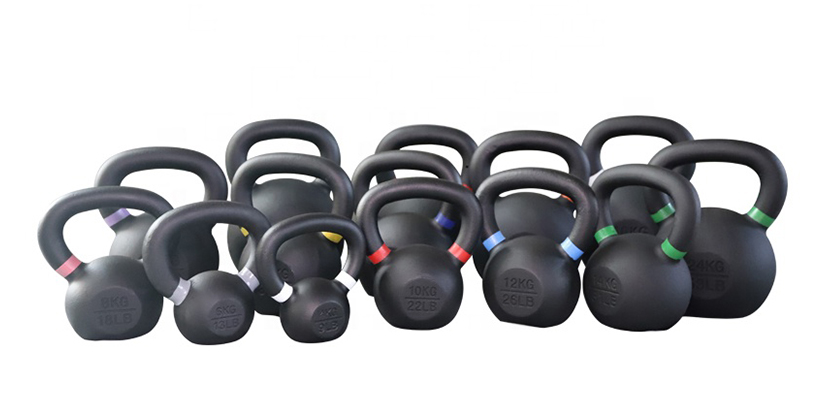
Beyond the internal structure, the exterior surface of the kettlebell dictates its longevity and ease of maintenance. In a professional kettlebell factory, the coating process is not merely aesthetic; it is a protective barrier against oxidation and environmental degradation. A poorly applied coating can flake off, exposing the raw iron to moisture and leading to rapid rusting.
The two most common finishes—powder coating and rubber/vinyl cladding—each present different operational requirements and failure modes. Powder coating offers a sleek, professional look but can chip if the application thickness is uneven. Rubber-coated bells provide better floor protection and grip, but the adhesive bond between the rubber and the inner core must be exceptionally strong to prevent delamination.
Comparison of Finishing Methods
| Finishing Type | Pros | Cons/Failure Modes | Ideal Use Case |
|---|---|---|---|
| Powel-Coated Iron | High durability, classic look | Chipping under impact, oxidation risk | Commercial weightlifting zones |
| Rubber/Vinyl Clad | Floor protection, high grip | Delamination, scent issues | Home gyms and high-traffic studios |
| Raw Cast Iron | Traditional, low cost | Rust prone, high floor impact | Budget-conscious or garage settings |
To ensure long-term performance, operators should check for 'bubbling' or peeling under the coating during routine inspections. This is often caused by trapped moisture or improper surface preparation before the coating was applied. Mastering the surface finish leads directly to the final stage of production: weight accuracy and labeling.
Precision Weight Calibration and Weight Tolerance Standards
The most significant pain point for professional buyers is receiving a shipment where the weights do not match the labeled specifications. In a high-quality kettlebell factory, weight precision is achieved through a systematic approach to casting volume and post-production adjustment. Discrepancies in weight are often the result of poor control over the casting volume or imprecise calibration of the scales used during final inspection.
Weight tolerance is a critical metric. While a certain degree of variance is expected in mass production, professional-grade equipment should fall within a very narrow margin. If a factory lacks a dedicated calibration station, the resulting weight distribution will be inconsistent across a set, making it impossible for athletes to maintain consistent progress in progressive overload training.
Verification Protocols for Weight Accuracy
To verify the quality of a shipment, one should use a calibrated digital scale and test a random sample from different parts of the batch. If the variance exceeds the manufacturer's stated tolerance (usually +/- 3-5% for commercial grades), the entire batch may be non-compliant. A common mistake is only checking the heaviest or lightest units, which fails to capture the variability of the middle-weight production runs.
Effective manufacturers use a multi-stage weighing process: first during the raw material stage, then after casting, and finally after the coating process. This ensures that the weight lost or gained during the finishing stages is fully accounted for. Once weight accuracy is confirmed, the production line can finalize the physical dimensions and labeling.
Standardizing Dimensions for Ergonomic Consistency
While weight is the primary metric, the physical dimensions of the kettlebell—specifically the height and width of the bell body—are equally vital for training consistency. A kettlebell factory must ensure that the geometric silhouette of a 16kg bell is proportionally similar to a 24kg bell in its base design. If the dimensions are wildly inconsistent, the user's range of motion and technique will be disrupted when they move between different weights.
Dimensional inconsistency often stems from using different mold designs for different weight classes rather than a scaled version of a single master design. This leads to 'awkward' bells that do not behave predictably during complex movements like the Turkish Get-Up or the Kettlebell Swing. For professional athletes, this lack of familiarity can lead to muscle imbalances or technical errors.
The Impact of Geometry on Movement Patterns
The relationship between the bell's center of mass and its external dimensions dictates the 'swing feel' of the kettlebell. A tall, narrow bell behaves differently than a short, wide bell, even if they weigh the same. Manufacturers should provide technical spec sheets that include not just weight, but also the height and diameter dimensions. This level of transparency allows gym owners to ensure their equipment sets are functionally compatible.
Regularly checking the physical dimensions against the technical specification sheet is a key way to identify potential issues with a supplier's manufacturing consistency. This level of scrutiny also applies to the final labeling and marking of the equipment.
Labeling Accuracy and Longevity of Identification
The final stage of the manufacturing process involves marking the weight on the kettlebell, typically through casting, engraving, or stencil painting. A failure in this area might seem minor, but it leads to significant operational confusion in high-traffic gym environments. If a weight mark is obscured by wear or was applied incorrectly, it can lead to incorrect loading in strength programs.
There are several methods for weight identification, each with its own durability profile. Cast-in weights are the most permanent and are standard for high-end cast iron bells. Stenciled paint or stickers, however, are susceptible to the high-friction environment of a training floor. If the identification method is too weak, it will eventually fail, leading to a loss of utility for the end-user.
Identification Methods and Durability Ranking
<- Cast-in Relief: Highest durability; part of the actual structure; virtually permanent.
- Engraved Marking: High durability; requires secondary filling or painting for visibility.
- Stencil/Paint: Moderate durability; prone to fading and chipping under heavy use.
- Adhesive Labels: Low durability; not recommended for professional or high-intensity use.
A professional procurement checklist should prioritize items with cast-in or engraved identification to ensure long-term utility. Once identification is verified, the entire production lifecycle from raw material to finished product can be reviewed for overall quality.
Summary of Quality Control Checklist for Buyers
Navigating the complexities of sourcing from a kettlebell factory requires a multifaceted approach to quality assurance. To simplify the process, the following checklist summarizes the critical control points identified throughout this guide. Use this to vet potential suppliers or to inspect incoming shipments.
| Production Stage | Critical Verification Metric | Warning Signs |
|---|---|---|
| Raw Material | Material Purity/Density | Surface cracks, inconsistent color, air bubbles |
| Casting/Structure | Handle Strength/Weld Integrity | Uneven handle thickness, visible seam gaps |
| Finishing | Coating Adhesion | Peeling, bubbling, or exposed rust spots |
| Weight Calibration | Target Weight Tolerance | Variance exceeding +/- 5% across the batch |
| Final Marking | Labeling Permanence | Faded paint or peeling stickers |
By applying these rigorous standards, buyers can ensure they are receiving equipment that is not only durable but also safe and ergonomically sound for long-term professional use.
Future Trends in Kettlebell Manufacturing and Precision
As the demand for high-performance strength training equipment grows, the technology within the kettlebell factory is evolving. We are seeing a move toward even higher levels of automation and digital integration to ensure perfection in every unit produced. The future of kettlebell manufacturing lies in the intersection of traditional casting methods and advanced digital quality control.
Smart factories are increasingly using AI-driven visual inspection systems to detect microscopic defects in the casting and coating processes that the human eye might miss. Additionally, the integration of 3D printing for mold creation allows for much more complex and ergonomically optimized handle designs. These advancements promise to reduce the frequency of the failure modes discussed in this guide, providing a higher standard of equipment for the global fitness community.